Strings
Bowed or fretted strings for a beginner?
One family gives you the note the moment you press. The other makes you find it, and then makes you produce the sound as a separate skill.
By Sawyer V. · Published · Last updated
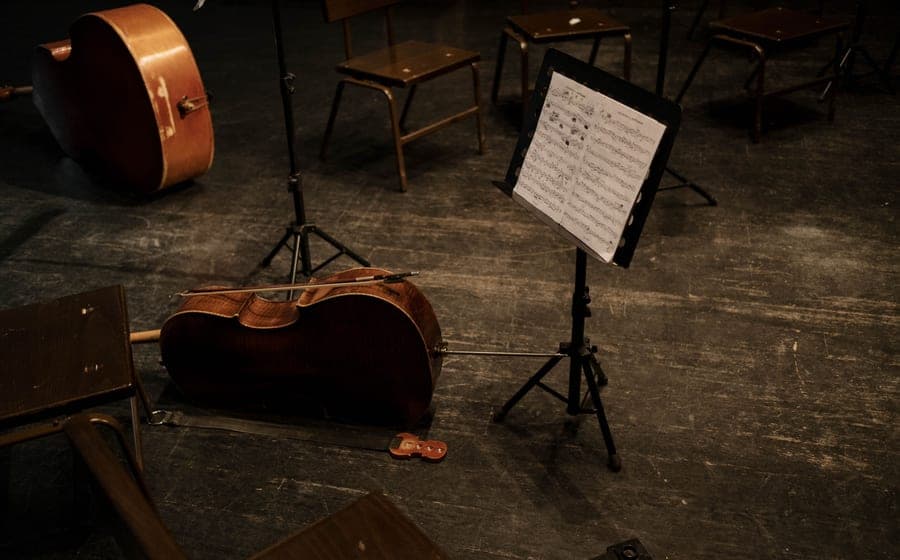
Stringed instruments split into two families that ask fundamentally different things of a beginner, and the split is not about the instrument’s size or price. It is about whether the instrument tells you where the note is.
Fretted instruments place the note for you and produce sound the instant you pluck, so a beginner sounds acceptable in week one. Bowed instruments require you to find every pitch by ear and to learn bowing as a separate skill, which means months before it sounds good. Fretted for self-teaching; bowed if there is a teacher and a program.
What frets actually do
A fret is a metal strip that stops the string at an exact length. Press anywhere in the space behind it and you get the same pitch, every time.
That is an enormous amount of help. It means a beginner on a Kala KA-15S#ad or a Kentucky KM-150#ad plays in tune from the first minute, and can spend their attention on rhythm, chord changes and actually making music.
It also means the instrument sounds acceptable immediately. Plucking a string produces a clean note with no technique required at all.
What a bowed instrument asks instead
A violin, viola or cello has no frets. The fingerboard is smooth, and the correct place for each note is a position the player has to learn through hearing and hand memory.
Being slightly off is not a small error. A finger a few millimeters out of place produces a note that is audibly wrong, and the beginner has to hear that and correct it — which requires an ear that is itself still developing.
Then there is the bow, which is genuinely a second instrument. It must travel parallel to the bridge, at a consistent distance from it, with consistent weight. Getting any of those wrong produces the scratch every beginner recognizes, regardless of how good the left hand is. The technique is in how to hold a violin and bow.
So a bowed-string beginner is learning two hard things at once, and either one failing means it sounds bad.
The honest timeline
| Fretted | Bowed | |
|---|---|---|
| A clean single note | Immediately | A few weeks |
| Sounds pleasant to a listener | Weeks | Many months |
| A recognizable song | Days to weeks | Months |
| Playing in tune reliably | Given by the frets | Years of refinement |
That table is not an argument against bowed strings. It is an argument for knowing what you are signing up for, because the most common way a violin ends up unused is a family that expected the ukulele timeline.
Where bowed strings win
Expressiveness. A bow can sustain a note indefinitely, swell it, fade it and shape it continuously. A plucked string starts loud and decays, and there is nothing you can do about it. Nothing in the fretted family matches a bowed instrument for singing line.
Ensembles that want you. School and community orchestras exist everywhere and need string players, particularly violists and cellists. That is a structured route into playing with other people that fretted instruments do not have in the same organized way.
A clear path. Graded syllabuses, established teaching methods and a large teacher population. If you want an instrument with a well-mapped route, bowed strings have the best one.
True intonation. The absence of frets is also a strength: an advanced player can adjust pitch continuously to fit the harmony, which a fretted instrument cannot.
Where fretted strings win
You can teach yourself. The single biggest practical difference. A fretted-instrument beginner can hear whether they are getting it right; a bowed-instrument beginner frequently cannot tell whether a bad sound is the left hand, the bow angle or the bow pressure.
Chords. Fretted instruments play harmony easily, which means self-accompaniment and singing along. Bowed instruments are essentially single-line instruments.
Nobody in the house suffers. Said plainly because it is real. The first six months of a beginner violin are hard on a household, and more than one instrument has been abandoned by family consensus rather than by the player.
No sizing treadmill. A ukulele or a mandolin fits a child and an adult equally. Violins and cellos come in fractional sizes and a growing child moves through three or four — see violin sizes and cello sizes.
Which one for whom
A child in a school string program. Bowed. The teacher, the ensemble and the peer group solve the exact problems that make bowed strings hard alone. A Stentor Student II Violin Outfit#ad outfit is the standard entry point — see best beginner violins.
A child learning at home with no teacher. Fretted, without much hesitation.
An adult who wants to play songs. Fretted. Chords, singing, and a fast route to something enjoyable.
An adult who wants to play in an orchestra. Bowed, and take lessons. The demand for adult amateur string players is real, and the entry barrier is the technique rather than the audition.
Someone who cannot decide. Start fretted. Everything you build — the ear, the sense of pulse, reading, calluses — transfers if you move to a bowed instrument later, and the reverse is also true. Neither choice closes anything off. The whole-field version of the question is in which instrument should you learn.
What we would buy
Stentor Student II Violin Outfit
StentorBest for: First violin, every size
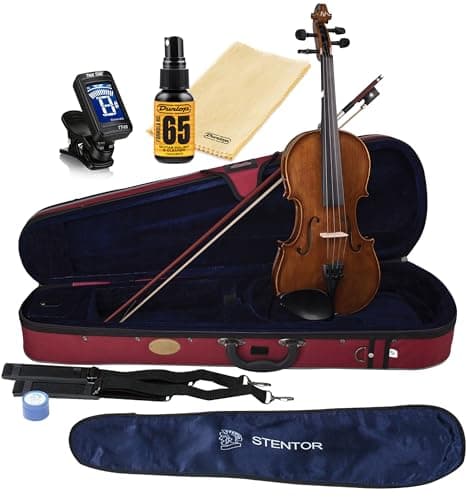
Solid carved spruce and maple with an ebony fingerboard, set up in a workshop before shipping, and made in five fractional sizes. The workshop setup is the specification that matters most on a beginner violin.
Published specifications
- Top:
- Solid carved spruce
- Back / sides:
- Solid figured maple
- Fingerboard:
- Ebony
- Pegs:
- Ebony or rosewood
- Sizes:
- 4/4, 3/4, 1/2, 1/4, 1/8
- Strings:
- Steel core, factory fitted
- Outfit:
- Wooden bow with ebony frog and natural horsehair, rosin, shaped lightweight case with music pocket and rucksack straps
What it gets right
- Ebony fingerboard and pegs, not stained hardwood — a stained fingerboard wears through and a soft peg will not hold a tuning
- Individually set up in a workshop before it ships, which is the single biggest variable on a cheap violin
- Available in five fractional sizes, so the same instrument family covers a child from about age five to adult
Where it gives ground
- The supplied steel-core strings are the first upgrade most teachers suggest
- The bow is functional rather than good; it is the second upgrade
What it is not good at
Being bought without measuring. Violin size is set by the player's arm length, not their age, and a violin one size too big is genuinely unplayable rather than merely awkward. Measure first.
How the specs score against a beginner’s needs
Scores are our reading of the published specifications above against what a beginner physically needs. They are not test results — we have not played this instrument.
Specifications from Stentor Music — Student II violin outfit.
Kentucky KM-150
KentuckyBest for: First mandolin, all solid wood
An all-solid A-style mandolin with a hand-carved spruce top and solid maple back and sides, at the tier where laminate is still the norm.
Published specifications
- Style:
- A-style, traditional design
- Top:
- Select solid spruce, hand-carved and graduated
- Back / sides:
- Select solid maple
- Neck:
- Solid maple
- Fingerboard:
- Rosewood
- Peghead:
- Traditional snakehead shape
- Neck joint:
- Modified dovetail
What it gets right
- All-solid construction — a carved, graduated top is what gives a mandolin its bark, and laminate cannot do it
- A dovetail neck joint rather than a bolt, which is the traditional construction and holds its geometry
- A-style bodies are simpler and cheaper to build than F-style, so the money goes into the wood rather than the scroll
Where it gives ground
- A-style has no scroll, which is purely cosmetic and matters to some players anyway
- Mandolin strings are under high tension and the instrument needs a setup to play comfortably
What it is not good at
Small hands. A mandolin neck is narrow but the string pairs are close together and the tension is high, which is hard on soft fingertips at first.
How the specs score against a beginner’s needs
Scores are our reading of the published specifications above against what a beginner physically needs. They are not test results — we have not played this instrument.
Specifications from Saga Music — Kentucky KM-150 standard A-model mandolin.
Kala KA-15S
Kala Brand MusicBest for: The honest floor, soprano
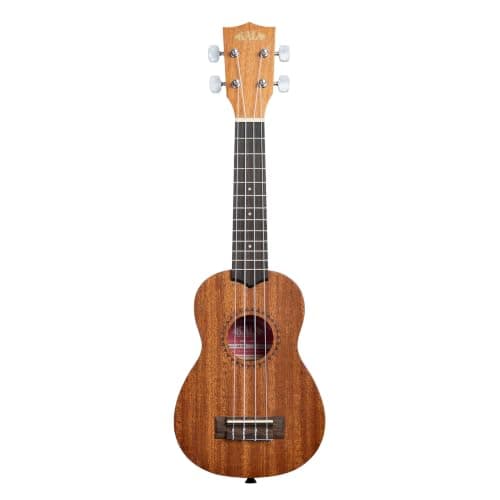
Mahogany throughout, a GraphTech NuBone nut and saddle, and Aquila strings fitted from the factory. The nut material is the spec that separates this from the pile of look-alikes.
Published specifications
- Size:
- Soprano
- Top / back / sides:
- Mahogany
- Neck / fretboard:
- Mahogany neck, rosewood fretboard
- Nut and saddle:
- GraphTech NuBone
- Scale length:
- 13.625"
- Frets:
- 12
- Nut width:
- 1.375"
- Overall length:
- 21.062"
- Strings:
- Aquila Super Nylgut
What it gets right
- NuBone nut and saddle rather than molded plastic — this is what decides whether the instrument plays in tune up the neck
- Aquila strings fitted at the factory, so the first thing you would otherwise replace is already done
- 21 inches overall and light enough for a small child to hold unsupported
Where it gives ground
- 12 frets only, and the body joint stops you well short of the high notes
- Soprano scale means less room between frets — adult fingers with wide fingertips will find it cramped
What it is not good at
Adult hands, sometimes. A 13.625 inch scale is genuinely tight. If the player is a grown-up with large hands, read our soprano-versus-concert comparison before buying this size.
How the specs score against a beginner’s needs
Scores are our reading of the published specifications above against what a beginner physically needs. They are not test results — we have not played this instrument.
Specifications from Kala Brand Music — KA-15S specifications.
Questions people actually ask
Are fretted instruments easier than bowed ones?
For a beginner, considerably. Frets place the note for you, so pressing anywhere in the right space gives the correct pitch. On a bowed instrument every note is placed by ear and hand memory alone.
Why is the violin so hard at first?
Because there are two separate difficult skills. The left hand must find pitches with no markers, and the right arm must draw a bow evenly and parallel to the bridge. Failing either produces a bad sound.
Can you teach yourself violin?
It is much harder than teaching yourself a fretted instrument. Bow-arm and posture faults are invisible to the person making them and become entrenched, which is why bowed strings are the family where we most strongly recommend a teacher.
Which family is better for a child?
Fretted for a child learning alone or with casual support; bowed for a child in a school string program with a teacher. The structure around the instrument matters more than the instrument.
Sources
Still deciding?
Every recommendation on this site is built the same way, and the method is published in full — including what we do not do and what would get a pick dropped.
Read next
- Best beginner violins: measure first, then buy
Arm-length sizing chart, why workshop setup is the spec that matters most, and one pick available in five sizes.
- Best beginner mandolins
A-style versus F-style, why a carved solid top matters more here than on a guitar, and the setup a mandolin needs.
- Violin or cello for a beginner?
Posture, early tone, transport, cost and orchestral demand, compared for a beginner choosing between the two.
- What instrument should I learn?
Four practical constraints instead of a personality quiz, each one routing straight to the instrument that fits.
- Mandolin or ukulele to start on?
Finger comfort, time to a first song, what each is for musically, and which suits a player with a guitar or violin background.