Strings
Best beginner violins: measure first, then buy
The one instrument family where the measurement has to come before the shopping, because the wrong size cannot be played correctly by anyone.
By Sawyer V. · Published · Last updated
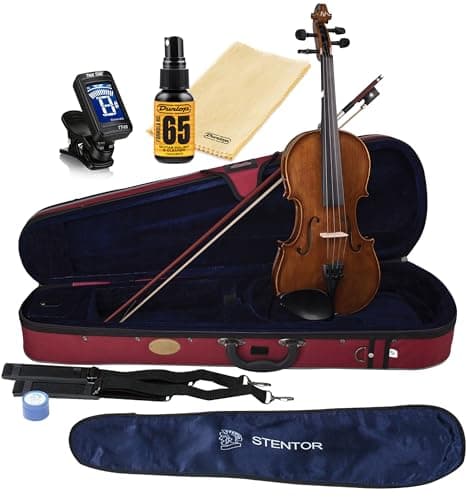
Orchestral strings are the one family on this site where the size question has to be settled before any shopping happens, because a violin one size too big is not awkward — it is unplayable. The left arm has to reach around the instrument with the hand in a specific position, and if the arm is too short the hand simply cannot get there.
So: the measurement first, then the instrument. Our method, and the fact that we have not played this violin, is on how we pick.
Violin size is set by arm length, not age. Measure from the side of the neck to the middle of the palm with the left arm extended straight out to the side: 17.5 to 20 inches is a 1/4, 20 to 22 inches is a 1/2, 22 to 23.5 inches is a 3/4, and 23.5 inches or more is full size.
The sizing chart
| Size | Arm measurement | Typical age |
|---|---|---|
| 1/16 | 14–16.5" | 3–4 |
| 1/10 | 16.5–17" | 3–5 |
| 1/8 | 17–17.5" | 4–5 |
| 1/4 | 17.5–20" | 5–6 |
| 1/2 | 20–22" | 7–8 |
| 3/4 | 22–23.5" | 9–11 |
| 4/4 (full) | 23.5" and up | 12 and up |
How to measure. Have the player extend their left arm straight out to the side, palm up. Measure from where the neck meets the shoulder to the middle of the palm. That number, not their birthday, selects the size. A tall seven-year-old may need a 3/4 while a small eleven-year-old is still on a 1/2, and both are normal.
When in doubt, size down. A slightly small violin is playable and slightly cramped. A slightly large one puts the hand out of position, which builds a technique that has to be dismantled later.
The specification that matters most: workshop setup
A violin arrives from a factory as an assembled instrument that is not ready to play. The bridge is unfitted — its feet have to be carved to match the curve of that specific instrument’s top — the soundpost inside has to be positioned, the pegs have to be fitted so they turn smoothly and hold, the nut and bridge string grooves have to be cut to the right depth, and the whole thing has to be strung and settled.
That work is skilled and it takes time, which is why the cheapest violins do not have it done. An unset-up violin has pegs that slip so it cannot be tuned, a bridge that may fall over, and string heights that make it painful to press down.
Stentor states that the Student II is individually set up and prepared for play in a workshop. That, rather than the wood, is what you are paying for at this level — and a shop setup after the fact costs more than the very cheapest instruments do in the first place.
The other specifications
Solid carved wood, not laminate. A carved spruce top and maple back rather than pressed plywood. Laminate violins exist and sound noticeably worse; the difference is larger on a violin than on any other instrument we cover.
Ebony fittings. Specifically the fingerboard and pegs. Cheap violins use stained softwood that looks like ebony until it wears through, and soft pegs will not hold a tuning no matter how well they were fitted.
What comes in the outfit. A violin needs a bow, rosin and a case to be usable. Bought separately those are a meaningful fraction of the instrument price, so a complete outfit is usually the sensible purchase.
What to skip
The very cheap complete violin outfit from an unnamed brand. These arrive unset-up: the bridge is loose in the case with no instruction on where it goes, the pegs slip, and the bow is unusable. A parent with no violin experience cannot fix any of that, so the child’s first experience is an instrument that cannot be tuned.
Buying a size up to last longer. On a violin this is not a comfort compromise. If the arm cannot reach the correct hand position, the player compensates by rotating the shoulder and collapsing the wrist, and that becomes the habit. Rent through the growth years if buying repeatedly is the concern.
What you also need
A shoulder rest. Not in most outfits and needed by almost every player. It fills the gap between the instrument and the collarbone so the violin can be held without clamping it with the chin.
Rosin, usually included. The bow makes no sound without it.
A teacher, and here more than anywhere else on this site. Violin posture and bow hold are close to impossible to self-correct because the player cannot see what they are doing. This is the instrument where an hour of instruction is worth the most.
If a violin is proving to be the wrong fit, our cross-instrument comparison for children works through the alternatives on the same physical-fit basis.
Two things worth reading before you buy: what a first violin should actually cost, in what a beginner violin should cost, and an honest account of the difficulty in is the violin hard to learn. For an adult weighing the whole string family, see best string instruments for adult beginners and violin or guitar.
Quick picks
Every size from 1/8 to full
Solid carved spruce and maple with an ebony fingerboard, set up in a workshop before it ships. The setup is the specification you are buying.
| # | Product | Best for | Score | Price |
|---|---|---|---|---|
| 1 | Stentor Student II Violin OutfitSolid carved spruce and maple with an ebony fingerboard, set up in a workshop before shipping, and made in five fractional sizes. | First violin, every sizeEnough | 8.9 | $395.00 · View on Amazon #ad How we’re funded |
The picks in full
Stentor Student II Violin Outfit
StentorBest for: First violin, every size
Solid carved spruce and maple with an ebony fingerboard, set up in a workshop before shipping, and made in five fractional sizes. The workshop setup is the specification that matters most on a beginner violin.
Published specifications
- Top:
- Solid carved spruce
- Back / sides:
- Solid figured maple
- Fingerboard:
- Ebony
- Pegs:
- Ebony or rosewood
- Sizes:
- 4/4, 3/4, 1/2, 1/4, 1/8
- Strings:
- Steel core, factory fitted
- Outfit:
- Wooden bow with ebony frog and natural horsehair, rosin, shaped lightweight case with music pocket and rucksack straps
What it gets right
- Ebony fingerboard and pegs, not stained hardwood — a stained fingerboard wears through and a soft peg will not hold a tuning
- Individually set up in a workshop before it ships, which is the single biggest variable on a cheap violin
- Available in five fractional sizes, so the same instrument family covers a child from about age five to adult
Where it gives ground
- The supplied steel-core strings are the first upgrade most teachers suggest
- The bow is functional rather than good; it is the second upgrade
What it is not good at
Being bought without measuring. Violin size is set by the player's arm length, not their age, and a violin one size too big is genuinely unplayable rather than merely awkward. Measure first.
How the specs score against a beginner’s needs
Scores are our reading of the published specifications above against what a beginner physically needs. They are not test results — we have not played this instrument.
Specifications from Stentor Music — Student II violin outfit.
Questions people actually ask
What size violin does my child need?
Measure from the side of the neck to the middle of the palm with the left arm extended straight out to the side. Roughly: 17.5 to 20 inches is a 1/4, 20 to 22 inches is a 1/2, 22 to 23.5 inches is a 3/4, and 23.5 inches and above is full size. Age is a weak proxy; the measurement is the answer.
How much should a beginner violin cost?
More than the very cheap end, because the single biggest variable on an inexpensive violin is whether it was set up by a person. An unset-up violin has a bridge in the wrong place and pegs that will not hold, and a shop setup costs more than the cheapest instruments do.
Should I rent or buy a first violin?
Renting is genuinely reasonable for a growing child, because they will move through three or four sizes. Many shops apply rental payments toward a purchase later. Buying makes more sense for an adult, who will stay on one size.
What comes in a violin outfit?
An outfit means the violin, a bow, rosin and a case. The Stentor Student II adds a shaped lightweight case with a music pocket and rucksack straps. Bought separately a bow and case cost a meaningful fraction of the instrument, so an outfit is usually the sensible purchase.
Sources
Still deciding?
Every recommendation on this site is built the same way, and the method is published in full — including what we do not do and what would get a pick dropped.
Read next
- Best violin books for beginners
Essential Elements teaches reading from page one; Suzuki deliberately does not. Which suits which child, the book that fills the gap Suzuki leaves, and what no violin book can do.
- What size guitar does a child need?
Age and height chart with real scale lengths, the ten-second fit check, and why height beats age every time.
- The best first instrument for a child
Instrument by instrument, the real starting age set by hand size and reach, with a pick for each and the noise column filled in.
- Choosing a school band instrument
Which instrument suits which child, what school rental covers, and the honest case for not buying in year one.
- Best beginner ukuleles: what's worth it from $60 to $120
Segmented by hand size rather than price, with the nut-material spec that separates a real ukulele from a decoration.
- The easiest instruments to learn
Ranked by time to a first real song, with the ceiling each one trades away, and a pick for the top three.
- Best violin brands for beginners
What each beginner violin brand is actually known for, the specifications a teacher checks first, and why setup outranks the label.