Strings
Best violin bows for beginners
The bow is the part actually making the sound, and the one in your outfit is the weakest thing you own. It is also the cheapest fix.
By Sawyer V. · Published · Last updated
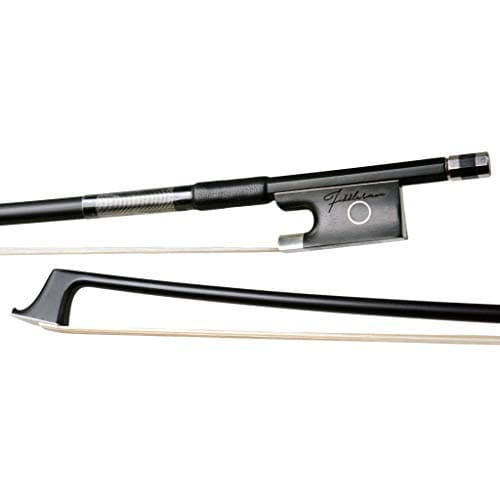
Buy a carbon fiber bow, in the same size as the violin, and spend about seventy dollars. That is the whole answer for nearly everyone, and the reasoning is simple enough to state in one sentence: wooden bows warp, carbon fiber bows do not, and a warped bow cannot be drawn straight no matter how well the player is doing. The Fiddlerman carbon fiber bow#ad costs less than a good set of strings and is a larger audible change than the strings would be.
Every pick states its Starter Path band, and we have not played any of them — the method is on how we pick. Materials, hair origin, frog material, lengths, warranties and the published handling values come from the makers’ own shops and from Johnson String, cited at the bottom. Where a figure is genuinely not published, this page says so rather than printing one.
At beginner level a better bow changes the sound more than a better violin does — the bow is the part physically producing the tone. Buy carbon fiber, not wood. Wooden bows warp and lose their camber, and under roughly $200 the wood is of unverifiable species anyway. About $70 buys a carbon bow with published specs and a multi-year stick warranty, which is the sweet spot. Match the size to the violin: bows run 4/4 (29.5 in), 3/4 (27.3 in), 1/2 (24.5 in), 1/4 (22.5 in), and a 4/4 bow on a 3/4 violin is simply the wrong object. Timing: ask the teacher, usually inside the first year — and note the bow comes before better strings in the upgrade order, not after.
Why the bow, and not the violin
This is the part that sounds like salesmanship and is not, so it is worth laying out properly.
A violin does not make sound on its own. The bow drags rosined hair across a string to set it vibrating, and how evenly it does that is governed by the stick: how straight it is, how it is balanced, how stiff it is, and how it responds when the player changes direction or pressure. The box amplifies and colors what the bow produces. On a wind instrument the equivalent variable is the player’s breath, and nobody would expect a better flute to fix bad air.
Student violin outfits are assembled to a total price, and the bow is where the money is taken out. It is generally straight enough and heavy enough to function, and that is the design target. The result is that a student who has developed a reasonable tone is often fighting their bow rather than their instrument — scratchiness they cannot eliminate, a bow that skips on string changes, a stick that has already started to pull out of true.
Our violin accessories page has said this for some time — it calls the bow “the first real upgrade” and notes it matters more than upgrading the violin — and it never said which bow to buy. That is what this page is for.
The criteria, in the order they decide it
1. Material, which settles it at this price. Carbon fiber or wood. Wooden bows warp: camber is heat-set into the stick when it is made, and heat, humidity and time pull it out again, at which point the bow is finished because a crooked stick cannot be drawn in a straight line. Carbon fiber is dimensionally stable and does not care about a car in July or a radiator in January. Under roughly two hundred dollars a wooden bow is additionally wood of unverifiable species — “brazilwood” on a cheap bow is a trade term for assorted hardwood, not a guarantee — so you are paying for the idea of wood. Above that level, wood becomes a genuine argument, and it is also the level at which bows are chosen individually by playing them.
2. Size, which people get wrong more than anything else. A bow is sized to the violin in the same fractions: 4/4, 3/4, 1/2, 1/4 and smaller. Fiddlerman publishes the lengths — 29.5, 27.3, 24.5 and 22.5 inches respectively — and each size is a separate product with its own listing. This matters because the obvious mistake is invisible: a 4/4 bow looks like a bow, and on a 3/4 violin it is too long and too heavy for the player to control, which reads as the child being bad at it.
3. Hair and frog, which are the detail that separates equals. The hair should be real horsehair, and makers who care say where it came from — Mongolian and Siberian are both named grades. The frog is the block the player’s hand sits against; ebony or a named engineered equivalent rather than unspecified black plastic. These are the specs a seller omits when there is nothing good to say.
4. Weight, which almost nobody publishes properly. Covered in its own section below, because the gap is large enough to be a finding rather than a footnote.
The spec this category documents worst
Weight and balance are essentially the entire feel of a bow. A violin bow is conventionally around sixty grams, and a few grams either way, or a balance point a centimeter different, changes how the bow behaves at the tip and how tiring it is to hold.
So it is odd that it is the figure nobody commits to. CodaBow, which is the most respected maker on this page, publishes its Prodigy’s weight as “Medium-Light” — a word, with no gram figure anywhere on the product page. Fiddlerman does better and publishes a range, roughly 59 to 63 grams for a 4/4, with its own listings differing between editions of the same bow. Dealer figures for the same model vary by example.
Two honest conclusions follow. First, do not try to choose between bows on published weight, because the data does not support it. Second, if you have any way to try bows in person — a local shop, a teacher’s spares, a school’s collection — take it, because that is the only way to resolve a variable the category refuses to publish. Everything on this page is a recommendation for the common case where trying several is not an option.
The picks
The Fiddlerman carbon fiber bow#ad is the one to buy, and the gap between it and the alternatives is mostly price rather than performance. It is a handmade carbon fiber stick with Siberian horsehair and a copper-mounted ebony frog, published at roughly 59 to 63 grams for a 4/4, and the maker warrants the stick and the frog mechanics for five years against three months on the hair — which neatly tells you which part is consumable. All four fractional sizes are published with lengths, and the 3/4 and 1/2 were both in stock at the same price when we checked. Buy this if a student is upgrading from an outfit bow, which is almost everyone reading this. Skip it if nothing — the only caveat is that weight is a range rather than a figure, and that is true of the whole category.
The Fiddlerman hybrid#ad wraps a carbon fiber core in pernambuco and is published at approximately 58 grams. It exists for a real reason rather than as a price tier: some players want the surface and response of a wood bow without betting the stick’s straightness on wood. Treat the pernambuco as a wrapping, not as a traditional pernambuco bow. Buy this if the player already knows what they want from a stick and prefers wood in the hand. Skip it if this would be a first-year student’s first upgrade — it is roughly double the plain carbon bow for a difference they cannot yet feel, and we could not confirm its frog material, which at that price is a real gap.
The CodaBow Prodigy#ad is the bow violin teachers name out loud, and it sits in the overspend band for a beginner deliberately. CodaBow publishes the handling as named values — center-tip balance, medium-light weight, firm action, stiff — which is more handling detail than anyone else here gives, and Johnson String publishes the Xebony frog (a resin and natural fiber blend) and ethically sourced Mongolian horsehair. It is made and supported in the United States. Buy this if an advancing student’s teacher has asked for it, or the player is past the point where the Fiddlerman is the limiting factor. Skip it if they are in their first year: it is about five times the Fiddlerman, and at this price the genuinely better move is trying several bows at a shop — which is the one thing ordering online cannot do.
Before you buy: is it the bow, or the rosin?
Worth checking first, because it is free and it accounts for a surprising share of “my bow is bad”.
A bow with insufficient rosin skates across the string and produces a thin, slipping sound that is easy to mistake for a cheap stick. A bow with far too much produces a gritty, scratchy tone and visible dust. Hair that has gone slick with months of use and skin oils will not grip at all, and no amount of fresh rosin fixes it — that is a rehair, not a new bow.
So the sequence worth following: confirm the hair is properly rosined, confirm the hair is not years old and glazed, and confirm the bow is actually straight when you look down it from the frog. If all three check out and the tone still fights the player, the stick is the problem and this page applies. Our page on how to care for a violin covers the routine, including loosening the hair after every session — a bow left tight loses its camber permanently, which is how student bows die early.
What we did not list, and why
Sub-$30 unbranded carbon bows. They are in stock, they are everywhere, and several are probably fine. The problem is that they publish no weight, no hair origin and no frog material, and this page’s entire argument is that material and construction decide a bow. Recommending an unspecified stick would contradict the argument. They are also the tier where “carbon fiber” sometimes means a carbon-pattern wrap over fiberglass.
Glasser’s fiberglass bow. A real US maker with a real product, and genuinely the tier most outfit bows belong to. Left off on stock rather than merit: it was down to three units when we checked, and we do not ship a buy row we cannot confirm you can buy today.
Pernambuco bows at $150. Pernambuco is the traditional bow wood and is now a restricted species, which should tell you something about what a hundred and fifty dollar “pernambuco” bow is likely to be. At that price the carbon bow is the better instrument and the honest purchase.
Anything above the Prodigy. CodaBow’s Diamond line and the serious wood bows are better and are out of scope here: a player choosing between professional sticks has a teacher advising them and should be trying bows in person, not reading a beginner site.
Bow accessories. Grips, collimators and training aids. A beginner’s bow hold is a teacher’s job, and our guide to holding a violin and bow covers what good looks like without buying anything.
Quick picks
Buy this one
Carbon fiber, Siberian horsehair, ebony frog, published at roughly 59-63 g for a 4/4 with a five-year warranty on the stick. For: almost every student upgrading from an outfit bow. Skip if: nothing - this is the default, and it costs less than a good set of strings.
| # | Product | Best for | Score | Price |
|---|---|---|---|---|
| 1 | Fiddlerman Carbon Fiber Violin Bow, 4/4A handmade carbon fiber stick with Siberian horsehair and an ebony frog, published at roughly 59 to 63 grams for a 4/4, with a five-year warranty on the stick and frog mechanics. | The upgrade most students should actually buyThe honest floor | 8.8 | $68.79 · View on Amazon #ad How we’re funded |
If you want wood response without wood failure
A carbon core wrapped in pernambuco, published at approximately 58 g. For: a player who already knows what they want from a stick. Skip if: this would be a first-year student's first upgrade - the plain carbon bow is the change that matters.
| # | Product | Best for | Score | Price |
|---|---|---|---|---|
| 1 | 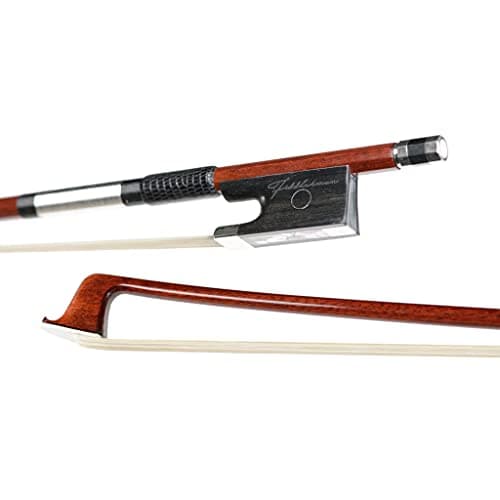 Fiddlerman Hybrid Wood and Carbon Fiber Violin Bow, 4/4A carbon fiber core wrapped in pernambuco, published at approximately 58 grams. | Wood feel without the wood failure modeEnough | 7.6 | $119.89 · View on Amazon #ad How we’re funded |
The one teachers name, and where overspending starts
Center-tip balance, firm action, stiff, Xebony frog, ethically sourced Mongolian horsehair. For: an advancing student whose teacher asked for it. Skip if: the player is in their first year - this is five times the Fiddlerman.
| # | Product | Best for | Score | Price |
|---|---|---|---|---|
| 1 | 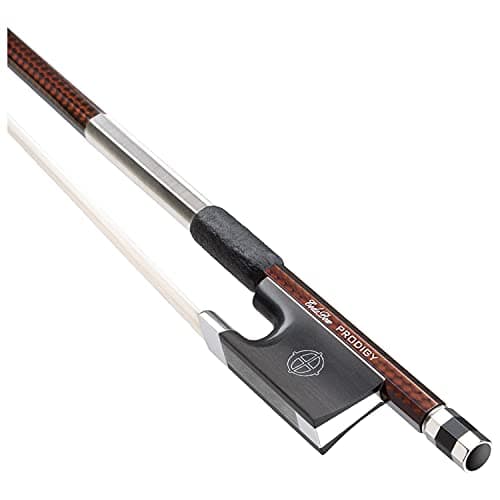 CodaBow Prodigy Carbon Fiber Violin Bow, 4/4CodaBow publishes the handling rather than the numbers: center-tip balance, medium-light weight, firm action, stiff. | The bow a teacher names, and where overspending startsWhere overspending starts | 7.8 | $385.00 · View on Amazon #ad How we’re funded |
The picks in full
Fiddlerman Carbon Fiber Violin Bow, 4/4
FiddlermanBest for: The upgrade most students should actually buy
A handmade carbon fiber stick with Siberian horsehair and an ebony frog, published at roughly 59 to 63 grams for a 4/4, with a five-year warranty on the stick and frog mechanics. It costs less than a set of good strings and it is a bigger audible change than either.
Published specifications
- Stick:
- Carbon fiber, handmade
- Weight:
- Published as approximately 59-63 g for a 4/4 — a range, not a figure
- Length:
- 4/4 29.5", 3/4 27.3", 1/2 24.5", 1/4 22.5" — each size is a separate product
- Hair:
- Siberian horsehair
- Frog:
- Ebony, copper mounted
- Warranty:
- Stick and frog mechanics 5 years; hair 3 months; tip wedge 12 months
What it gets right
- Carbon fiber does not warp, which is the failure mode that ends most student wooden bows — and the reason this beats a nominally fancier wood bow at the same price
- The maker publishes a weight range, a length per size, the hair origin and the frog material, which almost nothing under $100 in this category does
- A five-year warranty on the stick is unusual at any price and tells you what the maker expects of it
- Available in 4/4, 3/4, 1/2 and 1/4, so a child on a fractional violin is not stuck
Where it gives ground
- Weight is published as a range rather than a figure, so two examples will not feel identical — and on a bow, weight is the feel
- Siberian rather than Mongolian hair, which dealers price as a slightly lower grade, though no source we found quantifies the difference
- Sold through the maker's own shop and marketplace listings rather than local violin shops, so you cannot try it before buying
- Hair is covered for only three months, which is a short window for the part that wears
What it is not good at
Being chosen by specification. A bow is matched to a player and an instrument by playing several, and no amount of published data substitutes for that. This is the best default when trying several is not an option, not a claim that it is the right bow for a given player.
How the specs score against a beginner’s needs
Scores are our reading of the published specifications above against what a beginner physically needs. They are not test results — we have not played this instrument.
Specifications from Fiddlershop (Fiddlerman's own shop) — Fiddlerman Carbon Fiber Violin Bow: published lengths 4/4 29.5 in, 3/4 27.3 in, 1/2 24.5 in, 1/4 22.5 in, with approximate weights by size, Siberian horsehair, ebony frog, and the 5-year stick and frog warranty with 3-month hair and 12-month tip-wedge coverage, Fiddlerman — the maker states the bow is a handmade carbon fiber bow made to weigh approximately 59 to 63 grams.
Fiddlerman Hybrid Wood and Carbon Fiber Violin Bow, 4/4
FiddlermanBest for: Wood feel without the wood failure mode
A carbon fiber core wrapped in pernambuco, published at approximately 58 grams. It exists because some players want the response of a wood bow and the stability of carbon, and it is the honest middle of this page rather than a marketing tier.
Published specifications
- Stick:
- Carbon fiber core wrapped in pernambuco
- Weight:
- Published as approximately 58 g
- Size:
- 4/4
- Why it exists:
- Wood surface and response over a carbon core that does not warp
- Hair:
- Horsehair, per the maker's listing
- Frog detail:
- Not published in a form we could verify for this model, so we are not claiming one
What it gets right
- Pernambuco is the traditional bow wood, and this gets its surface and response without staking the stick's straightness on it
- Slightly lighter than the plain carbon bow at a published ~58 g, which some players prefer at the frog
- Same maker and same warranty structure as the cheaper carbon bow, so the support story is known
- A genuine middle tier rather than a price point invented to sit between two others
Where it gives ground
- Roughly double the plain carbon bow for a difference most beginners cannot yet feel
- The frog material is not published in a form we could confirm, which on a bow at this price is a real gap
- Pernambuco supply is restricted and the wood is a wrapping here, so do not read it as a traditional pernambuco bow
- Still not something you can try before buying through a marketplace listing
What it is not good at
A first upgrade for a student in their first year. The plain carbon bow is the change that matters; this is a preference purchase for a player who already knows what they want from a stick, and buying it early spends the budget in the wrong place.
How the specs score against a beginner’s needs
Scores are our reading of the published specifications above against what a beginner physically needs. They are not test results — we have not played this instrument.
Specifications from Fiddlershop — Fiddlerman Hybrid Violin Bow: a pernambuco-wrapped carbon fiber stick published at approximately 58 grams.
CodaBow Prodigy Carbon Fiber Violin Bow, 4/4
CodaBowBest for: The bow a teacher names, and where overspending starts
CodaBow publishes the handling rather than the numbers: center-tip balance, medium-light weight, firm action, stiff. A Xebony frog and ethically sourced Mongolian horsehair. It is the bow violin teachers name out loud, and it is five times the Fiddlerman.
Published specifications
- Stick:
- Carbon fiber
- Balance:
- Center-tip, per CodaBow
- Weight:
- Published only as "Medium-Light" — CodaBow gives no gram figure, and dealer figures vary by example
- Action:
- Firm
- Stiffness:
- Stiff
- Frog:
- Xebony frog, a resin and natural fiber blend
- Hair:
- Ethically sourced Mongolian horsehair
What it gets right
- The student carbon bow with the strongest reputation among teachers, which matters when a teacher has to approve the purchase
- CodaBow publishes balance, action and stiffness as named values, which is more handling detail than anyone else in this category gives
- Xebony frog and Mongolian hair are both specified rather than left as "premium"
- Made in the United States and supported there, with fractional sizes available in the same line
Where it gives ground
- Roughly five times the Fiddlerman carbon bow, for a difference a first-year student will not reliably hear
- No published weight in grams at all — only "Medium-Light" — which is a strange omission on a bow
- Dealers disagree on the frog maker and on the stick's internal construction, so the detail below the headline is not consistent
- At this price the sensible move is trying several bows at a shop, which is exactly what buying online prevents
What it is not good at
A beginner's first bow upgrade, which is why it sits in the overspend band. It is a genuinely better bow and the money does more as lessons or as a better instrument until the player's tone is developed enough to use it.
How the specs score against a beginner’s needs
Scores are our reading of the published specifications above against what a beginner physically needs. They are not test results — we have not played this instrument.
Specifications from CodaBow — Prodigy Violin: published handling values of Balance Center-Tip, Weight Medium-Light, Action Firm and Stiffness Stiff, with no gram figure given, Johnson String Instrument — CodaBow Prodigy violin bow Features & Specifications: carbon fiber construction, even and clear tone color, medium-light handling, firm action, stiff stiffness, Xebony frog made from a resin and natural fiber blend, and ethically sourced Mongolian horsehair.
Questions people actually ask
Is a better bow really worth more than a better violin?
At the beginner level, yes, and this is the one piece of string-world advice that surprises people. The bow is the part physically producing the sound — it is the equivalent of breath on a wind instrument — so a straighter, better-balanced, more responsive bow changes what comes out more than a different box does. The outfit bow in a student violin is built to a price that leaves almost nothing for it. Our violin accessories page makes the same point and is where this page came from.
Carbon fiber or wood for a beginner bow?
Carbon fiber, and it is not close at this price. Wooden bows warp — they lose their camber and go crooked with heat, humidity and time, and a warped bow cannot be drawn straight. Carbon fiber does not. Below roughly the two-hundred-dollar mark a wooden bow is also wood of unverifiable species and quality, so you are paying for a name on a stick. Wood becomes a real argument much further up, where individual bows are selected by playing them.
What size violin bow do I need?
The same fraction as the violin, and this is the commonest ordering mistake. Bows come in 4/4, 3/4, 1/2, 1/4 and smaller, and Fiddlerman publishes the lengths — 29.5 inches for a 4/4 down to 22.5 inches for a 1/4. A 4/4 bow on a 3/4 violin is not slightly wrong, it is the wrong object: too long and too heavy to control. If you do not know the instrument’s size, our violin sizes by age page has the measurement.
How much should a beginner spend on a bow?
Around seventy dollars buys a carbon fiber bow with published specs and a multi-year warranty, and that is the sweet spot — it is a large upgrade on any outfit bow for less than a set of good strings. Past about a hundred and fifty dollars you are buying refinement a first-year student cannot yet use, and past that the sensible move is trying several bows at a shop rather than ordering one.
When should a student upgrade the bow?
Ask the teacher, and typically somewhere inside the first year once the player is producing a consistent tone and the outfit bow’s limitations start showing as scratchiness they cannot fix. Note the site’s own upgrade order: the bow comes before better strings, not after. Our page on violin strings for beginners is the purchase that follows this one.
Why does nobody publish the weight of a bow?
It is the strangest gap in this category and worth knowing before you compare specs. Weight and balance are essentially the whole feel of a bow, and CodaBow publishes its Prodigy’s weight only as “Medium-Light” with no gram figure at all, while Fiddlerman publishes a range of roughly 59 to 63 grams for a 4/4. Dealer figures for the same bow differ by example. A 4/4 violin bow is conventionally around 60 grams; beyond that, two bows on paper can feel quite different in the hand, which is the honest argument for trying before buying when you can.
Do I need to rehair a bow, and how often?
Eventually, yes. Hair wears, loses its grip and breaks strand by strand, and no amount of rosin fixes hair that is done. For a student practicing daily, somewhere around once a year is typical, and a rehair costs a meaningful fraction of a cheap bow — which is part of why a well-made carbon stick is worth having, since the stick outlasts many rehairs. Note that Fiddlerman warrants the hair for three months and the stick for five years, which tells you which part is consumable.
Sources
- Fiddlershop (Fiddlerman's own shop) — Fiddlerman Carbon Fiber Violin Bow: published lengths 4/4 29.5 in, 3/4 27.3 in, 1/2 24.5 in, 1/4 22.5 in with approximate weights by size, Siberian horsehair, ebony frog, and a 5-year stick and frog warranty with 3-month hair and 12-month tip-wedge coverage
- Fiddlerman — the maker states the bow is handmade carbon fiber made to weigh approximately 59 to 63 grams
- Fiddlershop — Fiddlerman Hybrid Violin Bow: a pernambuco-wrapped carbon fiber stick published at approximately 58 grams
- CodaBow — Prodigy Violin: published handling values of Balance Center-Tip, Weight Medium-Light, Action Firm and Stiffness Stiff, with no gram figure given
- Johnson String Instrument — CodaBow Prodigy violin bow Features & Specifications: carbon fiber construction, even and clear tone color, medium-light handling, firm action, stiff stiffness, Xebony frog made from a resin and natural fiber blend, and ethically sourced Mongolian horsehair
Still deciding?
Every recommendation on this site is built the same way, and the method is published in full — including what we do not do and what would get a pick dropped.
Read next
- Violin accessories you actually need
The shoulder rest and tuner that outfits leave out, what to upgrade first, and which popular accessories to skip.
- Best violin strings for beginners
Steel against synthetic cores in the makers' own words, what ball-end and loop-end mean, and three sets for student players.
- What comes with a violin outfit, and what doesn't
What an outfit contains, what each part is worth bought separately, and the two items nearly everyone still needs.
- Violin sizes by age and arm length
The full fractional chart by arm length, how to measure, and why a violin one size too big cannot be played correctly.
- Best beginner violins: measure first, then buy
Arm-length sizing chart, why workshop setup is the spec that matters most, and one pick available in five sizes.
- How to look after a violin
The after-playing routine, why bow hair must be loosened, how much rosin is too much, and the bridge check nobody is taught.