Strings
What comes with a violin outfit, and what doesn't
A violin on its own is unplayable. Here is what an outfit contains, what each part is worth, and the two things that are almost never in the box.
By Sawyer V. · Published · Last updated
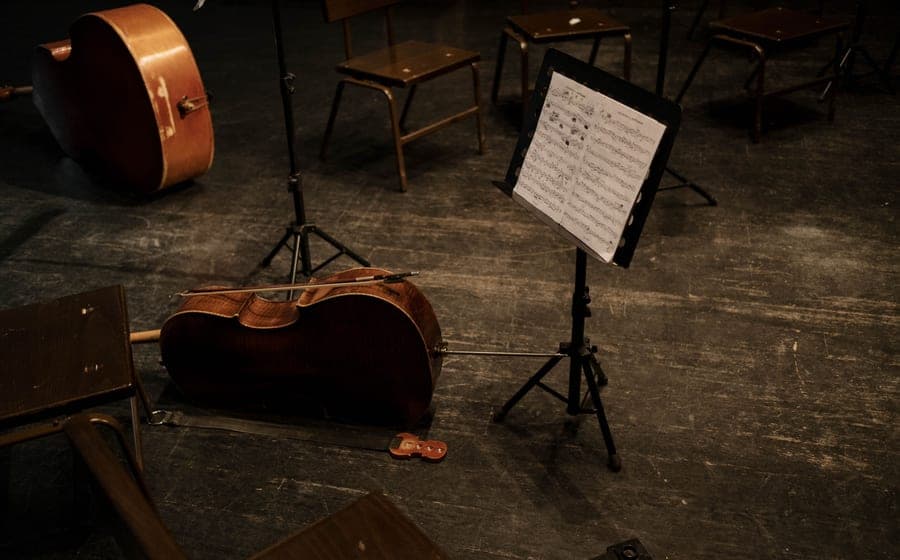
A violin is the one instrument on this site that is genuinely unplayable on its own. A guitar with no accessories still makes a sound. A violin with no bow and no rosin makes almost nothing.
That is why beginner violins are sold as “outfits” rather than instruments, and it is also why the outfit’s contents deserve reading before you compare prices. Here is what is in one, what each part is worth, and the two things that are almost never included.
What an outfit contains
Using the Stentor Student II as the reference, because its contents are published in full:
| Item | What it does | Included? |
|---|---|---|
| The violin, set up and ready to play | Bridge fitted, soundpost positioned, pegs fitted, strings on | Yes |
| Bow | Produces the sound. Ebony frog, natural horsehair on this outfit | Yes |
| Rosin | Sticky block rubbed on the bow hair. Without it the bow slides silently | Yes |
| Case | Shaped, lightweight, with a music pocket and rucksack straps | Yes |
| Strings | Steel core, factory fitted | Yes |
| Shoulder rest | Fills the gap between instrument and collarbone | No |
| Tuner | Clip-on chromatic tuner | Usually no |
| Spare strings | For the one that eventually breaks | No |
| Cleaning cloth | Wipes rosin dust off the top | Sometimes |
The setup is the part you are actually paying for
Worth saying again here because it is invisible in a contents list.
A violin leaves a factory as an assembled object that is not ready to play. The bridge is unfitted — its feet have to be carved to match the exact curve of that instrument’s top. The soundpost inside has to be positioned. The pegs have to be fitted so they turn smoothly and hold under string tension. The string grooves in the nut and bridge have to be cut to the right depth.
The cheapest outfits skip all of it, and what arrives is a violin with the bridge loose in the case, no instruction about where it goes, and pegs that slip so it cannot be tuned. A parent with no violin experience cannot fix any of that, and paying a shop to do it afterward costs more than the cheapest instruments do.
“Individually set up and prepared for play in a workshop” is therefore the most important line in any beginner violin listing. Our pick is chosen on that basis.
The two things you still need
A shoulder rest. Almost never included, needed by almost every player. Between the top of a violin and a human collarbone there is a gap, and the instrument has to be held stable across that gap. A shoulder rest bridges it so the violin sits level without being clamped down.
Without one, the player grips with the jaw and hunches the left shoulder up to meet the instrument. That is tiring within minutes, it tenses the whole left side, and it restricts the left hand’s freedom to move up the fingerboard. It is one of the most common posture problems a teacher has to unpick, and it is entirely preventable for very little money. Buy one sized for the violin.
A clip-on chromatic tuner. A violin has four strings tuned in fifths and it goes out of tune constantly — more than any other instrument here, because the pegs hold by friction and the strings stretch. A beginner cannot tune by ear yet, and neither can most parents.
A clip-on tuner reads the pitch through the wood, so an adult who plays nothing can tune the instrument in under a minute. Getting the violin tuned before every practice is not optional: an out-of-tune violin teaches a beginner that the notes they are finding are wrong, when the notes are fine and the instrument is not.
What is worth upgrading, and when
The bow, first. The bow is the part producing the sound, and the one in any beginner outfit is functional rather than good — usually too light, not perfectly straight, and with hair that needs frequent rehairing. A better bow makes a larger difference to the tone than a better violin does at this level. Ask the teacher when. Typically inside the first year.
The strings, second. Factory steel-core strings are bright, durable and slightly harsh. A synthetic-core set warms the tone considerably and is what most teachers suggest once the player is committed.
The case, only if it travels. The lightweight shaped case in a good outfit is genuinely adequate for carrying to a lesson each week.
What to skip
Practice mutes, initially. A heavy rubber mute makes a violin much quieter and also makes it sound dead, which makes practice unrewarding. There are situations that call for one; the first month is not one of them.
Fingerboard tapes, unless the teacher asks for them. Some teaching methods use them and some deliberately do not, because they train the eye rather than the ear. Ask first.
Electronic tuners built into the case, chin rest upgrades, and decorative accessories. None of them affect whether the player progresses.
The equivalent lists for the other instruments here are in what comes with a ukulele and what you need to start piano.
What we would buy
Stentor Student II Violin Outfit
StentorBest for: First violin, every size
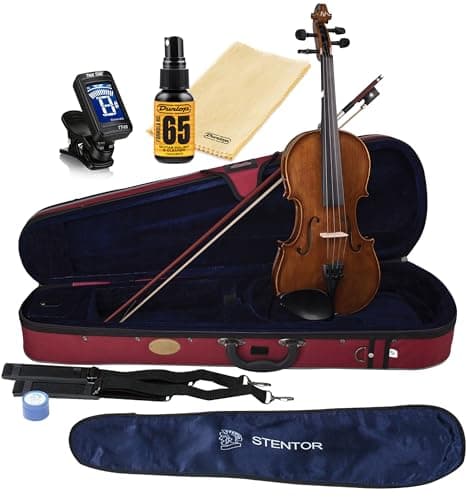
Solid carved spruce and maple with an ebony fingerboard, set up in a workshop before shipping, and made in five fractional sizes. The workshop setup is the specification that matters most on a beginner violin.
Published specifications
- Top:
- Solid carved spruce
- Back / sides:
- Solid figured maple
- Fingerboard:
- Ebony
- Pegs:
- Ebony or rosewood
- Sizes:
- 4/4, 3/4, 1/2, 1/4, 1/8
- Strings:
- Steel core, factory fitted
- Outfit:
- Wooden bow with ebony frog and natural horsehair, rosin, shaped lightweight case with music pocket and rucksack straps
What it gets right
- Ebony fingerboard and pegs, not stained hardwood — a stained fingerboard wears through and a soft peg will not hold a tuning
- Individually set up in a workshop before it ships, which is the single biggest variable on a cheap violin
- Available in five fractional sizes, so the same instrument family covers a child from about age five to adult
Where it gives ground
- The supplied steel-core strings are the first upgrade most teachers suggest
- The bow is functional rather than good; it is the second upgrade
What it is not good at
Being bought without measuring. Violin size is set by the player's arm length, not their age, and a violin one size too big is genuinely unplayable rather than merely awkward. Measure first.
How the specs score against a beginner’s needs
Scores are our reading of the published specifications above against what a beginner physically needs. They are not test results — we have not played this instrument.
Specifications from Stentor Music — Student II violin outfit.
Questions people actually ask
What is a violin outfit?
A violin sold together with the things needed to play it: a bow, a block of rosin and a case. Almost every beginner violin is sold this way, because a violin without a bow makes no sound and a bow without rosin makes almost none.
Do I need a shoulder rest?
Almost certainly, and it is almost never included. It fills the gap between the instrument and the collarbone so the violin can be held without clamping it down with the chin. Without one, most players grip with the jaw, which is tiring and teaches a posture a teacher will spend months correcting.
Is the included bow any good?
Functional rather than good, on any beginner outfit. It is usually the first upgrade a teacher suggests, and a better bow makes a larger difference to the sound than most people expect — it is the part actually producing the tone. Not urgent in the first months.
Do I need to change the strings on a new violin?
Not immediately. Factory-fitted steel-core strings are bright and durable and work fine for a beginner. Most teachers suggest a synthetic-core set within the first year, which warms the tone noticeably. It is the second upgrade after the bow.
Sources
Still deciding?
Every recommendation on this site is built the same way, and the method is published in full — including what we do not do and what would get a pick dropped.
Read next
- Best beginner violins: measure first, then buy
Arm-length sizing chart, why workshop setup is the spec that matters most, and one pick available in five sizes.
- Violin sizes by age and arm length
The full fractional chart by arm length, how to measure, and why a violin one size too big cannot be played correctly.
- What comes with a ukulele, and what you still need
What is really in the box, what the bundle accessories are worth, and the three things you genuinely need.
- What you actually need to start piano
The complete accessory list in priority order, with what each one is for and which ones can genuinely wait.
- Choosing a school band instrument
Which instrument suits which child, what school rental covers, and the honest case for not buying in year one.