Start Here
Best instruments if you cannot read music
Reading music is optional on some instruments and effectively mandatory on others. That single fact should shape which one you pick.
By Sawyer V. · Published · Last updated
A surprising number of people decide they are not musical because they cannot read music. That is a category error: reading music is a separate skill from playing an instrument, and on several instruments it is genuinely optional.
What matters is whether your instrument has a real alternative system. Some do, and they are fully developed. Some do not, and no amount of enthusiasm substitutes.
We have not played every instrument here. What follows is our reading of how each instrument’s teaching material actually works, and the method is on how we pick.
Choose a fretted instrument. Ukulele is the fastest to songs, guitar has the largest library of tab and chord charts of any instrument, and harmonica is the most forgiving to play purely by ear. Avoid piano and orchestral instruments if you are firm about not reading, because their whole teaching tradition assumes it.
The instruments with a real alternative
Guitar, bass and ukulele. Chord boxes show you where fingers go. Tablature shows which string and fret to play. Between them, essentially all popular music is available without a note of standard notation, and most teaching material is built that way.
Harmonica. Tab exists, but the real answer is that a diatonic harmonica in a given key contains mostly notes that work in that key, so playing by ear is unusually forgiving.
Drums. Notation exists and is useful, but a large share of drummers learn patterns by copying recordings and videos. It sits in the middle of this list.
The instruments where reading is effectively required
Piano. There is no tab equivalent that takes you anywhere. Method books, teachers and repertoire all use the grand staff, and both hands playing different parts makes learning by ear much harder than on a guitar. That is exactly why every book on our piano books page teaches notation.
Violin, viola, cello. No frets, no alternative notation, and an ensemble tradition built entirely on written parts.
Band instruments. School band exists to play written music together. Joining one without reading is not realistic, though plenty of players learn to read alongside their first year.
How we ranked these
Time to first sound first, because momentum is the whole point for this reader. Then running cost, then noise at home, then room to grow.
The picks
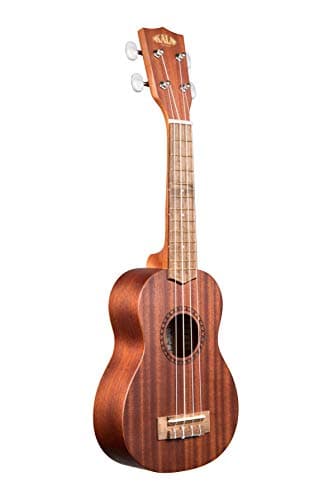
The Kala KA-15S#ad is the fastest route from nothing to playing songs. Four nylon strings under low tension, chord shapes that often need only one or two fingers, and a chord chart is all the notation you will ever need. Mahogany body, NuBone nut and saddle, geared tuners — the things that separate a real instrument from a toy.
Its limits: a soprano has tight fret spacing for larger hands, and the ukulele’s ceiling is lower than a guitar’s if you eventually want to play lead lines and complex arrangements.
The Squier Sonic Stratocaster#ad is the pick if the goal is to play the music you already listen to. Guitar has the deepest library of tablature and chord charts of any instrument, free and paid, for essentially every popular song recorded.
The honest costs are the usual guitar ones: steel strings hurt for the first few weeks, chord changes take longer than beginners expect, and you need an amp before an electric is much use — see do you need an amp for electric guitar.
The Hohner Special 20 (Key of C)#ad is the instrument for playing purely by ear. A diatonic harmonica in the key of C is laid out so that the notes available are mostly the ones that work, which makes improvising forgiving in a way no other instrument here is. It is pocket-sized and needs no accessories.
The trade is that one harmonica plays in one key, so playing with other people eventually means owning several — see how to choose a harmonica key.
If you want to learn to read later
It is far easier once your hands already work. A player who can already make music has a reason to decode the dots, and the dots describe something they can already do.
Guitar is the friendliest place to do this, because the same instrument supports both systems and most method books teach one or the other deliberately — that choice is the spine of best guitar books for beginners. If you are still choosing an instrument at all, start at what instrument should I learn.
Quick picks
The fastest route to playing songs
Four strings, chord boxes, and a complete beginner repertoire available without a single note of standard notation.
| # | Product | Best for | Score | Price |
|---|---|---|---|---|
| 1 | Kala KA-15SMahogany throughout, a GraphTech NuBone nut and saddle, and Aquila strings fitted from the factory. | The honest floor, sopranoThe honest floor | 8.7 | $69.00 · View on Amazon #ad How we’re funded |
If you want to play the music you listen to
Guitar has the largest alternative notation system in music: tablature, chord charts and a century of songs written down that way.
| # | Product | Best for | Score | Price |
|---|---|---|---|---|
| 1 | No image Squier Sonic StratocasterThe cheapest electric that still has full-scale geometry, sealed tuners and a real 9. | The honest floor, electricThe honest floor | 8.2 | Check price on Amazon → #ad How we’re funded |
If you want to play entirely by ear
A diatonic harmonica in the right key has no wrong notes in that key, which makes it the most forgiving instrument to improvise on.
| # | Product | Best for | Score | Price |
|---|---|---|---|---|
| 1 | No image Hohner Special 20 (Key of C)Brass reed plates in a plastic comb, made in Germany, and a long-standing reputation for bending easily straight out of the box. | The first harmonica to buyEnough | 9.1 | Check price on Amazon → #ad How we’re funded |
The picks in full
Kala KA-15S
Kala Brand MusicBest for: The honest floor, soprano
Mahogany throughout, a GraphTech NuBone nut and saddle, and Aquila strings fitted from the factory. The nut material is the spec that separates this from the pile of look-alikes.
Published specifications
- Size:
- Soprano
- Top / back / sides:
- Mahogany
- Neck / fretboard:
- Mahogany neck, rosewood fretboard
- Nut and saddle:
- GraphTech NuBone
- Scale length:
- 13.625"
- Frets:
- 12
- Nut width:
- 1.375"
- Overall length:
- 21.062"
- Strings:
- Aquila Super Nylgut
What it gets right
- NuBone nut and saddle rather than molded plastic — this is what decides whether the instrument plays in tune up the neck
- Aquila strings fitted at the factory, so the first thing you would otherwise replace is already done
- 21 inches overall and light enough for a small child to hold unsupported
Where it gives ground
- 12 frets only, and the body joint stops you well short of the high notes
- Soprano scale means less room between frets — adult fingers with wide fingertips will find it cramped
What it is not good at
Adult hands, sometimes. A 13.625 inch scale is genuinely tight. If the player is a grown-up with large hands, read our soprano-versus-concert comparison before buying this size.
How the specs score against a beginner’s needs
Scores are our reading of the published specifications above against what a beginner physically needs. They are not test results — we have not played this instrument.
Specifications from Kala Brand Music — KA-15S specifications.
Squier Sonic Stratocaster
Squier by FenderBest for: The honest floor, electric
The cheapest electric that still has full-scale geometry, sealed tuners and a real 9.5 inch fingerboard radius. Nothing about it will make a beginner's first year harder.
Published specifications
- Scale length:
- 25.5" (647.7 mm) — full size
- Body / neck:
- Poplar body, maple neck, "C" profile
- Fingerboard:
- Maple or Indian laurel, 9.5" (241 mm) radius
- Frets:
- 21, narrow tall
- Nut width:
- 1.650" (42 mm), synthetic bone
- Pickups:
- Three ceramic single-coils (SSS)
- Bridge:
- 6-saddle vintage-style synchronized tremolo
What it gets right
- Full 25.5 inch scale, so nothing learned here has to be relearned later
- Synthetic bone nut rather than a soft plastic one — the part that decides whether a cheap guitar stays in tune
- Sealed-gear tuners, which is the single most important spec on a first electric
Where it gives ground
- Poplar body and ceramic pickups are exactly what you would expect at this tier
- The tremolo bridge will pull the guitar out of tune if a beginner uses it, and beginners always use it
What it is not good at
Staying in tune if you use the whammy bar. If that matters, buy the hardtail (HT) version of the same guitar instead — it is the identical instrument with the tremolo deleted.
How the specs score against a beginner’s needs
Scores are our reading of the published specifications above against what a beginner physically needs. They are not test results — we have not played this instrument.
Specifications from Squier Wiki — Sonic Stratocaster specifications.
Hohner Special 20 (Key of C)
HohnerBest for: The first harmonica to buy
Brass reed plates in a plastic comb, made in Germany, and a long-standing reputation for bending easily straight out of the box. Bending is the technique that makes a harmonica sound like a harmonica, and this is the cheapest harp that makes it achievable.
Published specifications
- Type:
- 10-hole diatonic, 20 reeds
- Key:
- C — the standard beginner key
- Reed plates:
- Brass, 0.9 mm
- Comb:
- Plastic
- Length:
- Approximately 10.0 cm
- Tuning:
- Compromise tuning — favors chords
- Made in:
- Germany
What it gets right
- Widely documented as very easy to bend out of the box, both draw and blow bends — the single most important property for a learner
- Plastic comb does not swell with moisture the way a wooden comb does
- Compromise tuning makes chords sound sweeter, which is most of what a beginner plays
- Airtight enough that a beginner is not fighting leaks while learning breath control
Where it gives ground
- Costs several times what a toy-tier harmonica does, which stings before you understand why it matters
- Compromise tuning is very slightly less precise on single-note runs than equal temperament
- Reed plates are not designed to be swapped by the player the way Lee Oskar's are
- Key of C only — playing along with other music eventually means buying more keys
What it is not good at
Playing in any key but C. A diatonic harmonica plays one key, and a player who wants to jam with other people ends up owning several. That is normal for the instrument and it is a real ongoing cost nobody mentions upfront.
How the specs score against a beginner’s needs
Scores are our reading of the published specifications above against what a beginner physically needs. They are not test results — we have not played this instrument.
Specifications from Harmonica.com — Hohner Special 20 (Key of C) published review and specifications, The Harmonica Company — Hohner Special 20 vs Lee Oskar Major Diatonic comparison.
Questions people actually ask
Can you really learn an instrument without reading music?
On fretted instruments, absolutely, and millions of people have. Guitar, bass and ukulele have complete alternative systems in tab and chord boxes. On piano and orchestral instruments it is much harder, because no equivalent system exists.
Which instrument is hardest to learn without reading?
Piano and the orchestral strings, woodwind and brass. Their repertoire, their teaching tradition and their ensemble parts are all written in standard notation, and there is no widely used substitute.
What is tablature?
A notation system that shows which string and fret to play rather than which pitch. It tells you nothing about rhythm on its own, which is its main weakness, but it gets a beginner playing real music immediately.
Should I learn to read eventually?
It opens doors — ensembles, teachers, sheet music, transposition — and it is far easier to learn once you can already play. Starting without it is not a decision to never read; it is a decision about what comes first.
Do lessons require reading music?
Many teachers will happily teach chord-based playing by ear, especially on guitar and ukulele. Ask before booking, because a classically trained teacher may assume notation from lesson one.
Still deciding?
Every recommendation on this site is built the same way, and the method is published in full — including what we do not do and what would get a pick dropped.
Read next
- The easiest instruments to learn
Ranked by time to a first real song, with the ceiling each one trades away, and a pick for the top three.
- What instrument should I learn?
Four practical constraints instead of a personality quiz, each one routing straight to the instrument that fits.
- Best guitar books for beginners
The one decision that matters (chords first or reading first), five things to check on any method book, and seven picks with their weaknesses stated.
- Lessons or teaching yourself?
Which instruments are self-teachable and which are not, what a teacher actually provides, and the hybrid most adults should use.
- Best beginner ukuleles: what's worth it from $60 to $120
Segmented by hand size rather than price, with the nut-material spec that separates a real ukulele from a decoration.