Band & Orchestra
How to clean a band instrument
Woodwind and brass both fail slowly and silently when they are not maintained, and the student always blames themselves rather than the instrument.
By Sawyer V. · Published · Last updated

Band instruments have a specific failure pattern: they do not break, they degrade. Pads harden, corks compress, valves get sticky, and the instrument becomes gradually harder to play over months.
The student never reports this, because there is no moment when anything goes wrong. They simply find the low notes getting harder and conclude they are getting worse. That misattribution is the reason this page exists.
Woodwind: swab the bore dry after every session, and take the reed off the mouthpiece. Brass: empty the water keys every session and oil the valves weekly. Both: wipe fingerprints off, and never put the instrument away wet.
Clarinet and saxophone: the daily routine
Take the reed off the mouthpiece. Every time. A reed left clamped in a ligature stays wet, warps and grows mold. Dry it and put it in a reed guard — more on this in reeds explained.
Swab the bore. A pull-through swab, dropped through and pulled from the other end, once or twice. This is the single most important maintenance action on a woodwind, and the one most commonly skipped by students who are in a hurry to pack up.
Moisture left inside sits against the pads. Leather and felt pads absorb it, swell, harden and eventually stop sealing. A Yamaha YCL-255#ad that is swabbed after every session keeps its pads for years; one that is not can need attention within a couple of seasons.
Wipe the outside. Fingerprints are acidic. Thirty seconds with a soft cloth protects the finish, particularly on a lacquered Yamaha YAS-280#ad.
Disassemble properly. Twist gently while pulling; never force a joint. On a saxophone, remove the neck and swab it separately — it collects more moisture than anything else on the instrument.
Clarinet and saxophone: the periodic jobs
Wash the mouthpiece weekly. Lukewarm water, mild soap, a small brush. Never hot water — it can distort hard rubber mouthpieces permanently.
Grease the cork joints occasionally. Dry corks make assembly a fight and the fight is how tenons get cracked. Cork grease is inexpensive and a small amount goes a long way.
Check the pads. Look for pads that are torn, hardened, or no longer seating flat. A useful home test: cover a hole, suck gently on the instrument, and listen for the seal breaking. A leak-free instrument holds vacuum briefly.
Flute: the daily routine
A Yamaha YFL-222#ad is the simplest instrument on this page to look after.
Swab each of the three sections with the cleaning rod and a soft cloth after every session. Thread the cloth through the eye of the rod so the metal never contacts the inside of the tube.
Wipe the outside to remove fingerprints, and be gentle around the key mechanism, which is more delicate than it looks.
Never oil the keys yourself. Flute key mechanisms are precisely fitted and oiling belongs to a technician. Over-oiling attracts dust into exactly the wrong places.
The flute’s specific vulnerability is the head joint cork, which sets the tuning of the whole instrument. If a flute goes progressively out of tune with itself across registers, a slipped cork is a likely cause and it is a technician job.
Trumpet: the daily and weekly routine
Empty the water keys after every session. The condensation collecting inside a Yamaha YTR-2330#ad is mostly water and it will sit there if you let it. Press the key and blow through.
Oil the valves weekly, or whenever they feel slow. Unscrew the top cap, lift the valve part-way out, apply a few drops of valve oil to the piston, and lower it back in aligned correctly. A valve installed rotated will not let air through, which alarms students who think the instrument has broken.
Grease the tuning slides every few weeks. Slides that are never greased seize, and a seized slide is a repair rather than an inconvenience.
Wipe the outside after playing. Skin acidity varies between people and some players wear through lacquer surprisingly quickly.
The brass bath
Every few months, a trumpet benefits from a proper wash.
Remove the valves and all the slides, and keep the valves out of the water. Fill a bathtub with lukewarm water and a small amount of mild dish soap, and let the body soak briefly. Run a flexible brass snake through the tubing. Rinse thoroughly, dry completely, then re-grease the slides and re-oil the valves before reassembling.
Never use hot water. It can soften lacquer and, in the worst case, affect solder joints. Lukewarm is the instruction and it is not a suggestion.
What belongs to a technician
Pad replacement. The main woodwind service job and the one that decides whether an instrument seals.
Dents. On brass, a dent in the wrong place changes how the instrument responds. Removal needs specialist tools.
Seized valves or slides. Forcing them causes damage that costs considerably more than the visit would have.
Key regulation. Woodwind keys work in linked groups, and adjusting one without understanding the linkage makes things worse.
An annual service is a sensible budget line on an owned instrument. On a rental it is typically included, which is one of the strongest arguments for renting in year one — see renting versus buying, and the money side in what a band instrument should cost.
The things that cause the most damage
Putting it away wet. The root cause of most woodwind pad failure.
Eating or drinking anything sugary before playing. Sugar residue goes into the instrument and stays there.
Leaving it in a car. Heat and cold both do damage, and a case on a back seat in summer is a genuine risk.
Assembling by force. Bent keys and cracked tenons almost always come from someone pushing rather than twisting gently.
What we would buy
Yamaha YCL-255
YamahaBest for: Step-up clarinet, year two onward
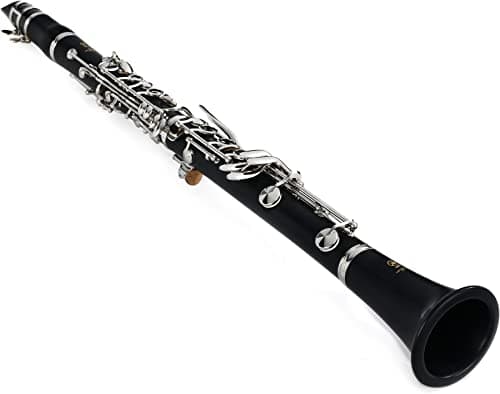
ABS resin body with a 65 mm barrel taken from Yamaha's high-end clarinets, Valentino pads and a 4C mouthpiece. The default student clarinet in most band rooms.
Published specifications
- Body:
- ABS resin, matte wood-like finish
- System:
- Boehm, 17 keys and 6 rings
- Keywork:
- Power-forged, nickel-plated nickel silver
- Barrel:
- 65 mm — the length used on Yamaha's high-end clarinets
- Pads:
- Valentino
- Bell:
- Solid ABS resin with resonance chamber
- Thumb rest:
- Adjustable, with strap ring
- Mouthpiece:
- Yamaha 4C
What it gets right
- ABS resin does not crack in a dry house, which is the failure that ends cheap wooden clarinets
- The 65 mm barrel is genuinely the same specification as Yamaha's expensive clarinets, and it is a large part of why this one plays in tune
- An adjustable thumb rest with a strap ring, which matters because a clarinet's weight lands on one thumb
Where it gives ground
- Resin will never have the warmth of grenadilla wood, and a student will notice when they play a wooden one
- The included 4C mouthpiece is competent and is the first thing many teachers upgrade
What it is not good at
Being a year-one purchase. Rent through the school first; directors reassign students in the first months and this is real money to have committed.
How the specs score against a beginner’s needs
Scores are our reading of the published specifications above against what a beginner physically needs. They are not test results — we have not played this instrument.
Specifications from Yamaha USA — YCL-255 overview.
Yamaha YFL-222
YamahaBest for: Step-up flute, year two onward
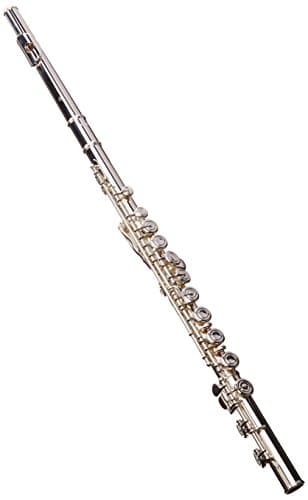
Silver-plated nickel silver throughout with pointed key arms and stainless steel springs. The flute most school programs treat as the standard once a student commits.
Published specifications
- Head / body / footjoint:
- Silver-plated nickel silver
- Keys:
- Hand-assembled silver-plated, offset G, closed hole (plateau)
- Footjoint:
- C foot
- Headjoint:
- CY, double flare taper with undercut embouchure hole
- Key arms:
- Pointed, for even pad-cup pressure
- Springs:
- Stainless steel
What it gets right
- Pointed key arms spread pressure evenly across the pad cup, which means a better seal and fewer leaks as the instrument ages
- Stainless steel springs resist the corrosion that makes cheap flute keys sluggish
- Closed-hole plateau keys give a beginner a solid platform for fingering before open holes are ever a question
Where it gives ground
- Offset G and closed holes are the right beginner choices and are also what a player eventually moves past
- Silver plate wears through at the contact points over years of daily use
What it is not good at
Being a year-one purchase. Rent through the school first — reassignment is common in the first months and this is not a cheap instrument to be stuck with.
How the specs score against a beginner’s needs
Scores are our reading of the published specifications above against what a beginner physically needs. They are not test results — we have not played this instrument.
Specifications from Yamaha YFL-222 published specifications (West Music).
Yamaha YTR-2330
YamahaBest for: Step-up trumpet, year two onward
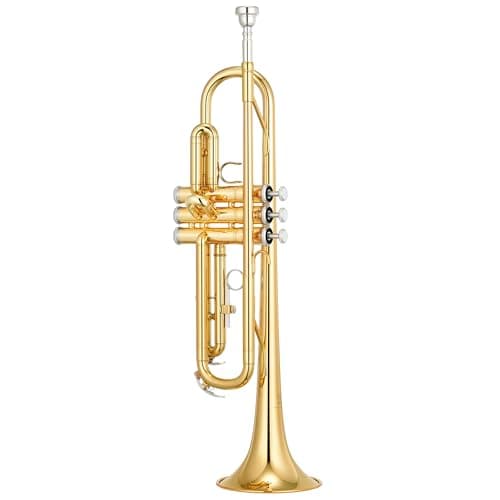
A .459 inch bore with monel pistons, a gold brass leadpipe and an adjustable third valve trigger. Yamaha's top-selling student trumpet and the one directors name first.
Published specifications
- Key:
- Bb
- Bore:
- .459"
- Bell:
- Yellow brass, two-piece, 4-7/8" diameter
- Leadpipe:
- Gold brass
- Valves:
- Monel pistons
- Third valve:
- Adjustable trigger
- Finish:
- Lacquer or silver plate
- Included:
- Mouthpiece
What it gets right
- Monel pistons are corrosion-resistant and stay smooth, which is the difference between a trumpet that stays fast and one that gums up
- The adjustable third valve trigger is how a player corrects the intonation problem every trumpet has on low D and C#
- A gold brass leadpipe warms the response slightly against plain yellow brass
Where it gives ground
- Student trumpets are all broadly similar on paper, so the case for this one is build quality rather than specification
- Lacquer wears at the contact points and looks tired long before it plays badly
What it is not good at
Being a year-one purchase. Brass reassignment is the most common kind in a band room, because embouchure suitability is unknowable in advance. Rent first.
How the specs score against a beginner’s needs
Scores are our reading of the published specifications above against what a beginner physically needs. They are not test results — we have not played this instrument.
Specifications from Yamaha Europe — YTR-2330 specifications.
Yamaha YAS-280
YamahaBest for: Step-up alto sax, year two onward
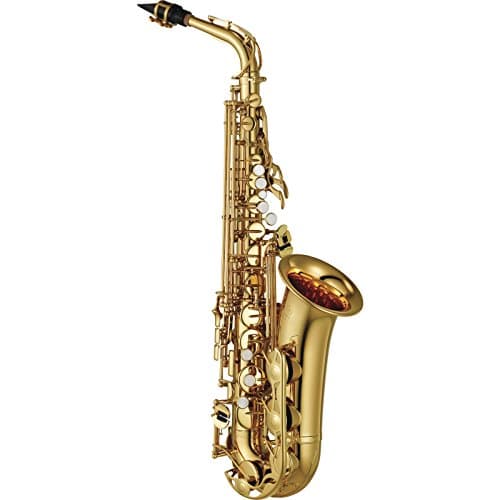
Lightweight, ergonomically shaped for a young player, with an adjustable thumb hook, a high F# key and a redesigned low B-to-C# connection. Widely treated as the standard student alto.
Published specifications
- Key:
- Eb alto
- Material:
- Brass, gold lacquer finish
- Bell:
- Two-piece
- Key touches:
- White polyester
- Mechanism:
- Improved B-C# connector, high F# key, adjustable thumb hook
- Neck receiver:
- Redesigned for stability
- Included:
- Yamaha 4C mouthpiece, case with rucksack straps, sax strap, cork grease
What it gets right
- Genuinely designed around a young player — light, and shaped so the hands fall naturally rather than reaching
- The adjustable thumb hook matters more than it sounds: a saxophone's weight lands on the right thumb, and a fixed hook fits one hand size
- High F# key included, which the method book will want before the second year is out
Where it gives ground
- Even a lightweight alto is heavy for a small eleven-year-old over a full rehearsal
- The 4C mouthpiece is a solid start and a very common first upgrade
What it is not good at
Being a year-one purchase. Saxophone is the most requested section and the most reassigned; rent until the placement is settled.
How the specs score against a beginner’s needs
Scores are our reading of the published specifications above against what a beginner physically needs. They are not test results — we have not played this instrument.
Specifications from Yamaha YAS-280 published specifications.
Questions people actually ask
How often should you clean a band instrument?
Swab a woodwind after every single session, and empty the water keys on a brass instrument every session. A deeper clean — mouthpiece, brass bath, valve servicing — every few weeks.
What happens if you never swab a clarinet?
Moisture sits against the pads, which swell, harden and stop sealing. A leaking instrument makes the low notes disproportionately hard, and the student concludes they are not improving rather than that the instrument is failing.
Can you wash a brass instrument?
Yes — a lukewarm bath with mild soap every few months is standard for trumpets and trombones, with the valves removed and kept dry. Never hot water, which can loosen lacquer and solder joints.
Should a student clean their own instrument?
The daily routine, yes, from the first week — it is two minutes and it prevents the expensive failures. Pad replacement, dent work and valve alignment belong to a technician.
Sources
Still deciding?
Every recommendation on this site is built the same way, and the method is published in full — including what we do not do and what would get a pick dropped.
Read next
- Choosing a school band instrument
Which instrument suits which child, what school rental covers, and the honest case for not buying in year one.
- Reeds, and why they decide how hard playing feels
What reed strength means, why beginners start soft, how to rotate a set, and the signs a reed is finished.
- Renting vs buying a school band instrument
Why year one is a rental year, what programs cover, the maintenance nobody warns you about, and when buying starts to win.
- What a school band instrument should cost
The four Starter Path bands applied to band instruments, the specific way ultra-cheap ones fail, and the real cost of year one.
- Should a first instrument be used or new?
Where secondhand is the best value on the site and where it hides expensive faults, plus a check-before-you-pay list per family.