Band & Orchestra
Trumpet accessories you actually need
A trumpet has one consumable and without it the instrument does not play badly, it stops working. Start there, not with a mute.
By Sawyer V. · Published · Last updated

Buy valve oil. Then stop and see what the player actually complains about. A trumpet is mechanically simple and has exactly one consumable: oil for the pistons#ad. Without it the valves slow down and then stick, and an instrument whose valves stick is not an instrument that sounds worse — it is one that cannot be played at all. It is also the cheapest thing on this site.
Everything after that is ordered by how soon it matters rather than by how much it costs. Every pick states its Starter Path band, and we have not played any of them — the method is on how we pick. Published contents and grades come from Yamaha’s own pages, cited at the bottom.
1. Valve oil — mandatory. Yamaha publishes four viscosities and calls Regular the all-round weight for any piston valves; that is the one for a student trumpet. Oil roughly weekly, two drops per casing. Note it is not the same as slide grease, and not the right product for a rotary-valve instrument such as a French horn. 2. A care kit — prevents a repair bill. Yamaha’s TR-MKIT publishes its contents: valve oil, slide grease, a flexible cleaning snake, a valve casing brush, a mouthpiece brush, a polishing cloth and a care manual. 3. A practice mute — only if the building needs it, and then it is what makes practice possible at all. 4. A music stand, before a trumpet stand. Not yet: a new mouthpiece — first year, keep the one it came with.
1. Valve oil, which is not optional
Three pistons move inside three casings at a tolerance tight enough to seal air. That only works lubricated. Dry, they slow; drier, they stick; left long enough with moisture and no oil, they corrode, and that is a technician’s bill rather than a bottle.
Yamaha Regular Synthetic Valve Oil#ad is the pick because Yamaha actually publishes which of its grades is for what: four viscosities — Super Light, Light, Regular and Vintage — with Regular described as the all-round weight for any piston valves. Almost nothing else in this category tells you that, which means buying anything else involves guessing. Synthetic, so it does not gum. A 60 ml bottle covers a school year. Buy this if there is a trumpet, cornet, baritone or tuba in the house. Skip it if the instrument is a French horn — rotary valves need Yamaha’s separate rotor spindle oil instead.
Two things people get wrong. More oil is not better; two drops down each casing, worked in by moving the piston, is the whole procedure. And valve oil is not tuning slide grease — the slides are supposed to hold position, so thin oil just runs out of them.
2. A care kit, which is the one that saves money
The inside of a trumpet collects condensation and whatever was in the player’s mouth, and a student instrument that is never cleaned internally develops exactly the problems that look like faults: sluggish valves, a stale smell, and slides that will not budge.
Yamaha’s Trumpet/Cornet Maintenance Kit#ad is the pick for a reason that has nothing to do with brand loyalty: Yamaha publishes the exact contents, which in this category is unusual enough to be the deciding factor. Valve oil, slide grease, a flexible cleaning snake, a valve casing brush, a mouthpiece brush, a polishing cloth and a printed care manual. Bought individually those cost more than the kit, and the mouthpiece brush is the item nobody thinks to buy and the one with the most obvious hygiene argument. Buy this if the trumpet is owned rather than rented and nobody in the house knows the cleaning routine. Skip it if the rental shop supplied a care kit with the instrument, which many do.
One limit worth stating: nothing in a care kit fixes a genuinely stuck valve or a dent. Those are technician jobs, and forcing a brush through an instrument that is already jammed makes the bill larger. Our page on cleaning a band instrument covers the routine across the family.
3. A practice mute, if the building requires one
This is the only item here that solves a social problem, and in a flat or a shared house it is the difference between a student who practices and one who does not.
The Pro Tec ML203 Liberty practice mute#ad is the pick we already carry for brass. The honest caveat applies to every practice mute: plugging the bell raises the back-pressure the player feels, so the instrument does not respond the way it does open, and a beginner who only ever practices muted is learning against a slightly different instrument. Buy this if noise is the reason practice is not happening. Skip it if there is anywhere in the building the player can make noise for twenty minutes — open is better practice. Our practice mutes page compares the options properly.
4. A music stand, before a trumpet stand
Unglamorous and genuinely useful. A trumpet player needs both hands on the instrument, which means the music has to be at eye level on its own: a student reading from a book flat on a bed is building a neck and posture habit that is harder to remove than to avoid. Several school supply lists require one outright.
The K&M 10065#ad is the stand we carry for exactly this, and our music stands page covers the cheap-folding-versus-solid question across instruments. Buy this if there is nowhere at eye level to put music. Skip it if the school provides stands and the student only plays there — though they will still be practicing at home.
What to skip, at least this year
A different mouthpiece. It changes how the instrument feels to play, which makes it a decision for the player with a teacher rather than a gift. The models we would otherwise name were at a couple of units of stock or unavailable when we last checked, so our mouthpieces page is the place for that decision rather than a buy row here.
A trumpet stand. The argument for is real — an instrument sitting out gets played more than one in a closed case. The argument against is a dent, and dents on brass are expensive. In a house with small children or a dog, the case is the right answer.
A tuner, as a separate object. Useful, and almost everybody already owns one in their pocket. Buy a clip-on or a dedicated unit when the player is in an ensemble and tuning to others, not in month one.
Gig bags and upgrade cases. The case a student trumpet ships in is adequate, and a rented instrument’s case belongs to the shop.
“Warm-up” gadgets and buzzing aids. There are rings and discs sold to help a beginner find an embouchure. We have no published evidence any of them does what it claims, and the alternative — a few lessons — is a known quantity. Our page on whether trumpet is hard to learn is direct about why the first month is the part where a person beats an object.
What we would buy
Yamaha Regular Synthetic Valve Oil, 60 ml
YamahaBest for: The one trumpet consumable that is not optional
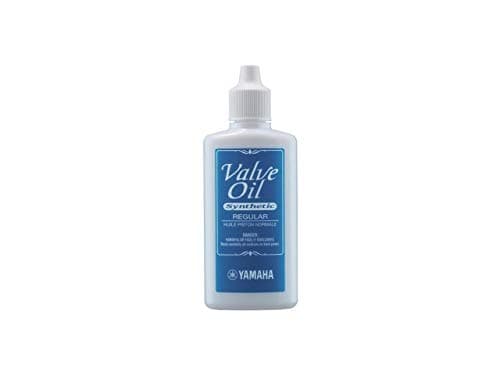
Yamaha publishes four viscosities of valve oil and calls Regular the all-round weight for any piston valve. A trumpet with dry valves does not play badly, it stops working, which makes this the cheapest object on the site that is genuinely mandatory.
Published specifications
- Grade:
- Regular — Yamaha describes it as the all-round weight for any piston valves
- Line:
- Yamaha publishes four viscosities: Super Light, Light, Regular and Vintage
- Compatibility:
- Piston valve instruments — trumpet, cornet, baritone, tuba
- Type:
- Synthetic
- Volume:
- 60 ml
- Not for:
- Rotary valves — Yamaha sells a separate rotor spindle oil for those
What it gets right
- Correct grade for a student trumpet without having to understand viscosity
- Synthetic, so it does not gum the way some older mineral oils do
- A 60 ml bottle lasts a school year of regular oiling
- Yamaha publishes which grade is for what, which almost nobody in this category does
Where it gives ground
- Does nothing for slides — those need grease, which is a separate product
- Wrong product for a rotary-valve instrument such as a French horn
- Easy to over-apply; more oil is not better
- Unexciting to receive as a gift on its own
What it is not good at
Rotary valves and tuning slides. A French horn needs Yamaha's rotor spindle oil instead, and a trumpet's tuning slides need grease — valve oil on a tuning slide runs straight out.
How the specs score against a beginner’s needs
Scores are our reading of the published specifications above against what a beginner physically needs. They are not test results — we have not played this instrument.
Yamaha Trumpet/Cornet Maintenance Kit (YAC TR-MKIT)
YamahaBest for: Everything a first-year trumpet actually needs, in one box
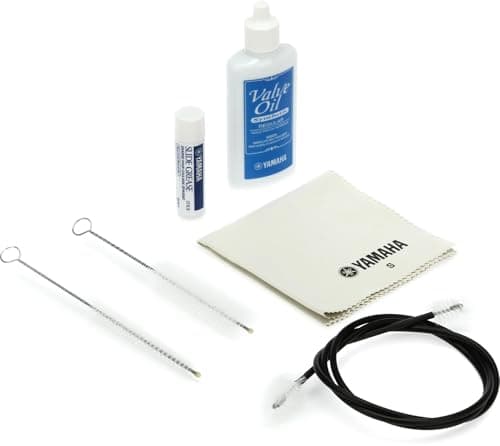
Yamaha publishes the contents: valve oil, slide grease, a flexible cleaning snake, a valve casing brush, a mouthpiece brush, a polishing cloth and a care manual. Bought separately those cost more than the kit, and the brush a beginner never thinks to buy is the mouthpiece one.
Published specifications
- Model:
- YAC TR-MKIT
- Lubricants:
- Valve oil (Regular) and slide grease
- Brushes:
- Flexible cleaner (snake), valve casing brush, mouthpiece brush
- Cloth:
- Polishing cloth
- Documentation:
- Care and maintenance manual included
- For:
- Trumpet and cornet
What it gets right
- Yamaha publishes the exact contents, so you know what you are buying — rare in this category
- Cheaper than assembling the same six items individually
- Includes the mouthpiece brush, which is the item beginners skip and the one with the clearest hygiene argument
- The printed care manual turns it into instructions rather than a bag of objects
Where it gives ground
- Dearer than a bottle of valve oil, which is the only strictly mandatory part
- A rented instrument may come with a shop care kit already
- Nothing in it addresses dents or sticking valves, which are repair jobs
- Overkill for a player who already oils and greases regularly
What it is not good at
Fixing a genuinely stuck valve or a dented slide. Those are technician jobs, and running a brush through a trumpet that is already jammed can make the bill worse rather than smaller.
How the specs score against a beginner’s needs
Scores are our reading of the published specifications above against what a beginner physically needs. They are not test results — we have not played this instrument.
Pro Tec ML203 Liberty Trumpet Practice Mute
Pro TecBest for: The honest floor, trumpet
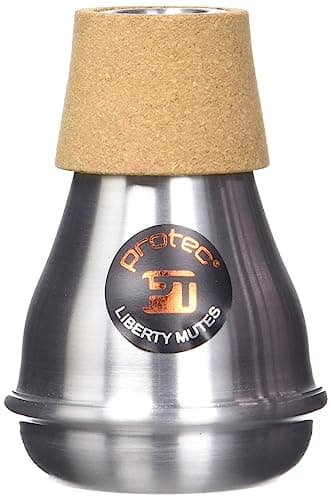
An all-aluminum compact practice mute with cork, small enough to store inside the bell. Thomann publishes the two things that matter about it - very gentle response and very good intonation - and it is the cheapest named-brand mute that claims both.
Published specifications
- Instrument:
- Bb trumpet or cornet
- Material:
- Aluminum body with cork
- Pitch:
- Non-transposing: the published claim is that it does not alter pitch
- Response:
- Thomann publishes 'very gentle response' and 'very good intonation'
- Storage:
- Compact enough to be kept inside the trumpet bell
What it gets right
- The least expensive practice mute here from a maker that publishes a specification at all
- Fits inside the bell, which means it travels in the existing case with no extra bag
- Aluminum rather than molded plastic, so it does not warp with heat and breath moisture
- Free-blowing by design, which matters because a high-resistance mute teaches a student to push
Where it gives ground
- No manufacturer-published decibel figure, so 'how quiet' is unquantified
- Cork needs occasional replacement and a loose mute rattles in the bell
- Less silencing than the sealed electronic systems, which is the trade for the free blow
- Pro Tec's own site was unreachable at time of writing, so the specification cited is a dealer's
What it is not good at
Making a trumpet silent. A practice mute is quiet, not inaudible - a neighbor through a thin wall will still know a trumpet is being played, just not what note.
How the specs score against a beginner’s needs
Scores are our reading of the published specifications above against what a beginner physically needs. They are not test results — we have not played this instrument.
Specifications from Thomann — Pro Tec Liberty trumpet practice mute: completely made of aluminum, very gentle response, very good intonation.
K&M 10065 music stand
Konig & MeyerBest for: Carrying it everywhere
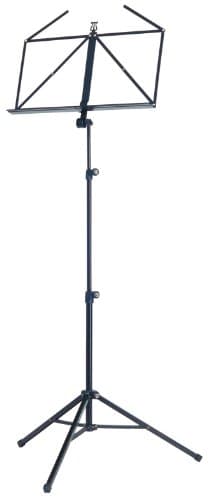
A folding desk deep enough for real books, on cross-braced legs, that packs to 490 mm and 1.55 kg. K&M publishes the folded length and the weight, which is how you know it will fit.
Published specifications
- Height:
- 585 to 1,220 mm (23 to 48 in)
- Desk:
- 485 x 240 x 42 mm, traditionally foldable
- Adjustment:
- Non-scratching locking screws
- Base:
- U-profile legs with cross braces, 690 mm base diameter
- Material:
- Steel
- Weight / folded:
- 1.55 kg; folds to 490 mm
- Bag:
- Not included — case 10012 is a separate accessory
What it gets right
- Folds to 490 mm including the desk, so unlike a symphony stand it genuinely packs down
- A 42 mm deep desk lip holds thick books rather than only loose sheets
- Cross-braced U-profile legs on a 690 mm base give a folding stand a wide footprint
- K&M publishes weight, folded length and desk depth, so fit can be verified before buying
Where it gives ground
- At 1.55 kg it is heavier than K&M's own lighter 100/1 model
- The desk is narrower than the Manhasset and folds at a seam rather than being one solid plate
- No bag in the box; the carrying case is an extra purchase
What it is not good at
Being the cheapest way to prop up a beginner method book — K&M's own 100/1 is lighter and simpler for that.
How the specs score against a beginner’s needs
Scores are our reading of the published specifications above against what a beginner physically needs. They are not test results — we have not played this instrument.
Specifications from Konig & Meyer — 10065 music stand, Konig & Meyer — 100/1 music stand (lighter alternative).
Questions people actually ask
What does a beginner trumpet player actually need to buy?
Valve oil#ad, and then nothing else is strictly required. A trumpet with dry valves does not sound bad, it seizes: the pistons stop moving and the instrument becomes unplayable. Everything else on this page is a real improvement to a real problem, in descending order of how soon you will care.
How often should valves be oiled?
For a student playing most days, roughly weekly, and immediately if a valve feels slow or sticky. More oil is not better — a couple of drops down each valve casing, worked in by moving the piston, is the whole job. A 60 ml bottle lasts a school year comfortably.
Is valve oil the same as slide grease?
No, and using one for the other is a common and annoying mistake. Valve oil is thin and goes on the pistons. Slide grease is thick and goes on the tuning slides, which need to hold position rather than move freely. Valve oil on a tuning slide simply runs out; grease on a piston makes it sluggish. The maintenance kit#ad contains both, which is a decent argument for buying it rather than two bottles.
Does a trumpet need a practice mute?
Only if the building makes it necessary, and then it is the difference between practicing and not. A trumpet is loud in a way a guitar is not, and a mute is the only accessory on this page that solves a social problem rather than a mechanical one. Our practice mutes page covers the options and what each does to the back-pressure.
Should I buy a different mouthpiece?
Not in the first year, and not as a surprise. The mouthpiece that came with a student trumpet is usually a 7C or equivalent and is a reasonable place to start; changing it changes how the instrument feels to play, which is a decision for the player with a teacher. Our beginner mouthpieces page explains the sizing — and note that the specific models we would otherwise name here were down to a couple of units or unavailable when we last checked stock, which is another reason to treat this as a considered purchase rather than an impulse one.
What about a stand for the trumpet?
Nice, not necessary. The honest argument for one is the same as for a guitar stand: an instrument left in a closed case gets played less than one sitting out. The honest argument against is that a trumpet on a stand in a house with a dog or a toddler is a dented trumpet. A music stand is the better buy first, because a student hunched over music on a bed is building a posture problem.
Sources
- Yamaha USA — Valve Oil: four published viscosities (Super Light, Light, Regular, Vintage), with Regular described as the all-round weight for any piston valves; a separate rotor spindle oil is listed for rotary valves
- Yamaha USA — Trumpet Maintenance Kit YAC TR-MKIT published contents: valve oil, slide grease, flexible cleaning snake, valve casing brush, mouthpiece brush, polishing cloth and a care and maintenance manual
Still deciding?
Every recommendation on this site is built the same way, and the method is published in full — including what we do not do and what would get a pick dropped.
Read next
- Best beginner trumpets
Bore size, monel versus stainless valves, the third valve trigger, and two picks for when buying is right.
- Best trumpet books for beginners
Buy the method the band class uses, then add the one that gives a student something to practice alone. Three books, their page counts, and which one is not a first book.
- Best trumpet mouthpieces for beginners
Bach 7C against 5C against 3C, with the published cup diameters that separate them, plus where the Yamaha equivalent fits. Why the mouthpiece upgrade that costs nothing extra is the one to resist.
- Best practice mutes for brass instruments
Back-pressure is the specification that matters, not how quiet it gets. Why a free-blowing mute beats a silent one for a student, and three mutes for trumpet and trombone.
- How to clean a band instrument
The two-minute after-playing routine per family, what happens when it is skipped, and the jobs that belong to a technician.
- Guitar accessories you actually need
The four accessories that change how a beginner's guitar plays, the ones that can wait, and the ones that are pure margin.