Band & Orchestra
Best beginner saxophones
The most-requested section in most band rooms and the heaviest instrument a small eleven-year-old will be handed. Weight and ergonomics decide more than tone here.
By Sawyer V. · Published · Last updated
The standing rule on this hub applies here more than anywhere: rent through the school in year one. Saxophone is the most-requested section in most band rooms, which means it fills fastest and reassignment is most likely, and it is the most expensive of the common beginner band instruments. Full reasoning in renting vs buying.
This page is for the year-two step-up and for schools without a program. Both picks state their Starter Path band, and we have not played them — the method is on how we pick.
Buy an alto, not a tenor. Alto is the beginner size: smaller, lighter, takes less air, and it is what school band programs are written around. Look for an adjustable thumb hook and a high F# key, both of which become relevant inside the first two years.
Why alto
Saxophones come in a family, and only one of them is a beginner instrument.
Alto is pitched in E flat, is the smaller of the two common sizes, and takes noticeably less air. Nearly all school band parts for a beginning saxophonist are written for it.
Tenor is pitched in B flat, is larger and heavier, and demands more breath support than a beginner has. It is a lovely instrument and a poor first one.
Soprano and baritone are specialist instruments and not beginner territory at all.
Weight is the real design problem
Here is what makes saxophone different from every other instrument on this hub: the whole instrument hangs from the player’s neck and is steadied by one thumb.
For an eleven-year-old, an alto is genuinely heavy over a full rehearsal, and the keys are spread wide enough that a small hand has to stretch to reach the lower stack. That combination — weight plus reach — is why saxophone fit needs checking by someone who has seen a hundred children try.
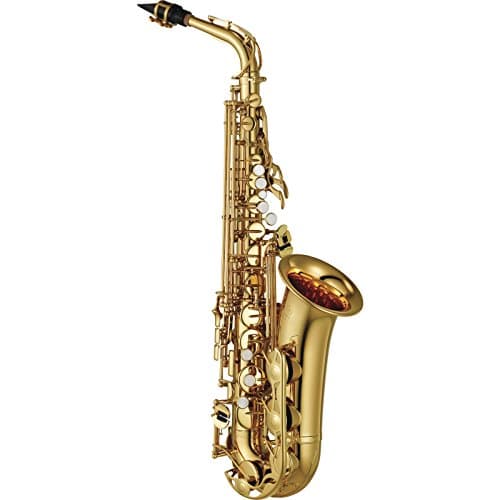
Yamaha states the Yamaha YAS-280#ad is designed with young beginners in mind, relatively lightweight and ergonomically shaped, and it includes an adjustable thumb hook. That last part is not a minor feature: the instrument’s balance rests on the right thumb, and a fixed hook fits exactly one hand size. Being able to move it is the difference between a comfortable hand position and a compensating one.
It also includes a saxophone strap in the outfit, which is not an accessory on this instrument — it is load-bearing.
The high F# key
An extra key extending the range one semitone above the standard top F.
It matters because of timing. A beginner does not need it in month one, and method books and band parts start asking for it well before the end of the second year. A saxophone without it develops a ceiling exactly when a committed student is starting to get somewhere, which is the worst possible moment.
The Yamaha includes it. Check for it on anything else you consider.
What the budget pick is, honestly
The Jean Paul AS-400#ad is a golden-brass lacquered student alto at a fraction of the Yamaha’s price, from a manufacturer that builds specifically for the beginner and intermediate band market rather than repackaging generic stock.
The honest framing: it is a real, playable saxophone, and it is not built to the same tolerances. Pad seating and key regulation are where that shows, and it shows within a year rather than on arrival. Its published specifications are also thinner than Yamaha’s, which makes a like-for-like comparison harder than it should be.
For a family that cannot fund a Yamaha and whose school has no rental program, it puts a working instrument in a student’s hands. That is worth something real.
What to skip
Tenor saxophones for a beginner, covered above.
Very cheap unbranded saxophones. A saxophone has more moving parts than any other common band instrument, and at the bottom of the market the key regulation is wrong from new. A student cannot tell the difference between an instrument that leaks and their own inability to produce a note.
Coloured or novelty finishes, for the same reason as with trumpets.
Buying before the director has checked hand size and reach. Saxophone is the band instrument where physical fit varies most at eleven.
What you also need
Reeds, in a box — they are consumable, they chip, and a student with one reed is a student who misses a rehearsal. Cork grease. A swab, used every session, because moisture inside is what destroys pads. A decent neck strap if the included one is thin. And a music stand.
Quick picks
The step-up standard
Lightweight and ergonomically shaped for a young player, with an adjustable thumb hook, a high F# key and a complete outfit including a 4C mouthpiece.
| # | Product | Best for | Score | Price |
|---|---|---|---|---|
| 1 | Yamaha YAS-280Lightweight, ergonomically shaped for a young player, with an adjustable thumb hook, a high F# key and a redesigned low B-to-C# connection. | Step-up alto sax, year two onwardEnough | 9.0 | $1,539.00 · View on Amazon #ad How we’re funded |
If buying in year one, on a budget
A golden-brass lacquered student alto at a fraction of the price. A real, playable saxophone built for the beginner market rather than repackaged generic stock.
| # | Product | Best for | Score | Price |
|---|---|---|---|---|
| 1 | 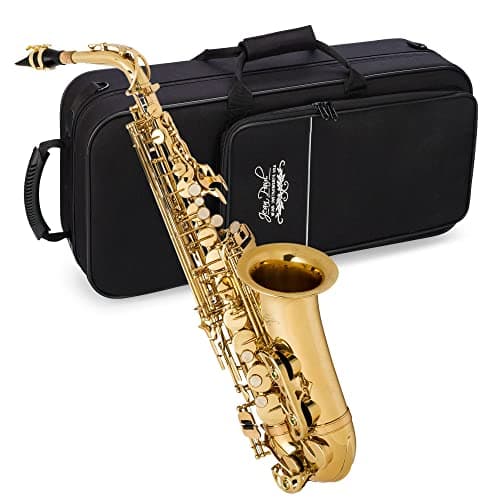 Jean Paul AS-400A golden-brass lacquered student alto at a fraction of the Yamaha. | Budget alto sax, if buying in year oneThe honest floor | 7.1 | $749.99 · View on Amazon #ad How we’re funded |
The picks in full
Yamaha YAS-280
YamahaBest for: Step-up alto sax, year two onward
Lightweight, ergonomically shaped for a young player, with an adjustable thumb hook, a high F# key and a redesigned low B-to-C# connection. Widely treated as the standard student alto.
Published specifications
- Key:
- Eb alto
- Material:
- Brass, gold lacquer finish
- Bell:
- Two-piece
- Key touches:
- White polyester
- Mechanism:
- Improved B-C# connector, high F# key, adjustable thumb hook
- Neck receiver:
- Redesigned for stability
- Included:
- Yamaha 4C mouthpiece, case with rucksack straps, sax strap, cork grease
What it gets right
- Genuinely designed around a young player — light, and shaped so the hands fall naturally rather than reaching
- The adjustable thumb hook matters more than it sounds: a saxophone's weight lands on the right thumb, and a fixed hook fits one hand size
- High F# key included, which the method book will want before the second year is out
Where it gives ground
- Even a lightweight alto is heavy for a small eleven-year-old over a full rehearsal
- The 4C mouthpiece is a solid start and a very common first upgrade
What it is not good at
Being a year-one purchase. Saxophone is the most requested section and the most reassigned; rent until the placement is settled.
How the specs score against a beginner’s needs
Scores are our reading of the published specifications above against what a beginner physically needs. They are not test results — we have not played this instrument.
Specifications from Yamaha YAS-280 published specifications.
Jean Paul AS-400
Jean Paul USABest for: Budget alto sax, if buying in year one
A golden-brass lacquered student alto at a fraction of the Yamaha. The honest framing: it is a real, playable saxophone and it is not built to the same tolerances.
Published specifications
- Key:
- Eb alto
- Material:
- Golden brass, lacquered
- Level:
- Student / beginner
What it gets right
- Puts a playable alto saxophone within reach of a family that cannot fund a Yamaha
- Jean Paul builds specifically for the beginner and intermediate band market rather than repackaging generic stock
- Cheap enough that a year of uncertainty is not an expensive bet
Where it gives ground
- Pad seating and key regulation are where the price shows, and both affect how the instrument plays within a year
- Published specifications are thinner than Yamaha's, which makes it harder to compare properly
What it is not good at
Going without maintenance. Every saxophone needs pad work eventually and a budget one needs it sooner. If the school rents, rent.
How the specs score against a beginner’s needs
Scores are our reading of the published specifications above against what a beginner physically needs. They are not test results — we have not played this instrument.
Specifications from Jean Paul USA AS-400 published description.
Questions people actually ask
Should a beginner start on alto or tenor sax?
Alto, in nearly every case. It is smaller, lighter and takes less air than a tenor, and it is what school band programs are built around. Tenor is a step a player takes later, if at all.
Is saxophone hard for a small child?
Physically, yes — it is heavy and its keys are spread wide, which is a genuine reach problem for a smaller eleven-year-old. That is why an adjustable thumb hook and a neck strap matter, and why the director should check fit before anyone commits.
What is the high F# key?
An extra key extending the instrument’s range one semitone above the standard top F. Most method books and band parts want it before the second year is out, so its absence becomes a limitation fairly quickly. Both picks that include it are worth preferring.
Should we rent a saxophone first?
Yes. Saxophone is the most-requested section in most band rooms, which means it fills first and reassignment is common. It is also the most expensive of the common beginner band instruments to buy outright.
Sources
Still deciding?
Every recommendation on this site is built the same way, and the method is published in full — including what we do not do and what would get a pick dropped.
Read next
- Renting vs buying a school band instrument
Why year one is a rental year, what programs cover, the maintenance nobody warns you about, and when buying starts to win.
- Choosing a school band instrument
Which instrument suits which child, what school rental covers, and the honest case for not buying in year one.
- The easiest band instruments to learn
Ranked by time to a reliable first note, with what embouchure is and why it decides the ranking.
- Best beginner clarinets
Why resin beats wood for a student, what a 65mm barrel does for intonation, and two picks for the year-two step-up.
- Best beginner trumpets
Bore size, monel versus stainless valves, the third valve trigger, and two picks for when buying is right.