Band & Orchestra
Best band instruments for smaller players
Directors size students to instruments for a reason, and the reason is that arm length and weight decide more of the first year than enthusiasm does.
By Sawyer V. · Published · Last updated
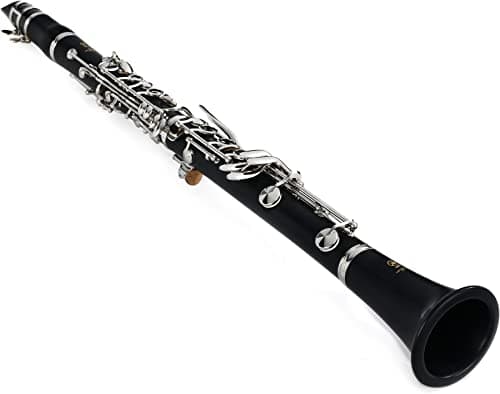
Band instruments are not sized the way string instruments are. There is no 3/4 clarinet. A ten-year-old plays the same trumpet an adult plays, which means the fit question is answered by choosing a different instrument rather than a smaller one.
That is why directors assess students physically in the first weeks, and why their recommendation is worth more than a child’s preference for whichever instrument their friend picked.
Every pick states its Starter Path band, and we have not physically tested any of them — the method is on how we pick.
Clarinet is the safest fit for a small player: light, held in front of the body, no reach to the side. Trumpet is lighter still if the front teeth are settled. Flute works only with a curved head joint. Alto saxophone is the one most often reconsidered on weight.
What actually constrains each instrument
| Instrument | The constraint | Small player? |
|---|---|---|
| Clarinet | Finger reach across the tone holes | Yes |
| Trumpet | Front teeth and lip development | Yes, if teeth allow |
| Flute | Arm length, held out to the right | Only with a curved head joint |
| Alto saxophone | Weight on a neck strap | Often needs a harness |
| Trombone | Arm length to reach outer slide positions | Frequently not |
| Tuba / baritone | Sheer size and weight | No |
Clarinet: the usual answer
A clarinet hangs down in front of the body. The arms are relaxed at the sides, nothing is held out laterally, and the weight is genuinely small. For a physically small ten-year-old, that combination is hard to beat.
Its real constraint is finger reach: the hands must cover several open tone holes completely, and a hole that is nine-tenths covered produces no note at all. Most ten-year-olds manage this; a very small child may not, and a director will spot it in minutes.
The Yamaha YCL-255#ad is the buy-once instrument that carries a student well past year one and holds resale value. The Jean Paul CL-300#ad is the budget entry if a year-one purchase is unavoidable. Both are in best beginner clarinets.
Trumpet: lightest, with a caveat
By pure weight, the Yamaha YTR-2330#ad is the easiest instrument here for a small player to hold. It is supported by both hands in front of the body and weighs far less than a saxophone.
The constraint is dental. Brass embouchure works against the front teeth, and a student in the middle of losing and regrowing them has a target that keeps moving. It does not prevent starting, and it does mean the first months can be inconsistent for reasons that have nothing to do with practice.
A director will look at this specifically. If they suggest waiting a term on a brass instrument, that is a dental judgment rather than a musical one. What playing a trumpet actually asks for is in trumpet versus saxophone.
Flute: only with the curved head joint
A flute is held horizontally out to the player’s right, with the arms raised and the head turned. That posture asks for arm length that many small ten-year-olds simply do not have, and forcing it produces raised shoulders and neck strain.
The solution is well established: a curved head joint, which folds the top of the instrument back and brings the mouthpiece several inches closer to the body. It changes nothing about fingering or technique, and a student swaps to a straight head joint when they have grown.
If a small student wants flute, buy or rent an instrument such as the Yamaha YFL-222#ad and ask specifically about a curved head joint. Do not simply hand a small child a straight flute and hope — the comparison against clarinet is in flute versus clarinet.
Alto saxophone: the one most often reconsidered
It is the instrument children most want and the one where size objections arise most.
An alto is a substantial piece of metal hanging from a neck strap. For a small student the load concentrated on the back of the neck is a real complaint, and it is the reason directors steer smaller ten-year-olds toward clarinet for year one.
A harness — which spreads the weight across both shoulders rather than the neck — makes it workable for many students, and it is an inexpensive accessory that is rarely suggested. Worth asking about before giving up on the instrument.
The ones to avoid for now
Trombone. Reaching the outer slide positions requires a specific arm length. Below it, the student physically cannot play part of the instrument’s range. Some programs have shorter-reach solutions; otherwise it is a wait.
Tuba and baritone. Size and weight rule them out for small players, and school programs typically supply these instruments rather than expecting a family to.
Oboe and bassoon. Not a size problem so much as a difficulty and cost problem. Both are usually second instruments taken up by students who already play something.
What to do in practice
Let the director assess the student in person. They are looking at hand size, arm reach, teeth and lip shape, and matching that against what the ensemble needs. That is information a catalog cannot give you.
Then rent for year one. Reassignment is common in the first months precisely because fit becomes obvious once a student starts playing, and renting turns that into a swap rather than a loss — see renting versus buying.
Quick picks
The safest fit for a small player
Held in front of the body, light, and no reach out to the side. The instrument directors most often steer smaller students toward, and for good physical reasons.
| # | Product | Best for | Score | Price |
|---|---|---|---|---|
| 1 | Yamaha YCL-255ABS resin body with a 65 mm barrel taken from Yamaha's high-end clarinets, Valentino pads and a 4C mouthpiece. | Step-up clarinet, year two onwardEnough | 8.9 | $755.00 · View on Amazon #ad How we’re funded |
| 2 | 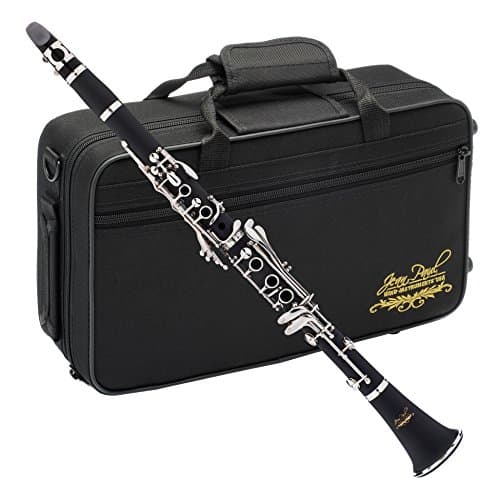 Jean Paul CL-300Ebonite body with nickel keys on the full Boehm 17-key system, at roughly half what the Yamaha costs. | Budget clarinet, if buying in year oneThe honest floor | 7.2 | $279.99 · View on Amazon #ad How we’re funded |
Light, if the teeth are ready
By weight, the easiest band instrument for a small player to hold. What limits younger students is dental development rather than mass.
| # | Product | Best for | Score | Price |
|---|---|---|---|---|
| 1 | 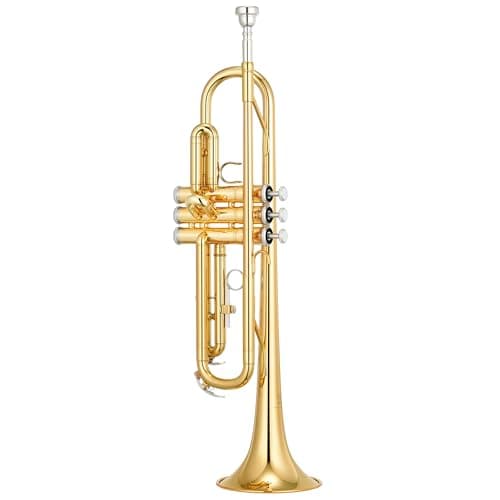 Yamaha YTR-2330A . | Step-up trumpet, year two onwardEnough | 8.8 | $1,400.00 · View on Amazon #ad How we’re funded |
Only with a curved head joint
A standard flute is held out to the right and asks for arm length a small ten-year-old often does not have. A curved head joint solves it.
| # | Product | Best for | Score | Price |
|---|---|---|---|---|
| 1 | 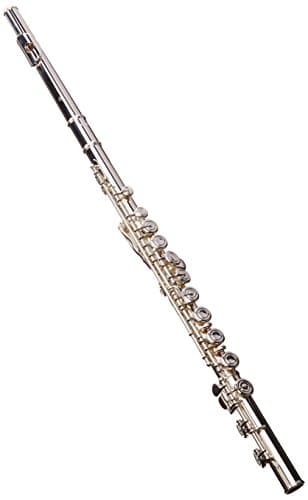 Yamaha YFL-222Silver-plated nickel silver throughout with pointed key arms and stainless steel springs. | Step-up flute, year two onwardEnough | 8.8 | $725.00 · View on Amazon #ad How we’re funded |
The picks in full
Yamaha YCL-255
YamahaBest for: Step-up clarinet, year two onward
ABS resin body with a 65 mm barrel taken from Yamaha's high-end clarinets, Valentino pads and a 4C mouthpiece. The default student clarinet in most band rooms.
Published specifications
- Body:
- ABS resin, matte wood-like finish
- System:
- Boehm, 17 keys and 6 rings
- Keywork:
- Power-forged, nickel-plated nickel silver
- Barrel:
- 65 mm — the length used on Yamaha's high-end clarinets
- Pads:
- Valentino
- Bell:
- Solid ABS resin with resonance chamber
- Thumb rest:
- Adjustable, with strap ring
- Mouthpiece:
- Yamaha 4C
What it gets right
- ABS resin does not crack in a dry house, which is the failure that ends cheap wooden clarinets
- The 65 mm barrel is genuinely the same specification as Yamaha's expensive clarinets, and it is a large part of why this one plays in tune
- An adjustable thumb rest with a strap ring, which matters because a clarinet's weight lands on one thumb
Where it gives ground
- Resin will never have the warmth of grenadilla wood, and a student will notice when they play a wooden one
- The included 4C mouthpiece is competent and is the first thing many teachers upgrade
What it is not good at
Being a year-one purchase. Rent through the school first; directors reassign students in the first months and this is real money to have committed.
How the specs score against a beginner’s needs
Scores are our reading of the published specifications above against what a beginner physically needs. They are not test results — we have not played this instrument.
Specifications from Yamaha USA — YCL-255 overview.
Jean Paul CL-300
Jean Paul USABest for: Budget clarinet, if buying in year one
Ebonite body with nickel keys on the full Boehm 17-key system, at roughly half what the Yamaha costs. The system is complete; the tolerances are where the money went.
Published specifications
- Body:
- Ebonite
- Keys:
- Nickel-plated
- System:
- Boehm, 17 keys
What it gets right
- The full 17-key Boehm system, so nothing in the method book is unplayable on it
- Ebonite is stable in a dry house, same practical advantage as the Yamaha's resin
- Low enough cost that an uncertain first year is not an expensive bet
Where it gives ground
- Pad seating and key regulation are the weak points, and a leak develops sooner than on the Yamaha
- The supplied mouthpiece is basic even by student standards
What it is not good at
Surviving without maintenance. Woodwind pads are consumable on any instrument, and on a budget one they need attention sooner. This is exactly why school rental is worth its price.
How the specs score against a beginner’s needs
Scores are our reading of the published specifications above against what a beginner physically needs. They are not test results — we have not played this instrument.
Specifications from Jean Paul USA CL-300 published description.
Yamaha YTR-2330
YamahaBest for: Step-up trumpet, year two onward
A .459 inch bore with monel pistons, a gold brass leadpipe and an adjustable third valve trigger. Yamaha's top-selling student trumpet and the one directors name first.
Published specifications
- Key:
- Bb
- Bore:
- .459"
- Bell:
- Yellow brass, two-piece, 4-7/8" diameter
- Leadpipe:
- Gold brass
- Valves:
- Monel pistons
- Third valve:
- Adjustable trigger
- Finish:
- Lacquer or silver plate
- Included:
- Mouthpiece
What it gets right
- Monel pistons are corrosion-resistant and stay smooth, which is the difference between a trumpet that stays fast and one that gums up
- The adjustable third valve trigger is how a player corrects the intonation problem every trumpet has on low D and C#
- A gold brass leadpipe warms the response slightly against plain yellow brass
Where it gives ground
- Student trumpets are all broadly similar on paper, so the case for this one is build quality rather than specification
- Lacquer wears at the contact points and looks tired long before it plays badly
What it is not good at
Being a year-one purchase. Brass reassignment is the most common kind in a band room, because embouchure suitability is unknowable in advance. Rent first.
How the specs score against a beginner’s needs
Scores are our reading of the published specifications above against what a beginner physically needs. They are not test results — we have not played this instrument.
Specifications from Yamaha Europe — YTR-2330 specifications.
Yamaha YFL-222
YamahaBest for: Step-up flute, year two onward
Silver-plated nickel silver throughout with pointed key arms and stainless steel springs. The flute most school programs treat as the standard once a student commits.
Published specifications
- Head / body / footjoint:
- Silver-plated nickel silver
- Keys:
- Hand-assembled silver-plated, offset G, closed hole (plateau)
- Footjoint:
- C foot
- Headjoint:
- CY, double flare taper with undercut embouchure hole
- Key arms:
- Pointed, for even pad-cup pressure
- Springs:
- Stainless steel
What it gets right
- Pointed key arms spread pressure evenly across the pad cup, which means a better seal and fewer leaks as the instrument ages
- Stainless steel springs resist the corrosion that makes cheap flute keys sluggish
- Closed-hole plateau keys give a beginner a solid platform for fingering before open holes are ever a question
Where it gives ground
- Offset G and closed holes are the right beginner choices and are also what a player eventually moves past
- Silver plate wears through at the contact points over years of daily use
What it is not good at
Being a year-one purchase. Rent through the school first — reassignment is common in the first months and this is not a cheap instrument to be stuck with.
How the specs score against a beginner’s needs
Scores are our reading of the published specifications above against what a beginner physically needs. They are not test results — we have not played this instrument.
Specifications from Yamaha YFL-222 published specifications (West Music).
Questions people actually ask
What band instrument is best for a small child?
Clarinet, most often. It hangs in front of the body with the arms relaxed, weighs little, and requires no reach out to the side. Trumpet is lighter still but has dental requirements.
Is a flute too hard for a small player to hold?
A standard straight head joint frequently is, because the instrument is held out to the right with the arms raised. A curved head joint brings the mouthpiece closer and solves it entirely.
Can a small child play saxophone?
An alto is a substantial weight on a neck strap and is the instrument most often reconsidered on size grounds. A harness that spreads the load across the shoulders makes it workable for many students.
Should we wait a year for the child to grow?
Rarely necessary. There is almost always an instrument that fits now, and starting on a well-fitting instrument beats waiting for a better-fitting one — students who wait frequently do not start at all.
Sources
Still deciding?
Every recommendation on this site is built the same way, and the method is published in full — including what we do not do and what would get a pick dropped.
Read next
- Choosing a school band instrument
Which instrument suits which child, what school rental covers, and the honest case for not buying in year one.
- Flute or clarinet for a first band instrument?
Embouchure versus reeds, the first-two-weeks failure on each, running costs, and which suits smaller players.
- Best beginner clarinets
Why resin beats wood for a student, what a 65mm barrel does for intonation, and two picks for the year-two step-up.
- Woodwind or brass for a first band instrument?
How each family produces sound, what that means for the first month, running costs, and how each suits different students.
- Trumpet or saxophone for a beginner?
Embouchure versus fingering, weight and reach, running costs, and how each one sounds in the first six months.