Ukuleles
Baritone vs tenor ukulele
Tenor is the biggest ukulele that still plays like a ukulele. Baritone is bigger again and tuned like a guitar, which changes far more than the size does.
By Sawyer V. · Published · Last updated
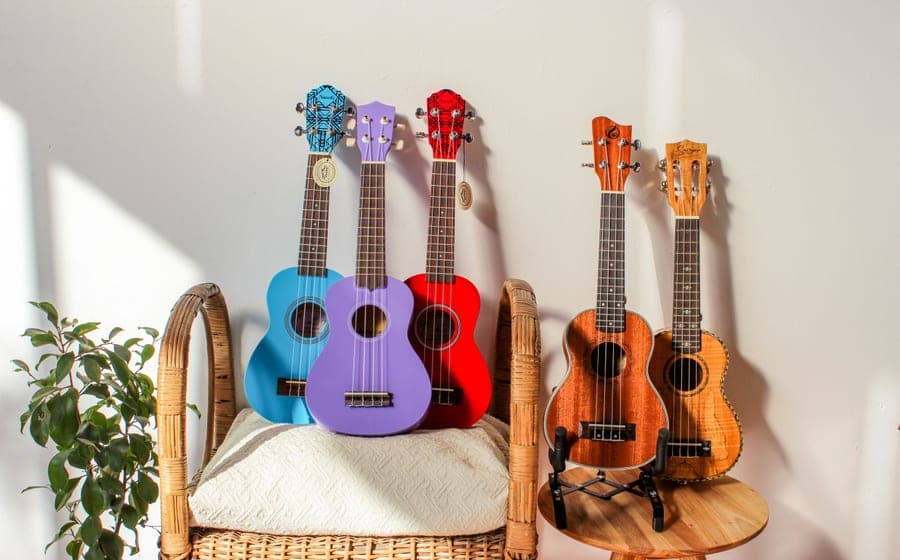
Most ukulele size guides run soprano, concert, tenor, baritone and treat it as one ladder where the instruments get progressively larger. Three of those four are the same instrument in different sizes. The fourth is not.
That is why our soprano vs concert vs tenor comparison stops where it does, and it is why this page exists separately. The gap between a tenor and a baritone is not three inches of scale length. It is a different tuning, which means different chord shapes, different chord charts and a different set of people you can play with.
We have not played these instruments. What follows is our reading of published specifications against what each size asks of a player, and the method is on how we pick.
Buy a tenor unless you already play guitar. Tenor keeps standard GCEA tuning, so every beginner resource applies and you can play with other ukulele players. Buy a baritone if you play guitar and want your existing chord shapes to work immediately, or if you want a deeper, mellower instrument and do not care about the classic ukulele sound.
The tuning difference, which is the whole comparison
A tenor is tuned G-C-E-A. The same as a soprano and a concert, usually with a re-entrant high G, meaning the fourth string is pitched above the third rather than below it. That re-entrant jangle is a large part of what makes a ukulele sound like a ukulele.
A baritone is tuned D-G-B-E with a low D. Those are exactly the top four strings of a guitar, in the same order, at the same pitches. Nothing is re-entrant: the strings run low to high in order, like a guitar.
The practical consequences are larger than they sound.
Chord shapes keep their fingering but change their name. The shape a ukulele player calls C on a tenor produces a G on a baritone. Neither instrument is wrong; they are transposed relative to each other by a fourth.
Beginner material assumes GCEA. Chord charts, method books, apps, YouTube lessons and the songbook at a club are all written for GCEA. On a baritone, every one of those is giving you instructions for a different instrument. That is a real obstacle for someone learning from scratch, and it is the main reason we steer beginners to tenor.
Guitar knowledge transfers completely. The mirror image. If you have ever played guitar, you already know baritone chord shapes, because they are the shapes you play on the top four strings. There is no relearning at all.
The full tuning picture, including low-G tenor setups that sit between these two worlds, is in ukulele tunings explained.
The size difference
Both are large by ukulele standards, and the gap between them is meaningful.
Tenor: a 17 inch scale, about 26 inches overall, an 11.75 inch body and a nut width around 1.39 inches, on the Kala KA-15T we use as the reference here.
Baritone: a 20 inch scale, about 30 inches overall, and a wider nut at 1.5 inches, on the Kala KA-B.
Three inches of scale spreads the frets noticeably further apart, and the extra nut width gives the fingers more room side to side. For a player with large hands or stiff fingers, the baritone is the most forgiving fretted instrument on this site. For a player with small hands, it is a stretch.
Both instruments have 18 frets, so neither limits you at the top end.
The sound difference
Tenor is the fullest version of the classic ukulele voice: bright and percussive, with more volume and sustain than a soprano because the body is bigger. It is still unmistakably a ukulele.
Baritone is deeper and warmer, and because the tuning is not re-entrant it loses the high-string sparkle that defines the ukulele sound. Most people describe it as sitting between a ukulele and a small nylon-string guitar, which is accurate.
If you are buying because you love how ukuleles sound, that difference matters more than any spec on this page. If you are buying because you want a small, soft-stringed instrument that is easy on the fingers, the baritone’s deeper voice may be exactly what you were after.
What does not change
Four strings. Nylon or synthetic strings under low tension, which is why both are far gentler on fingertips than any steel-string instrument. No sizing charts for children, no bow, no reed, no tuning slides. Both are instruments a complete beginner can get a clean chord out of on the first afternoon.
Both also need their own string sets. Baritone strings are built for DGBE at a 20 inch scale and usually include wound lower strings; tenor sets are built for GCEA at 17 inches. Fitting one to the other does not work, and the string question in general is in best ukulele strings.
Who should buy which
Buy a tenor if you are new to stringed instruments, if you want to play with other ukulele players, if you want to use ordinary beginner resources without translating anything, or if you want the ukulele sound people picture. It is also the better choice for a classroom or a club, because everyone is in the same tuning.
Buy a baritone if you already play guitar and want to skip the relearning entirely, if your hands find smaller ukuleles cramped, or if you want a warmer instrument and the classic ukulele jangle is not the point for you. Former guitarists with arthritis or reduced grip strength are the clearest case of all: nylon strings at low tension, on shapes they already know.
Do not buy a baritone as a first instrument if you have never played guitar. It is a good instrument and the wrong starting point, for the material reason rather than a snobbish one: everything you will try to learn from is written in a different tuning.
The two we would buy
The Kala KA-15T#ad is our reference tenor. Mahogany top, back and sides, a 17 inch scale, 18 brass frets, a walnut fingerboard and bridge, and a GraphTech NuBone nut and saddle, which is a real material a technician can file cleanly if the action needs lowering. It ships with Aquila Super Nylgut strings, which are what most decent ukuleles come fitted with.
Its honest limits: it is a bigger object to hold than the soprano most people picture, at just over 26 inches, and its deeper voice is less bright than a soprano’s if the chirpy sound was what you wanted.
The Kala KA-B Baritone Ukulele#ad is the baritone equivalent from the same line, so the comparison is close to like-for-like: mahogany construction, 18 frets, a 20 inch scale, a 1.5 inch nut and Aquila Super Nylgut strings, tuned DGBE with a low D.
Its limits are the ones this whole page is about. It does not sound like the ukulele in your head, beginner material will be in the wrong tuning, and at 30 inches overall it is approaching small-guitar size, which undercuts the portability that draws a lot of people to ukuleles in the first place.
If neither is quite right
A concert ukulele sits below the tenor and is the size we recommend to most adult beginners: more finger room than a soprano, still small and light, still GCEA. That three-way comparison is in soprano vs concert vs tenor.
A low-G tenor is the middle path nobody mentions. Fitting a low-G string set to a tenor keeps GCEA tuning, so all your resources still work, but removes the re-entrant jangle and adds depth. For a guitarist who wants a ukulele that feels less alien without leaving standard tuning, it is often the right answer.
A nylon-string guitar is worth considering if the baritone appeals mainly because it is guitar-like. Six strings, the same soft nylon feel, and no translation needed at all — the entry options are in best classical guitars for beginners.
Full shortlists for each size are in best tenor ukuleles and best baritone ukuleles.
What we would buy
Kala KA-15T
Kala Brand MusicBest for: Tenor, adult hands
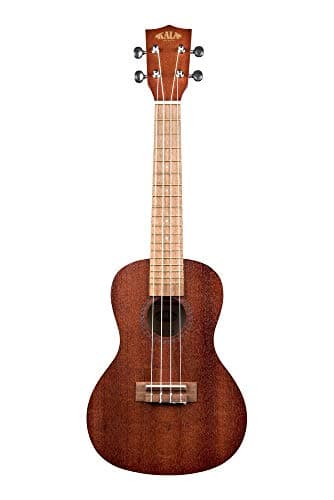
A 17 inch tenor scale with 18 frets, a NuBone nut and saddle and Aquila strings fitted. The most room between frets of any standard-tuned ukulele.
Published specifications
- Size:
- Tenor
- Scale length:
- 17"
- Overall length:
- 26.125"
- Body length:
- 11.75"
- Frets:
- 18, brass
- Top / back / sides:
- Mahogany
- Neck / fingerboard:
- Mahogany neck, walnut fingerboard and bridge
- Nut and saddle:
- GraphTech NuBone
- Nut width:
- 1.39"
- Body depth:
- 3.12"
- Strings:
- Aquila Super Nylgut
What it gets right
- 17 inches of scale is the most fret spacing available in standard GCEA tuning, which is exactly what adult fingers want
- 1.39 inch nut is marginally wider than the soprano and concert in the same line, so strings are less crowded across the neck too
- Same NuBone nut and factory Aquilas as the rest of the KA-15 series
Where it gives ground
- 26 inches overall is a large instrument, and it loses the pocket-sized charm people buy ukuleles for
- The bigger body is fuller and warmer, which means less of the bright plink that says 'ukulele'
What it is not good at
Children, and anyone who wants the classic sound. If the appeal is the small bright instrument, size down to a soprano — the tenor is a different experience.
How the specs score against a beginner’s needs
Scores are our reading of the published specifications above against what a beginner physically needs. They are not test results — we have not played this instrument.
Specifications from Kala Brand Music — KA-15T tenor specifications.
Kala KA-B Baritone Ukulele
Kala Brand MusicBest for: Guitarists, and anyone with big hands
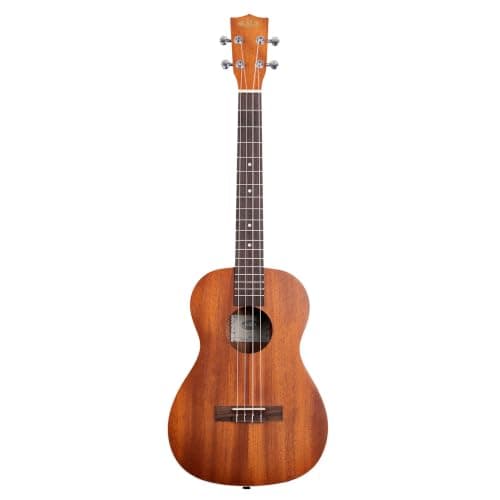
Tuned DGBE — the top four strings of a guitar — on a 20 inch scale. That makes it the one ukulele size a guitarist can pick up and play immediately, with no chord shapes to relearn.
Published specifications
- Scale length:
- 20.0625"
- Tuning:
- D-G-B-E with low D
- Top, back and sides:
- Mahogany
- Neck:
- Mahogany
- Frets:
- 18
- Nut width:
- 1.5"
- Overall length:
- 30.25"
- Strings:
- Aquila Super Nylgut
What it gets right
- DGBE tuning matches a guitar's top four strings exactly, so every guitar chord shape transfers with no transposition
- A 1.5 inch nut and 20 inch scale give more room than any other ukulele size
- Deeper, warmer voice than a soprano or concert — closer to a small nylon guitar
- Ships with Aquila Super Nylgut, so the usual first upgrade is already done
Where it gives ground
- Ukulele chord charts do NOT apply — a soprano C shape gives you a different chord here
- Loses the bright, jangly re-entrant character most people buy a ukulele for
- Largest and least portable of the four standard sizes
- Needs baritone-specific strings, not a standard GCEA set
What it is not good at
Being someone's first ukulele if they want the ukulele sound. It is closer to a small guitar than to a soprano, and a beginner following ukulele tutorials will be playing different chords to the ones on screen.
How the specs score against a beginner’s needs
Scores are our reading of the published specifications above against what a beginner physically needs. They are not test results — we have not played this instrument.
Specifications from Kala Brand Music — KA-B Satin Mahogany Baritone specifications, West Music — Kala KA-B published dimensions.
Questions people actually ask
Is a baritone ukulele just a bigger tenor?
No, and this is the thing most size charts get wrong. A tenor is tuned GCEA like every smaller ukulele. A baritone is tuned DGBE, the same as the top four strings of a guitar. Same chord shape, different chord name.
Which is better for a beginner?
Tenor, for almost everyone. Beginner material, chord charts, apps, classes and ukulele groups all assume GCEA tuning. A beginner on a baritone is following instructions written for a different instrument.
Which is better if I already play guitar?
Baritone. Every chord shape you know for the top four guitar strings transfers exactly, so you can play immediately rather than relearning shapes. That is the whole argument for it, and it is covered in ukulele for guitar players.
Can you tune a baritone like a tenor?
You can fit a set of strings designed to bring a baritone up to GCEA, and players do it. Understand that you are buying a specific string set for it, not just retuning the strings it came with, because the scale length is built around DGBE.
Which one sounds more like a ukulele?
The tenor, clearly. It has the bright GCEA voice with more body than a soprano. A baritone sounds closer to a small nylon-string guitar, which is either exactly what you want or a disappointment, depending on why you were buying a ukulele.
Still deciding?
Every recommendation on this site is built the same way, and the method is published in full — including what we do not do and what would get a pick dropped.
Read next
- Soprano vs concert vs tenor ukulele
Real scale lengths and fret counts across all four sizes, with the hand-size rule and buy paths for the two that matter.
- Best tenor ukuleles
Who a 17-inch tenor scale is genuinely for, what it trades away in tone, and the pick worth buying.
- Best baritone ukuleles
Why DGBE tuning changes everything, who should buy a baritone and who definitely should not, plus the smaller sizes worth considering instead.
- Picking up a ukulele as a guitar player
The capo-five relationship, which size guitarists should buy, what re-entrant tuning breaks, and the low-G option.
- Ukulele tunings, and which one to use
Standard GCEA, what re-entrant tuning does, high-G versus low-G, and the baritone exception that changes every chord shape.