Ukuleles
Soprano vs concert vs tenor ukulele
Four sizes, and the difference that matters is not tone. It is how much room your fingers have between the frets.
By Sawyer V. · Published · Last updated
Soprano is 13.6 inches of scale with 12 frets and the classic bright sound. Concert is about 14.75 inches with 18 frets and more room between them. Tenor is 17 inches and fuller-sounding. Baritone is 19 to 20 inches and tuned differently. Adults are generally happiest on concert; children on soprano.
The four sizes
| Size | Scale length | Frets | Overall length | Tuning | Sounds |
|---|---|---|---|---|---|
| Soprano | 13.6" | 12 | About 21" | Standard (GCEA) | Bright, plinky, classic |
| Concert | 14.75" (375 mm) | 18 | About 24" | Standard (GCEA) | Fuller, rounder |
| Tenor | 17" | 18 | About 26" | Standard (GCEA) | Full, warm, more sustain |
| Baritone | 19–20" | 18–19 | About 30" | Different (DGBE) | Deep, guitar-like |
The scale lengths above come from published manufacturer specifications for the Kala KA-15S soprano, Cordoba 15CM concert and Kala KA-15T tenor. Different makers vary by a fraction of an inch; the bands are consistent.
The baritone is a different instrument
Worth taking out of the comparison first, because the tuning difference makes it incompatible with everything else.
Soprano, concert and tenor are all tuned GCEA. Chord shapes and songs move between them without any adjustment — a soprano player picks up a tenor and simply plays it. A baritone is tuned DGBE, which is the same as the top four strings of a guitar. Every chord shape is different, and every ukulele songbook is wrong for it.
That makes the baritone an excellent choice for one specific person: someone who plans to move to guitar and wants the shapes to transfer. For everyone else it is a trap, because the ukulele resources they will find online do not apply.
What the size actually changes
Fret spacing, which is the important one. A longer scale means more distance between frets. On a 13.6 inch soprano the frets down at the nut are tight enough that an adult with average-sized fingers will regularly find two fingers competing for the same space. On a 14.75 inch concert that mostly stops happening. One and a bit inches of scale sounds trivial and is the single biggest reason adults are happier on concert.
Range. A soprano has 12 frets and the body joint stops you there. Concert and tenor have 18. For strumming songs 12 is plenty; for melody playing it is a real ceiling.
Tone. Smaller bodies sound brighter and more percussive with less sustain; larger ones sound fuller and rounder. The classic ukulele sound in most people’s heads is a soprano. If someone wants the instrument specifically for that sound, size down.
Not the nut width, which surprises people. A Kala soprano and a Cordoba concert both specify about 1.375 inches at the nut. Going up a size gives you room along the neck, not across it. If the problem is fingers crowding each other side to side, a bigger ukulele will not fix it — you want a wider nut, which is a separate specification.
How to choose
Buy soprano if the player is a child, or the budget is at the bottom of the range, or the classic bright ukulele sound is specifically what they want, or the instrument needs to travel in a backpack.
Buy concert if the player is an adult with no strong preference. This is the default recommendation for a reason: it fixes the one genuine ergonomic complaint about the instrument and costs very little more.
Buy tenor if the player has large hands or comes from guitar and finds even a concert cramped, or wants the fullest sound.
Buy baritone only if guitar is the actual destination and the ukulele is a stepping stone — the head-to-head is in baritone vs tenor ukulele. Our ukulele versus guitar comparison covers whether that stepping-stone plan makes sense at all.
Our picks for the two sizes that matter most are in the beginner ukulele roundup.
There is a fourth size, and it is a genuinely different instrument rather than a larger version of these three: the baritone is tuned DGBE, so no ukulele chord shape carries over. Who that suits — guitarists, mostly — is in best baritone ukuleles.
What we would buy
Kala KA-15S
Kala Brand MusicBest for: The honest floor, soprano
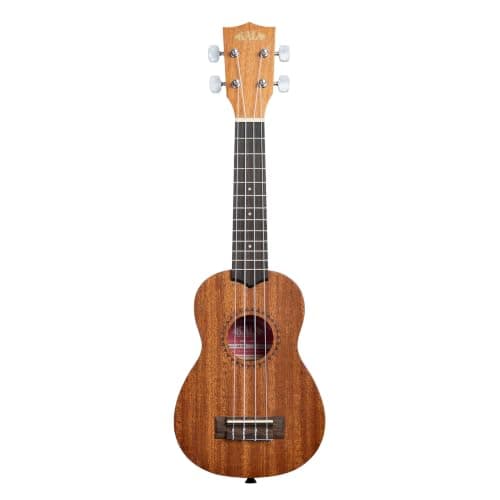
Mahogany throughout, a GraphTech NuBone nut and saddle, and Aquila strings fitted from the factory. The nut material is the spec that separates this from the pile of look-alikes.
Published specifications
- Size:
- Soprano
- Top / back / sides:
- Mahogany
- Neck / fretboard:
- Mahogany neck, rosewood fretboard
- Nut and saddle:
- GraphTech NuBone
- Scale length:
- 13.625"
- Frets:
- 12
- Nut width:
- 1.375"
- Overall length:
- 21.062"
- Strings:
- Aquila Super Nylgut
What it gets right
- NuBone nut and saddle rather than molded plastic — this is what decides whether the instrument plays in tune up the neck
- Aquila strings fitted at the factory, so the first thing you would otherwise replace is already done
- 21 inches overall and light enough for a small child to hold unsupported
Where it gives ground
- 12 frets only, and the body joint stops you well short of the high notes
- Soprano scale means less room between frets — adult fingers with wide fingertips will find it cramped
What it is not good at
Adult hands, sometimes. A 13.625 inch scale is genuinely tight. If the player is a grown-up with large hands, read our soprano-versus-concert comparison before buying this size.
How the specs score against a beginner’s needs
Scores are our reading of the published specifications above against what a beginner physically needs. They are not test results — we have not played this instrument.
Specifications from Kala Brand Music — KA-15S specifications.
Cordoba 15CM
CordobaBest for: Adult hands, concert size
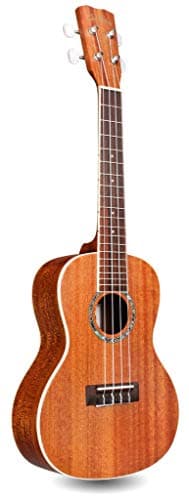
A 375 mm concert scale with 18 frets and a 35 mm nut. The extra inch and a bit of scale over a soprano is the difference between cramped and comfortable for most adults.
Published specifications
- Size:
- Concert
- Top / back / sides:
- Mahogany
- Fingerboard:
- Rosewood
- Scale length:
- 375 mm (14-3/4")
- Frets:
- 18
- Nut width:
- 35 mm (1-3/8")
- Body / overall:
- 280 mm body, 610 mm (24") overall
- Strings / finish:
- Aquila, satin finish, abalone rosette
What it gets right
- 18 frets against a soprano's 12 — a whole extra register that a soprano simply does not have
- The 375 mm scale gives noticeably more room between frets without becoming a tenor-sized instrument
- Aquila strings and an abalone rosette; it looks considerably more expensive than it is
Where it gives ground
- Identical 35 mm nut width to the Kala soprano — the extra room is between the frets, not across the neck
- 24 inches overall is a lot of instrument for a small child
What it is not good at
Sounding like a ukulele in the postcard sense. The concert body is fuller and rounder; the bright, plinky voice people picture is the soprano's.
How the specs score against a beginner’s needs
Scores are our reading of the published specifications above against what a beginner physically needs. They are not test results — we have not played this instrument.
Specifications from Cordoba Guitars — 15CM.
Questions people actually ask
Soprano vs concert ukulele, which is better?
Concert for adults, soprano for children and for anyone who specifically wants the classic bright ukulele voice. The concert’s longer scale gives noticeably more room between frets and six more frets of range; the soprano is smaller, cheaper and sounds more like the instrument people picture.
Soprano vs concert ukulele for kids?
Soprano. At about 21 inches overall it is the size a child can hold unaided, and small fingers do not need the extra fret spacing that makes a concert easier for adults.
Is a tenor ukulele good for beginners?
It is fine, and it is not the obvious first choice. A tenor is 17 inches of scale and 26 inches overall, which is a lot of instrument, and it sounds fuller and less distinctively ukulele-like. Players with large hands or a guitar background often prefer it.
What is the difference between a baritone ukulele and a guitar?
A baritone ukulele has four strings tuned like the top four strings of a guitar, on a 19 to 20 inch scale. Chord shapes learned on it transfer directly to a guitar and do not transfer from a soprano, concert or tenor, which are tuned differently. That makes it a genuinely different instrument from the other three.
Sources
Still deciding?
Every recommendation on this site is built the same way, and the method is published in full — including what we do not do and what would get a pick dropped.
Read next
- Best beginner ukuleles: what's worth it from $60 to $120
Segmented by hand size rather than price, with the nut-material spec that separates a real ukulele from a decoration.
- Best ukuleles for kids
Wood or composite, with the humidity problem that kills cheap wooden ukuleles in dry houses stated plainly.
- Ukulele vs guitar for beginners
Why the ukulele is genuinely easier, exactly which skills transfer to guitar, and when the stepping-stone plan is a detour.
- How much should a beginner ukulele cost?
Four bands from $30 to $200, defined by nut material and tuner type rather than by brand, with the accessory list included.
- What comes with a ukulele, and what you still need
What is really in the box, what the bundle accessories are worth, and the three things you genuinely need.
- Best soprano ukuleles
What a soprano scale actually costs an adult, why the nut material decides everything at this price, and the sopranos worth owning.