Ukuleles
Best travel ukuleles
The instrument you take camping is not the instrument you keep on a stand at home, and the reason is humidity rather than size.
By Sawyer V. · Published · Last updated
The ukulele is already the instrument people take places, which is most of why it is popular. It is also, in its usual wooden form, surprisingly poorly suited to the places people take it.
A wooden ukulele is a thin box that responds to the moisture in the air. Take it from a heated house to a damp tent to a hot car and the wood moves each time. Do that a few times and something cracks — usually the top, usually along the grain, usually permanently.
Both picks state their Starter Path band, and we have not physically tested either — the method is on how we pick.
For a ukulele that genuinely lives in a bag, buy a molded composite body. It ignores humidity, tolerates heat and survives being dropped. Buy a wooden soprano instead if it travels occasionally, in a case, and you care about how it sounds.
What actually goes wrong on the road
Humidity swings, which do the real damage. Wood expands and contracts with ambient moisture. The top of a ukulele is thin and is glued to braces that do not move as much, so when the wood shrinks it loses that argument and splits. This is the number one killer of traveling instruments and it is completely silent until the day it is not.
Heat, especially in a car. The inside of a parked car in summer reaches temperatures that soften glue joints. A ukulele left on a back seat for an afternoon can come out with a lifting bridge.
Impact. Backpacks get dropped and put down hard. A wooden instrument takes a corner knock badly; a molded one shrugs.
Sand and salt. Sand finds its way into geared tuners and turns them gritty, and salt air corrodes the metal parts on anything.
The full version of the humidity argument, including what to do at home, is in ukulele care and humidity.
The composite case
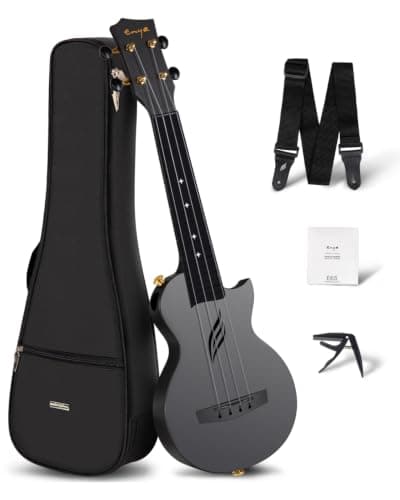
The Enya Nova U Mini#ad is molded from a carbon-fiber composite rather than built from wood, and every advantage follows from that one fact.
It does not care about a dry radiator-heated room in January or a damp caravan in October. There is no grain to split along and no glued brace to separate. Being knocked off a picnic table is a non-event. For a knockabout instrument — camping, festivals, the beach, a child’s bedroom floor — that durability is worth more than any tonal refinement.
It is also the reason we recommend it as a young child’s first ukulele in best ukuleles for kids. The failure modes it removes are exactly the ones a household with a six-year-old cannot manage.
The honest cost is tone. Composite has a brighter, harder voice with less of the warmth and complexity that mahogany gives you. It is not a bad sound and it is not the same sound, and anyone who tells you a composite instrument matches wood is selling something.
The wooden case
If “travel” means taken to a friend’s house, on holiday in a case, or to a class across town, the durability argument weakens considerably and the tone argument takes over.
The Kala KA-15S#ad is a mahogany soprano with the two quality decisions that actually matter: a NuBone nut and saddle rather than molded plastic, which is what determines whether the instrument plays in tune above the fifth fret, and Aquila Super Nylgut strings fitted at the factory.
It sounds better than the composite. It will also crack if it spends a winter next to a radiator, so it comes with obligations: a case, no cars in summer, no unheated sheds.
Size, for travel specifically
Soprano is the travel size, at roughly 21 inches overall. It fits in more bags, fits in more overhead lockers, and is the size most people picture when they picture a ukulele.
Concert and tenor are physically larger for the sake of more room between frets and a fuller sound. Both are better instruments for adult hands and neither is as convenient to carry. If your hands genuinely need the extra space, take the larger one and accept the bulk — a cramped instrument that travels well still does not get played. The comparison is in soprano versus concert versus tenor.
What we would not recommend is a sub-soprano “pocket” ukulele. The scale length gets short enough that intonation becomes genuinely difficult and the frets are too close together for most adult fingers.
Packing it properly
Slacken the strings a little for a flight. Not for a car journey, not for storage — but a cargo hold changes both temperature and pressure, and a quarter-turn down on each tuner is cheap insurance.
Never leave it in a car in summer. The most common single cause of a ruined instrument, and it is entirely avoidable.
Wipe the tuners after a beach trip. Sand in a geared tuner is not repairable in any economic sense.
Take a spare set of strings. Small, light, and the difference between a broken string ending the trip and costing ten minutes. The procedure is in how to change ukulele strings.
The verdict
Buy the composite if the instrument is going to live rough — and understand you are trading tone for the ability to stop worrying about it. Buy the wooden soprano if travel means occasional trips in a case, because it is simply a nicer instrument to play and to hear.
Plenty of people end up owning both, and it is not an extravagant position: the composite goes in the backpack, the mahogany stays on the stand. If this is your only ukulele, start from our main beginner ukulele roundup instead and treat travel as a secondary consideration.
Quick picks
Genuinely knockabout
A molded carbon-fiber composite body that does not care about humidity, temperature swings or being dropped. The only pick here we would leave in a tent.
| # | Product | Best for | Score | Price |
|---|---|---|---|---|
| 1 | Enya Nova U MiniA 21 inch carbon-fiber-and-polycarbonate body weighing 430 grams. | Young kids, survives anythingThe honest floor | 8.0 | $59.14 · View on Amazon #ad How we’re funded |
If it travels but is looked after
A proper mahogany soprano with a NuBone nut and saddle. Better tone by a clear margin, and it needs a case and a bit of care.
| # | Product | Best for | Score | Price |
|---|---|---|---|---|
| 1 | 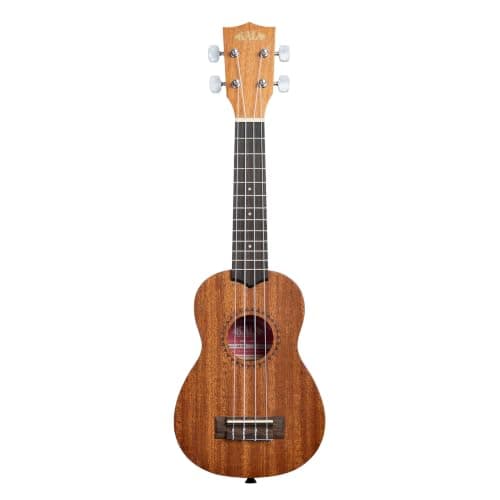 Kala KA-15SMahogany throughout, a GraphTech NuBone nut and saddle, and Aquila strings fitted from the factory. | The honest floor, sopranoThe honest floor | 8.7 | $69.00 · View on Amazon #ad How we’re funded |
The picks in full
Enya Nova U Mini
EnyaBest for: Young kids, survives anything
A 21 inch carbon-fiber-and-polycarbonate body weighing 430 grams. It is water resistant and it does not care about humidity, which is the honest reason to buy it for a six-year-old.
Published specifications
- Size:
- Soprano, 21"
- Top / back / sides:
- 30% carbon fiber and polycarbonate composite
- Weight:
- 430 g (0.9 lb)
- Overall length:
- 22"
- Nut width:
- 1-3/8"
- Body:
- Arched back, radius fretboard, cutaway
- In the box:
- Semi-hard case, strap, capo, spare strings
What it gets right
- Composite body — it does not crack in a dry house or swell in a damp one, which is what actually kills cheap wooden ukuleles
- 430 grams; a five-year-old can carry it around by the neck all day, and they will
- Case, strap, capo and spare strings included
Where it gives ground
- It does not sound like wood, and no amount of playing will change that
- The composite body is a fixed quantity — there is no breaking-in and no improvement over time
What it is not good at
Tone. A mahogany Kala sounds warmer and fuller, plainly. You are buying survivability, and that is a legitimate thing to buy for a young child, but be clear that is the trade.
How the specs score against a beginner’s needs
Scores are our reading of the published specifications above against what a beginner physically needs. They are not test results — we have not played this instrument.
Specifications from Enya Music — Nova carbon fiber ukulele collection.
Kala KA-15S
Kala Brand MusicBest for: The honest floor, soprano
Mahogany throughout, a GraphTech NuBone nut and saddle, and Aquila strings fitted from the factory. The nut material is the spec that separates this from the pile of look-alikes.
Published specifications
- Size:
- Soprano
- Top / back / sides:
- Mahogany
- Neck / fretboard:
- Mahogany neck, rosewood fretboard
- Nut and saddle:
- GraphTech NuBone
- Scale length:
- 13.625"
- Frets:
- 12
- Nut width:
- 1.375"
- Overall length:
- 21.062"
- Strings:
- Aquila Super Nylgut
What it gets right
- NuBone nut and saddle rather than molded plastic — this is what decides whether the instrument plays in tune up the neck
- Aquila strings fitted at the factory, so the first thing you would otherwise replace is already done
- 21 inches overall and light enough for a small child to hold unsupported
Where it gives ground
- 12 frets only, and the body joint stops you well short of the high notes
- Soprano scale means less room between frets — adult fingers with wide fingertips will find it cramped
What it is not good at
Adult hands, sometimes. A 13.625 inch scale is genuinely tight. If the player is a grown-up with large hands, read our soprano-versus-concert comparison before buying this size.
How the specs score against a beginner’s needs
Scores are our reading of the published specifications above against what a beginner physically needs. They are not test results — we have not played this instrument.
Specifications from Kala Brand Music — KA-15S specifications.
Questions people actually ask
What is the best ukulele to take traveling?
A molded composite one. Carbon-fiber and polycarbonate ukuleles do not crack in dry air, do not swell in damp air and survive impacts that would end a laminate wooden instrument. That single property outweighs the tone difference for an instrument that lives in a bag.
Are plastic ukuleles any good?
The good ones are genuinely playable instruments rather than toys — the test is whether they hold pitch and play in tune up the neck. What they cannot do is match the warmth of solid or laminate mahogany, and no amount of molding will change that.
Can you take a ukulele on a plane?
Usually as cabin baggage, since a soprano is small enough for most overhead lockers. Airline policies differ and none of them guarantee it, so the smaller the instrument and the less you would mind losing it, the better.
Will the beach ruin a ukulele?
Salt air, sand and direct sun are all bad for a wooden instrument, and sand in the tuners is the failure nobody anticipates. A composite body handles the first three; the tuners still need wiping down.
Sources
Still deciding?
Every recommendation on this site is built the same way, and the method is published in full — including what we do not do and what would get a pick dropped.
Read next
- Best beginner ukuleles: what's worth it from $60 to $120
Segmented by hand size rather than price, with the nut-material spec that separates a real ukulele from a decoration.
- How to look after a ukulele
The 40 to 60 per cent rule, the early warning signs of a dry instrument, and what genuinely needs cleaning versus what does not.
- Best ukuleles for kids
Wood or composite, with the humidity problem that kills cheap wooden ukuleles in dry houses stated plainly.
- Soprano vs concert vs tenor ukulele
Real scale lengths and fret counts across all four sizes, with the hand-size rule and buy paths for the two that matter.
- Best instruments for an apartment
Four instruments that survive a shared wall, ranked by how quiet they are at their loudest, plus the headphones that make the difference.