Strings
Best beginner cellos
The most expensive instrument on this site to complete, which makes what comes in the box the thing to compare.
By Sawyer V. · Published · Last updated
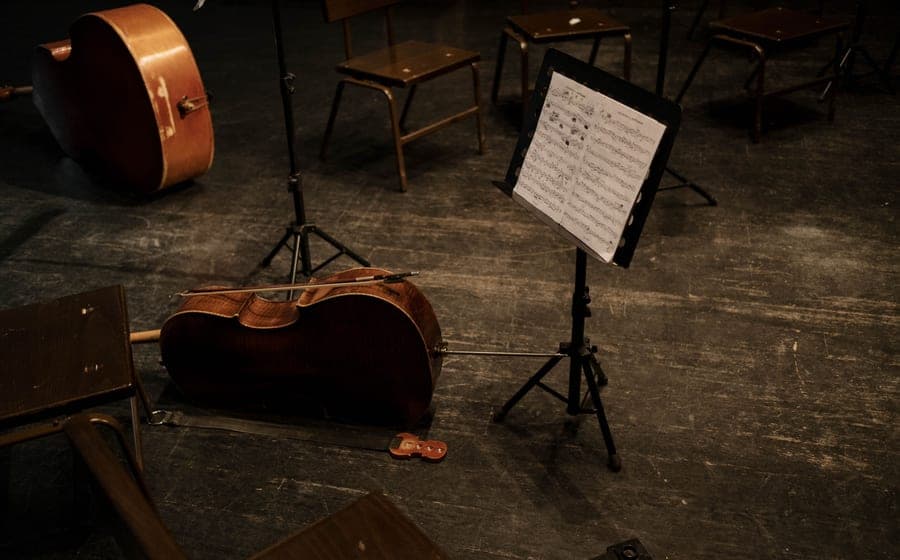
The cello is the friendliest of the bowed strings to learn on and the least friendly to buy. It is large, it is expensive to complete, and unlike a guitar it cannot be played at all without four other things.
Both picks state their Starter Path band, and we have not played them — the method is on how we pick.
Why completeness is the specification
A cello on its own makes no sound. It needs a bow. The bow needs rosin. The instrument needs a case, because a cello left leaning against a wall gets knocked over. It needs a stand for the same reason. And on a hard floor it needs an endpin stop, or it slides away from the player mid-phrase.
Buying those individually costs more than a beginner cello does. That is why cellos are sold as outfits, and why “what is in the box” is the first question rather than the last.
The Cecilio CCO-100 cello outfit#ad ships with a hard case, a soft case, a Brazilwood bow with unbleached horsehair, a stand, rosin and a spare set of strings. Two cases is unusual and genuinely convenient for something this size — the soft one for a lesson, the hard one for anything else.
The specification that is not in the box
Setup. Same story as the violin, and worth restating because it is invisible in every listing.
A cello arrives with the bridge unfitted — its feet have to be carved to match the curve of that specific instrument’s top — the soundpost needs positioning, and the pegs need fitting so they turn smoothly and hold. On an instrument at this price that work has not been done to the standard a teacher expects.
Budget for a shop setup before the first lesson. It is not optional and it is not expensive relative to the instrument, and a cello that has had it plays and sounds like a different instrument from one that has not.
Sizing
Cello sizes run 1/8, 1/4, 1/2, 3/4 and 4/4, and unlike a violin they are selected by the player’s height rather than arm length.
Broadly, full size suits players from about five feet upward, with the fractional sizes descending from there. The reliable version of this is to ask the teacher, who will sit the child at an instrument and check three things: that the knees sit comfortably against the lower bouts, that the left hand reaches first position without the shoulder rising, and that the C peg is near the ear rather than behind the head.
Getting it wrong is the same failure mode as a violin one size too big: the player compensates with posture, and the posture becomes the habit.
Rent or buy
Renting deserves more consideration on cello than on any other instrument here. It is expensive, it takes real floor space, and a growing child will pass through several sizes.
Buying makes sense for an adult, who will stay on 4/4 permanently, and for a child who has reached 3/4 or full size and has clearly committed.
What to skip
Any cello whose listing does not say what is in the outfit. The one specification that matters here, and its absence is not an oversight.
Buying a size up to last longer. A cello is not adjustable in the way people hope. If the reach is wrong the technique goes wrong with it.
Skipping the endpin stop. Trivial-sounding and it is the difference between a stable instrument and one sliding across a wooden floor. Some outfits include one; check, and buy one if not.
If the cello turns out to be too much
It is a lot of instrument to commit to, and there is no shame in the smaller route. Our violin picks cover the same bowed-string technique on something far cheaper and smaller, and the cross-instrument comparison works through the alternatives on physical fit.
Quick picks
Complete cello outfit
Arrives with a hard case, a soft case, a bow, a stand, rosin and a spare string set. Buying those separately costs more than the instrument.
| # | Product | Best for | Score | Price |
|---|---|---|---|---|
| 1 | No image Cecilio CCO-100 cello outfitA spruce-top, maple-body cello that arrives with a hard case, a soft case, a bow, a stand, rosin and a spare string set. | First cello, complete outfitThe honest floor | 7.8 | Check price on Amazon → #ad How we’re funded |
If a violin is the better fit after all
Cello is a large commitment in space and money. If the player is small or undecided, the violin route is cheaper to try and shares the same technique foundations.
| # | Product | Best for | Score | Price |
|---|---|---|---|---|
| 1 | 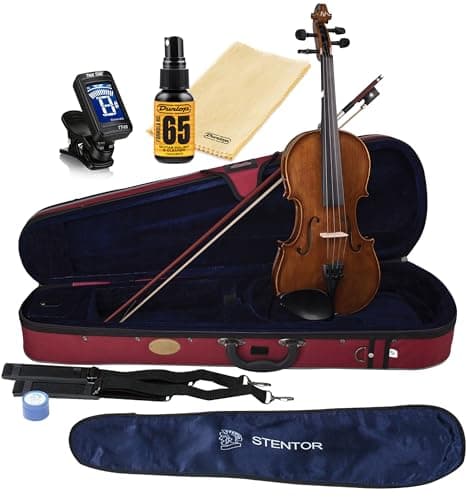 Stentor Student II Violin OutfitSolid carved spruce and maple with an ebony fingerboard, set up in a workshop before shipping, and made in five fractional sizes. | First violin, every sizeEnough | 8.9 | $395.00 · View on Amazon #ad How we’re funded |
The picks in full
Cecilio CCO-100 cello outfit
CecilioBest for: First cello, complete outfit
A spruce-top, maple-body cello that arrives with a hard case, a soft case, a bow, a stand, rosin and a spare string set. Cellos are expensive to complete, and this one is complete.
Published specifications
- Top:
- Spruce
- Back / neck / sides:
- Maple
- Bow:
- Brazilwood with unbleached horsehair
- In the outfit:
- Hard case, soft case, bow, cello stand, rosin, spare string set
- Sizes:
- Available in full and fractional sizes
- Warranty:
- 1 year against manufacturer defects
What it gets right
- Genuinely complete — a cello needs a bow, rosin, a stand and a case to be usable, and buying those separately costs more than the instrument
- Both a hard and a soft case, which for an instrument this size is a real convenience rather than a gimmick
- Available in fractional sizes, so a growing child stays within one family
Where it gives ground
- The supplied bow and strings are the first two things a teacher will suggest upgrading
- Set-up quality is the variable at this tier — budget for a shop check before the first lesson
What it is not good at
Arriving ready. A cello needs its bridge fitted and its soundpost checked, and at this price that work has not been done to the standard a teacher expects. Factor a setup in.
How the specs score against a beginner’s needs
Scores are our reading of the published specifications above against what a beginner physically needs. They are not test results — we have not played this instrument.
Specifications from Cecilio Music — CCO-100 cello outfit.
Stentor Student II Violin Outfit
StentorBest for: First violin, every size
Solid carved spruce and maple with an ebony fingerboard, set up in a workshop before shipping, and made in five fractional sizes. The workshop setup is the specification that matters most on a beginner violin.
Published specifications
- Top:
- Solid carved spruce
- Back / sides:
- Solid figured maple
- Fingerboard:
- Ebony
- Pegs:
- Ebony or rosewood
- Sizes:
- 4/4, 3/4, 1/2, 1/4, 1/8
- Strings:
- Steel core, factory fitted
- Outfit:
- Wooden bow with ebony frog and natural horsehair, rosin, shaped lightweight case with music pocket and rucksack straps
What it gets right
- Ebony fingerboard and pegs, not stained hardwood — a stained fingerboard wears through and a soft peg will not hold a tuning
- Individually set up in a workshop before it ships, which is the single biggest variable on a cheap violin
- Available in five fractional sizes, so the same instrument family covers a child from about age five to adult
Where it gives ground
- The supplied steel-core strings are the first upgrade most teachers suggest
- The bow is functional rather than good; it is the second upgrade
What it is not good at
Being bought without measuring. Violin size is set by the player's arm length, not their age, and a violin one size too big is genuinely unplayable rather than merely awkward. Measure first.
How the specs score against a beginner’s needs
Scores are our reading of the published specifications above against what a beginner physically needs. They are not test results — we have not played this instrument.
Specifications from Stentor Music — Student II violin outfit.
Questions people actually ask
What size cello does my child need?
Cello sizing goes by the player’s height rather than arm length, and it runs from 1/8 up to 4/4. As a rough guide, full size suits players from about five feet upward. Ask the teacher before ordering — a cello is expensive to get wrong.
Is cello harder than violin?
Different rather than harder. The cello’s larger spacing between notes is easier on the intonation than a violin’s cramped fingerboard, and the sitting posture is more natural than holding an instrument under the chin. Against that, it is far larger, heavier and more expensive.
What does a cello need besides the instrument?
A bow, rosin, a case, a stand and an endpin stop to keep it from sliding on a hard floor. That is why outfits exist — buying those separately costs more than a beginner instrument.
Should we rent a cello instead?
For a growing child, seriously consider it. Cellos are expensive, they take real floor space, and a child moves through sizes. Many shops apply rental payments toward a later purchase.
Sources
Still deciding?
Every recommendation on this site is built the same way, and the method is published in full — including what we do not do and what would get a pick dropped.
Read next
- Best beginner violins: measure first, then buy
Arm-length sizing chart, why workshop setup is the spec that matters most, and one pick available in five sizes.
- Violin sizes by age and arm length
The full fractional chart by arm length, how to measure, and why a violin one size too big cannot be played correctly.
- What comes with a violin outfit, and what doesn't
What an outfit contains, what each part is worth bought separately, and the two items nearly everyone still needs.
- Best beginner mandolins
A-style versus F-style, why a carved solid top matters more here than on a guitar, and the setup a mandolin needs.
- The best first instrument for a child
Instrument by instrument, the real starting age set by hand size and reach, with a pick for each and the noise column filled in.