Start Here
Best instruments for college dorms
A dorm room is not a small apartment. There is another person in it, the walls are not yours, and everything you own has to fit under a bed.
By Sawyer V. · Published · Last updated
A dorm room is the hardest space on this site to play in, and it is not the same problem as a small apartment. In an apartment the constraint is neighbors through a wall. In a dorm the constraint is a person eight feet away who is trying to study, plus a housing contract, plus the fact that everything you own has to fit in a space the size of a wardrobe.
That changes the answer. Instruments that are fine in a studio flat are not fine here.
We have not played these instruments in a dorm. What follows is our reading of published specifications against the constraints of the room, and the method is on how we pick.
Buy something with a headphone socket or something naturally quiet. A ukulele, a 61-key keyboard with headphones, a headphone amp for a guitar you already own, or a practice pad if you drum. Do not bring an acoustic drum kit, a brass instrument or an amplifier.
The four dorm rules
1. It has to be silent on demand. Not quiet — silent. Your roommate has exams, and quiet hours are usually written into the housing agreement. Headphone practice is the feature that makes an instrument dorm-compatible.
2. It has to fit under a bed or on a hook. Dorm storage is brutal. An instrument that lives out in the room takes space from a person who did not choose it.
3. You cannot modify the room. No wall hangers, no shelf brackets, no acoustic panels, and often no adhesive fixings either. That rules out several solutions that work fine in a rented flat.
4. It has to survive travel. A dorm instrument goes home at every break and moves rooms every year. Fragile instruments in soft cases do not last that cycle.
What not to bring
An acoustic drum kit. Not workable, no matter how understanding the roommate. Electronic kits are borderline, because the pedals still put impact into the floor below you.
Brass and woodwind. Practice mutes reduce volume but do not silence them, and the sound carries through dorm walls. Use the practice rooms your tuition is paying for.
A guitar amplifier. Even a small one. If you have an electric guitar, a headphone amp does the job in a shirt pocket — the options are in best headphone amps for guitar.
Anything fragile you love. Dorms flood, radiators run hot, and people have parties. Bring the instrument you can replace.
How we ranked these
Time to first sound first, because a student with a full timetable needs an instrument that rewards short sessions. Then running cost, then noise in a shared room, then room to grow.
The picks
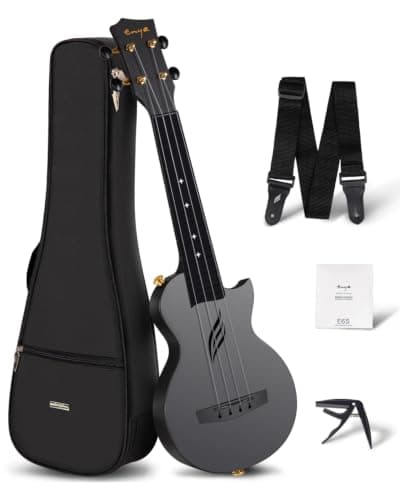
The Enya Nova U Mini#ad is the instrument we would actually take to college. It is a 21 inch soprano ukulele made from a carbon fiber composite rather than wood, which means it tolerates a dorm radiator, a damp room and being carried in a backpack without the humidity anxiety a wooden instrument brings. It weighs 430 g and comes with a semi-hard case, strap, capo and spare strings.
Its limits are honest: a soprano has tight fret spacing that suits smaller hands, the composite body sounds different from wood, and it is not an instrument you grow old with. For four years in a shared room, those are acceptable trades.
The Casio Casiotone CT-S1#ad is the pick if the goal is piano. 61 full-size keys, a headphone socket, a small set of genuinely good sounds rather than hundreds of mediocre ones, and light enough to lift off a desk one-handed when the desk is needed for something else.
The trades: unweighted keys, so it is not the instrument for a music major working toward exams, and 61 keys will eventually run out under a method book — the reasoning is in 49 vs 61 keys.
The Fender Mustang Micro#ad is the answer for the very common case of a student who already owns an electric guitar. It plugs into the guitar’s jack, headphones plug into it, and the room stays silent. Bluetooth streaming means playing along with music from a phone, and USB-C means recording into a laptop.
What it is not is an amp you can share with anyone: there is no speaker, no aux input, and the battery runs about four hours per charge.
The Evans RealFeel 12" single-sided practice pad#ad is the honest answer for a drummer at college. A practice pad is the only percussion that works in a dorm, and it is where hand technique is actually built anyway. It is quiet, it costs little, and it fits in a bag.
It will not teach limb coordination and nobody finds it exciting. It is a holding pattern that keeps your hands sharp until you are back at a kit — the full argument is in drum kit vs practice pad to start.
What to buy alongside
Closed-back headphones. The single most important accessory in a dorm, because open-back headphones leak sound into the room and defeat the point — options are in best headphones for a digital piano.
A stand that folds flat, not one that lives out permanently.
An agreement with your roommate about hours, made before the instrument arrives.
If your situation is a flat rather than a dorm, the constraints loosen considerably and the wider list is in best instruments for small apartments.
Quick picks
The instrument that asks nothing of the room
A carbon-fiber soprano ukulele that survives being thrown in a backpack, needs no case rules and is quiet enough to play at midnight.
| # | Product | Best for | Score | Price |
|---|---|---|---|---|
| 1 | Enya Nova U MiniA 21 inch carbon-fiber-and-polycarbonate body weighing 430 grams. | Young kids, survives anythingThe honest floor | 8.0 | $55.24 · View on Amazon #ad How we’re funded |
If you want to play piano
61 full-size keys, a headphone socket, and light enough to move off a desk when your roommate needs the desk.
| # | Product | Best for | Score | Price |
|---|---|---|---|---|
| 1 | 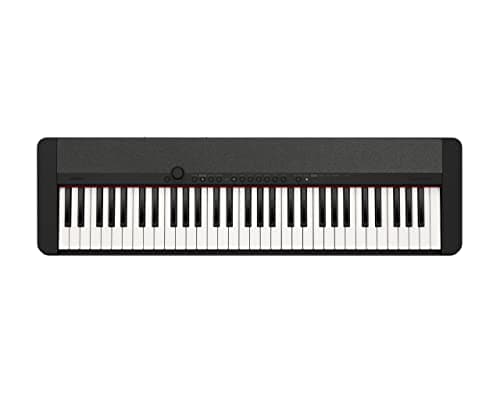 Casio Casiotone CT-S161 full-size touch-sensitive keys, 61 tones and no arranger clutter. | 61 keys, piano sound firstThe honest floor | 7.8 | $219.99 · View on Amazon #ad How we’re funded |
If you already own an electric guitar
A headphone amp turns the guitar you brought from home into a silent instrument. Cheaper and smaller than any amp.
| # | Product | Best for | Score | Price |
|---|---|---|---|---|
| 1 | 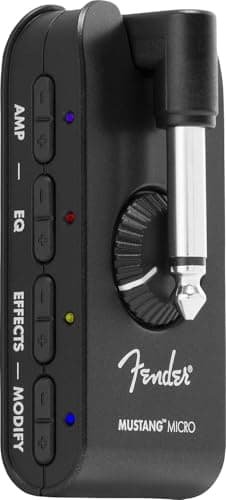 Fender Mustang MicroThe one to buy if you learn by playing along. | Practicing to recordsEnough | 7.8 | $98.99 · View on Amazon #ad How we’re funded |
If you are a drummer at college
A practice pad is the only percussion that works in a dorm. It builds hands while the kit waits at home.
| # | Product | Best for | Score | Price |
|---|---|---|---|---|
| 1 | 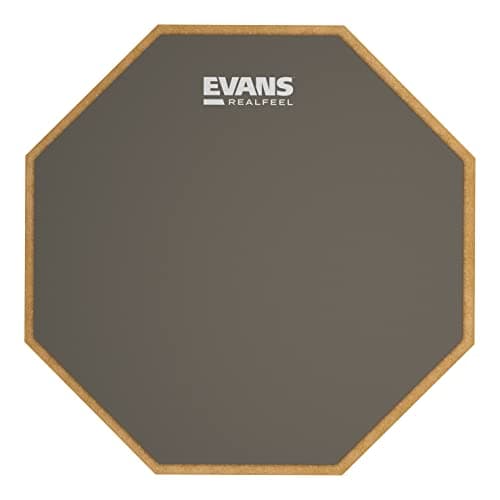 Evans RealFeel 12" single-sided practice padThe same gum rubber playing surface as the two-sided pad, without the neoprene side. | Lighter, one surfaceThe honest floor | 8.5 | $39.99 · View on Amazon #ad How we’re funded |
The picks in full
Enya Nova U Mini
EnyaBest for: Young kids, survives anything
A 21 inch carbon-fiber-and-polycarbonate body weighing 430 grams. It is water resistant and it does not care about humidity, which is the honest reason to buy it for a six-year-old.
Published specifications
- Size:
- Soprano, 21"
- Top / back / sides:
- 30% carbon fiber and polycarbonate composite
- Weight:
- 430 g (0.9 lb)
- Overall length:
- 22"
- Nut width:
- 1-3/8"
- Body:
- Arched back, radius fretboard, cutaway
- In the box:
- Semi-hard case, strap, capo, spare strings
What it gets right
- Composite body — it does not crack in a dry house or swell in a damp one, which is what actually kills cheap wooden ukuleles
- 430 grams; a five-year-old can carry it around by the neck all day, and they will
- Case, strap, capo and spare strings included
Where it gives ground
- It does not sound like wood, and no amount of playing will change that
- The composite body is a fixed quantity — there is no breaking-in and no improvement over time
What it is not good at
Tone. A mahogany Kala sounds warmer and fuller, plainly. You are buying survivability, and that is a legitimate thing to buy for a young child, but be clear that is the trade.
How the specs score against a beginner’s needs
Scores are our reading of the published specifications above against what a beginner physically needs. They are not test results — we have not played this instrument.
Specifications from Enya Music — Nova carbon fiber ukulele collection.
Casio Casiotone CT-S1
CasioBest for: 61 keys, piano sound first
61 full-size touch-sensitive keys, 61 tones and no arranger clutter. It is the 61-key board for someone who wants to play piano rather than operate a keyboard.
Published specifications
- Keys:
- 61, full-size, touch-sensitive
- Polyphony:
- 64 notes
- Tones:
- 61, including a stereo grand piano
- Weight:
- 9.9 lb
- Dimensions:
- 36.61" W x 10.15" D x 3.30" H
- Connectivity:
- USB-MIDI
What it gets right
- Deliberately few sounds and a clean panel, which removes the single biggest distraction from actual practice
- 9.9 pounds and 3.3 inches tall — it can live on a shelf between sessions, and an instrument that lives out of the way gets played less
- 64-note polyphony, higher than the PSR-E383's 48
Where it gives ground
- No lesson mode at all, unlike the PSR-E383
- Unweighted keys, same fundamental limit as any 61-key board
What it is not good at
Entertaining a young child. There is no light-up key guidance, no play-along scoring and only 61 sounds. That restraint is the point for an adult beginner and a drawback for a seven-year-old.
How the specs score against a beginner’s needs
Scores are our reading of the published specifications above against what a beginner physically needs. They are not test results — we have not played this instrument.
Specifications from Casio — CT-S1 product page.
Fender Mustang Micro
FenderBest for: Practicing to records
The one to buy if you learn by playing along. Bluetooth audio streams from a phone with automatic sync, USB-C records your guitar and that stream together, and the plug rotates to fit almost any jack angle.
Published specifications
- Amp models:
- 12 amp models; Fender's spec table lists 11 effect models, its feature list says 12 effect combinations
- Bluetooth:
- Audio streaming with automatic audio and video sync
- USB / recording:
- USB-C, records guitar and the Bluetooth stream simultaneously
- Battery:
- Rechargeable lithium-ion, 4 hours continuous play, charges over USB
- Output:
- 1/8 inch stereo headphone out
- Plug:
- 270 degree rotating 1/4 inch plug
- Size / weight:
- 1.5" W x 1.13" D x 3.15" H; 1.8 oz (51 g)
What it gets right
- Bluetooth streaming with automatic audio and video sync, so backing tracks and lesson videos line up
- Records the guitar and the streamed track together over USB-C, which no other pick here does
- The 270 degree rotating plug clears recessed and angled jack plates
- 1.8 oz with the battery inside — nothing to carry but headphones
Where it gives ground
- No aux input at all, so playing along requires a Bluetooth source
- Four hours is Fender's own figure, on a sealed battery with no swap — when it is flat, practice waits for the charger
- Headphones are not included, and the amp is only as good as the headphones you own
What it is not good at
Long sessions away from power. The published runtime is fixed and the cell cannot be swapped.
How the specs score against a beginner’s needs
Scores are our reading of the published specifications above against what a beginner physically needs. They are not test results — we have not played this instrument.
Specifications from Fender — Mustang Micro.
Evans RealFeel 12" single-sided practice pad
EvansBest for: Lighter, one surface
The same gum rubber playing surface as the two-sided pad, without the neoprene side. Lighter and cheaper, and for a beginner the second surface is not the point yet.
Published specifications
- Diameter:
- 12"
- Surface:
- Single — natural gum rubber
- Response:
- Realistic stick rebound, consistent across the surface
- Manufacture:
- Designed, engineered and made in the USA
What it gets right
- Identical playing surface to the two-sided pad, which is the part that matters
- Lighter, so it actually travels
- The cheapest genuinely good pad, which makes it the right first one
Where it gives ground
- One surface, so no harder option for strength work later
- The flat back slides on a smooth table without a stand
What it is not good at
Being the last pad a committed drummer owns. Most people who keep drumming end up wanting the second surface eventually.
How the specs score against a beginner’s needs
Scores are our reading of the published specifications above against what a beginner physically needs. They are not test results — we have not played this instrument.
Specifications from Evans RealFeel single-sided pad published description.
Questions people actually ask
What instrument can I actually play in a dorm?
Anything with a headphone socket, plus the quiet acoustic instruments: ukulele, classical guitar, practice pad. What does not work is anything loud and unmutable — acoustic drums, brass, and to a lesser extent violin.
Are instruments usually allowed in dorms?
Policies vary and many schools restrict amplified instruments or set quiet hours rather than banning instruments outright. Check your housing agreement before buying anything, because the rules are written per campus.
Can I practice trumpet or saxophone in a dorm room?
Realistically no, even with a practice mute. Most schools with music programs provide practice rooms for exactly this reason, and band students should plan around booking one rather than playing in their room.
Is a keyboard too big for a dorm desk?
A 61-key board is about a meter wide, which fits most dorm desks but leaves little room for anything else. If the desk is shared or tiny, a ukulele or a controller is the more realistic purchase.
What about my roommate?
Headphones solve the sound and not the sight. Agree hours before you start rather than after the first complaint — the negotiation is easier when you are offering a rule instead of defending one.
Still deciding?
Every recommendation on this site is built the same way, and the method is published in full — including what we do not do and what would get a pick dropped.
Read next
- Best instruments for an apartment
Four instruments that survive a shared wall, ranked by how quiet they are at their loudest, plus the headphones that make the difference.
- Setting up a practice space that gets used
Why the instrument should never live in its case, the seat height that prevents wrist problems, and the two cheap accessories that matter most.
- Best headphone amps for guitar
How a headphone amp differs from a practice amp, what to check before buying, and three picks for silent practice at home.
- Best headphones for a digital piano
Closed-back over-ear picks, the quarter-inch adapter problem, and why open-back headphones are the wrong tool here.
- Best instruments for travel
Durability over tone, what airlines and climates do to wooden instruments, and four instruments that genuinely travel.