Guitars
Best guitars for small hands
This is an adult problem as often as a child's one, and the usual advice — buy a kid's guitar — is the wrong answer for a grown-up. Here is the right one.
By Sawyer V. · Published · Last updated
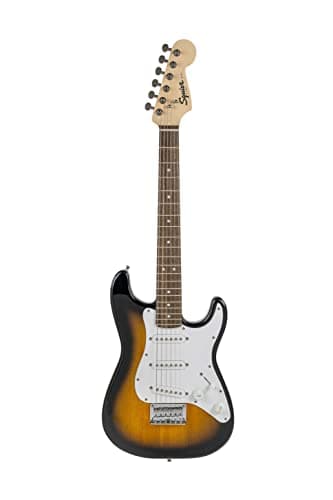
Most writing about small hands is addressed to parents, and it assumes the player is eight. Plenty of adults have small hands, and telling a grown-up to buy a children’s guitar is unhelpful advice delivered badly.
The useful version is mechanical. Small hands are a reach problem, and reach has two separate dimensions. Get both right and the instrument stops fighting you.
Small hands need a shorter scale length — around 22 to 24 inches rather than the standard 25.5 — which brings the frets closer together. A narrower nut helps separately, by bringing the strings closer across the neck. These are two different measurements and a guitar can be good at one and bad at the other.
The two measurements
Scale length is the reach along the neck. It is the vibrating length of the string, and it sets fret spacing. On a full 25.5 inch scale the frets down at the nut sit around 36 mm apart; on a 22.75 inch scale, around 32 mm. Across a four-fret chord stretch that difference compounds into the gap between comfortable and impossible.
Nut width is the reach across the neck. A standard electric is around 1.65 inches at the nut; the Squier Mini is 1.6 inches. That sounds trivial and it is the difference between a fingertip landing cleanly and muting the string next door.
Which one is your problem depends on your hand. Short fingers with a short span want a shorter scale. Wide fingertips on a normal span want a wider nut, not a narrower one — going smaller would make the crowding worse. Work out which before shopping.
The third factor, on acoustics: body depth
On an acoustic, scale length is only half of it. A full dreadnought body is around 412 mm across and up to 118 mm deep, and the strumming arm has to reach over that before the fretting hand matters at all.
For a smaller player this is frequently the binding constraint. The Yamaha JR1#ad body is 317 mm across and 80 to 90 mm deep — nearly 100 mm narrower and 30 mm shallower — which is the entire difference between getting an arm comfortably over the instrument and hunching to reach.
If an acoustic is the goal and the player is small, a concert-size body at full scale is the other route: same fret spacing, much smaller box.
Electrics dodge most of this
A solid-body electric is thin, so the body-depth problem largely vanishes. That makes electric the easier answer for a small-handed player, and it is why two of the three segments above are electric.
The Squier Mini Stratocaster#ad at a 22.75 inch scale and a 1.6 inch nut is the smallest reach in a conventional six-string electric, and its hardtail bridge means there is nothing to knock out of tune. The Epiphone Power Players Les Paul#ad is fractionally shorter at 22.73 inches with a mahogany body and two real humbuckers, plus a wrap-around bridge that has nothing to slip.
Both are marketed at children. Both are real guitars, and an adult with small hands will play better on either than on a full-size instrument they are stretching to reach.
What to skip
A full-size guitar with a “slim” neck, if the problem is reach. Neck depth (front to back) and neck width are marketed interchangeably and are not the same thing. A slim-profile neck on a 25.5 inch scale has exactly the same fret spacing as a fat one. If the reach is the problem, the profile does not fix it.
Tuning down to slacken the strings. A workaround people suggest and it creates two new problems: the guitar no longer matches any recording or lesson, and slack strings buzz. Fix the geometry, not the pitch.
What actually helps beyond the instrument
A setup, with the action taken as low as the guitar allows. Lower action means less finger travel and less force per note, and for a small hand that is a bigger proportional gain than for a large one.
Lighter strings. A 9-gauge set instead of a 10 reduces the tension noticeably. It is a small change and it stacks with everything else — see our strings guide.
A capo, temporarily. Capoing at the second or third fret shortens the working scale and shrinks the spacing, which is a genuinely useful way for a small-handed beginner to play real songs while their reach develops.
Quick picks
Adults with small hands, electric
A short scale on a full-featured instrument. Both of these are sold as children's guitars and both are entirely reasonable adult instruments for someone with a short reach.
| # | Product | Best for | Score | Price |
|---|---|---|---|---|
| 1 | Squier Mini StratocasterA 22. | Ages roughly 6-12The honest floor | 8.1 | $199.99 · View on Amazon #ad How we’re funded |
| 2 | No image Epiphone Power Players Les PaulA 22. | Ages roughly 8-13Enough | 8.7 | Check price on Amazon → #ad How we’re funded |
Adults and older children, acoustic
The acoustic problem is body depth as much as scale length, and a 3/4 body solves both at once.
| # | Product | Best for | Score | Price |
|---|---|---|---|---|
| 1 | 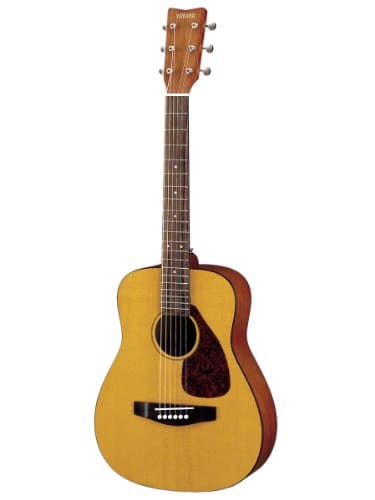 Yamaha JR1 (FG Junior)A 540 mm scale on a body 389 mm long and 317 mm across, with a gig bag included. | 3/4 acoustic, ages 7-11The honest floor | 8.2 | $189.99 · View on Amazon #ad How we’re funded |
Young children
Three strings on a 20.4 inch scale weighing two pounds. The shortest reach available on an instrument that still uses standard guitar strings and tuning.
| # | Product | Best for | Score | Price |
|---|---|---|---|---|
| 1 | 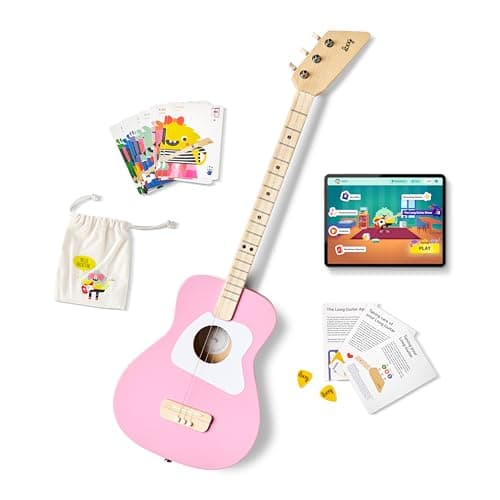 Loog Pro AcousticThree strings, a 20. | Ages 6-9, first chords fastThe honest floor | 8.0 | $149.00 · View on Amazon #ad How we’re funded |
The picks in full
Squier Mini Stratocaster
Squier by FenderBest for: Ages roughly 6-12
A 22.75 inch scale, 20 frets and a hardtail bridge. Fender's own sizing guidance puts it at roughly ages 6 to 12, and the fixed bridge removes the main way a child detunes a guitar.
Published specifications
- Scale length:
- 22.75" (578 mm) — 3/4 size
- Frets:
- 20
- Body / neck:
- Laminated hardwood body, maple neck, "C" profile
- Fingerboard:
- 9.5" radius
- Nut width:
- 1.6" (40.6 mm), synthetic bone
- Pickups / bridge:
- Three single-coils, 5-way switch, 6-saddle hardtail
- Detail:
- Smaller strap pins, side-mounted output jack
What it gets right
- Hardtail bridge — no tremolo to pull it out of tune, which matters more than any other spec on a child's guitar
- The narrower 1.6 inch nut is genuinely easier for small fingers than a full-size 1.65 inch
- Side-mounted jack and smaller strap pins are real design thought, not a shrunk adult guitar
Where it gives ground
- Laminated hardwood body — it is built to a price and it looks it up close
- 20 frets, so a couple of notes at the top of the neck simply are not there
What it is not good at
Growing with the player. A child who sticks with it will outgrow the 22.75 inch scale in a couple of years, and that is the expected outcome, not a defect.
How the specs score against a beginner’s needs
Scores are our reading of the published specifications above against what a beginner physically needs. They are not test results — we have not played this instrument.
Specifications from Squier Wiki — Mini Stratocaster specifications.
Yamaha JR1 (FG Junior)
YamahaBest for: 3/4 acoustic, ages 7-11
A 540 mm scale on a body 389 mm long and 317 mm across, with a gig bag included. It is a scaled-down FG, not a toy that happens to be small.
Published specifications
- Scale length:
- 540 mm (21-1/4") — 3/4 size
- Nut width:
- 43 mm (1-11/16")
- Top:
- Spruce (laminate)
- Back / sides:
- Meranti
- Neck / fingerboard:
- Nato neck, rosewood fingerboard and bridge
- Body:
- 389 mm long, 317 mm wide, 80-90 mm deep; 845 mm overall
- In the box:
- Gig bag
What it gets right
- The body is genuinely small — 317 mm across against the FG800's 412 mm, which is what actually decides whether a child can hold it
- Full 43 mm nut width despite the short scale, so chord shapes are not cramped
- Gig bag included, which on a child's instrument is not an accessory but a requirement
Where it gives ground
- Laminate spruce top, unlike the solid-top FG800 — this is the compromise for the size and price
- Meranti back and sides are basic
What it is not good at
Being a lifetime instrument. This is deliberately a stepping stone; a child who keeps playing moves to a full-size body in a few years and this one becomes the travel guitar.
How the specs score against a beginner’s needs
Scores are our reading of the published specifications above against what a beginner physically needs. They are not test results — we have not played this instrument.
Specifications from Yamaha USA shop — JR1 3/4 size acoustic guitar.
Epiphone Power Players Les Paul
EpiphoneBest for: Ages roughly 8-13
A 22.73 inch scale on a mahogany body with two real humbuckers, and a gig bag, strap, cable and picks in the box. The short scale is the whole point: it is reachable.
Published specifications
- Scale length:
- 22.73" — 3/4+ size
- Body / neck:
- Mahogany body, bolt-on mahogany neck, SlimTaper D profile
- Frets:
- 22, sculpted heel for upper-fret access
- Pickups:
- Epiphone 650R (neck) and 700T (bridge) humbuckers
- Bridge:
- LightningBar compensated wrap-around
- In the box:
- Gig bag, strap, picks, guitar cable
What it gets right
- A wrap-around bridge has nothing to knock out of tune — the right choice for a kid's guitar
- Mahogany body and neck rather than the plywood usual at this size
- Ships with the accessories that otherwise cost another chunk on top
Where it gives ground
- Les Pauls are dense, and even a 3/4+ one has weight a small child will notice on a strap
- Humbuckers only — no bright, clean single-coil sound available
What it is not good at
Very small children. At 3/4+ this suits roughly age 8 upward; a five-year-old needs the smaller scale of a Squier Mini or a Loog.
How the specs score against a beginner’s needs
Scores are our reading of the published specifications above against what a beginner physically needs. They are not test results — we have not played this instrument.
Specifications from Epiphone (Gibson) — Power Players Les Paul.
Loog Pro Acoustic
LoogBest for: Ages 6-9, first chords fast
Three strings, a 20.4 inch scale and two pounds. It uses standard guitar strings and standard tuning, so everything learned on it transfers directly to a six-string.
Published specifications
- Strings:
- 3, standard guitar strings and tuning
- Scale length:
- 20.4" (520 mm)
- Dimensions:
- 29.2" long, 8.8" wide, 2.6" deep
- Weight:
- 2.0 lb (0.9 kg)
- Body / neck:
- Basswood body, maple neck and fingerboard
- Frets:
- 18
- Age guidance:
- Manufacturer states from age 6
What it gets right
- Three strings means a real chord on the first day, which is the single biggest predictor of a child continuing
- Standard tuning and standard strings — this is not a proprietary instrument that teaches a dead end
- Two pounds and 29 inches long; a six-year-old can pick it up unaided
Where it gives ground
- Three strings, so full six-string chord shapes are not available
- Basswood and a short scale mean a quiet, thin voice compared with any full acoustic
What it is not good at
Being the guitar for long. It is a deliberate bridge to a six-string, and if the child is already 9 or 10 you should probably skip straight to a 3/4 six-string instead.
How the specs score against a beginner’s needs
Scores are our reading of the published specifications above against what a beginner physically needs. They are not test results — we have not played this instrument.
Specifications from Loog Guitars — Pro Acoustic specifications.
Questions people actually ask
What guitar is best for small hands?
One with a short scale — around 22 to 24 inches rather than the standard 25.5 — and ideally a narrower nut. The Squier Mini at 22.75 inches and the Epiphone Power Players at 22.73 inches are both full-featured guitars at a genuinely short reach.
Can adults play a 3/4 size guitar?
Absolutely, and plenty do. There is nothing childish about a short scale — several famous instruments are built that way deliberately. If the fret spacing on a full-size guitar is a genuine reach, a 3/4 will make you a better player faster.
Does nut width matter for small hands?
Yes, and it is a separate problem from scale length. Scale length sets how far apart the frets are — the reach along the neck. Nut width sets how far apart the strings are — the reach across it. Short fingers usually want both smaller, but a person with slim fingers and short reach only needs the first.
Should someone with small hands start on ukulele instead?
It is a genuinely good option if the goal is to strum and sing. Four nylon strings on a 13.6 inch scale is the smallest reach of anything we cover. If the goal is specifically guitar, a short-scale guitar is the better answer — see our ukulele versus guitar comparison.
Sources
Still deciding?
Every recommendation on this site is built the same way, and the method is published in full — including what we do not do and what would get a pick dropped.
Read next
- What size guitar does a child need?
Age and height chart with real scale lengths, the ten-second fit check, and why height beats age every time.
- Best guitars for kids: sized by reach, not by age
Segmented by age band with real scale lengths and body dimensions, plus why buying big to grow into reliably backfires.
- Best beginner electric guitars: what's worth it from $150 to $400
Segmented by player and price band, with the three specs that actually decide whether a first electric survives its first year.
- Best beginner ukuleles: what's worth it from $60 to $120
Segmented by hand size rather than price, with the nut-material spec that separates a real ukulele from a decoration.
- Best beginner acoustic guitars: solid tops from $200 to $350
Solid versus laminate tops, the dreadnought body-size problem, and picks for adults and children separately.