Guitars
Best guitars for kids: sized by reach, not by age
The most common mistake is buying one size too big so it lasts. Here is why that reliably ends the hobby, and what to buy at each age instead.
By Sawyer V. · Published · Last updated
Buying a guitar for a child is a different problem from buying one for yourself, and the difference is not budget. It is that a child has a fixed arm length, a fixed hand span and no ability to compensate for an instrument that does not fit. An adult on a slightly-too-large guitar adjusts. A seven-year-old on a full-size dreadnought simply cannot reach around it, and no amount of enthusiasm changes that.
So this page is organized by age band, and every pick lists its actual scale length and, where it matters, its actual body width. Those two numbers decide the purchase. Our method, including the fact that we have not played these instruments, is set out on how we pick.
As a starting point: roughly ages 4 to 6 suit a 1/4-size instrument or a 3-string Loog, ages 5 to 7 a 1/2 size, ages 8 to 12 a 3/4 size, and most players move to full size around 12 or once they pass about five feet tall. Height is a better guide than age.
Why buying big to grow into fails
This is the single most common mistake and it is made with good intentions every time. The reasoning is that children grow, guitars are expensive, so buy the one they will still fit in three years.
The reasoning fails because of what a first-position chord actually requires. A G major or an F chord asks a hand to span three or four frets while the wrist stays at a workable angle. On a full-size 25.5 inch scale the frets down at the nut are around 36 mm apart. On a 3/4 instrument at 22.75 inches they are around 32 mm. That 4 mm per fret compounds across a four-fret stretch, and for a hand that is itself only two-thirds of adult size it is the whole difference between a chord being reachable and not.
A child who cannot form the shape does not conclude that the guitar is too big. They conclude they are bad at guitar. Then they stop, and the guitar they were going to grow into sits in a corner until it is sold. Buy the size that fits now. Used 3/4 guitars in good condition sell quickly, precisely because every family arrives at this problem.
The three-string question
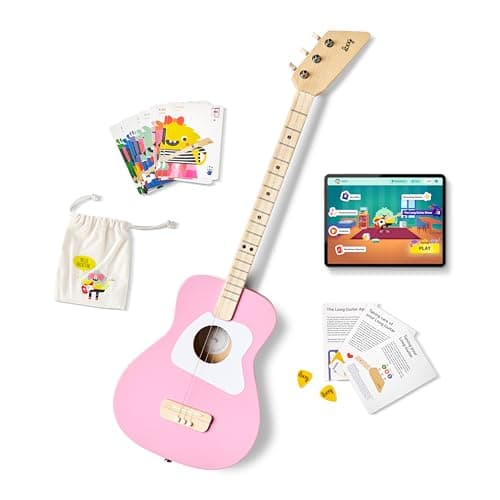
For a child under about eight, a 3-string instrument is worth genuinely considering rather than dismissing as a toy. The Loog Pro Acoustic uses standard guitar strings in standard tuning on a 20.4 inch scale, weighs two pounds, and is 29 inches long overall.
The argument for it is mechanical. On three strings, a major chord is one finger across one fret. A six-year-old can play a recognizable song in the first sitting. On six strings, the same child spends four weeks building the hand strength for a chord that still buzzes. The strongest predictor of a young child continuing is whether they made music early, and three strings gets there in days rather than weeks.
The argument against is that they will need to move to six strings eventually. That is true, and it is fine — because the tuning and the strings are the same, the transition is adding strings rather than starting over. If the child is already nine or ten, skip it and go straight to a 3/4 six-string.
What to skip
The $45 to $70 “kids guitar” with a cartoon finish and no named manufacturer. The tell is the description: it will list the color, the included pick and the bag, and it will not list a scale length. That is not an oversight. These instruments frequently have unadjustable necks and action so high that a child physically cannot press a string to the fret. The child fails at something that is not possible, and concludes the failure is theirs. This is the exact mechanism that ends the hobby.
Also skip a full-size acoustic for anyone under about twelve. The electric equivalent is survivable because the action is low; a full dreadnought with a 412 mm body and stiff steel strings is not. If the budget only reaches a cheap full-size acoustic, a good ukulele is a better instrument for the same money and a far better first year.
What else you will need
A clip-on tuner, without exception. A child cannot tune by ear yet and an out-of-tune instrument teaches them that everything they play sounds wrong.
A strap and a stand, both for the same reason: an instrument that lives in a case under a bed gets played roughly a tenth as often as one on a stand in the corner of the room. If you buy nothing else on this list, buy the stand.
For an electric, a small practice amp with a headphone socket. The headphone socket is not a luxury — it is what makes practicing at eight in the evening possible in a house with other people in it.
Quick picks
Roughly ages 6 to 8
The goal at this age is a real chord in the first week. Three strings gets there; six strings usually does not.
| # | Product | Best for | Score | Price |
|---|---|---|---|---|
| 1 | Loog Pro AcousticThree strings, a 20. | Ages 6-9, first chords fastThe honest floor | 8.0 | $149.00 · View on Amazon #ad How we’re funded |
Roughly ages 7 to 11
Genuine 3/4 instruments. Both have short scales and, crucially, bodies small enough for a child to get an arm over unaided.
| # | Product | Best for | Score | Price |
|---|---|---|---|---|
| 1 | 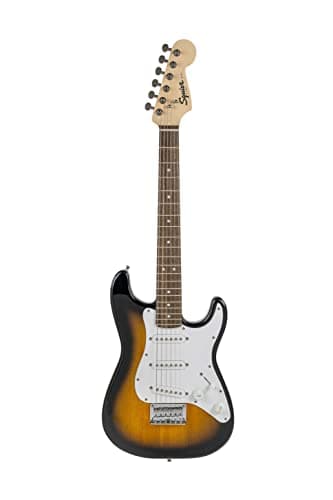 Squier Mini StratocasterA 22. | Ages roughly 6-12The honest floor | 8.1 | $199.99 · View on Amazon #ad How we’re funded |
| 2 | 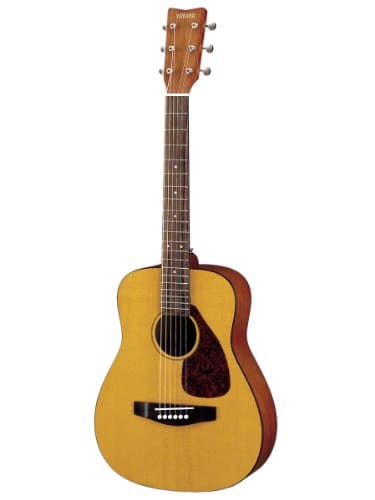 Yamaha JR1 (FG Junior)A 540 mm scale on a body 389 mm long and 317 mm across, with a gig bag included. | 3/4 acoustic, ages 7-11The honest floor | 8.2 | $189.99 · View on Amazon #ad How we’re funded |
Roughly ages 9 to 13
A 3/4+ scale with adult hardware. This is the last stop before a full-size instrument and it is a real guitar, not a toy.
| # | Product | Best for | Score | Price |
|---|---|---|---|---|
| 1 | No image Epiphone Power Players Les PaulA 22. | Ages roughly 8-13Enough | 8.7 | Check price on Amazon → #ad How we’re funded |
The picks in full
Loog Pro Acoustic
LoogBest for: Ages 6-9, first chords fast
Three strings, a 20.4 inch scale and two pounds. It uses standard guitar strings and standard tuning, so everything learned on it transfers directly to a six-string.
Published specifications
- Strings:
- 3, standard guitar strings and tuning
- Scale length:
- 20.4" (520 mm)
- Dimensions:
- 29.2" long, 8.8" wide, 2.6" deep
- Weight:
- 2.0 lb (0.9 kg)
- Body / neck:
- Basswood body, maple neck and fingerboard
- Frets:
- 18
- Age guidance:
- Manufacturer states from age 6
What it gets right
- Three strings means a real chord on the first day, which is the single biggest predictor of a child continuing
- Standard tuning and standard strings — this is not a proprietary instrument that teaches a dead end
- Two pounds and 29 inches long; a six-year-old can pick it up unaided
Where it gives ground
- Three strings, so full six-string chord shapes are not available
- Basswood and a short scale mean a quiet, thin voice compared with any full acoustic
What it is not good at
Being the guitar for long. It is a deliberate bridge to a six-string, and if the child is already 9 or 10 you should probably skip straight to a 3/4 six-string instead.
How the specs score against a beginner’s needs
Scores are our reading of the published specifications above against what a beginner physically needs. They are not test results — we have not played this instrument.
Specifications from Loog Guitars — Pro Acoustic specifications.
Squier Mini Stratocaster
Squier by FenderBest for: Ages roughly 6-12
A 22.75 inch scale, 20 frets and a hardtail bridge. Fender's own sizing guidance puts it at roughly ages 6 to 12, and the fixed bridge removes the main way a child detunes a guitar.
Published specifications
- Scale length:
- 22.75" (578 mm) — 3/4 size
- Frets:
- 20
- Body / neck:
- Laminated hardwood body, maple neck, "C" profile
- Fingerboard:
- 9.5" radius
- Nut width:
- 1.6" (40.6 mm), synthetic bone
- Pickups / bridge:
- Three single-coils, 5-way switch, 6-saddle hardtail
- Detail:
- Smaller strap pins, side-mounted output jack
What it gets right
- Hardtail bridge — no tremolo to pull it out of tune, which matters more than any other spec on a child's guitar
- The narrower 1.6 inch nut is genuinely easier for small fingers than a full-size 1.65 inch
- Side-mounted jack and smaller strap pins are real design thought, not a shrunk adult guitar
Where it gives ground
- Laminated hardwood body — it is built to a price and it looks it up close
- 20 frets, so a couple of notes at the top of the neck simply are not there
What it is not good at
Growing with the player. A child who sticks with it will outgrow the 22.75 inch scale in a couple of years, and that is the expected outcome, not a defect.
How the specs score against a beginner’s needs
Scores are our reading of the published specifications above against what a beginner physically needs. They are not test results — we have not played this instrument.
Specifications from Squier Wiki — Mini Stratocaster specifications.
Yamaha JR1 (FG Junior)
YamahaBest for: 3/4 acoustic, ages 7-11
A 540 mm scale on a body 389 mm long and 317 mm across, with a gig bag included. It is a scaled-down FG, not a toy that happens to be small.
Published specifications
- Scale length:
- 540 mm (21-1/4") — 3/4 size
- Nut width:
- 43 mm (1-11/16")
- Top:
- Spruce (laminate)
- Back / sides:
- Meranti
- Neck / fingerboard:
- Nato neck, rosewood fingerboard and bridge
- Body:
- 389 mm long, 317 mm wide, 80-90 mm deep; 845 mm overall
- In the box:
- Gig bag
What it gets right
- The body is genuinely small — 317 mm across against the FG800's 412 mm, which is what actually decides whether a child can hold it
- Full 43 mm nut width despite the short scale, so chord shapes are not cramped
- Gig bag included, which on a child's instrument is not an accessory but a requirement
Where it gives ground
- Laminate spruce top, unlike the solid-top FG800 — this is the compromise for the size and price
- Meranti back and sides are basic
What it is not good at
Being a lifetime instrument. This is deliberately a stepping stone; a child who keeps playing moves to a full-size body in a few years and this one becomes the travel guitar.
How the specs score against a beginner’s needs
Scores are our reading of the published specifications above against what a beginner physically needs. They are not test results — we have not played this instrument.
Specifications from Yamaha USA shop — JR1 3/4 size acoustic guitar.
Epiphone Power Players Les Paul
EpiphoneBest for: Ages roughly 8-13
A 22.73 inch scale on a mahogany body with two real humbuckers, and a gig bag, strap, cable and picks in the box. The short scale is the whole point: it is reachable.
Published specifications
- Scale length:
- 22.73" — 3/4+ size
- Body / neck:
- Mahogany body, bolt-on mahogany neck, SlimTaper D profile
- Frets:
- 22, sculpted heel for upper-fret access
- Pickups:
- Epiphone 650R (neck) and 700T (bridge) humbuckers
- Bridge:
- LightningBar compensated wrap-around
- In the box:
- Gig bag, strap, picks, guitar cable
What it gets right
- A wrap-around bridge has nothing to knock out of tune — the right choice for a kid's guitar
- Mahogany body and neck rather than the plywood usual at this size
- Ships with the accessories that otherwise cost another chunk on top
Where it gives ground
- Les Pauls are dense, and even a 3/4+ one has weight a small child will notice on a strap
- Humbuckers only — no bright, clean single-coil sound available
What it is not good at
Very small children. At 3/4+ this suits roughly age 8 upward; a five-year-old needs the smaller scale of a Squier Mini or a Loog.
How the specs score against a beginner’s needs
Scores are our reading of the published specifications above against what a beginner physically needs. They are not test results — we have not played this instrument.
Specifications from Epiphone (Gibson) — Power Players Les Paul.
Questions people actually ask
What is a good instrument for a 7 year old to learn?
A 1/2-size guitar, a 3-string Loog or a soprano ukulele are the three that work reliably at seven. All three share the property that matters: a small enough body and a short enough scale that the child can hold it and reach a chord unaided. We compare across instrument families in the best first instrument for a child.
What size guitar for 10 year old?
Usually a 3/4, which is roughly a 22 to 23 inch scale. Standard sizing guidance puts 3/4 instruments at about ages 8 to 12 or heights between 4’2” and 5’. Height beats age here — a tall ten-year-old may already suit a full-size instrument and a small one will not. The table is in guitar sizes for kids.
Should I buy a bigger guitar so my child grows into it?
No. A guitar is not a coat. A child who cannot form a chord shape on an oversized neck stops practicing within weeks, and a child who stops practicing never grows into anything. Buy the size that fits now; a 3/4 guitar in good condition resells easily because every family faces the same problem two years later.
Is an electric or acoustic guitar better for a child?
Electric, usually — on physical grounds. Thinner strings and lower action need less hand strength, and small hands have very little of it. The counterweight is that an electric needs an amplifier, which is both a cost and a noise consideration. A quiet compromise many families land on is an electric with headphones through a small practice amp.
Sources
Still deciding?
Every recommendation on this site is built the same way, and the method is published in full — including what we do not do and what would get a pick dropped.
Read next
- What size guitar does a child need?
Age and height chart with real scale lengths, the ten-second fit check, and why height beats age every time.
- The best first instrument for a child
Instrument by instrument, the real starting age set by hand size and reach, with a pick for each and the noise column filled in.
- Best beginner electric guitars: what's worth it from $150 to $400
Segmented by player and price band, with the three specs that actually decide whether a first electric survives its first year.
- Best ukuleles for kids
Wood or composite, with the humidity problem that kills cheap wooden ukuleles in dry houses stated plainly.
- How much should a beginner guitar cost?
Four price bands defined by specification rather than by number, plus the hidden costs that turn a $200 budget into a $270 purchase.