Strings
Mandolin accessories you actually need
Two cheap changes make a budget mandolin sound like a better instrument. Neither of them is the one people buy first.
By Sawyer V. · Published · Last updated

Buy strings and a proper pick first. Together they cost about ten dollars more than nothing and they change the sound more than any other purchase available. This is the honest priority order for a mandolin and it is not the order people buy in. On a budget instrument the factory strings are routinely the worst component fitted, and the pick that came in the case is usually a thin guitar pick, which physically cannot drive four pairs of steel strings. Both are cheap. Both are transformative. Neither looks like an upgrade.
Every pick states its Starter Path band, and we have not played any of them — the method is on how we pick. Gauges, materials, model numbers and lengths come from D’Addario’s and Dunlop’s own pages, cited at the bottom.
1. Strings. D’Addario EJ74, medium 11-40, phosphor bronze, loop end — check your tailpiece takes loop ends, because a minority of mandolins need ball ends and the EJ70 is that set. 2. A stiff pick, around 1.4 mm with a beveled edge; a thin guitar pick is the commonest reason a mandolin sounds thin and clicky. 3. A clip-on tuner — eight strings in four pairs is twice a guitar’s tuning work, and each pair has to be in tune with itself. 4. A cradle-style strap, if it is played standing, because many mandolins have no strap buttons at all. Later: a real case, once the instrument leaves the house.
1. Strings, the cheapest real upgrade on the instrument
A mandolin at the beginner end of the market is built to a price, and the easiest place to take cost out is the set of strings fitted at the factory. They are frequently dull before the instrument is sold, because it has been sitting in a box.
D’Addario EJ74#ad is the pick because it is the reference set in the category. D’Addario publishes the full breakdown: medium 11-40, plain steel .011 and .015 trebles with phosphor bronze wound .026 and .040, round wound, loop end — which they describe as a universal fit — and list it as ideal for bluegrass and folk. Buy these if the mandolin is more than a few months old or was bought used, which covers nearly everybody. Skip them if your tailpiece requires ball-end strings, in which case the EJ70 is the set — look at the tailpiece before ordering, because loop-end strings will not seat at all on a ball-end fitting.
One warning: eight strings is a slower job than six, and mandolin tailpieces are fiddly. Change them in pairs, keep tension on the bridge as you go, and remember that the bridge on most mandolins is not glued down — it is held by string pressure, so taking every string off at once means it falls over and its position has to be found again.
2. A pick stiff enough to actually move the strings
This is the accessory most mandolin beginners have never considered and the one with the highest ratio of improvement to cost.
A mandolin asks a lot of a pick: four pairs of steel strings at high tension over a short scale. A thin, flexible guitar pick flexes instead of displacing them, and what you hear is pick noise and a thin attack rather than the bright bell tone the instrument is capable of. Beginners reliably attribute that to the mandolin.
The Dunlop Primetone Triangle Smooth, 1.4 mm#ad is the pick. Dunlop publishes it as model 513-140 in Ultex with three hand-burnished sculpted beveled edges, which they describe as giving a quick release — and the bevel is the part that matters, because a square-edged pick scratches across paired strings. Being a triangle, each pick has three usable points. Buy these if the player is using whatever came in the case. Skip them if they already have a stiff mandolin pick they like — picks are the classic duplicate, and a player who has settled on a shape has settled for a reason.
3. A clip-on tuner, which earns its place here more than on a guitar
Eight strings, tuned in four pairs, G-D-A-E low to high. Each pair has to be in tune with itself as well as with the other three, and two strings a fraction apart do not sound like a chorus — they sound out of tune in a way that is hard to localize.
That makes tuning a mandolin roughly twice the work of tuning a guitar and a far more frequent activity, especially on a new instrument whose strings are still stretching.
The D’Addario Micro Headstock Tuner#ad is already our pick elsewhere on the site and it suits a mandolin well: it clips to the headstock and reads vibration rather than room sound, so it works in a noisy room or at a jam. It is small enough to leave attached. Buy this if there is no clip-on tuner in the house. Skip it if there is — a clip-on tuner is instrument-agnostic, so a guitarist’s spare works fine. Our page on how to tune a mandolin covers the pairs.
4. A strap, and why a guitar strap will not do
Mandolin straps are a genuinely different product, and this is the accessory new players most often do not know exists.
Plenty of mandolins have nowhere to attach a conventional two-button strap. The answer is a cradle-style strap that loops around the instrument instead of clipping to it. The D’Addario leather mandolin strap#ad is that: leather, cradle style, adjustable from 36.5 to 46 inches through multiple holes, in black or brown. We have not quoted a width, because D’Addario’s own page gives two conflicting figures and we would rather omit a spec than publish one we cannot stand behind. Buy this if the mandolin is played standing, or the player’s left hand is holding the instrument up rather than fretting. Skip it if they only play sitting down and are comfortable.
What to skip, or buy later
A case, but only for now. It is a real purchase and it is further down the list because it changes nothing about how the instrument plays. Once the mandolin leaves the house it matters, because the thin bag most beginner instruments ship with is dust protection rather than impact protection.
A capo. Mandolin capos exist and are fiddly, and a beginner playing in two or three keys does not need one. Later, if they are accompanying a singer.
A tone-gard or arm rest. Real products that stop a forearm damping the back of the instrument. Audible to a player who already has a good tone, inaudible to somebody in their first months.
Coated strings. They last longer and cost noticeably more. On a budget instrument with a beginner playing it, two sets of uncoated strings over a year is the better spend.
A pickup. Only when there is a band and a PA, not before.
What we would buy
D'Addario EJ74 Phosphor Bronze Mandolin Strings, Medium 11-40
D'AddarioBest for: The first real upgrade to a cheap mandolin
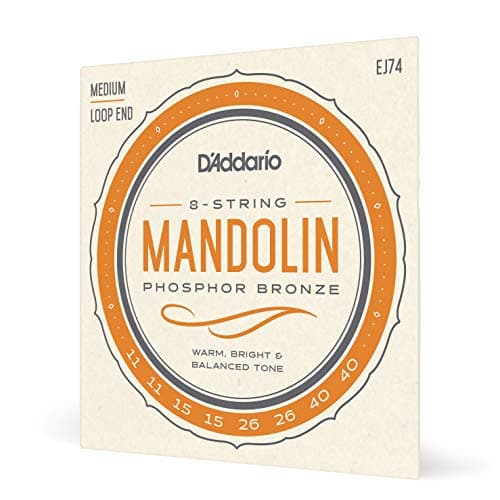
D'Addario's best-selling mandolin set, medium gauge, loop end. On a budget mandolin the factory strings are usually the worst component on the instrument, which makes a ten-dollar string change the highest-return thing you can do to it.
Published specifications
- Gauges:
- 11-40 medium: plain steel .011 and .015, phosphor bronze wound .026 and .040, in pairs
- End:
- Loop end — D'Addario publishes this as a universal fit
- Winding:
- Round wound
- Material:
- Phosphor bronze wound strings over plain steel trebles
- Published use:
- D'Addario lists it as ideal for bluegrass and folk
- Ball-end alternative:
- EJ70 (11-38) is the ball-end set, for mandolins that require ball ends
What it gets right
- The single cheapest change that audibly improves a budget mandolin
- D'Addario publishes the full gauge breakdown, so you know exactly what you are fitting
- Loop end fits the overwhelming majority of mandolin tailpieces
- Best-selling set in the category, so it is the baseline other sets are described against
Where it gives ground
- Eight strings to change rather than six, and mandolin tailpieces are fiddly
- Loop end is wrong for the minority of mandolins that need ball ends — check first
- Medium gauge is firmer under the fingers than the light sets some beginners prefer
- Uncoated, so they go dull faster than a coated set
What it is not good at
A mandolin that requires ball-end strings. D'Addario sells the EJ70 for exactly that case, and fitting the wrong end type means the strings will not seat in the tailpiece at all.
How the specs score against a beginner’s needs
Scores are our reading of the published specifications above against what a beginner physically needs. They are not test results — we have not played this instrument.
Dunlop Primetone Triangle Smooth Pick, 1.4 mm (3-pack)
Jim DunlopBest for: The pick a mandolin actually wants
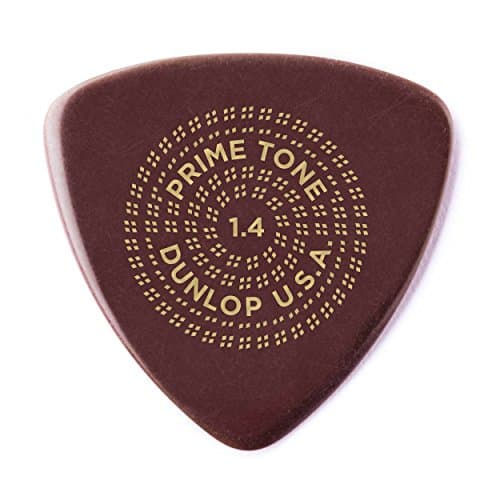
Ultex, 1.4 mm, triangular, with three hand-burnished beveled edges. A mandolin needs a far stiffer pick than a guitar does, and giving a new player the thin celluloid pick that came free with the instrument is the commonest reason their mandolin sounds thin.
Published specifications
- Model:
- 513-140
- Thickness:
- 1.4 mm
- Material:
- Ultex
- Shape:
- Triangle, with three usable playing points
- Edges:
- Hand-burnished sculpted bevels, published as giving a quick release
- Pack:
- 3 picks
What it gets right
- Stiff enough to drive eight strings, which a standard guitar pick is not
- Three points per pick, so one pick is effectively three before it is worn out
- Beveled edges genuinely reduce the scratchy attack a square-edged pick gives on paired strings
- Cheap enough to buy as an add-on and still be the thing that changes the sound most
Where it gives ground
- Three picks for the price of a dozen thin ones
- 1.4 mm feels unmanageable to anyone used to a flexible guitar pick
- Picks are the classic duplicate gift — a player may own twenty
- Large triangle shape is not to everyone's taste; Dunlop sells a small-triangle version
What it is not good at
Strumming an acoustic guitar. At 1.4 mm with a hard bevel it is built for driving paired metal strings, and on a six-string acoustic it is loud, stiff and unsubtle.
How the specs score against a beginner’s needs
Scores are our reading of the published specifications above against what a beginner physically needs. They are not test results — we have not played this instrument.
D'Addario Micro Headstock Tuner (PW-CT-12)
D'AddarioBest for: Staying on the headstock
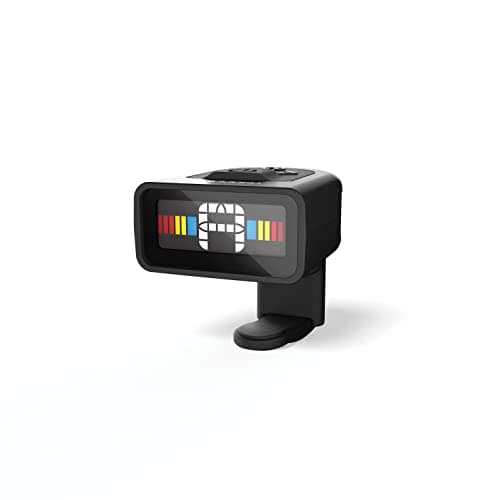
The tuner that disappears. It clips behind the headstock, reads vibration through the wood rather than through a microphone, and the screen rotates to four positions so it can be read from wherever it ends up.
Published specifications
- Type:
- Clip-on chromatic headstock tuner
- Sensing:
- Piezo — D'Addario cites improved piezo control for noisy environments
- Display:
- Full color, 4 screen orientations (2 vertical, 2 horizontal)
- Calibration:
- 410-480 Hz
- Power:
- CR2032 battery included
- Mounting:
- Ratchet clamp
- Accuracy:
- Not published by D'Addario
What it gets right
- Four screen orientations, so it reads correctly clipped to the front or the back of a headstock
- Calibration from 410 to 480 Hz covers ensembles that do not tune to A440
- Vibration sensing rather than a microphone, which is why it still works in a room with a television on
- Small enough to leave clipped on permanently
Where it gives ground
- CR2032 coin cell — a battery you have to go and find when it dies, and there is no rechargeable option in this model
- D'Addario publishes no accuracy figure in cents, so its precision cannot be compared on paper with tuners that do
- No weight or dimensions published, despite the size being the selling point
What it is not good at
Wind and brass. It reads vibration through a solid headstock, so there is nothing for it to clip to on a flute or a trumpet.
How the specs score against a beginner’s needs
Scores are our reading of the published specifications above against what a beginner physically needs. They are not test results — we have not played this instrument.
Specifications from D'Addario — Micro Headstock Tuner product page.
D'Addario Leather Mandolin Strap, cradle style
D'AddarioBest for: Holding the instrument without gripping it
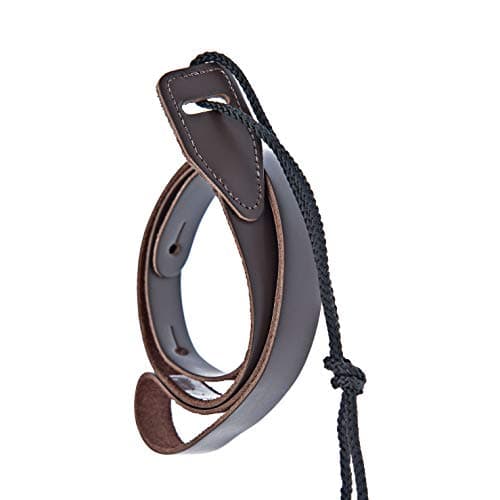
A cradle-style leather strap, adjustable through multiple holes from 36.5 to 46 inches. Most mandolins have nowhere to attach a guitar strap, which is why a mandolin-specific cradle strap is the accessory most new players do not know exists.
Published specifications
- Type:
- Cradle style — it loops around the instrument rather than clipping to two buttons
- Material:
- Leather
- Length:
- Adjustable, 36.5 to 46 inches
- Adjustment:
- Multiple holes
- Colors:
- Black and brown
- Publisher inventory:
- D'Addario SKU 75M00 / 75M01
What it gets right
- Cradle design works on mandolins that have no strap buttons at all
- Leather, so it will outlast the instrument a beginner is learning on
- A real range of adjustment, which matters when the player is still growing
- Solves a problem most beginners have and have not named: they are holding the instrument up with their left hand
Where it gives ground
- Cradle straps sit differently from a guitar strap and take getting used to
- D'Addario's own page gives conflicting width figures, so we have not quoted one
- Leather needs a few weeks to soften
- An F-style mandolin with buttons may suit a conventional strap better
What it is not good at
Anything other than a mandolin or similar small body. A cradle strap is shaped around the instrument's dimensions and will not hold a guitar or a banjo properly.
How the specs score against a beginner’s needs
Scores are our reading of the published specifications above against what a beginner physically needs. They are not test results — we have not played this instrument.
Questions people actually ask
What does a new mandolin player actually need?
A set of decent strings and a stiff pick, and together they cost less than a method book. On a budget mandolin the factory strings are usually the worst component on the instrument, and the free pick in the case is normally a thin guitar pick that cannot drive eight metal strings. Those two changes alter the sound more than anything else you can buy.
What gauge mandolin strings should a beginner use?
Medium, 11-40, which is what D’Addario’s EJ74#ad is — it is the best-selling set in the category and the one other sets get described against. The one thing to check before ordering is the tailpiece: EJ74 is a loop-end set, which fits the large majority of mandolins, but a minority need ball ends and D’Addario sells the EJ70 for those.
Why does a mandolin need a thicker pick than a guitar?
Because it is driving eight strings in four pairs rather than six single ones, at higher tension over a much shorter scale. A thin, flexible pick bends instead of moving the strings, which produces a thin, clicky sound that most beginners assume is the instrument’s fault. Something around 1.4 mm with a beveled edge is a normal mandolin pick.
Do I need a clip-on tuner if I have a phone app?
A clip-on is genuinely better here than on most instruments. It reads the vibration through the headstock rather than the sound in the room, so it keeps working while somebody else is playing — and with eight strings to bring into tune, including each pair against itself, you will use it far more than a guitarist does.
Does a mandolin need a strap?
If it is played standing, yes, and it is a different product from a guitar strap: many mandolins have nowhere to clip one, so mandolin straps are cradle-style and loop around the instrument. Sitting down you can manage without, though plenty of players use one anyway to stop the left hand holding the instrument up instead of playing it.
Is a case worth buying?
Once the instrument leaves the house, yes. Most beginner mandolins ship with a thin gig bag that is dust protection rather than impact protection. It is not in our first four because it is not what changes how the instrument sounds — it is what stops it being broken.
Sources
- D'Addario — EJ74 Mandolin Strings, Phosphor Bronze, Medium, 11-40: plain steel .011 and .015, phosphor bronze wound .026 and .040, round wound and loop end construction for universal fit, listed as ideal for bluegrass and folk; the EJ70 is the ball-end set for mandolins requiring ball ends
- Jim Dunlop — Primetone Triangle Smooth Pick 1.4 mm, model 513-140: Ultex construction with three hand-burnished sculpted beveled edges published as giving a quick release and a wide gripping surface
- D'Addario — Leather Mandolin Strap (SKU 75M00 / 75M01): cradle style, leather, adjustable 36.5" to 46" through multiple holes, black and brown
Still deciding?
Every recommendation on this site is built the same way, and the method is published in full — including what we do not do and what would get a pick dropped.
Read next
- Best beginner mandolins
A-style versus F-style, why a carved solid top matters more here than on a guitar, and the setup a mandolin needs.
- Best mandolin books for beginners
The method that starts from nothing, the chord book that answers week-three questions, and the song collection that keeps a beginner going. Three books on published page counts.
- How to tune a mandolin
GDAE in pairs, why unison courses are unforgiving, the tuning order that converges, and what to do when a course will not settle.
- Mandolin or ukulele to start on?
Finger comfort, time to a first song, what each is for musically, and which suits a player with a guitar or violin background.
- Violin accessories you actually need
The shoulder rest and tuner that outfits leave out, what to upgrade first, and which popular accessories to skip.
- Ukulele accessories you actually need
The three items that genuinely matter, the best cheap upgrade, and what a bundle is really padding with.