Guitars
Best guitar capos for beginners
The accessory that turns four chords into a whole songbook, and the one most likely to be blamed for a guitar sounding out of tune.
By Sawyer V. · Published · Last updated
A capo is a clamp. It presses all six strings down at one fret, so the instrument is effectively shortened and everything sounds higher. The shapes in your hands do not change, which is exactly why it matters to a beginner: it multiplies a small vocabulary of chords across every key a song might be in.
It is also the cheapest accessory that can make a guitar sound broken, because a capo that clamps too hard bends the strings sharp. That is the axis this page is really about.
We have not tested these capos. This is our reading of what each maker publishes about how its clamp works, and the method is on how we pick.
Buy the D’Addario NS Tri-Action if you want one capo that does everything: one hand, adjustable pressure, and a pick holder. Buy the Shubb C1 if you keep one guitar and want the tuning to hold perfectly. Buy the Kyser if you will be changing position mid-song and want the fastest, simplest clamp there is.
When a beginner actually needs one
Not in week one. The capo becomes useful the moment you try to play along with something.
Playing along with records. Songs are written in whatever key suited the singer, which is frequently a key full of barre chords. A capo puts the song back into the shapes you have.
Singing. The guitar can move to suit your voice instead of your voice straining to suit the guitar. For anyone who wants to sing while they play, this is the capo’s main job.
Playing with someone else. Two guitarists with capos at different frets playing the same chord shapes is a genuinely nice sound, and it is free.
The three designs
Trigger capos use a spring. You squeeze, position, release, all with one hand. Fast, simple, and the pressure is whatever the spring decides — which on a thin neck can be far more than the strings need.
Lever capos use a screw to set the pressure and an over-center lever to apply it. You set it once for your guitar and it repeats that pressure exactly. Slower to move, and the most accurate.
Screw and strap capos are the old designs: an elastic strap or a thumbscrew yoke. Cheap, slow, and generally worse at everything, which is why none is on this page.
The pick on this page that blurs the line is the Tri-Action, which is a trigger capo with a tension screw on it.
Why capos pull chords sharp
Worth understanding, because it explains every buying decision here.
A string sounds a note because of its tension and its length. A capo shortens it, which is the point. But if the clamp is also pressing the string downward harder than it needs to, it stretches it, and a stretched string is sharper. Press hard enough and the instrument that was perfectly in tune ten seconds ago is now noticeably wrong — usually worst on the thinner strings.
Two things fix it. Adjustable tension, so you use the least pressure that produces a clean note. And a clamp geometry that presses straight down rather than dragging the strings sideways across the fingerboard, which is what Shubb publishes as its design principle.
The other common cause is placement. Sitting the capo in the middle of the fret space instead of tight behind the fret needs far more force to stop buzzing. If your capo pulls sharp, move it forward before you blame the capo.
How we ranked these
Tuning stability first, because a capo that detunes the guitar has failed at its job. Then speed of use, then whether it fits the guitar you own, then build and warranty, then room to grow.
The picks
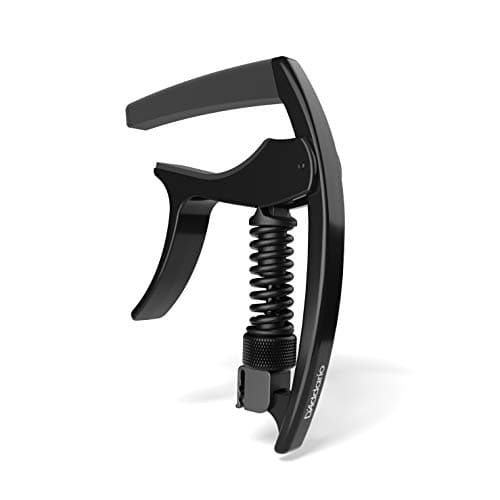
The D'Addario NS Tri-Action Capo#ad is the one we would buy for a beginner. It works one-handed like a trigger capo, and it has a micrometer tension screw so the clamping force can be dialed down until the chords ring clean without going sharp. D’Addario specifies the geometry to need less squeeze than a stiff spring, which matters for smaller hands, and there is a pick holder built into it.
Its limits: a one-year warranty where Kyser offers a lifetime one, and it is published for six-string guitars only, with no twelve-string or classical fit listed.
The Shubb C1 Standard Capo (steel string)#ad is the accuracy pick. A screw sets the pressure once for your instrument, then an over-center lever with a roller applies exactly that pressure every time. The rubber sleeve is designed to conform to the fingerboard radius, and the clamp presses the string straight down rather than pulling it sideways — Shubb’s published reason the tuning holds.
The trade is speed and single-instrument thinking. It is a two-step device, so mid-song changes are slower, and moving it between guitars with different neck depths means re-dialing the screw. It is also steel-string only; nylon players need the C2.
The Kyser Quick-Change Capo (6-string acoustic)#ad is the fastest and the simplest. Aircraft-grade aluminum, a trigger spring, one hand, and you can move it between verses without breaking time. Kyser makes it in Texas and backs it with a lifetime guarantee, repair or replacement, which is unusual for an accessory this size.
The honest cost is the thing this page keeps returning to: no tension adjustment at all. The spring decides, and on some necks that means a chord that rings sharp with nothing you can do about it. It is also model-specific — the acoustic capo is not the electric capo.
What to do when you get it
Tune with the capo on. Not before. Whatever the capo does to the tuning, tuning afterwards makes it correct.
Place it tight behind the fret. The lowest pressure that gives clean notes is the correct pressure.
Take it off when you put the guitar away. Leaving a capo clamped keeps the strings under extra tension and presses the rubber into them permanently.
Do not use it to avoid barre chords forever. It is a tool for keys, not a way around the F chord. That wall, and how long it lasts, is in is guitar hard to learn.
Quick picks
The one to buy first
One-handed like a trigger capo, adjustable like a lever capo, with a pick holder built in. The combination a beginner actually wants.
| # | Product | Best for | Score | Price |
|---|---|---|---|---|
| 1 | D'Addario NS Tri-Action CapoA trigger capo with a tension screw on it. | Both at onceEnough | 8.0 | $25.99 · View on Amazon #ad How we’re funded |
If tuning is the priority
Set the pressure once for your guitar and the locking geometry repeats it every time, pressing the string straight down instead of sideways.
| # | Product | Best for | Score | Price |
|---|---|---|---|---|
| 1 | 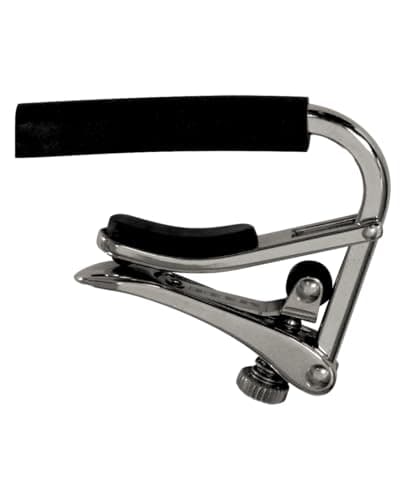 Shubb C1 Standard Capo (steel string)The capo you set once. | Staying in tuneEnough | 8.0 | $22.95 · View on Amazon #ad How we’re funded |
If speed is the priority
Squeeze, move, release, one hand, without stopping. No adjustment at all, and a lifetime guarantee behind it.
| # | Product | Best for | Score | Price |
|---|---|---|---|---|
| 1 | 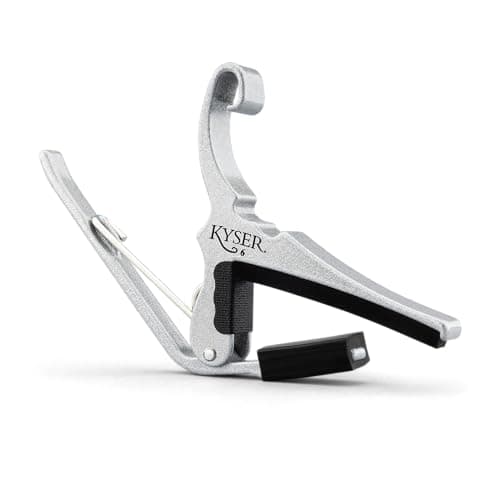 Kyser Quick-Change Capo (6-string acoustic)The trigger capo almost everyone pictures. | One-handed changesThe honest floor | 7.6 | $24.95 · View on Amazon #ad How we’re funded |
The picks in full
D'Addario NS Tri-Action Capo
D'AddarioBest for: Both at once
A trigger capo with a tension screw on it. You get the one-handed squeeze of a Kyser and the micrometer adjustment of a Shubb, which is the combination a beginner actually wants.
Published specifications
- Material:
- Aircraft-grade aluminum
- Mechanism:
- Patented Tri-Action geometry, reduced opening and closing force
- Tension adjustment:
- Micrometer tension screw
- String action:
- Direct horizontal pressure, minimizing side-to-side pull
- Fit:
- 6-string electric and acoustic
- Extra:
- Integrated pick holder
- Warranty:
- 1-year limited
What it gets right
- One-handed operation plus an adjustable tension screw — the two things that are usually sold separately
- The Tri-Action geometry is specified to need less squeeze, which matters for smaller or weaker hands
- Built-in pick holder removes the accessory most likely to be lost
Where it gives ground
- One-year limited warranty, against a lifetime guarantee on the Kyser
- Published for 6-string guitars only — no 12-string or classical fit is listed
- No weight or dimensions published, so neck clearance is unverifiable before buying
What it is not good at
Anything other than a six-string guitar. D'Addario publishes no radius range or multi-instrument fit for it.
How the specs score against a beginner’s needs
Scores are our reading of the published specifications above against what a beginner physically needs. They are not test results — we have not played this instrument.
Specifications from D'Addario — NS Tri-Action Capo.
Shubb C1 Standard Capo (steel string)
ShubbBest for: Staying in tune
The capo you set once. A screw sets the clamping pressure for your guitar, then an over-center lever applies that same pressure every time, pressing the string straight down instead of dragging it sideways.
Published specifications
- Material:
- Solid brass, plated finishes
- Mechanism:
- Over-center locking lever with a roller
- Tension adjustment:
- One-time screw adjustment; locking geometry repeats it
- Sleeve:
- Proprietary rubber that conforms to the fingerboard radius
- String action:
- Presses the string straight down, never sideways
- Fit:
- Steel-string acoustic and electric (C2 is the nylon-string model)
- Weight:
- Not published by Shubb
What it gets right
- The pressure is a setting rather than a guess, which is the single biggest cause of a capo pulling chords sharp
- Pressing straight down rather than sideways is Shubb's published reason the tuning holds
- Solid brass with a serviceable design rather than a stamped part
Where it gives ground
- Two-handed and two-step: position it, then flip the lever — slower than a trigger capo mid-song
- The adjustment assumes one guitar; moving between necks of different depths means re-dialing it
- Steel-string only, so a nylon-string player needs the C2 instead
What it is not good at
Fast, blind changes between songs. It is built for accuracy on one instrument, not for speed.
How the specs score against a beginner’s needs
Scores are our reading of the published specifications above against what a beginner physically needs. They are not test results — we have not played this instrument.
Specifications from Shubb — C1 standard capo, Shubb — how it works.
Kyser Quick-Change Capo (6-string acoustic)
KyserBest for: One-handed changes
The trigger capo almost everyone pictures. Squeeze, move, release — one hand, without putting the guitar down — and Kyser backs it with a lifetime guarantee.
Published specifications
- Material:
- Aircraft-grade aluminum
- Mechanism:
- Trigger-style spring clamp, single-hand operation
- Fit:
- 6-string acoustic guitars (separate models for electric and other instruments)
- Tension adjustment:
- None published — clamping force is set by the spring
- Made in:
- Texas, USA; 100% US sourced and manufactured
- Warranty:
- Lifetime, repair or replacement
- Weight:
- Not published by Kyser
What it gets right
- One-handed trigger action means you can move it mid-song without stopping
- Aircraft-grade aluminum keeps the weight off the neck while staying rigid across all six strings
- A lifetime, no-questions guarantee on a US-made part, which is unusual on an accessory this size
Where it gives ground
- No tension adjustment at all — the spring decides the pressure, and on some necks that means buzzing or pulled-sharp strings
- Model-specific: the acoustic version is not the electric version, so one capo does not cover a house with several guitars
- Kyser publishes no weight or dimensions, so clearance on an unusually thick neck cannot be checked in advance
What it is not good at
Fine control. If a chord rings sharp after clamping, there is nothing to adjust — the answer is a different capo.
How the specs score against a beginner’s needs
Scores are our reading of the published specifications above against what a beginner physically needs. They are not test results — we have not played this instrument.
Specifications from Kyser Musical Products — acoustic guitar capo.
Questions people actually ask
What does a capo actually do?
It clamps across the strings at a fret, which raises the pitch of every string by the same amount. The chord shapes you already know keep working, but they now sound in a higher key. That is how a beginner with four chords plays along with a record that is in a key those four chords do not fit.
Does a capo make the guitar go out of tune?
A capo clamped too hard does. Excess pressure stretches the strings behind the fret and pulls the chord sharp, and cheap capos with a fixed spring are the usual culprits. It is the main reason we prefer capos with adjustable tension.
Where exactly do you put a capo?
Just behind the fret wire, not on top of it and not in the middle of the fret space. Directly behind the fret gives a clean note at the lowest pressure, which is also the placement least likely to pull the tuning.
Do I need a different capo for a classical guitar?
Usually yes. Classical guitars have a flat, wide fingerboard where steel-string guitars are narrower and curved, so a capo shaped for one does not clamp evenly on the other. Shubb sells the C2 for nylon strings; Kyser makes a separate classical model.
Is a capo cheating?
No, and the question is worth answering because beginners ask it. Working guitarists use capos constantly, to match a singer, to get open-string ringing in an awkward key, or to change the character of a chord voicing. It is a tool, not a shortcut.
Sources
Still deciding?
Every recommendation on this site is built the same way, and the method is published in full — including what we do not do and what would get a pick dropped.
Read next
- Guitar accessories you actually need
The four accessories that change how a beginner's guitar plays, the ones that can wait, and the ones that are pure margin.
- Best clip-on tuners for beginners
Why a clip-on beats a phone app, the four specs that separate them, and three tuners for guitar, ukulele and band instruments.
- How long does it take to learn guitar?
Milestones by practice hours rather than months, what gates each phase, and why the first three weeks matter most.
- What a guitar setup actually is
The four adjustments in a setup, why budget guitars need one most, and which parts of it a beginner can safely do at home.
- Best beginner acoustic guitars: solid tops from $200 to $350
Solid versus laminate tops, the dreadnought body-size problem, and picks for adults and children separately.