Band & Orchestra
Trumpet or saxophone for a beginner?
The trumpet has three buttons and is the harder instrument. Almost everything about that sentence is counter-intuitive and all of it is true.
By Sawyer V. · Published · Last updated
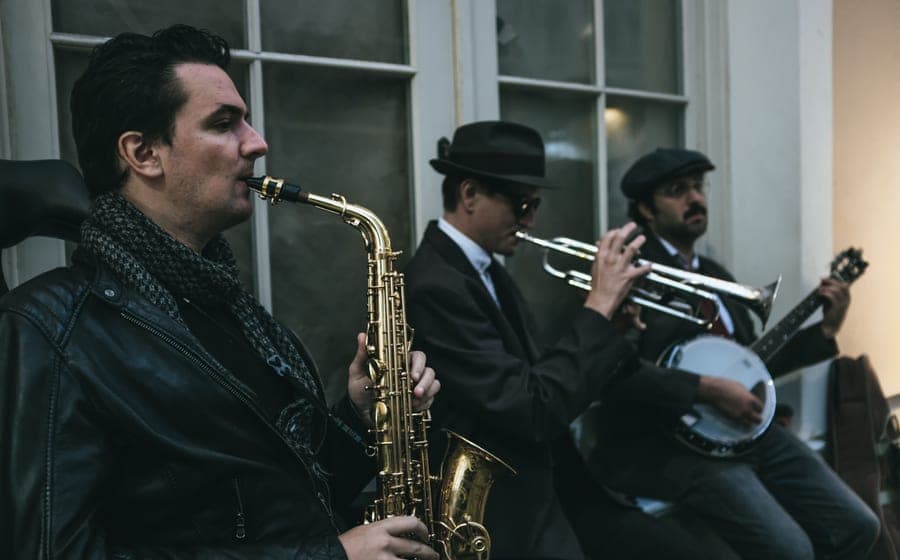
Both instruments are stock choices in a first-year band and they fail in opposite directions. The saxophone is easy to start and heavy to hold; the trumpet is light to hold and genuinely difficult to make a sound on.
Saxophone is easier to get a first sound from and is heavier, larger and more expensive. Trumpet is light and cheap and demands weeks of lip development before it produces reliable notes. For a small player who will persist, trumpet; for one who needs early encouragement, saxophone.
How each one makes a sound
The saxophone uses a reed. A cane blade vibrates against the mouthpiece when air passes it. The player has to form a reasonable embouchure, and the reed does the fundamental work. Most beginners produce a recognizable saxophone note in their first lesson.
The trumpet uses your lips. There is no reed and no mechanical helper. The player’s lips buzz against the mouthpiece, and that buzz is the sound source. Producing it at all takes practice, and producing it consistently takes weeks.
That difference explains almost everything else about the two instruments, including the valve count.
Why three valves is not simple
A saxophone has more than twenty keys and a trumpet has three, and beginners read that as the trumpet being easier. It is the reverse.
On a saxophone, a fingering gives you a note. Learn the fingerings and you can play a scale.
On a trumpet, a valve combination gives you an entire harmonic series — several notes sharing one fingering. Which of them sounds is decided by the player’s embouchure and air speed. The same three fingers down produce different notes depending on what the lips do.
So the trumpet moves the difficulty from the fingers to the face, where it is invisible and much harder to teach. It is why trumpet students plateau at the point where the next note up requires a lip adjustment they have not yet built.
The physical comparison
| Trumpet | Alto saxophone | |
|---|---|---|
| First sound | Weeks | Usually the first lesson |
| Weight | Light, held in both hands | Heavy, needs a neck strap |
| Fingering | Three valves, simple patterns | Twenty-plus keys, more to learn |
| Where the difficulty is | Embouchure and air | Fingering and, later, tone |
| Consumables | Valve oil, slide grease | Reeds, continuously |
| Cost | Lower at every level | Higher at every level |
| Volume at home | Louder and carries further | Loud, slightly less piercing |
Weight is the deciding factor more often than tone
An alto saxophone is a substantial piece of metal. It hangs from a neck strap, and for a small ten-year-old the load on the neck is a real complaint and sometimes needs a harness to distribute.
A trumpet weighs a fraction as much and is supported by both hands in front of the body. On pure mass, it is the easier instrument for a small player to manage.
What limits young trumpet players instead is dental. Brass embouchure works against the teeth, and a child in the middle of losing and regrowing front teeth has a genuinely moving target. Band directors factor this in, which is part of why their recommendations are worth taking seriously — see choosing a school band instrument.
Running costs
The saxophone has an ongoing reed budget. Reeds chip, warp and lose response after a few weeks, and a student playing on a dead reed finds everything harder and reports getting worse. Parents who do not know about reeds never think to check — details in reeds explained.
The trumpet has valve oil and slide grease, both cheap and slow to consume. Over several years the difference is real.
Both need periodic professional cleaning and adjustment, and both benefit from a routine the student can do themselves — see how to clean a band instrument.
How they sound in month three
Worth being blunt, because it affects a household.
A beginner saxophone sounds like a saxophone fairly early — thin and honky, and recognizably the instrument.
A beginner trumpet is harder listening. The notes crack, high notes fail, and the instrument is loud and bright. It improves, and the first months are noisier than the saxophone equivalent.
What to buy
Rent in year one on either. Directors reassign students between sections in the first months based on physical fit and ensemble balance, and buying converts a routine reassignment into a financial argument — the reasoning is in renting versus buying a band instrument.
If buying, the pattern is identical on both instruments: a budget option for a year-one purchase, or the step-up that carries a committed student for years.
Trumpet. The Yamaha YTR-2330#ad is the buy-once choice and holds resale value; the Jean Paul TR-330#ad is the budget entry. Both are in best beginner trumpets.
Alto saxophone. The Yamaha YAS-280#ad and the Jean Paul AS-400#ad occupy the same two positions — see best beginner saxophones.
Alto is the beginner saxophone, not tenor and not soprano. School band parts are written for alto, and it is the size the method books assume.
The wider question
If this is really a question about which family rather than which instrument, the woodwind-versus-brass version is in woodwind or brass, and the full ranking across the band room is in easiest band instruments to learn.
What we would buy
Yamaha YTR-2330
YamahaBest for: Step-up trumpet, year two onward
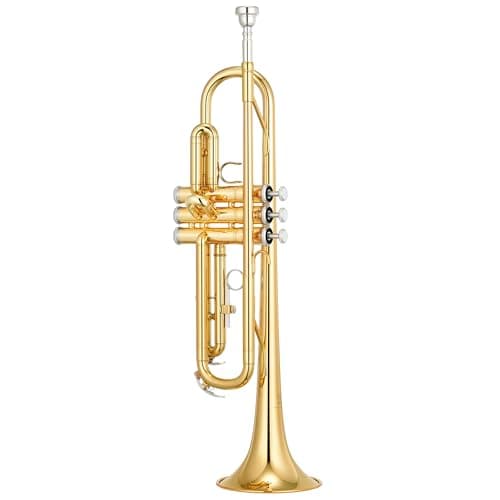
A .459 inch bore with monel pistons, a gold brass leadpipe and an adjustable third valve trigger. Yamaha's top-selling student trumpet and the one directors name first.
Published specifications
- Key:
- Bb
- Bore:
- .459"
- Bell:
- Yellow brass, two-piece, 4-7/8" diameter
- Leadpipe:
- Gold brass
- Valves:
- Monel pistons
- Third valve:
- Adjustable trigger
- Finish:
- Lacquer or silver plate
- Included:
- Mouthpiece
What it gets right
- Monel pistons are corrosion-resistant and stay smooth, which is the difference between a trumpet that stays fast and one that gums up
- The adjustable third valve trigger is how a player corrects the intonation problem every trumpet has on low D and C#
- A gold brass leadpipe warms the response slightly against plain yellow brass
Where it gives ground
- Student trumpets are all broadly similar on paper, so the case for this one is build quality rather than specification
- Lacquer wears at the contact points and looks tired long before it plays badly
What it is not good at
Being a year-one purchase. Brass reassignment is the most common kind in a band room, because embouchure suitability is unknowable in advance. Rent first.
How the specs score against a beginner’s needs
Scores are our reading of the published specifications above against what a beginner physically needs. They are not test results — we have not played this instrument.
Specifications from Yamaha Europe — YTR-2330 specifications.
Jean Paul TR-330
Jean Paul USABest for: Budget trumpet, if buying in year one
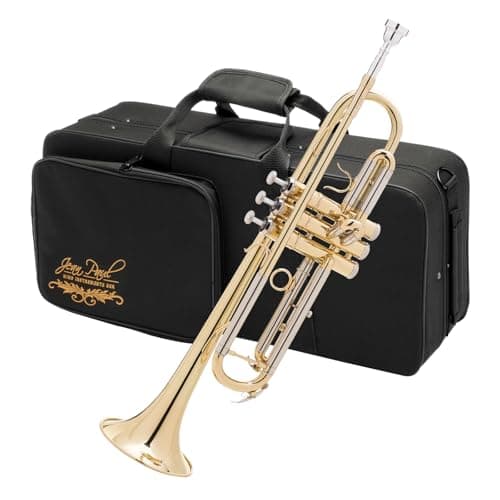
A medium-bore student trumpet with stainless steel valves and a two-piece yellow brass bell, play-tested in the US before shipping, with a 7C mouthpiece and semi-hard case.
Published specifications
- Key:
- Bb
- Bore:
- Medium
- Bell:
- Two-piece yellow brass
- Valves:
- Stainless steel
- Finish:
- Gold lacquer
- Included:
- 7C mouthpiece, semi-hard case, valve oil, polishing cloth, gloves
What it gets right
- Play-tested in the US before it ships, which for a budget brass instrument is a meaningfully better process than none
- A complete package — mouthpiece, case, oil and cloth are all things you would otherwise buy
- Deliberate breath resistance suited to a beginner, rather than the wide-open blow that leaves a new player out of air
Where it gives ground
- Stainless steel valves are durable and not as smooth as monel over time
- Resale is minimal, so the saving over a Yamaha is smaller than it looks across a few years
What it is not good at
Growing with a serious player. It gets a student through the first years honestly; beyond that the Yamaha or an intermediate horn is the step.
How the specs score against a beginner’s needs
Scores are our reading of the published specifications above against what a beginner physically needs. They are not test results — we have not played this instrument.
Specifications from Jean Paul USA TR-330 published description.
Yamaha YAS-280
YamahaBest for: Step-up alto sax, year two onward
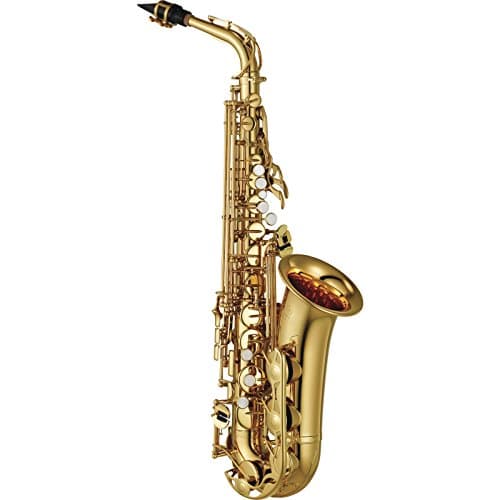
Lightweight, ergonomically shaped for a young player, with an adjustable thumb hook, a high F# key and a redesigned low B-to-C# connection. Widely treated as the standard student alto.
Published specifications
- Key:
- Eb alto
- Material:
- Brass, gold lacquer finish
- Bell:
- Two-piece
- Key touches:
- White polyester
- Mechanism:
- Improved B-C# connector, high F# key, adjustable thumb hook
- Neck receiver:
- Redesigned for stability
- Included:
- Yamaha 4C mouthpiece, case with rucksack straps, sax strap, cork grease
What it gets right
- Genuinely designed around a young player — light, and shaped so the hands fall naturally rather than reaching
- The adjustable thumb hook matters more than it sounds: a saxophone's weight lands on the right thumb, and a fixed hook fits one hand size
- High F# key included, which the method book will want before the second year is out
Where it gives ground
- Even a lightweight alto is heavy for a small eleven-year-old over a full rehearsal
- The 4C mouthpiece is a solid start and a very common first upgrade
What it is not good at
Being a year-one purchase. Saxophone is the most requested section and the most reassigned; rent until the placement is settled.
How the specs score against a beginner’s needs
Scores are our reading of the published specifications above against what a beginner physically needs. They are not test results — we have not played this instrument.
Specifications from Yamaha YAS-280 published specifications.
Jean Paul AS-400
Jean Paul USABest for: Budget alto sax, if buying in year one
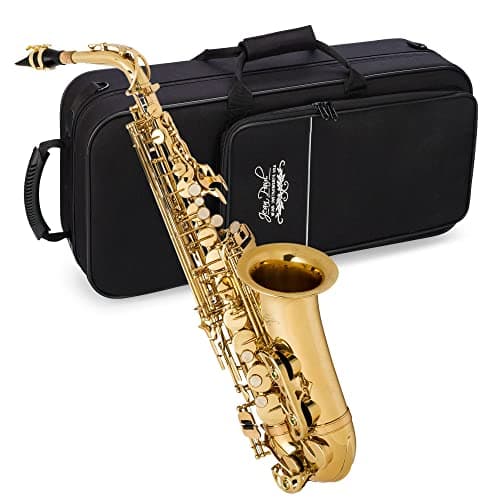
A golden-brass lacquered student alto at a fraction of the Yamaha. The honest framing: it is a real, playable saxophone and it is not built to the same tolerances.
Published specifications
- Key:
- Eb alto
- Material:
- Golden brass, lacquered
- Level:
- Student / beginner
What it gets right
- Puts a playable alto saxophone within reach of a family that cannot fund a Yamaha
- Jean Paul builds specifically for the beginner and intermediate band market rather than repackaging generic stock
- Cheap enough that a year of uncertainty is not an expensive bet
Where it gives ground
- Pad seating and key regulation are where the price shows, and both affect how the instrument plays within a year
- Published specifications are thinner than Yamaha's, which makes it harder to compare properly
What it is not good at
Going without maintenance. Every saxophone needs pad work eventually and a budget one needs it sooner. If the school rents, rent.
How the specs score against a beginner’s needs
Scores are our reading of the published specifications above against what a beginner physically needs. They are not test results — we have not played this instrument.
Specifications from Jean Paul USA AS-400 published description.
Questions people actually ask
Is trumpet or saxophone easier to learn?
Saxophone, for most beginners. A reed does the work of producing the vibration, so a first sound comes quickly. On a trumpet the player’s lips are the vibrating part, which takes weeks to develop.
Why does a trumpet only have three valves?
Because pitch is mostly controlled by the lips, not the valves. The three valves change the length of tubing; the player’s embouchure selects which note in the harmonic series sounds. That is why fingering is simple and playing is not.
Which is louder at home?
Trumpet, comfortably, and it also carries further because of its high frequency content. Practice mutes exist and are cheap, and they change the feel enough that they are not a complete answer.
Which is better for a small child?
Trumpet, on weight. An alto saxophone is a substantial object that needs a neck strap and sometimes a harness. A trumpet is much lighter, and its limitation for young players is teeth and lip development rather than mass.
Sources
Still deciding?
Every recommendation on this site is built the same way, and the method is published in full — including what we do not do and what would get a pick dropped.
Read next
- Best beginner trumpets
Bore size, monel versus stainless valves, the third valve trigger, and two picks for when buying is right.
- Best beginner saxophones
Why alto is the beginner size, the ergonomic details that matter at eleven, and two picks for when buying is right.
- Woodwind or brass for a first band instrument?
How each family produces sound, what that means for the first month, running costs, and how each suits different students.
- Choosing a school band instrument
Which instrument suits which child, what school rental covers, and the honest case for not buying in year one.
- The easiest band instruments to learn
Ranked by time to a reliable first note, with what embouchure is and why it decides the ranking.