Band & Orchestra
Best step-up flutes
Three mechanical changes and one tonal one. Only the tonal one costs real money, and it is the one nobody asks about.
By Sawyer V. · Published · Last updated
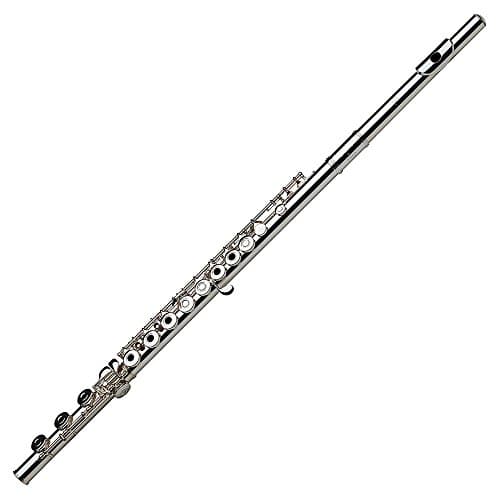
Only one of the four step-up specs changes how the flute sounds, and it is not the one you have been thinking about. Stepping up a flute means some combination of open-hole keys, an offset G, a B footjoint and a sterling silver headjoint. Yamaha’s published lineup table gives away the secret: covered keys, offset-G ring keys and in-line ring keys are offered at every one of its three series levels. The key configuration is therefore a choice you can make at any price. What the series number changes — and what costs real money — is the metal.
Every pick states its Starter Path band, and we have not played any of them — the method is on how we pick. Configurations, tonehole construction, footjoint conventions and materials come from the makers’ and dealers’ own published pages, cited at the bottom, and where a spec is genuinely not published this page says so rather than printing a number.
Open holes, offset G and a B footjoint are available at every price tier, so none of them is a step up in quality — they are configuration. The one spec that reliably changes the sound is the headjoint material, and it is the last one to arrive as you spend more. Told to get open holes: the Gemeinhardt 3OB (open hole, offset G, B foot, silver-plated) is the cheapest route to all three mechanical features. Not told to get open holes: stay on covered keys — the plateau Jupiter JFL710 costs more than the open-hole Gemeinhardt, which is the clearest proof that holes are not a tier. Auditioning: the Yamaha YFL-462H, the first tier where sterling silver enters the build. And often: keep the student flute and pay for a service instead.
The four specs, and which ones matter
This is a category where the vocabulary does a lot of work to make small differences sound large. Here is each change, what it actually does, and where it sits.
1. Open-hole (ring) keys against covered (plateau) keys. Open-hole keys have a hole in the middle of five of the keys, which the fingertip has to cover completely. They allow some advanced technique — note bending, glissandi, alternative fingerings — and they are sometimes specified on audition lists. They are also the change students are most often sold and least often ready for: a very common first move with a new open-hole flute is to plug the holes, which makes it a covered-key flute that cost more. Crucially, Yamaha offers both configurations inside the same series, so this is not a quality step.
2. Offset G against in-line G. The G key either sits slightly out of the main line of keys, closer to where the third finger naturally falls, or in line with the rest. Offset is easier for most hands and markedly easier for smaller ones; Jupiter’s dealers publish it as reducing tension in the hands and wrists. In-line is traditional. This is a fit decision, and Yamaha again offers both at every level.
3. B footjoint against C footjoint. The footjoint is the short section at the end. Yamaha publishes the difference in its own words: the B foot adds a key that reaches a half step below the C foot’s lowest note and produces a darker, more powerful tone with excellent projection, while the C foot offers a warmer, more flexible sound. The extra low B almost never appears in student repertoire. Yamaha also publishes the naming convention, which is genuinely useful when reading listings: add H to the model number for the B-foot version, so a YFL-462H is the B-foot YFL-462.
4. Headjoint and body material. This is the one. A student flute is silver-plated nickel silver; the step-up tiers introduce sterling silver, usually at the headjoint first and the body later. The headjoint is where the air column is formed, so it is the component whose material most affects the sound — and it is also the most expensive change, which is why it arrives last.
The sourcing problem, which you should know about before you spend $700
We expected to compare four or five flutes on published specifications and could not, and the reason is worth stating because it affects how you should read every other flute page you find.
Yamaha publishes properly. One comparison table covering nine models, with key configuration, G position, tonehole construction, material, footjoint convention and warranty. It is the only maker in this category that does.
Almost nobody else does. Gemeinhardt’s own product pages render their specifications through a script and serve no spec text at all to a plain request, so every figure we publish for the 3OB comes from a dealer. Jupiter’s dealers publish body, headjoint, key material and construction for the JFL710 but we could not find a single source that states its footjoint or whether it has a split E mechanism. And Pearl’s Quantz 525 — which on price and reputation should have been the middle pick on this page — has dealer listings that contradict each other on the footjoint, some saying B and some saying C, and on the lip plate, some saying sterling silver and some saying silver-plated.
That is why there is no Pearl buy row here. On a page whose entire argument is that you should buy on published specification, listing a flute whose specification cannot be pinned down would contradict the argument. It is a good flute line and we would rather say nothing about which one you would receive than guess.
Even Yamaha has a limit worth naming: it publishes material as a per-series combination — “sterling silver and nickel silver” — and does not itemize on the lineup table which component of a given model is sterling. So the single spec that matters most for sound is the one the whole category documents least precisely. The practical defense is to ask the seller, in writing, which parts are sterling silver before paying a sterling-silver price.
The picks
The Gemeinhardt 3OB#ad is the pick when a teacher has asked for open holes, which is the commonest reason a step-up purchase happens on a deadline. Flute Center publishes the configuration: open hole, offset G, split E, B footjoint, with silver-plated headjoint, body and mechanism. The Amazon listing title independently names four of those, so there is no ambiguity about which variant arrives — which in this category is worth something. It delivers all three mechanical features for well under half what the sterling tier costs. Buy this if the requirement is open holes and the budget is real. Skip it if the reason for upgrading is tone: the headjoint is plated, so this will sound much like the student flute it replaces. One honest caveat on availability — Flute Center notes the 3OB has become difficult to source and is sold out at many retailers, so the listing may not stay live.
The Jupiter JFL710#ad is here to make an argument as much as to be bought. It is a plateau-key flute with an offset G, a silver-plated nickel silver body and Jupiter’s Genesis headjoint, with ribbed construction and top adjustment screws — both published, and both things a cheap student flute often lacks. And it costs more than the open-hole Gemeinhardt. Sit with that for a moment: the covered-key flute is dearer than the open-hole one, because you are paying for build rather than for holes. Buy this if nobody has asked for open holes and you want a better-built flute in the same configuration the student already plays. Skip it if auditions are coming and the list specifies open hole, since plateau keys cannot be converted. Two spec rows on this one say “not published” and they are the footjoint and the E mechanism; we would rather tell you that than borrow the older JFL700’s figures.
The Yamaha YFL-462H#ad is the tier where the sound changes and, for most readers, where overspending starts. Ring keys, offset G, a B footjoint and drawn-and-curled toneholes — Yamaha publishes that the tonehole walls are drawn upward from the body material, giving a broad, light sound — in the 400 series, which is the first tier where sterling silver enters the build. Five-year warranty, and no split E mechanism, both published. Buy this if the player is auditioning, or is committed enough that this is the last flute they will need before a professional instrument. Skip it if they are in school band and not auditioning. It is three times the Gemeinhardt for the same three mechanical features, and at that point the money does more as lessons — which is the same argument our trumpet mouthpiece page makes about buying a wider cup before you can support it.
Before you buy anything: get the current flute serviced
This is the recommendation that costs us a sale and it belongs near the top rather than buried, so here it is in its own section.
A large share of “I have outgrown my flute” is actually a flute that needs work. Pads compress and leak, the head cork dries and shifts, and the mechanism develops play — and all three produce exactly the symptoms people read as an instrument ceiling: a weak low register, notes that will not speak quietly, and intonation that drifts. A full service costs a fraction of any flute on this page and sometimes returns the instrument to a condition the student has never actually experienced, because it was bought used and never serviced.
So the sequence we would follow: have the current flute looked at, play it for a month afterwards, and only then decide whether the limitation is the instrument. Our page on cleaning a band instrument covers what you can do yourself and what needs a technician, and renting against buying a band instrument is worth re-reading if the student is still in their first couple of years.
What we did not list, and why
The Pearl Quantz 525. Covered above, and the omission is the page’s own argument applied to itself: dealer listings for the same model number disagree on the footjoint and on the lip plate metal, so we cannot tell you what you would receive.
The Yamaha YFL-262 and YFL-362H. These are the natural rungs between our floor and our top pick, and they are left off on stock rather than merit. At verification the 262 open-hole listing was down to two units with a second listing quoting a six-to-ten-day ship, and the 362H listings were at two units each. We do not ship a buy row we cannot confirm you can buy today, which is the same standard that kept two mouthpieces off our trumpet pages.
Azumi, Haynes Amadeus and the sterling-body tier. Genuinely better instruments, all comfortably past two thousand dollars, and all at one to three units when checked. They are also past the point this site covers: a player choosing between professional headjoint cuts has a teacher advising them and does not need a beginner site.
Sub-$300 flutes described as “intermediate”. The word is unregulated. The listings at that price publish no headjoint material, no footjoint and frequently no brand with a service network, and an open-hole flute that cannot be regulated is worse than the covered-key student flute it replaced. Our page on beginner flutes covers what the floor actually looks like.
Headjoints sold separately. A real upgrade path and the right answer for some players — a sterling headjoint on a good plated body is a cheaper route to the tonal change than a whole flute. It is also a fitting decision made by playing several, which is not something we can usefully recommend a specific product for online.
Quick picks
If the teacher asked for open holes
Open hole, offset G and a B footjoint together, on a silver-plated body, for well under half the sterling-silver tier. For: a student told to arrive with open holes. Skip if: you are upgrading for sound rather than fingering — the headjoint here is plated.
| # | Product | Best for | Score | Price |
|---|---|---|---|---|
| 1 | Gemeinhardt 3OBOpen-hole keys, offset G and a B footjoint on a silver-plated body, which is the full set of mechanical step-up features for well under half what the sterling-silver tier costs. | The cheapest route to all three mechanical changesThe honest floor | 8.0 | $701.99 · View on Amazon #ad How we’re funded |
If nobody asked for open holes
Plateau keys and an offset G, and it costs more than the open-hole pick above. That is the point: open holes are a configuration, not a tier, and most students stepping up should stay on covered keys. For: a student with no open-hole requirement. Skip if: auditions are coming and the list says open hole.
| # | Product | Best for | Score | Price |
|---|---|---|---|---|
| 1 | 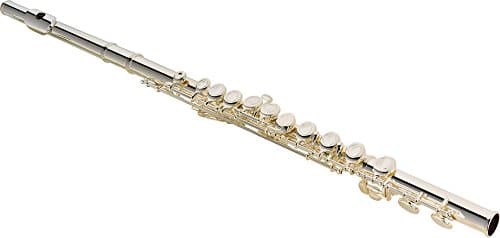 Jupiter JFL710A plateau-key flute with an offset G and a silver-plated nickel silver body, and it costs more than the open-hole Gemeinhardt on this same page. | Stepping up without open holesThe honest floor | 7.0 | $887.00 · View on Amazon #ad How we’re funded |
The tier where the sound changes, and where overspending starts
Yamaha's 400 series: ring keys, offset G, B foot, and the first tier where sterling silver enters the build. For: a committed player heading into auditions. Skip if: the student is in school band and not auditioning — the money does more as lessons.
| # | Product | Best for | Score | Price |
|---|---|---|---|---|
| 1 | 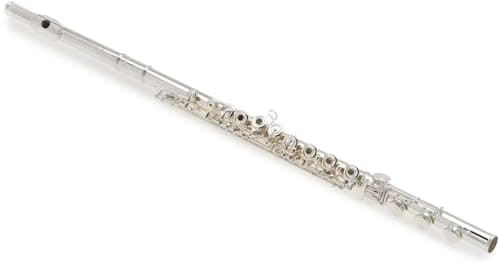 Yamaha YFL-462HRing keys, offset G, a B footjoint and drawn-and-curled toneholes in Yamaha's 400 series, which is the first tier where sterling silver enters the build. | The tier where the sound actually changesEnough | 8.4 | $2,100.00 · View on Amazon #ad How we’re funded |
The picks in full
Gemeinhardt 3OB
GemeinhardtBest for: The cheapest route to all three mechanical changes
Open-hole keys, offset G and a B footjoint on a silver-plated body, which is the full set of mechanical step-up features for well under half what the sterling-silver tier costs. It is the honest answer for a student whose teacher has asked for open holes.
Published specifications
- Keys:
- Open hole (French)
- G key:
- Offset G
- Footjoint:
- B footjoint
- Headjoint and body:
- Silver-plated
- E mechanism:
- Split E, listed by Flute Center as recommended on this model
- Material note:
- Gemeinhardt does not publish a body wall thickness or a headjoint cut for the standard 3OB
What it gets right
- The only flute on this page that delivers open holes, offset G and a B foot together at this price
- The Amazon listing title itself names four of the specs, so there is no guessing which configuration arrives
- Silver-plated means a knock costs nothing emotional — the right call for a student who still travels with it on a bus
- A long-standing school-market model, so band directors and repair techs know it
Where it gives ground
- Silver-plated headjoint, which is the one component where material genuinely changes the sound — so this is a mechanical step up and not a tonal one
- Gemeinhardt's own site is JS-rendered and publishes no spec text we could retrieve, so every figure here comes from a dealer rather than the maker
- No published wall thickness or headjoint cut, which are the figures a serious player would want next
- Flute Center notes the 3OB has become hard to source and is sold out at many retailers, so the listing may not stay live
What it is not good at
Changing the tone. The headjoint is silver-plated, and a plated headjoint on a stepping-up flute sounds much like the plated headjoint on the student flute it replaced. If the reason for upgrading is sound rather than fingering, this is the wrong tier.
How the specs score against a beginner’s needs
Scores are our reading of the published specifications above against what a beginner physically needs. They are not test results — we have not played this instrument.
Jupiter JFL710
JupiterBest for: Stepping up without open holes
A plateau-key flute with an offset G and a silver-plated nickel silver body, and it costs more than the open-hole Gemeinhardt on this same page. That is the useful fact: open holes are not a price tier, they are a configuration, and plenty of students should stay on covered keys.
Published specifications
- Keys:
- Plateau — covered keys, closed hole
- G key:
- Offset G
- Headjoint and body:
- Silver-plated nickel silver, with Jupiter's Genesis headjoint and lip plate
- Keys material:
- Nickel silver
- Construction:
- Ribbed construction, top adjustment screws, ABS molded case
- Footjoint and E mechanism:
- Not published — no source we could find states the JFL710's footjoint or whether it carries a split E
What it gets right
- Covered keys are the right configuration for most students stepping up, and this page is the only place on the site that says so
- Offset G, which Jupiter's dealers publish as reducing hand and wrist tension — the ergonomic half of a step-up, kept
- Ribbed construction and top adjustment screws are both published, and both are things a student flute often lacks
- Genesis headjoint is a named, published design rather than an unspecified 'upgraded' one
Where it gives ground
- Costs more than the open-hole Gemeinhardt while offering fewer mechanical features — you are paying for build, not configuration
- Footjoint is not published anywhere we could verify, so you cannot tell from the specs whether you are getting a B or a C foot
- Whether it has a split E mechanism is also unpublished, and on a plateau flute that is the one mechanism worth knowing about
- Silver-plated headjoint, so like the Gemeinhardt this is not a tonal upgrade
What it is not good at
A student whose teacher has specifically asked for open holes, which happens in the year before auditions. Plateau keys cannot be converted — the keys are a different part.
How the specs score against a beginner’s needs
Scores are our reading of the published specifications above against what a beginner physically needs. They are not test results — we have not played this instrument.
Specifications from Tapestry Music — Jupiter JFL710 published specifications: silver-plated nickel silver body and headjoint, nickel silver keys, plateau (covered) keys, offset G, Genesis headjoint and lip plate, ribbed construction, top adjustment screws, ABS molded case, Vancouver Music Gallery — Jupiter JFL710, listed explicitly as closed hole, offset G, silver-plated C flute.
Yamaha YFL-462H
YamahaBest for: The tier where the sound actually changes
Ring keys, offset G, a B footjoint and drawn-and-curled toneholes in Yamaha's 400 series, which is the first tier where sterling silver enters the build. It is also three times the price of the Gemeinhardt, and for most school students that is the definition of overspending.
Published specifications
- Keys:
- Ring keys (open hole)
- G key:
- Offset G
- Footjoint:
- B footjoint — the H suffix is Yamaha's published convention for it
- Toneholes:
- Drawn and curled — Yamaha publishes that the walls are drawn upward from the body material, giving a broad, light sound
- Material:
- 400 series: sterling silver and nickel silver. Yamaha publishes the series material as a combination and does not itemize on the lineup table which component is sterling
- E mechanism:
- None on the 462H, per Yamaha's Allegro comparison
- Warranty:
- 5 years, per Yamaha's published comparison
What it gets right
- The only flute on this page where sterling silver enters the build at all, which is the one change that reliably alters the sound
- Yamaha publishes more about it than any other maker in the category publishes about anything — configuration, toneholes, footjoint convention, warranty
- Offset G and ring keys together, so it is the audition-ready configuration without the inline-G reach problem
- Yamaha's published footjoint reasoning is specific: the B foot gives a darker, more powerful tone with excellent projection against the C foot's warmer, more flexible sound
Where it gives ground
- Three times the price of a flute that gives the same three mechanical features
- Yamaha states the material as a sterling-and-nickel combination per series and does not say on the lineup table which part of THIS model is sterling, so the single most important spec is still not itemized
- No split E mechanism, which some teachers specifically want on an open-hole flute
- Overspending for a student who is still in school band and not auditioning — the money does more as lessons
What it is not good at
A student who is stepping up because their fingers want open holes. This is a tonal purchase, and paying for sterling silver before a player has the tone control to use it is the same mistake as a beginner buying a wider trumpet mouthpiece.
How the specs score against a beginner’s needs
Scores are our reading of the published specifications above against what a beginner physically needs. They are not test results — we have not played this instrument.
Specifications from Yamaha USA — 400/300/200 Series flute lineup table, publishing key configuration (covered keys, offset G ring keys, in-line ring keys) at every series level, drawn and curled toneholes, the B-footjoint "H" suffix convention (ex. YFL-462H) and the per-series material as sterling silver and nickel silver combinations, Yamaha USA — Footjoints: the B footjoint adds a key reaching a half step below the C foot's lowest note and produces a darker, more powerful tone with excellent projection, while the C footjoint offers a warmer, more flexible sound, Yamaha USA — Allegro intermediate flute comparison, listing the YFL-462H with no split E mechanism and a 5-year warranty.
Questions people actually ask
What is a step-up flute?
In practice it means one of four changes, and they are not equal. Three are mechanical — open-hole (ring) keys instead of covered plateau keys, an offset G instead of an in-line G, and a B footjoint instead of a C foot. One is tonal: a sterling silver headjoint instead of a silver-plated one. Yamaha’s own lineup table offers all three key configurations at every series level, which means the mechanical changes are available at any price and only the material actually moves you up a tier.
Do open holes make you a better flute player?
No, and the published lineup tables are the proof: Yamaha sells covered keys, offset-G ring keys and in-line ring keys within the same series, at the same build level. Open holes change the fingering and allow some advanced techniques; they do not change the instrument’s tier. Many students plug the holes for their first year with the flute anyway, which should tell you how much the holes themselves are doing.
What flute should I buy for college auditions?
Ask the school first — some audition lists specify open-hole keys and most specify nothing at all. If the list is silent, the spec worth spending on is the headjoint, because that is what a panel hears. The Yamaha YFL-462H#ad is the pick here that reaches the sterling-silver tier with the audition-friendly offset-G ring key configuration. Buying open holes on a plated headjoint instead gets you the look of a step-up flute and none of the sound.
Offset G or in-line G?
Offset, for almost everybody, and especially for a student with smaller hands. The G key sits closer to where the third finger naturally falls, which is why Jupiter’s dealers publish it as reducing hand and wrist tension. In-line G is a traditional layout that suits long fingers and is the configuration most likely to cause strain. Yamaha offers both at every series level, so it is a fit decision rather than a quality one — our page on band instruments for small players covers the reach question across the family.
Is a B footjoint worth it?
It is worth knowing about rather than worth chasing. Yamaha publishes the difference plainly: the B foot adds a key that reaches a half step below the C foot’s lowest note, and produces a darker, more powerful tone with excellent projection, while the C foot gives a warmer, more flexible sound. The extra note is rare in student repertoire. If two flutes are otherwise equal, take the B foot; do not pay a tier for it.
Why is the closed-hole flute on this page more expensive than the open-hole one?
Because key configuration and build quality are priced separately, and that is the single most useful thing on this page. The Jupiter JFL710#ad has covered keys and costs more than the open-hole Gemeinhardt 3OB#ad. You are paying for ribbed construction and the headjoint design, not for holes. Anybody who assumes open holes mean a better flute has the relationship backwards.
Should I just keep the student flute?
Often, yes. A well-maintained student flute will carry a player through school, and a service — new pads, a cork, a clean — frequently fixes what felt like an instrument limitation for a fraction of a new flute. The honest signals for stepping up are a teacher asking for a specific configuration, or a player whose tone has developed past what a plated headjoint can deliver. Wanting a nicer flute is not a signal; it is what every student wants.
Sources
- Yamaha USA — 400/300/200 Series flute lineup table, publishing covered keys, offset G ring keys and in-line ring keys at every series level, drawn and curled toneholes, the B-footjoint "H" suffix convention (ex. YFL-462H), and the per-series material as sterling silver and nickel silver combinations
- Yamaha USA — 400/300/200 Series overview, describing the range as offering sterling silver and nickel silver combinations across the series
- Yamaha USA — Allegro intermediate flute comparison, listing the YFL-462H with no split E mechanism and a 5-year warranty
- Flute Center — Gemeinhardt model 3OB: open hole, offset G, split E (recommended), B footjoint, silver-plated headjoint, body and mechanism; notes the model has become difficult to source
- Tapestry Music — Jupiter JFL710: silver-plated nickel silver body and headjoint, nickel silver keys, plateau keys, offset G, Genesis headjoint and lip plate, ribbed construction, top adjustment screws
- Pearl Flute — Quantz 525 product page, which lists Largo, Brezza and Forza headjoint options and describes the 525 series as nickel silver and silver plated; dealer listings for the same model disagree on the footjoint and the lip plate metal, which is why no Quantz is listed as a pick here
Still deciding?
Every recommendation on this site is built the same way, and the method is published in full — including what we do not do and what would get a pick dropped.
Read next
- Best beginner flutes
Closed-hole and offset G explained, the split E mechanism, and the two picks for a year-two step-up.
- Step-up band instruments for year two
What separates a step-up from a budget instrument, the timing that makes the purchase sensible, and the pick for each section.
- Best flute books for beginners
The band-class method and the specialist tone method do different jobs, and a flute beginner needs the second one more than any other wind player. Three books on published details.
- Renting vs buying a school band instrument
Why year one is a rental year, what programs cover, the maintenance nobody warns you about, and when buying starts to win.
- How to clean a band instrument
The two-minute after-playing routine per family, what happens when it is skipped, and the jobs that belong to a technician.
- Best band instruments for smaller players
The physical constraint on each band instrument, which ones suit a small player, and the picks that fit without compromise.