Band & Orchestra
Best flute books for beginners
Getting any sound at all is the first flute problem, and the band method your school assigned barely mentions it.
By Sawyer V. · Published · Last updated
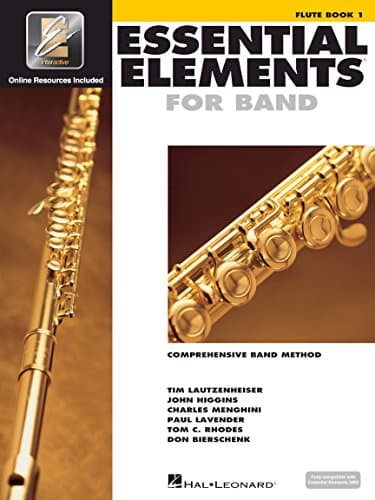
A beginner flute player needs two books, and that is not an upsell. If they are in a school band, buy Essential Elements for Band, Flute Book 1 because the class is working from it and falling behind the class is its own problem. Then add Trevor Wye's Beginner's Book for the Flute, Part One, because the band method is written for a room full of mixed instruments and spends almost no pages on tone — and tone is the entire early difficulty on flute in a way it is not on any other wind instrument.
Every pick states its Starter Path band, and we have not worked through any of them cover to cover — the method is on how we pick. Authors, page counts and publisher codes come from Hal Leonard's catalog entries, cited at the bottom.
Buy both: Essential Elements for Band Flute Book 1 (48 pages, the method nearly every US school band assigns) to keep up with the class, and Trevor Wye's Beginner's Book for the Flute Part One (64 pages, Novello) to actually learn a sound. The band method teaches the class; Wye teaches the instrument. Do not buy Wye's Practice Books for a beginner — confusingly similar name, completely different and more advanced series.
Why flute is different from the other wind instruments
On a clarinet or a saxophone, a reed does the work of turning breath into vibration. On a trumpet, the player's lips buzz against a cup. Either way there is a mechanism that converts air into a pitch, and a beginner's first sound — however ugly — is a sound.
A flute has neither. The player directs a stream of air across the sharp edge of the embouchure hole, and the stream splits, oscillating above and below the edge. That oscillation is the note. If the angle, the aperture of the lips or the air speed is wrong, there is no note at all — only the sound of breath.
Which produces a specific and demoralising first few weeks that a clarinet student does not have. The flute beginner is not making a bad sound; they are making no sound, and nothing in the book explains why.
The low register makes it worse. Low notes need a wider, slower air stream than the beginner's instinct, so the bottom of the instrument is where tone collapses first. That is precisely where Wye's book starts, and precisely what a band method skips.
Two kinds of book, and the naming trap
A band method is written for a classroom. Its job is to get thirty students on twelve different instruments playing the same tune in week six, which means it is paced for unison learning and cannot stop to address one family's embouchure in depth. Essential Elements is the dominant one in American schools, and it does include instrument-specific exercises alongside the band material.
A specialist method is written by a player of one instrument for students of that instrument. It can spend twenty pages on tone because every reader needs those twenty pages. Trevor Wye's Beginner's Book is this, and the illustrated posture and fingering is the part a student working alone cannot get anywhere else.
And then the trap. Wye also wrote a series called the Practice Books — six volumes on tone, technique, articulation, intonation and vibrato, breathing and scales, and advanced practice. They are standard texts and they are not beginner books. A gift buyer or a parent searching “Trevor Wye flute” will see both and the titles are close enough that the wrong one gets bought regularly. Volume 1 of the Practice Books is called Tone, which makes it sound exactly like what a beginner needs. It is a level up from the Beginner's Book.
The picks
Essential Elements for Band, Flute Book 1#ad is 48 pages by six named authors, softcover with online EE Interactive content, and it is the book to own if there is a band program involved. Its real strength is that the flute part lines up bar for bar with the clarinet, trumpet and percussion books, so the student can play along with the class and the accompaniment tracks. Buy this if they are in a school band. Skip it if they are learning privately with no ensemble, where the classroom pacing is just slow.
Trevor Wye: Beginner's Book for the Flute, Part One#ad is 64 pages from Novello, 9 by 12 inches, built around developing tone and a firm low register, illustrated throughout with posture and fingering. It is the book that addresses the actual first problem. Buy this if they play flute at all — genuinely, most students should own it alongside whatever the class uses. Skip it if they are already past the tone stage and want repertoire, in which case Part Two continues the same approach.
Practice Books for the Flute, Omnibus Edition#ad collects all six practice books into one Chester Music volume. It is better value than buying two of them separately and it is the wrong first purchase, because five of the six volumes are about problems a first-year player has not met. Buy this if the player is committed and a year or two in. Skip it if they are still learning to produce a clean low D. Hal Leonard publishes neither a page count nor an ISBN for this edition, so we are not claiming either. A player at that stage is often also being told to change instrument, which is a separate decision — our step-up flutes roundup covers what actually changes and what does not.
What we did not list, and why
Rubank Elementary Method for Flute. A long-standing and perfectly good school method. We left it off because the currently-stocked listings either carry an ambiguous title that does not name the edition clearly or were down to a couple of units, and on a page whose whole argument is that buying the right edition matters, a listing we cannot confidently identify is not one we will recommend.
Flute For Dummies and similar broad guides. The parts of flute that prose can teach are the parts that matter least here; the embouchure cannot be explained into existence.
Essential Elements Book 2. The right next step and not a beginner book.
Songbooks and play-along collections. Motivating and level-dependent. A collection of intermediate arrangements given to a three-month student is discouraging, and the right one depends entirely on what they like — which is a taste judgment rather than a specification one.
What a book cannot fix
Two things, and they are worth knowing before spending money on a third book.
A leaking instrument. A student flute with worn pads or a bent key will not play cleanly no matter how good the student's air is, and a beginner has no way to tell the difference between their embouchure and their instrument. If a rented flute has had several previous students, a service is worth more than any book. Our page on cleaning a band instrument covers the maintenance that prevents it.
Head-joint position. How the flute is rolled in and out relative to the lip changes everything about whether a note appears, and it is nearly impossible to self-correct because the player cannot see it. This is the single strongest argument for a few lessons even if the rest of the learning is from books.
If the instrument itself is still in question, our beginner flutes roundup covers what to look for, and flute against clarinet is the comparison most families are actually making first.
Quick picks
If they are in a school band
The method the class is almost certainly using, which means arriving on the same page as everybody else. For: a first-year student in a program. Skip if: the director assigned something else — ask first.
| # | Product | Best for | Score | Price |
|---|---|---|---|---|
| 1 | Essential Elements for Band — Flute Book 148 pages and the method the overwhelming majority of American school bands assign. | The school band studentThe honest floor | 7.8 | $9.98 · View on Amazon #ad How we’re funded |
The one that teaches a sound
Sixty-four pages from a flute specialist built around tone and a firm low register, with illustrated posture and fingering. For: anybody struggling to get a clean note. Skip if: nothing — most students should own this alongside the band book.
| # | Product | Best for | Score | Price |
|---|---|---|---|---|
| 1 | 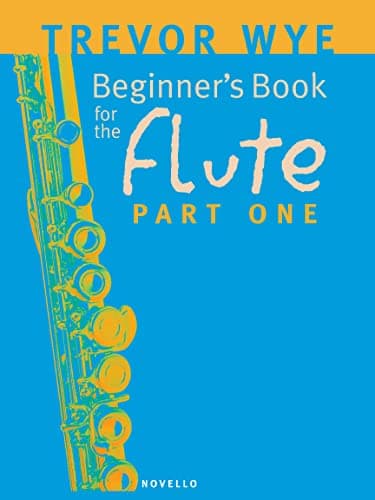 Trevor Wye: Beginner's Book for the Flute, Part One64 pages from a flute specialist, built around developing tone and a firm low register — the two things a band method skips and the two things that decide whether a beginner flute sounds like music or like air. | Learning to actually sound goodEnough | 8.4 | $16.01 · View on Amazon #ad How we’re funded |
Where overspending starts
All six Wye practice books in one volume. Cheaper than buying two separately and five of the six address problems a beginner has not met. For: a committed player a year or two in. Skip if: they are still learning to make a note.
| # | Product | Best for | Score | Price |
|---|---|---|---|---|
| 1 | 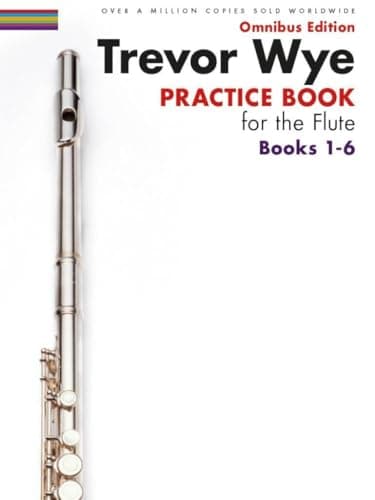 Trevor Wye: Practice Books for the Flute, Omnibus Edition Books 1-6All six of Wye's practice books in one volume: tone, technique, articulation, intonation and vibrato, breathing and scales, and advanced practice. | Where overspending startsWhere overspending starts | 7.4 | $23.32 · View on Amazon #ad How we’re funded |
The picks in full
Essential Elements for Band — Flute Book 1
Hal LeonardBest for: The school band student
48 pages and the method the overwhelming majority of American school bands assign. If a child has joined a band program, there is a strong chance this is already the book on the stand — and arriving with the same one is the point, not a coincidence.
Published specifications
- Authors:
- Tim Lautzenheiser, Don Bierschenk, Charles Menghini, John Higgins, Tom C. Rhodes and Paul Lavender
- Pages:
- 48
- Format:
- Softcover with online media (EE Interactive)
- Designed for:
- Classroom unison learning, with instrument-specific exercises alongside the band material
- Publisher inventory:
- HL 00870255 / 00862578
What it gets right
- Written for a class, so the flute book lines up bar for bar with the clarinet, trumpet and percussion books the rest of the band is playing
- Includes instrument-specific exercises as well as the unison band material, so the flute's own problems get addressed
- The online EE Interactive content supplies accompaniment, which is what makes solo practice bearable in the first weeks
- Cheapest book on this page, and the one most likely to be the one the teacher asks for
Where it gives ground
- Paced for a class meeting several times a week; a student working alone will find it slow and thin on explanation
- Almost nothing on tone production, which is the whole early difficulty on flute
- Assumes a teacher is handling embouchure and posture
- The early repertoire is functional rather than memorable
What it is not good at
Teaching a flute embouchure. Getting a sound at all is the first and hardest flute problem, and a band method designed for a classroom leaves that to the person standing in front of the class.
How the specs score against a beginner’s needs
Scores are our reading of the published specifications above against what a beginner physically needs. They are not test results — we have not played this instrument.
Specifications from Hal Leonard — Essential Elements for Band, Flute Book 1 with EE Interactive: six named authors, 48 pages, softcover with online media.
Trevor Wye: Beginner's Book for the Flute, Part One
NovelloBest for: Learning to actually sound good
64 pages from a flute specialist, built around developing tone and a firm low register — the two things a band method skips and the two things that decide whether a beginner flute sounds like music or like air. Illustrated throughout with posture and fingering.
Published specifications
- Author:
- Trevor Wye
- Publisher:
- Novello (distributed by Music Sales America)
- Pages:
- 64
- Trim:
- 9" x 12"
- Focus:
- Tone development and a firm low register, with illustrations of posture and fingering
- ISBN:
- 978-0-85360-229-3
- Publisher code:
- HL 14003809 / NOV120584
What it gets right
- Written by a flute specialist rather than a band-method committee, and it shows in how much space goes to tone
- The low register is where beginner flutes fail and where this book starts — a band method typically avoids it
- Illustrated posture and hand position, which is the part a student working at home cannot self-diagnose
- Part Two continues the same approach, so there is a path rather than a dead end
Where it gives ground
- Does not line up with a band class, so a student in a program will be working two books at once
- Half again the price of the band method
- No bundled audio in this printing
- Wye's tone exercises are repetitive by design and need a reason to stick with them
What it is not good at
Replacing the band book. If the student is in a school program the class is working from Essential Elements and this is the supplement, not the substitute.
How the specs score against a beginner’s needs
Scores are our reading of the published specifications above against what a beginner physically needs. They are not test results — we have not played this instrument.
Specifications from Hal Leonard — Beginner's Book for the Flute, Part One (HL 14003809): publisher Novello, Music Sales America distribution, softcover, ISBN 9780853602293, publisher code NOV120584.
Trevor Wye: Practice Books for the Flute, Omnibus Edition Books 1-6
Chester MusicBest for: Where overspending starts
All six of Wye's practice books in one volume: tone, technique, articulation, intonation and vibrato, breathing and scales, and advanced practice. Every one of them is a standard text, and five of the six are about problems a first-year flute player has not met.
Published specifications
- Author:
- Trevor Wye
- Publisher:
- Chester Music
- Contents:
- Practice Books 1 to 6 bound as one volume
- Format:
- Softcover
- Publisher code:
- HL 14043425 / CH8232401
- Pages:
- Not published by Hal Leonard for this edition
What it gets right
- Cheaper than buying even two of the six practice books separately, so for a committed player it is obvious value
- These are the standard flute technique texts — a serious student will own them eventually
- Volume 1 (Tone) alone is worth the price and is the one a beginner can start
- One book instead of six to keep track of
Where it gives ground
- Five of the six volumes address problems well past a first-year player, so most of the book sits unopened
- A large omnibus is intimidating in a way a 64-page beginner book is not
- Hal Leonard publishes neither a page count nor an ISBN for this edition, so we are not claiming either
- Nothing in it teaches a beginner how to get a first sound
What it is not good at
Being a first flute book. It is a technique reference for a player who already has a tone and wants to refine it. Buy the Beginner's Book first and come back to this in a year or two.
How the specs score against a beginner’s needs
Scores are our reading of the published specifications above against what a beginner physically needs. They are not test results — we have not played this instrument.
Specifications from Hal Leonard — Practice Books for the Flute, Omnibus Edition Books 1-6 (HL 14043425): publisher Chester Music, softcover, publisher code CH8232401; no page count or ISBN published.
Questions people actually ask
What is the best flute book for a beginner?
Two books rather than one, and this is the honest answer rather than a sales pitch. If they are in a school band, the class is working from Essential Elements for Band#ad and they need that one to keep up. But a band method is written for a classroom of mixed instruments and spends almost no space on tone, which is the whole early flute problem — so add Trevor Wye's Beginner's Book#ad, which is built around exactly that.
Why is tone the main problem on flute?
Because unlike almost every other instrument, a flute beginner's first difficulty is producing a note at all. There is no reed and no mouthpiece to buzz into: the player blows across the edge of an embouchure hole and the air column splits. Get the angle, the aperture or the air speed wrong and you get breath noise instead of a pitch. A clarinet beginner makes an ugly sound; a flute beginner often makes no sound.
Does the band method teach tone at all?
Barely, and that is by design rather than by failure. Essential Elements is written for a classroom learning in unison across flutes, clarinets, trumpets and percussion, so it cannot stop and spend ten pages on one family's embouchure. It includes some instrument-specific exercises, and it assumes a director is standing in front of the class fixing embouchures in person.
Is Trevor Wye too advanced for a first-year student?
The Beginner's Book is not — it is written for exactly that student, with illustrated posture and fingering and a focus on the low register. The Practice Books are a different series and are for a player who already has a tone. The names are confusingly similar, and buying the wrong one is the commonest mistake in this category.
Should I buy the omnibus edition to save money?
Only if the player is committed and a year or two in. It is genuinely cheaper than buying even two of the six practice books separately, and five of the six address intonation, vibrato, articulation, breathing and advanced practice — none of which a beginner has reached. A beginner who opens it finds mostly material they cannot use, which is discouraging rather than motivating.
Do flute books come with audio?
The band method does — Essential Elements includes online EE Interactive content with accompaniment, which is what makes solo practice bearable in the first weeks. The Trevor Wye books do not bundle audio in the printings we checked. For a student working alone, that difference matters more than it sounds.
Sources
- Hal Leonard — Essential Elements for Band, Flute Book 1 with EE Interactive: six named authors, 48 pages, softcover with online media
- Hal Leonard — Beginner's Book for the Flute, Part One (HL 14003809): Novello, ISBN 9780853602293, publisher code NOV120584
- Hal Leonard — Practice Books for the Flute, Omnibus Edition Books 1-6 (HL 14043425): Chester Music, publisher code CH8232401
Still deciding?
Every recommendation on this site is built the same way, and the method is published in full — including what we do not do and what would get a pick dropped.
Read next
- Best beginner flutes
Closed-hole and offset G explained, the split E mechanism, and the two picks for a year-two step-up.
- Best first wind instruments for adults
Why adults should skip the rent-first rule, which wind instrument suits which adult, and the picks worth buying outright.
- Flute or clarinet for a first band instrument?
Embouchure versus reeds, the first-two-weeks failure on each, running costs, and which suits smaller players.
- How to clean a band instrument
The two-minute after-playing routine per family, what happens when it is skipped, and the jobs that belong to a technician.
- Best gifts for band students
Woodwind, brass and percussion need completely different accessories. The one gift that works for all three, the two that are family-specific, and what to avoid on a rented instrument.
- Best guitar books for beginners
The one decision that matters (chords first or reading first), five things to check on any method book, and seven picks with their weaknesses stated.