Ukuleles
Solid wood or laminate ukulele?
This is the one specification where we regularly recommend the cheaper option on purpose, and the reason is a radiator.
By Sawyer V. · Published · Last updated
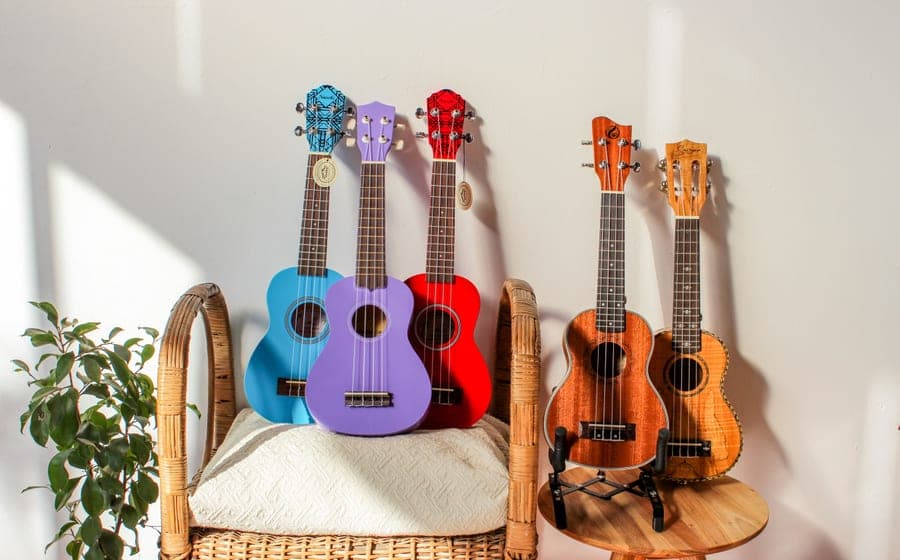
On guitars, the solid-top upgrade is close to a straightforward recommendation. On ukuleles it genuinely is not, and the reason is that the instrument is small, cheap and frequently owned by people who will not manage humidity.
Solid wood sounds fuller, responds better to a light touch and improves over years of playing. Laminate sounds flatter, never improves, and barely responds to humidity so it does not crack. Choose solid for an adult in a stable room; choose laminate for a child, a travel instrument, or a dry house.
What the words mean
Solid wood means the top — and sometimes the back and sides — is cut from a single piece of timber. It flexes as one unit.
Laminate means thin layers of wood glued together with alternating grain direction, like plywood. The outer layer is usually attractive; the inner ones are whatever is structurally sensible.
Most beginner ukuleles are laminate, including the Kala KA-15S#ad and the Cordoba 15CM#ad. That is not a mark against either instrument — it is the normal construction at this price and it is part of why they survive ownership by beginners.
What solid wood does
It vibrates more freely. Glue lines between laminate layers absorb vibration. A single sheet flexes without that damping, so more of the string energy becomes sound.
It improves with playing. Over years, a solid-wood instrument becomes fuller and more responsive. Laminate does not do this. It is as good on the first day as it will ever be.
It responds to touch. Play softly and a solid top goes proportionally quieter and sweeter. Laminate compresses that range, which is forgiving and less expressive.
It is more sensitive to good strings. A responsive top makes a string change more audible, which is worth knowing if you intend to upgrade the factory strings.
What laminate does better
It ignores humidity. The single most important point on this page. Alternating grain directions make laminate dramatically more stable, so it does not develop the cracks a solid top develops in a dry, centrally heated room. That failure mode is silent, gradual and permanent, and it is described in full in ukulele care and humidity.
It survives being handled badly. Layered construction is tougher against knocks and dents. For an instrument that lives on a bedroom floor, this matters more than resonance.
It costs less, which frees budget for the parts that decide whether a cheap ukulele is playable at all: the nut and saddle material, and the tuners.
That last point is the one beginners most often get wrong. A solid-top ukulele with a molded plastic nut is a worse instrument than a laminate one with NuBone, because the nut decides whether the thing plays in tune above the fifth fret and the top decides how nice it sounds when it does. Priority order is in are cheap ukuleles worth it.
How much difference is there really?
Less than on a guitar, and this is worth being honest about.
A ukulele has a small body, four nylon strings and low tension. There is simply less energy going into the top than there is on a steel-string guitar, so the top’s ability to convert that energy matters proportionally less.
A solid-top ukulele next to a good laminate one is noticeably warmer and more open. It is not a different class of instrument, and a beginner who cannot yet hear the difference is not missing much by starting on laminate.
The equivalent argument for guitars, where the gap is larger, is in solid top versus laminate guitars.
Telling them apart
Look into the soundhole at the edge. Solid wood shows the same grain running through the full thickness. Laminate shows thin horizontal lines where the plies meet, often with a paler inner layer.
Read the description carefully. “Solid mahogany top” means solid. “Mahogany” on its own almost always means laminate. Manufacturers do not omit “solid” by accident.
Watch for “solid top” specifically. Many instruments have a solid top with laminate back and sides. That is the correct place to spend the money, and it is a different claim to solid all round.
The third option
Composite instruments sidestep the argument. The Enya Nova U Mini#ad is molded from a carbon-fiber composite rather than built from wood, so there is no grain to crack and no glued brace to separate.
It does not sound like mahogany and never will — the voice is brighter and harder. For a young child, or for an instrument that lives in a backpack, that trade is one we make willingly, and it is why the same instrument leads best travel ukuleles.
The recommendation
For a first ukulele, buy laminate with good fittings. It is what most of our picks are, it survives a beginner, and the money saved goes into the parts that decide playability.
Buy solid when you already know you are keeping the instrument, the room is stable, and you want the sound rather than just the function. That is a second-ukulele purchase for most people, and a perfectly good reason to own two.
What we would buy
Kala KA-15S
Kala Brand MusicBest for: The honest floor, soprano
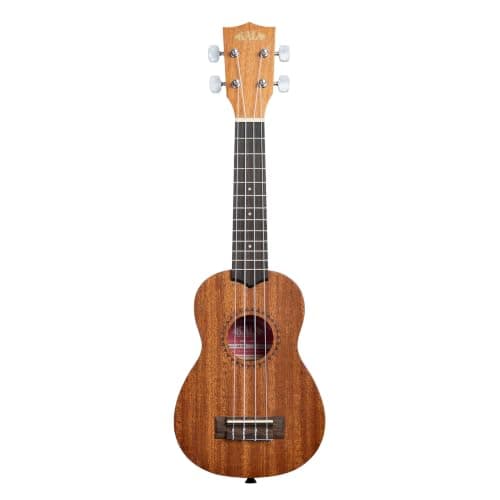
Mahogany throughout, a GraphTech NuBone nut and saddle, and Aquila strings fitted from the factory. The nut material is the spec that separates this from the pile of look-alikes.
Published specifications
- Size:
- Soprano
- Top / back / sides:
- Mahogany
- Neck / fretboard:
- Mahogany neck, rosewood fretboard
- Nut and saddle:
- GraphTech NuBone
- Scale length:
- 13.625"
- Frets:
- 12
- Nut width:
- 1.375"
- Overall length:
- 21.062"
- Strings:
- Aquila Super Nylgut
What it gets right
- NuBone nut and saddle rather than molded plastic — this is what decides whether the instrument plays in tune up the neck
- Aquila strings fitted at the factory, so the first thing you would otherwise replace is already done
- 21 inches overall and light enough for a small child to hold unsupported
Where it gives ground
- 12 frets only, and the body joint stops you well short of the high notes
- Soprano scale means less room between frets — adult fingers with wide fingertips will find it cramped
What it is not good at
Adult hands, sometimes. A 13.625 inch scale is genuinely tight. If the player is a grown-up with large hands, read our soprano-versus-concert comparison before buying this size.
How the specs score against a beginner’s needs
Scores are our reading of the published specifications above against what a beginner physically needs. They are not test results — we have not played this instrument.
Specifications from Kala Brand Music — KA-15S specifications.
Cordoba 15CM
CordobaBest for: Adult hands, concert size
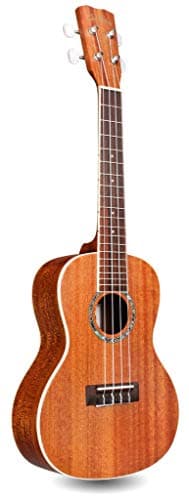
A 375 mm concert scale with 18 frets and a 35 mm nut. The extra inch and a bit of scale over a soprano is the difference between cramped and comfortable for most adults.
Published specifications
- Size:
- Concert
- Top / back / sides:
- Mahogany
- Fingerboard:
- Rosewood
- Scale length:
- 375 mm (14-3/4")
- Frets:
- 18
- Nut width:
- 35 mm (1-3/8")
- Body / overall:
- 280 mm body, 610 mm (24") overall
- Strings / finish:
- Aquila, satin finish, abalone rosette
What it gets right
- 18 frets against a soprano's 12 — a whole extra register that a soprano simply does not have
- The 375 mm scale gives noticeably more room between frets without becoming a tenor-sized instrument
- Aquila strings and an abalone rosette; it looks considerably more expensive than it is
Where it gives ground
- Identical 35 mm nut width to the Kala soprano — the extra room is between the frets, not across the neck
- 24 inches overall is a lot of instrument for a small child
What it is not good at
Sounding like a ukulele in the postcard sense. The concert body is fuller and rounder; the bright, plinky voice people picture is the soprano's.
How the specs score against a beginner’s needs
Scores are our reading of the published specifications above against what a beginner physically needs. They are not test results — we have not played this instrument.
Specifications from Cordoba Guitars — 15CM.
Enya Nova U Mini
EnyaBest for: Young kids, survives anything
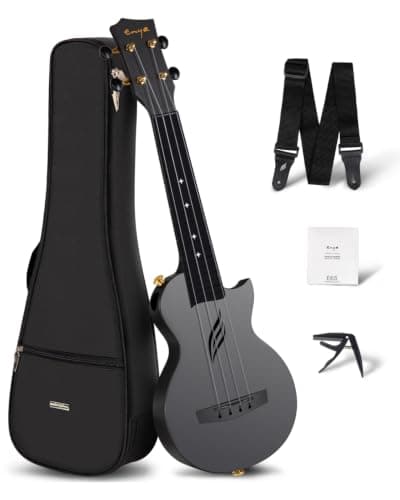
A 21 inch carbon-fiber-and-polycarbonate body weighing 430 grams. It is water resistant and it does not care about humidity, which is the honest reason to buy it for a six-year-old.
Published specifications
- Size:
- Soprano, 21"
- Top / back / sides:
- 30% carbon fiber and polycarbonate composite
- Weight:
- 430 g (0.9 lb)
- Overall length:
- 22"
- Nut width:
- 1-3/8"
- Body:
- Arched back, radius fretboard, cutaway
- In the box:
- Semi-hard case, strap, capo, spare strings
What it gets right
- Composite body — it does not crack in a dry house or swell in a damp one, which is what actually kills cheap wooden ukuleles
- 430 grams; a five-year-old can carry it around by the neck all day, and they will
- Case, strap, capo and spare strings included
Where it gives ground
- It does not sound like wood, and no amount of playing will change that
- The composite body is a fixed quantity — there is no breaking-in and no improvement over time
What it is not good at
Tone. A mahogany Kala sounds warmer and fuller, plainly. You are buying survivability, and that is a legitimate thing to buy for a young child, but be clear that is the trade.
How the specs score against a beginner’s needs
Scores are our reading of the published specifications above against what a beginner physically needs. They are not test results — we have not played this instrument.
Specifications from Enya Music — Nova carbon fiber ukulele collection.
Questions people actually ask
Are solid wood ukuleles worth it?
For an adult keeping the instrument in a stable room, yes — they sound fuller and improve with playing. For a child, a travel instrument, or a very dry house, laminate is frequently the better buy.
Do laminate ukuleles sound bad?
No. They sound flatter and less resonant than solid wood, and most well-regarded beginner ukuleles are laminate. On an instrument this small the difference is smaller than it is on a guitar.
How do you tell if a ukulele is solid wood?
Look at the edge of the soundhole. Solid wood shows continuous grain through the thickness; laminate shows thin layer lines. Manufacturers state it when it is solid, because it is a selling point.
Will a solid wood ukulele crack?
It can, in dry conditions. Sustained low humidity shrinks the top against braces that do not move, and something has to give. Keeping it between roughly 40 and 60 per cent relative humidity prevents it.
Sources
Still deciding?
Every recommendation on this site is built the same way, and the method is published in full — including what we do not do and what would get a pick dropped.
Read next
- How to look after a ukulele
The 40 to 60 per cent rule, the early warning signs of a dry instrument, and what genuinely needs cleaning versus what does not.
- Are cheap ukuleles worth it?
The intonation failure that cannot be repaired, what causes it, and the two specs that tell you whether an instrument has it.
- Best beginner ukuleles: what's worth it from $60 to $120
Segmented by hand size rather than price, with the nut-material spec that separates a real ukulele from a decoration.
- Best travel ukuleles
Composite versus wood for a knockabout ukulele, what actually breaks in a backpack, and the two picks worth taking anywhere.
- Solid top or laminate for a first acoustic?
What a solid top does that a laminate cannot, when laminate is the smarter buy, and how to tell which one you are looking at.