Keys
Best keyboards for worship
A church keyboard has one job a home keyboard does not: getting a clean signal to the sound desk. That is a connector, and most beginner keyboards do not have it.
By Sawyer V. · Published · Last updated
Worship keyboard buying goes wrong in a specific way. Somebody buys a well-reviewed beginner keyboard, brings it to a Sunday, and discovers that getting it into the sound system is a problem nobody warned them about — and that plugging into the only available socket turns their own speakers off.
The feature that separates a church keyboard from a home keyboard is not a sound. It is a connector, and it is on the back panel where nobody looks.
Every pick below states its Starter Path band, and we have not played any of them — the method is on how we pick. Key counts, polyphony and the connector lists come from Yamaha’s and Roland’s own published specifications, cited at the bottom.
Buy the Roland FP-30X. It is the cheapest instrument here with both things a worship keyboard needs: dedicated Output (L/Mono, R) 1/4-inch jacks so the desk gets a clean feed while your speakers stay on, and 88 weighted PHA-4 keys with split and layer. Under about $250, the Yamaha PSR-E383 works — through a DI box off its 1/4-inch headphone jack, which is a normal solution and not a bodge.
The connector that decides this
A sound desk wants a signal it can set a level on, independent of what is coming out of your speakers. That is what a line output is. On the keyboards here it appears in the specification as “Output (L/Mono, R) jacks: 1/4-inch phone type”, and it is a separate pair of sockets from the headphone jacks.
Most keyboards below about $500 do not have one. What they have is a headphone socket, and on Yamaha’s portable keyboards it is even labeled PHONES/OUTPUT, which tells you plainly that it is doing both jobs.
Using it is perfectly workable, and it is what most volunteer keyboard rigs in small churches are doing right now. Two consequences, though, and both are worth knowing before Sunday morning rather than during it:
Your speakers go off. On almost every keyboard, inserting a plug into the headphone socket mutes the internal speakers. You will be relying entirely on the church’s monitoring, which in a small building may be nothing at all.
You need a DI box. A headphone output is a high-level unbalanced signal and a desk input expects something else, so a direct-injection box sits between them. They cost a small fraction of a keyboard, every venue sound engineer owns several, and this is routine rather than a compromise.
Split and layer, and why a worship part needs them
The second specification is a function rather than a socket. Split divides the keyboard so the left hand plays one sound and the right hand another. Dual or layer stacks two sounds on the same keys.
A typical modern worship keys part is a sustained pad underneath and something more defined on top — piano, electric piano or a bell-like synth. Without layering that is two players or two passes. With it, it is one button.
The good news is that split and dual are nearly universal. All four keyboards here have both, including the cheapest. It is worth checking explicitly on anything you are considering that is not on this page, because a keyboard without them will quietly halve what the player can contribute.
The picks, and what separates them
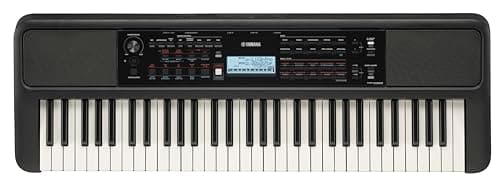
The Yamaha PSR-E383#ad is the budget answer. 61 organ-style touch-sensitive keys, Dual and Split both present, a sustain pedal jack, and crucially a full-size standard stereo phone jack as its PHONES/OUTPUT rather than the 1/8-inch minijack on cheaper boards — that is a much better thing to put into a DI box. 48-note polyphony is the real limitation: a held pad plus a busy right hand plus sustain will drop notes.
The Roland FP-30X#ad is the recommendation. 88 PHA-4 Standard keys with escapement, 256-note polyphony, Dual and Split with an adjustable split point, Bluetooth audio and MIDI, and the dedicated L/R Output jacks. It weighs 14.8 kg with the music rest and it is 51 inches wide, which is a genuine two-person load-in — worth knowing if it moves every week.
The Yamaha PSR-E483#ad exists here for one reason: it has a microphone input, which is rare at this price and solves a real problem for a one-person worship slot where the keys player also leads the singing. 890 voices, 345 styles, two assignable knobs, Dual and Split. It still has no dedicated line out, so the DI box applies, and 61 unweighted keys are the wrong instrument for piano parts.
The Roland FP-60X#ad is the honest ceiling. Same PHA-4 keybed and the same line outs as the FP-30X, plus a 1/4-inch mic input with vocal effects, 27 dedicated strings and pad tones, and bigger speakers in a proper enclosure. Every one of those is a performing feature, and at 19.3 kg it is ten pounds heavier to carry for them.
What we did not list, and why
Stage pianos and workstation synths — the Yamaha MX series, the Roland Juno-DS, the Nord boards every touring worship keyboardist actually uses — are the right instruments for this job and the wrong ones for this page. They assume a player who can build a patch and change it mid-song, and they start at around double the FP-30X.
The Yamaha P-series portable pianos are excellent instruments and a frequent recommendation elsewhere for exactly this use. They are not listed because of the specification this whole page turns on: the P-145 and P-225 route their output through headphone jacks rather than a dedicated line out. That is fine at home and it is the thing this page exists to warn about.
Keyboard amplifiers are a category we deliberately skipped. In a church with a PA, a keyboard amp is a second sound source for the engineer to fight, and the money is better spent on a DI box and a decent monitor send.
Arranger keyboards with auto-accompaniment are covered separately on arranger keyboards for beginners. They are a genuinely good fit for a small church with no band — a one-person backing arrangement — and a genuinely bad fit for a church with one, where the drum pattern fights the drummer.
Setting up for a service without any surprises
Three things that go wrong on a first Sunday, all avoidable.
Arrive with your own cables. Two long instrument cables and the DI box if the keyboard needs one. The church may have them; the church may also have one cable with an intermittent fault that nobody has got round to throwing away.
Set your output level before the engineer sets theirs. A keyboard sent too hot clips before it reaches the desk and there is nothing the engineer can do about it. Set the keyboard’s master volume somewhere sensible and leave it there for the whole service rather than riding it.
Check your split point before the first song, not during it. Split points are usually set from a menu, and finding that menu while a congregation waits is a particular kind of unpleasant.
If the question underneath all this is which instrument to play at all, our page on instruments for worship and church covers the whole family, and guitars for worship is the sibling to this page.
Quick picks
If the budget is tight
61 touch-sensitive keys with split and dual, a sustain pedal jack and a full-size quarter-inch headphone socket you can run into a DI box. It is not a line out, and with a DI box in front of it, it works.
| # | Product | Best for | Score | Price |
|---|---|---|---|---|
| 1 | Yamaha PSR-E38361 touch-sensitive keys and 125 lesson songs with hand-separate practice and scoring. | Learning tools, 61 keysThe honest floor | 7.6 | $199.99 · View on Amazon #ad How we’re funded |
The one to buy
88 weighted keys, 256-note polyphony, split and layer, and a pair of dedicated quarter-inch Output jacks. It is the cheapest instrument here that has both of the specs a worship keyboard needs.
| # | Product | Best for | Score | Price |
|---|---|---|---|---|
| 1 | 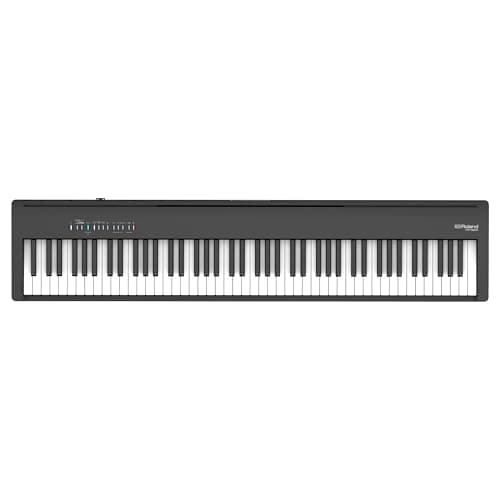 Roland FP-30X88 weighted PHA-4 Standard keys, 256-note polyphony, split and dual, Bluetooth audio and MIDI, and a pair of dedicated 1/4 inch Output jacks. | The keyboard to actually buy for worshipEnough | 9.0 | $649.99 · View on Amazon #ad How we’re funded |
If the keys player also sings
61 keys, split and dual, two live knobs and a microphone input, which is genuinely unusual at this price. Fine for pads and organ, wrong for real piano parts.
| # | Product | Best for | Score | Price |
|---|---|---|---|---|
| 1 | 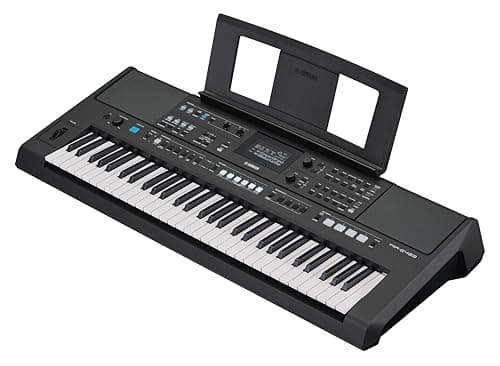 Yamaha PSR-E48361 touch-sensitive keys with split and dual, two live control knobs, 345 accompaniment styles and - the reason it is here - a microphone input. | The volunteer who sings and playsEnough | 7.4 | $429.99 · View on Amazon #ad How we’re funded |
Where overspending starts
The same keybed and the same line outs as the FP-30X, plus a mic input with vocal effects, more pad sounds and bigger speakers. Every addition is a performing feature.
| # | Product | Best for | Score | Price |
|---|---|---|---|---|
| 1 | 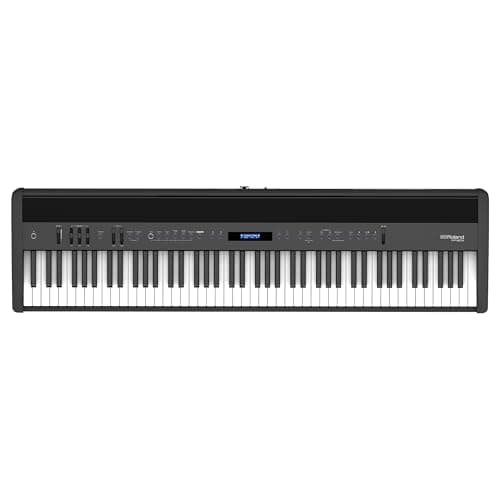 Roland FP-60XThe same 88-key PHA-4 action and the same L/R line outs as the FP-30X, plus a microphone input with vocal effects, more tones and bigger speakers. | Where overspending startsWhere overspending starts | 8.6 | $1,099.99 · View on Amazon #ad How we’re funded |
The picks in full
Yamaha PSR-E383
YamahaBest for: Learning tools, 61 keys
61 touch-sensitive keys and 125 lesson songs with hand-separate practice and scoring. The touch response is the spec that matters; the 650 tones are the spec that sells it.
Published specifications
- Keys:
- 61, organ-style (unweighted), touch-sensitive
- Touch response:
- Soft / medium / hard / off
- Polyphony:
- 48 notes
- Tones:
- 650 (258 panel, 25 drum/SFX, 20 arpeggio, 347 XGlite)
- Lessons:
- 125 lesson songs, right/left/both-hand practice with evaluation
- In the box:
- Music rest, PA130 power adapter
What it gets right
- Touch-sensitive keys — playing harder makes it louder, which is the thing a beginner has to learn early and a non-touch keyboard cannot teach
- The lesson mode with hand-separate practice and scoring is genuinely useful, not a gimmick
- Power adapter included, which is not a given at this tier
Where it gives ground
- Unweighted organ-style keys — this will not build the finger strength a piano needs
- 61 keys, so a method book that assumes 88 will eventually run out of instrument
What it is not good at
Preparing anyone for an acoustic piano. If there is a real piano in the child's future, the unweighted action is a habit to unlearn later. Read our 61-versus-88 comparison before deciding.
How the specs score against a beginner’s needs
Scores are our reading of the published specifications above against what a beginner physically needs. They are not test results — we have not played this instrument.
Specifications from Yamaha — PSR-E383 specifications.
Roland FP-30X
RolandBest for: The keyboard to actually buy for worship
88 weighted PHA-4 Standard keys, 256-note polyphony, split and dual, Bluetooth audio and MIDI, and a pair of dedicated 1/4 inch Output jacks. It is the cheapest instrument on this page that has both of the specs a worship keyboard needs: real line outs and real piano action.
Published specifications
- Keys:
- 88, PHA-4 Standard with escapement and Ivory Feel
- Line output:
- Output (L/Mono, R) jacks, 1/4-inch phone type - dedicated, separate from the headphone jacks
- Polyphony:
- 256 notes
- Tones:
- 321 total; 56 reachable from the front panel
- Split and layer:
- Both, with an adjustable split point
- Headphones:
- Two jacks: stereo mini and stereo 1/4-inch
- Bluetooth:
- Audio (Ver 3.0) and MIDI (Ver 4.0)
- Speakers:
- 12 cm x 2, rated 11 W x 2
- Weight:
- 14.8 kg (32 lb 11 oz) with music rest
What it gets right
- Dedicated L/R line outputs: the sound desk gets a clean signal and the onboard speakers keep working, which a headphone-jack feed does not allow
- PHA-4 Standard is a genuine weighted action with escapement, so piano parts are playable rather than approximated
- 256-note polyphony means a held pad and a sustain pedal do not start stealing notes
- Bluetooth audio doubles as the rehearsal-track playback the keys player usually ends up responsible for
Where it gives ground
- No microphone input, so a singing keyboardist needs a separate channel at the desk
- Only 56 of the 321 tones are reachable from the panel; the rest need the Roland Piano App on a phone
- 32 lb and 51 inches wide - this is a two-person load-in, not a thing you carry under one arm
- No pitch or modulation controls, so it is a piano that does other sounds rather than a synth
What it is not good at
Fast patch changes mid-service. Panel access to sounds is limited and layering is set from buttons rather than a screen, so a player who needs a different sound every song will be reaching for a phone.
How the specs score against a beginner’s needs
Scores are our reading of the published specifications above against what a beginner physically needs. They are not test results — we have not played this instrument.
Yamaha PSR-E483
YamahaBest for: The volunteer who sings and plays
61 touch-sensitive keys with split and dual, two live control knobs, 345 accompaniment styles and - the reason it is here - a microphone input. A worship keyboardist who also sings can run both through one box and one cable to the desk.
Published specifications
- Keys:
- 61, organ-style, touch sensitive (soft / medium / hard / off)
- Split and layer:
- Both: Dual/Layers and Split
- Voices:
- 890 (352 voices, 40 drum/SFX kits, 40 arpeggio, 458 XGlite), with 19 S.Art Lite voices
- Polyphony:
- 64 notes
- Accompaniment styles:
- 345, with Multi Finger and Smart Chord fingering
- Microphone input:
- Yes
- Output to a PA:
- Via the standard stereo phone (1/4") headphone jack; there is no dedicated line out
- Foot switch:
- Yes (sustain, arpeggio hold, articulation)
- Control knobs:
- 2
- Weight:
- 7.3 kg (16 lb 1 oz), excluding batteries
What it gets right
- The microphone input is genuinely unusual at this price and solves a real problem for a one-person worship slot
- Split and dual both present, so a left-hand pad under a right-hand piano is one button away
- The headphone jack is a full-size 1/4" stereo socket, which is a far better thing to send to a DI box than the 1/8" minijack on cheaper boards
- Two assignable knobs mean a filter sweep or a reverb change without entering a menu
Where it gives ground
- No dedicated line output - front of house is being fed from the headphone socket, which also mutes the internal speakers
- 61 unweighted organ-style keys: fine for pads and organ, wrong for a real piano part
- 64-note polyphony will drop notes under a sustained pad plus a busy right hand
- The 345 accompaniment styles are mostly irrelevant in a church with a band
What it is not good at
Piano parts. The keys are unweighted and there are only 61 of them, so anything written for a real piano runs out of instrument at both ends and feels wrong under the fingers.
How the specs score against a beginner’s needs
Scores are our reading of the published specifications above against what a beginner physically needs. They are not test results — we have not played this instrument.
Specifications from Yamaha — PSR-E473 / PSR-E483 published specifications (keys, touch response, voices, polyphony, styles, dual and split, mic input, headphone/output jack, foot switch, weight).
Roland FP-60X
RolandBest for: Where overspending starts
The same 88-key PHA-4 action and the same L/R line outs as the FP-30X, plus a microphone input with vocal effects, more tones and bigger speakers. Everything it adds is a performing feature, and none of it changes what a first-year worship keyboardist can do.
Published specifications
- Keys:
- 88, PHA-4 Standard with escapement and Ivory Feel - identical to the FP-30X
- Line output:
- Output (L/Mono, R) jacks, 1/4-inch phone type
- Microphone input:
- 1/4-inch phone jack, with vocal effects
- Polyphony:
- 256 notes
- Tones:
- 16 piano, 18 electric piano, 18 organ, 27 strings and pads, 279 synth and other
- Split and layer:
- Both, with an adjustable split point
- Speakers:
- 8 x 12 cm x 2 with speaker box, rated 13 W x 2
- Weight:
- 19.3 kg (42 lb 9 oz) with music rest
What it gets right
- The mic input with vocal effects is the one feature a singing keyboardist genuinely misses on the FP-30X
- 27 dedicated strings and pad tones, which is the sound a worship keys part is usually providing
- Larger speakers in a proper enclosure, so it is audible in a rehearsal room without the PA
- Same keybed and same line outs as the FP-30X, so nothing about the core instrument is a compromise
Where it gives ground
- Substantially more than the FP-30X for a feature set a volunteer will not use in year one
- 42 lb rather than 32 lb, which matters when it is carried in and out every week
- The extra tones are reached through menus, so the practical sound palette is not that much wider in a live setting
- Still not a synth: no pitch bend wheel, no deep editing
What it is not good at
Being the sensible purchase. The money between this and the FP-30X buys a DI box, a sustain pedal, a stand, a case and a year of lessons, and any of those would do more for the player.
How the specs score against a beginner’s needs
Scores are our reading of the published specifications above against what a beginner physically needs. They are not test results — we have not played this instrument.
Questions people actually ask
What makes a keyboard good for worship rather than for home?
Two things, and neither is a sound. A dedicated line output, so the sound desk gets a clean signal while your onboard speakers keep working for you. And split or layer, so a left-hand pad can sit under a right-hand piano part without changing patch. Everything else — voice counts, styles, rhythms — is a home-keyboard feature list.
Can I use a headphone jack to connect to the PA?
Yes, through a DI box, and it is what most volunteer keyboard players are doing. The two catches are worth knowing: plugging into the headphone socket usually mutes the keyboard’s own speakers, so you lose your personal monitoring; and a headphone output is a high-level unbalanced signal, which is exactly what a DI box is for. A DI box costs a small fraction of a keyboard and should be assumed, not resented.
61 keys or 88 for church?
88 if anyone will play actual piano parts, 61 if the keys role is pads, organ and simple chords. The honest reckoning is that most worship keyboard parts live inside a two-octave range and 61 keys is genuinely enough for them — right up until somebody asks for a piano intro. Our 61 against 88 comparison works through the general case.
Do I need weighted keys for worship?
Not for pads and organ, where unweighted is arguably better — organ players prefer a fast, light action. You need weighted keys if you play piano parts, because dynamics on an unweighted keyboard are produced by a velocity sensor with a short travel and the control is simply not there. The Roland FP-30X#ad is the cheapest pick here with a real weighted action.
What else do I need besides the keyboard?
A sustain pedal that is a continuous pedal rather than a plastic footswitch, a stand that does not wobble, a bench at the right height, two long instrument cables, and a DI box unless the keyboard has line outs. Our sustain pedal roundup and stand and bench guide cover two of those properly.
Should the church buy it or should I?
If it lives in the building, the church should own it. If it goes home with you every week, you should. The practical reason is maintenance and access rather than fairness: a personal instrument that disappears when a volunteer moves away leaves a hole in the service, and a church instrument that nobody can practice on at home produces under-rehearsed playing.
Sources
- Yamaha — PSR-E383 published specifications (61 organ-style touch-sensitive keys, Dual, Split, sustain pedal, PHONES/OUTPUT standard stereo phone jack, 48-note polyphony, 650 voices, 4.4 kg)
- Yamaha — PSR-E473 / PSR-E483 published specifications (61 keys, Dual and Split, mic input, 64-note polyphony, 890 voices, 345 styles, standard stereo phone headphone jack, 7.3 kg)
- Roland — FP-30X specifications (88-key PHA-4 Standard, 256-note polyphony, Dual and Split, Output L/Mono and R 1/4-inch jacks, Bluetooth audio and MIDI, 14.8 kg)
- Roland — FP-60X specifications (88-key PHA-4 Standard, Output L/Mono and R 1/4-inch jacks, Mic Input 1/4-inch jack, tone counts by category, 19.3 kg)
Still deciding?
Every recommendation on this site is built the same way, and the method is published in full — including what we do not do and what would get a pick dropped.
Read next
- Best instruments for worship and church music
What a worship team actually needs, why chord charts change the instrument choice, and four picks that slot into an existing group.
- Best guitars for worship and church players
Why acoustic-electric is the default, what onboard electronics actually need to do, and three guitars that suit a church stage.
- Best beginner digital pianos: 88 keys, honestly compared
Hammer action versus semi-weighted at the entry price, with the polyphony and weight trade-offs both stated.
- Best portable keyboards
The three specs that decide whether a keyboard actually travels, and the boards that get all three right at a beginner price.
- 61 vs 88 key keyboard
When 61 keys stops being enough, what 88 actually costs in money and floor space, and buy paths for both answers.
- Best sustain pedals for keyboards
Polarity, half-damper and grip explained, plus three pedals for keyboards that came with a plastic footswitch or nothing.