Guitars
Best guitars for worship and church players
A worship guitar has a job description: plug in without fuss, stay in tune through a two-hour service, and take a capo every single song.
By Sawyer V. · Published · Last updated
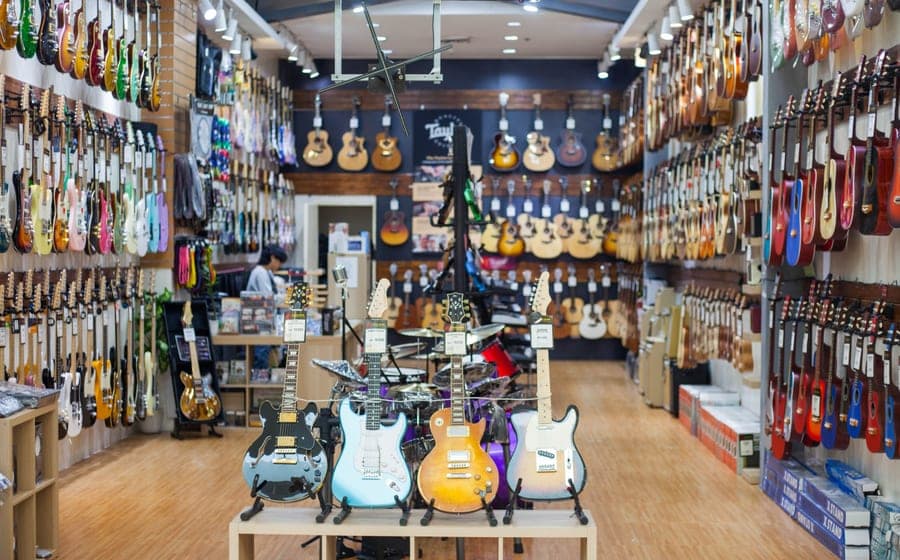
A guitar bought for church gets asked to do specific things, and they are not the things a bedroom guitar is judged on. It has to plug into a system run by a volunteer, hold tune under stage lights for a couple of hours, take a capo on nearly every song, and be comfortable while you are standing up and possibly singing.
None of that is exotic, and none of it costs much. It just points at a slightly different shortlist than a general beginner roundup.
We have not played these guitars. What follows is our reading of published specifications against the job, and the method is on how we pick.
If you plug into the sound system, buy an acoustic-electric with a built-in tuner: the Yamaha FGX800C is the one we would choose. If the neck is the obstacle, the Fender CD-60SCE does the same job with an easier neck. If you are mic'd rather than plugged in, skip the electronics and buy more guitar with the FG800.
What a church stage actually asks for
1. A way to plug in. Onboard electronics mean you arrive, hand the sound desk a cable, and you are done. Without them somebody has to find a microphone and a stand and keep you in one place all service.
2. A tuner you can use silently. Stage tuning happens between songs, in front of people, often while someone is speaking. A preamp tuner with a mute is the civilized way to do it. A clip-on is the fallback, and it is worth owning either way — see best clip-on tuners.
3. Tuning stability under lights. Stage lights are warm and warmth moves tuning. Sealed die-cast tuners and a properly cut nut are what keep a guitar stable; both are present on the picks here.
4. Capo tolerance. Worship sets transpose constantly. A guitar that goes sharp the moment a capo clamps on it will fight you every week, which is as much about the capo as the guitar.
5. Comfort standing up. You will be on your feet. Strap buttons, weight and body depth matter more than they do on the sofa.
What does not matter as much as you think
Tonewood arguments. Through a PA in a room with carpet and a hundred people, the difference between mahogany and nato back and sides is not what anyone hears.
Very expensive guitars. A stage is a hard environment: knocks, stands, temperature swings, other people carrying your gear. There is a good case for the sensible instrument rather than the precious one.
Cutaways. Useful if you play above the twelfth fret, and most worship parts do not. Nice to have, not a requirement.
How we ranked these
Tuning stability first, because drifting tuning is the failure everyone hears. Then how well it plugs in, then playability through long sets, then room to grow, then what else you still need to buy.
The picks
The Yamaha FGX800C#ad is the one we would take to a church. It is the FG800 platform — solid Sitka spruce top, scalloped bracing — with a cutaway and Yamaha’s onboard electronics, which include a tuner in the preamp. That tuner is the feature you will use every single week.
The honest costs: onboard electronics add to the price for something a mic'd player does not need, the preamp runs on a battery that will die at the worst moment, and the cutaway changes the body volume slightly compared with the plain FG800.
The Fender CD-60SCE#ad is the pick when the player is fighting the neck. It carries Fender’s Easy-to-Play neck shape and rolled fingerboard edges over into a plugged-in guitar, with a solid spruce top and mahogany back and sides. For a volunteer who is learning barre chords and capo positions at the same time, that friendlier neck is worth more than a spec sheet suggests.
Its trade is that Fender’s entry preamps are simpler than Yamaha’s, and the guitar is a little warmer and less cutting in a dense mix.
The Yamaha FG800#ad earns its place for the player who will be mic'd, or who is still at the rehearsal-and-living-room stage. No electronics means the whole budget goes into the guitar: the same solid Sitka spruce top and scalloped bracing, for less money. Add a clip-on tuner and you have everything a small room needs.
The limit is obvious: when the church asks you to plug in, you cannot, and retrofitting a pickup costs enough to erase the saving.
What else to budget for
A capo you can trust. Used more here than in any other playing context. The ones that hold tuning are in best guitar capos.
A spare preamp battery and a spare cable. Both fail, both fail on a Sunday, and both cost very little.
A strap and a stand. You are standing, and the guitar has to live somewhere safe between sets — see best guitar stands.
If the decision is still which instrument to play on the team at all, the cross-instrument version is in best instruments for worship and church.
Quick picks
The one to buy for a stage
A solid top with onboard electronics and a tuner built into the preamp, which is the feature that matters when you are plugged into a house system.
| # | Product | Best for | Score | Price |
|---|---|---|---|---|
| 1 | No image Yamaha FGX800CThe FG800 with a cutaway and Yamaha's System66 preamp bolted in. | Best onboard electronicsEnough | 8.8 | Check price on Amazon → #ad How we’re funded |
If the neck needs to be easier
The same plugged-in capability on Fender's easier neck shape with rolled fingerboard edges, for a player who struggles with barre chords and capo work.
| # | Product | Best for | Score | Price |
|---|---|---|---|---|
| 1 | No image Fender CD-60SCEThe CD-60S with a cutaway and Fishman electronics. | Warmer voice, easier neckEnough | 8.5 | Check price on Amazon → #ad How we’re funded |
If you will be mic'd, not plugged in
No electronics, more guitar for the money. The right answer for a small room where a microphone is doing the work.
| # | Product | Best for | Score | Price |
|---|---|---|---|---|
| 1 | No image Yamaha FG800A solid Sitka spruce top with scalloped bracing at the entry price. | Buy once, acousticEnough | 8.8 | Check price on Amazon → #ad How we’re funded |
The picks in full
Yamaha FGX800C
YamahaBest for: Best onboard electronics
The FG800 with a cutaway and Yamaha's System66 preamp bolted in. The onboard tuner and three-band EQ are the parts a beginner actually uses, and they are better here than at any comparable price.
Published specifications
- Top:
- Solid Sitka spruce
- Scale length:
- 25.6"
- Electronics:
- System66 preamp with SRT pickup
- Preamp controls:
- Volume, 3-band EQ, mid-frequency Q control, onboard tuner
- Body:
- Dreadnought with cutaway
What it gets right
- Solid Sitka spruce top — the specification that matters most on any acoustic, present here
- Onboard tuner means the guitar tunes itself without a clip-on, which beginners genuinely use
- Mid-frequency Q control is unusual at this price and is the knob that fixes a boxy amplified sound
- Same well-regarded FG platform as the acoustic-only FG800
Where it gives ground
- Slightly brighter and less warm than the Fender, which not everyone prefers
- The cutaway removes a little body volume when played unplugged
- Preamp runs on a battery that will die at the worst moment
- More guitar than a player who never plugs in actually needs
What it is not good at
A player who will never amplify it. If the guitar lives in a bedroom and never leaves, the plain FG800 is the same instrument without a battery compartment or a preamp to pay for.
How the specs score against a beginner’s needs
Scores are our reading of the published specifications above against what a beginner physically needs. They are not test results — we have not played this instrument.
Specifications from ReviewFinder — Fender CD-60SCE vs Yamaha FGX800C published comparison, ScoreGuitar — Fender CD-60SCE vs Yamaha FGX800C spec comparison.
Fender CD-60SCE
FenderBest for: Warmer voice, easier neck
The CD-60S with a cutaway and Fishman electronics. Mahogany back and sides give it a warmer, rounder voice than the Yamaha, and it inherits the easy-to-play neck the CD-60S is known for.
Published specifications
- Top:
- Solid spruce
- Back and sides:
- Mahogany
- Electronics:
- Fishman
- Body:
- Dreadnought with cutaway
- Scale length:
- 25.3"
What it gets right
- Mahogany back and sides produce a warmer, rounder tone than the Yamaha's brighter voice
- Solid spruce top
- Inherits the CD-60S easy-to-play neck profile, which is a real advantage in month one
- Shorter 25.3 inch scale means slightly lower string tension and easier fretting
Where it gives ground
- Fishman system here has fewer controls than Yamaha's System66 — less ability to fix a bad amplified sound
- Warmer voice can read as muddy through a cheap amplifier
- Cutaway costs a little unplugged volume
- Battery-powered preamp, same caveat as the Yamaha
What it is not good at
Playing loud with a band. The electronics are fine for a coffee shop or a church group and will fight feedback at volume, which is a limitation of the price rather than of this guitar specifically.
How the specs score against a beginner’s needs
Scores are our reading of the published specifications above against what a beginner physically needs. They are not test results — we have not played this instrument.
Specifications from ReviewFinder — Fender CD-60SCE vs Yamaha FGX800C published comparison, ScoreGuitar — Fender CD-60SCE vs Yamaha FGX800C spec comparison.
Yamaha FG800
YamahaBest for: Buy once, acoustic
A solid Sitka spruce top with scalloped bracing at the entry price. Solid-versus-laminate is the one acoustic spec that changes what the instrument does over years, and this is the cheapest place to get it done right.
Published specifications
- Top:
- Solid Sitka spruce
- Back / sides:
- Nato / okume
- Neck / fingerboard:
- Nato neck, rosewood fingerboard, R400 mm (23-5/8") radius
- Scale length:
- 650 mm (25-9/16")
- Nut width:
- 43 mm (1-11/16")
- Bracing:
- Scalloped
- Body:
- Traditional Western (dreadnought), 412 mm (16-1/4") wide, 100-118 mm deep
- Hardware:
- Die-cast chrome tuners, urea nut and saddle
What it gets right
- A solid top, not a laminate — the only acoustic spec at this price that genuinely changes over time
- Scalloped bracing and die-cast tuners are specifications you normally pay considerably more for
- Yamaha's most-copied entry acoustic; parts, setups and advice are everywhere
Where it gives ground
- A full dreadnought body is a big box — 412 mm across and up to 118 mm deep
- Nato and okume back and sides are the cost saving; the top is where the money went
What it is not good at
Fitting a smaller player. The dreadnought body is wide and deep enough that a young teenager can struggle to get their arm over it comfortably. If that is the buyer, look at the JR1 or a concert-size body instead.
How the specs score against a beginner’s needs
Scores are our reading of the published specifications above against what a beginner physically needs. They are not test results — we have not played this instrument.
Specifications from Yamaha Europe — FG/FS800 series specifications.
Questions people actually ask
Do I need an acoustic-electric for church?
If you plug into the sound system, yes. A plain acoustic can be mic'd, but that ties you to one spot and is harder for a volunteer sound team to manage. Onboard electronics make you self-sufficient.
What should the onboard preamp have?
A tuner, at minimum, plus volume and basic tone control. A built-in tuner lets you tune silently on stage between songs, which is the single most useful stage feature on a beginner acoustic-electric.
Why do worship players use capos so much?
Because songs get transposed to suit whoever is singing that week. A capo lets you keep familiar chord shapes in a new key. That makes capo quality a real consideration — see best guitar capos.
Will a cheap guitar be good enough on stage?
Through a PA, tuning stability and pickup quality matter more than tonewoods. A solid top and a working preamp at this tier is enough for most rooms; the thing that will embarrass you is drifting tuning, not a laminate back.
Electric or acoustic for a worship band?
Most volunteer players start on acoustic because it works unplugged at rehearsal and plugged in on Sunday. Electric has its place in larger bands, and the cross-instrument view is in best instruments for worship and church.
Still deciding?
Every recommendation on this site is built the same way, and the method is published in full — including what we do not do and what would get a pick dropped.
Read next
- Best instruments for worship and church music
What a worship team actually needs, why chord charts change the instrument choice, and four picks that slot into an existing group.
- Best acoustic-electric guitars for beginners
When onboard electronics earn their premium, which preamp controls matter, and two picks with genuinely different voices.
- Best guitar capos for beginners
What a capo is for, the three clamping designs, why over-clamping pulls chords sharp, and three picks with honest trade-offs.
- Best beginner acoustic guitars: solid tops from $200 to $350
Solid versus laminate tops, the dreadnought body-size problem, and picks for adults and children separately.
- Best clip-on tuners for beginners
Why a clip-on beats a phone app, the four specs that separate them, and three tuners for guitar, ukulele and band instruments.