Guitars
Squier Sonic vs Affinity Stratocaster
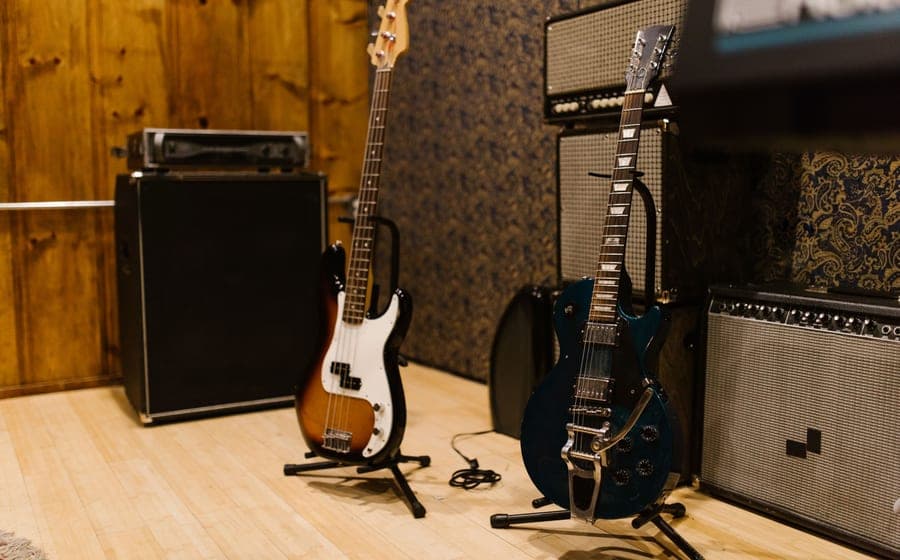
Two Squier Stratocasters one tier apart. The geometry is identical, which means this decision is about hardware and fretwire, not about playability.
By Sawyer V. · Published · Last updated
These are the two Squier Stratocasters a beginner actually chooses between, and most comparisons of them get lost in finish names and pickup marketing. The useful version is shorter than you would expect, because the important specifications are identical.
We have not played either guitar. What follows is our reading of the published specifications against what a first-year player physically needs, and the method is on how we pick.
Buy the Squier Sonic Stratocaster#ad if the total budget has to cover an amp, a cable and a tuner as well. Buy the Squier Affinity Series Stratocaster#ad if the guitar budget stands on its own and you want the better fretwire and hardware. Nothing about the Sonic will make a first year harder.
What is identical
Scale length: 25.5 inches on both. This is the single most consequential number on an electric guitar, because it sets string tension and fret spacing. Learning on one and moving to the other means relearning nothing.
Fingerboard radius: 9.5 inches on both. The curve across the fingerboard, which decides how chords and bends feel under the hand.
Nut width and material: 1.650 inches, synthetic bone, on both. The nut is where cheap guitars usually fail: a soft plastic nut binds the string so tuning moves in jumps rather than smoothly. Both of these avoid that.
Body wood: poplar on both. Standard at this tier and not a differentiator between them.
What the Affinity adds
Medium jumbo frets instead of narrow tall. The real difference. Taller, wider fretwire takes less finger pressure to sound a note cleanly, which matters when fingertips are still soft and chord shapes are still unreliable. It is the one upgrade on this page a beginner can feel in week one.
Better hardware. Tuners and bridge components a tier up from the Sonic. Over a year this shows up as an instrument that drifts out of tune less often.
That is close to the whole list. The Affinity is not a different design, it is the same design built with slightly better parts.
What neither one fixes
The setup. Both arrive set up to a factory standard, and both play considerably better after a technician has adjusted the action and the nut slots. Budget for that on either guitar rather than assuming the pricier one arrives perfect — what a setup covers is in what a guitar setup is.
The tremolo problem. Both are offered with a vintage-style synchronized tremolo, and on both it will pull the guitar out of tune once a beginner starts using the bar. The hardtail version of either is the safer buy.
The amp. An electric guitar is half an instrument without one. If choosing the Affinity means buying no amp, that is a bad trade — the options are in best beginner guitar amps.
Who should buy which
Buy the Sonic if the money has to stretch across a whole starter setup, if the player might not stick with it, or if you want to leave room for a setup and a better amp. It has full-scale geometry, sealed tuners and a synthetic bone nut, which is our entire definition of the honest floor for a first electric.
Buy the Affinity if the player is an adult who has decided they are doing this, or if a child has already outgrown a starter instrument. The fretwire is the reason, not the badge.
Buy neither if the player is small. Both are full-size, and a 3/4 scale instrument is the right answer for a young child — see best guitars for kids.
The wider view, including how these two sit against Epiphone and Yamaha at the same prices, is in Squier vs Epiphone vs Yamaha, and the full field is in best beginner electric guitars.
What we would buy
Squier Sonic Stratocaster
Squier by FenderBest for: The honest floor, electric
The cheapest electric that still has full-scale geometry, sealed tuners and a real 9.5 inch fingerboard radius. Nothing about it will make a beginner's first year harder.
Published specifications
- Scale length:
- 25.5" (647.7 mm) — full size
- Body / neck:
- Poplar body, maple neck, "C" profile
- Fingerboard:
- Maple or Indian laurel, 9.5" (241 mm) radius
- Frets:
- 21, narrow tall
- Nut width:
- 1.650" (42 mm), synthetic bone
- Pickups:
- Three ceramic single-coils (SSS)
- Bridge:
- 6-saddle vintage-style synchronized tremolo
What it gets right
- Full 25.5 inch scale, so nothing learned here has to be relearned later
- Synthetic bone nut rather than a soft plastic one — the part that decides whether a cheap guitar stays in tune
- Sealed-gear tuners, which is the single most important spec on a first electric
Where it gives ground
- Poplar body and ceramic pickups are exactly what you would expect at this tier
- The tremolo bridge will pull the guitar out of tune if a beginner uses it, and beginners always use it
What it is not good at
Staying in tune if you use the whammy bar. If that matters, buy the hardtail (HT) version of the same guitar instead — it is the identical instrument with the tremolo deleted.
How the specs score against a beginner’s needs
Scores are our reading of the published specifications above against what a beginner physically needs. They are not test results — we have not played this instrument.
Specifications from Squier Wiki — Sonic Stratocaster specifications.
Squier Affinity Series Stratocaster
Squier by FenderBest for: Buy once, adult starter
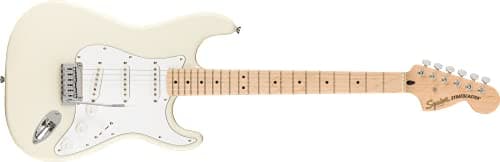
Same geometry as the Sonic with medium jumbo frets and better hardware. This is the tier where a beginner stops having a reason to upgrade.
Published specifications
- Scale length:
- 25.5" (648 mm) — full size
- Body / neck:
- Poplar body, maple neck, "C" profile
- Fingerboard:
- Maple, 9.5" (241 mm) radius
- Frets:
- 21, medium jumbo
- Nut width:
- 1.650" (42 mm), synthetic bone
What it gets right
- Medium jumbo frets are noticeably easier to fret cleanly than narrow tall wire, which is the physical thing a beginner struggles with
- Identical scale, radius and nut width to the Sonic, so the step up is hardware, not geometry
- Widely serviced — any shop can set one up without ordering parts
Where it gives ground
- The jump from the Sonic buys hardware and fretwire, not tone
- Still a poplar body; if you are chasing a specific sound this is not the guitar that delivers it
What it is not good at
Justifying itself over the Sonic on paper. The difference is real but it is felt, not read — if the budget is tight, the Sonic is not a compromise.
How the specs score against a beginner’s needs
Scores are our reading of the published specifications above against what a beginner physically needs. They are not test results — we have not played this instrument.
Specifications from Reverb — Squier Affinity Series Stratocaster specs.
Questions people actually ask
Is the Affinity worth the extra over the Sonic?
If the budget allows it without cutting into an amp or lessons, yes: the medium jumbo frets are easier to fret cleanly and the hardware is better. If paying more means skipping an amp, no. The Sonic is not a compromise instrument.
What is actually different between them?
Fretwire and hardware, mostly. Both are 25.5 inch scale, both have a 9.5 inch fingerboard radius, both have a 1.650 inch synthetic bone nut. The Sonic uses narrow tall frets; the Affinity uses medium jumbo.
Do they sound different?
Less than the price gap suggests. Both are poplar-bodied with ceramic single-coils. If you are chasing a specific recorded tone, neither of these is the guitar that delivers it, and the amp will matter more than the guitar.
Which is better for a child?
Neither, if the child is small. Both are full 25.5 inch scale instruments. A shorter scale guitar is the right answer for under-12s, and the sizing rules are in guitar sizes for kids.
Should I get the tremolo or hardtail version?
Hardtail, for a beginner. The tremolo bridge pulls the guitar out of tune when it is used, and beginners always use it. Squier sells a hardtail version of the Sonic that is otherwise the same guitar.
Still deciding?
Every recommendation on this site is built the same way, and the method is published in full — including what we do not do and what would get a pick dropped.
Read next
- Best beginner electric guitars: what's worth it from $150 to $400
Segmented by player and price band, with the three specs that actually decide whether a first electric survives its first year.
- Squier vs Epiphone vs Yamaha for a first guitar
Fender, Gibson and Yamaha lineages compared on the specs that differ: scale length, pickups, fingerboard radius.
- How much should a beginner guitar cost?
Four price bands defined by specification rather than by number, plus the hidden costs that turn a $200 budget into a $270 purchase.
- What a guitar setup actually is
The four adjustments in a setup, why budget guitars need one most, and which parts of it a beginner can safely do at home.
- Are cheap guitars worth it?
The line between cheap and too cheap, named part by part, with what each failure does to a beginner who cannot diagnose it.