Guitars
Squier vs Epiphone vs Yamaha for a first guitar
These are not three versions of the same guitar. They are budget lines of three different design traditions, and the differences are measurable.
By Sawyer V. · Published · Last updated
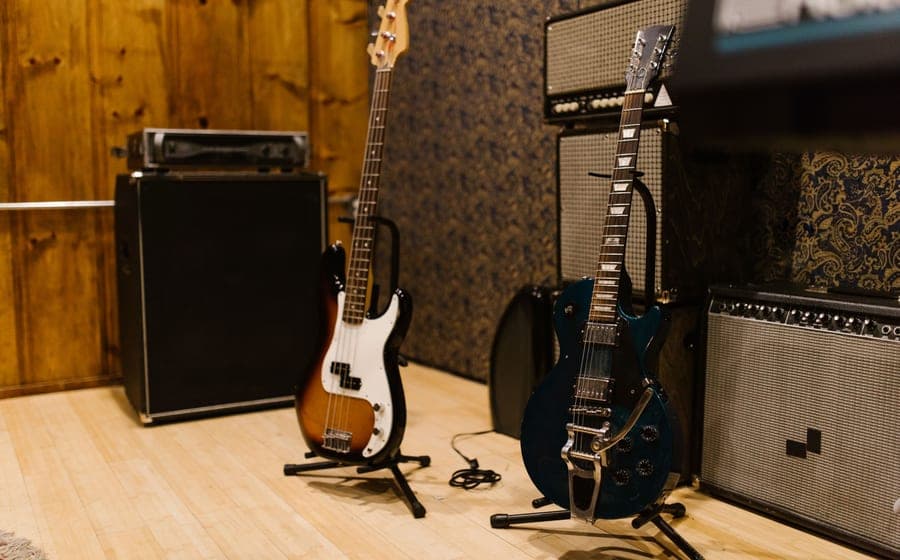
Squier is Fender’s budget line: 25.5 inch scale, single-coil pickups, bright. Epiphone is Gibson’s: shorter scale, humbuckers, warmer and thicker. Yamaha’s Pacifica is its own design with an HSS layout that covers both. None is better; they are three different sounds at the same price.
Why the lineage matters more than the badge
Squier and Epiphone are not third-party copies. Squier is owned by Fender and Epiphone by Gibson, which is why the guitars are dimensionally faithful to their expensive parents rather than approximately similar. A Squier Stratocaster has the same 25.5 inch scale, the same 9.5 inch fingerboard radius and the same 1.650 inch nut width as a Fender Stratocaster costing five times as much.
That matters for a beginner in one specific way: nothing learned on the cheap version has to be unlearned on the expensive one. Muscle memory built over a year of practice transfers exactly. An unrelated brand that copies the body outline but uses its own neck dimensions does not give you that.
Side by side, on the specs that actually differ
| Squier (Sonic Strat) | Epiphone (Power Players LP) | Yamaha (Pacifica PAC012) | |
|---|---|---|---|
| Lineage | Fender | Gibson | Yamaha, its own design |
| Scale length | 25.5" | 22.73" (3/4+) | 25.5" |
| Pickups | Three single coils | Two humbuckers | Humbucker + two single coils |
| Fingerboard radius | 9.5" (241 mm) | Not published | 13.75" (350 mm) |
| Frets | 21 | 22 | 22 |
| Bridge | Vintage tremolo (hardtail version available) | Wrap-around, fixed | Tremolo |
| Body wood | Poplar | Mahogany | Agathis |
| Character | Bright, clear, cuts through | Thick, warm, dense | Versatile, covers both |
Single coils versus humbuckers, without the jargon
A single-coil pickup uses one coil of wire and produces a bright, clear, slightly thin sound with a fair amount of detail. It also picks up electrical hum from lights and computer screens, which is audible and mildly annoying.
A humbucker uses two coils wired to cancel that hum — hence the name. The side effect is a thicker, warmer, louder output with less high-end detail. It suits distorted playing much better.
For a beginner the practical difference is this: if the music they want to play is heavy, a humbucker gets there more easily and a single coil will sound thin at high gain. If the music is clean — funk, pop, blues, country — the single coil is the sound they are picturing. The Yamaha’s HSS layout sidesteps the question by having one of each, which is a genuinely sensible choice for someone who does not yet know what they like.
Scale length and what it does to the hand
Fender’s 25.5 inch scale and Gibson’s shorter 24.75 inch scale are the two conventions in electric guitar, and both have been standard for decades. At a given tuning, the longer scale holds slightly higher string tension, which reads as a tighter, brighter attack. The shorter scale is a touch slinkier.
A beginner will not notice this. What a beginner will notice is fret spacing: the shorter scale puts the frets marginally closer together, which is easier for a smaller hand. This is why Epiphone’s youth-size Power Players line at 22.73 inches makes sense for a child, and why we put it in the children’s segment of the electric guitar roundup rather than the adult one.
The fingerboard radius nobody explains
Fingerboard radius describes how curved the fingerboard is across its width. A small number is a rounder board; a large number is flatter. Squier’s 9.5 inch (241 mm) is a moderate vintage-style curve. Yamaha’s 13.75 inch (350 mm) is much flatter.
A rounder board suits the natural arch of a hand forming a chord in the first position. A flatter board suits single notes higher up the neck and makes string bending easier without notes choking out. Neither is better, and a beginner should not choose on this. It is worth knowing only so that the difference between two guitars feeling different is not mistaken for one of them being faulty.
Which one to buy
If the player wants clean, bright, classic guitar sounds, or simply has no idea and wants the most-copied electric guitar design in the world: the Squier.
If the player is a child between roughly eight and thirteen: the Epiphone Power Players, for the short scale and the fixed wrap-around bridge, which is one fewer thing to knock out of tune.
If the player wants one guitar to cover several styles and does not want to make this decision again in a year: the Yamaha, for the HSS layout.
Whichever you pick, budget for a setup. It matters more than the choice you just made, and we explain why in are cheap guitars worth it.
What we would buy
Squier Sonic Stratocaster
Squier by FenderBest for: The honest floor, electric
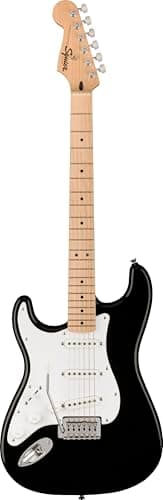
The cheapest electric that still has full-scale geometry, sealed tuners and a real 9.5 inch fingerboard radius. Nothing about it will make a beginner's first year harder.
Published specifications
- Scale length:
- 25.5" (647.7 mm) — full size
- Body / neck:
- Poplar body, maple neck, "C" profile
- Fingerboard:
- Maple or Indian laurel, 9.5" (241 mm) radius
- Frets:
- 21, narrow tall
- Nut width:
- 1.650" (42 mm), synthetic bone
- Pickups:
- Three ceramic single-coils (SSS)
- Bridge:
- 6-saddle vintage-style synchronized tremolo
What it gets right
- Full 25.5 inch scale, so nothing learned here has to be relearned later
- Synthetic bone nut rather than a soft plastic one — the part that decides whether a cheap guitar stays in tune
- Sealed-gear tuners, which is the single most important spec on a first electric
Where it gives ground
- Poplar body and ceramic pickups are exactly what you would expect at this tier
- The tremolo bridge will pull the guitar out of tune if a beginner uses it, and beginners always use it
What it is not good at
Staying in tune if you use the whammy bar. If that matters, buy the hardtail (HT) version of the same guitar instead — it is the identical instrument with the tremolo deleted.
How the specs score against a beginner’s needs
Scores are our reading of the published specifications above against what a beginner physically needs. They are not test results — we have not played this instrument.
Specifications from Squier Wiki — Sonic Stratocaster specifications.
Epiphone Power Players Les Paul
EpiphoneBest for: Ages roughly 8-13
A 22.73 inch scale on a mahogany body with two real humbuckers, and a gig bag, strap, cable and picks in the box. The short scale is the whole point: it is reachable.
Published specifications
- Scale length:
- 22.73" — 3/4+ size
- Body / neck:
- Mahogany body, bolt-on mahogany neck, SlimTaper D profile
- Frets:
- 22, sculpted heel for upper-fret access
- Pickups:
- Epiphone 650R (neck) and 700T (bridge) humbuckers
- Bridge:
- LightningBar compensated wrap-around
- In the box:
- Gig bag, strap, picks, guitar cable
What it gets right
- A wrap-around bridge has nothing to knock out of tune — the right choice for a kid's guitar
- Mahogany body and neck rather than the plywood usual at this size
- Ships with the accessories that otherwise cost another chunk on top
Where it gives ground
- Les Pauls are dense, and even a 3/4+ one has weight a small child will notice on a strap
- Humbuckers only — no bright, clean single-coil sound available
What it is not good at
Very small children. At 3/4+ this suits roughly age 8 upward; a five-year-old needs the smaller scale of a Squier Mini or a Loog.
How the specs score against a beginner’s needs
Scores are our reading of the published specifications above against what a beginner physically needs. They are not test results — we have not played this instrument.
Specifications from Epiphone (Gibson) — Power Players Les Paul.
Yamaha Pacifica PAC012
YamahaBest for: One guitar, several styles
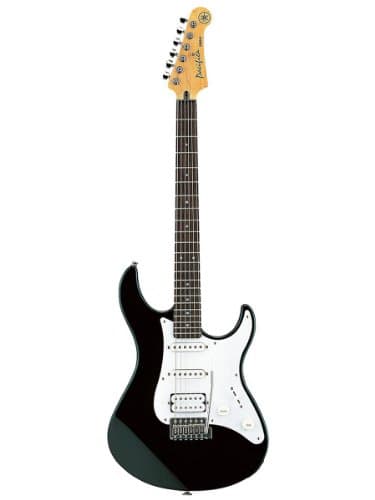
An HSS layout and 22 frets at the entry tier. The humbucker at the bridge means one guitar covers both the quiet and the loud thing a beginner wants to try.
Published specifications
- Scale length:
- 25-1/2" (648 mm) — full size
- Body:
- Solid agathis, bolt-on construction
- Neck:
- Maple, 22 frets
- Fingerboard radius:
- 13-3/4" (350 mm) — flatter than a Strat
- Pickups:
- Humbucker / single / single (HSS)
- Nut:
- Urea
What it gets right
- 22 frets rather than 21, and a flatter 350 mm radius that suits chord playing
- The bridge humbucker covers distorted rock without a pickup swap later
- Yamaha's entry instruments are consistently well set up out of the box for the tier
Where it gives ground
- Agathis is a soft, plain body wood; the finish marks easily
- The flatter fingerboard radius is a real difference from a Strat — if a friend's Strat is the reference, this will feel different
What it is not good at
Being a Stratocaster. It is Strat-shaped and it is not one; the radius and the bridge pickup make it its own thing. That is a feature, but do not buy it expecting a Fender feel.
How the specs score against a beginner’s needs
Scores are our reading of the published specifications above against what a beginner physically needs. They are not test results — we have not played this instrument.
Specifications from Yamaha USA — PAC012 specifications.
Questions people actually ask
Which is better, Squier or Epiphone?
Neither. Squier is Fender’s budget line and builds Fender geometry — a 25.5 inch scale with single-coil pickups, which reads bright and clear. Epiphone is Gibson’s budget line and builds Gibson geometry — a shorter scale with humbuckers, which reads thicker and warmer. Pick the sound, not the brand.
Squier or Epiphone for a beginner?
For a beginner with no preference, Squier by a small margin, for one practical reason: Stratocaster-style bodies are lighter and more comfortable to sit with for a long practice session than a Les Paul, which is dense. If the player already likes the way a Les Paul sounds, that consideration loses immediately.
Is Fender Squier good for beginners?
Yes. The important thing is that Squier is Fender’s own line, so the scale length, fingerboard radius and neck profile match a real Fender. Nothing learned on a Squier has to be relearned. That is not true of unrelated brands that copy the shape but not the dimensions.
Yamaha vs Fender for a beginner guitar?
Yamaha’s Pacifica line offers an HSS pickup layout — a humbucker at the bridge with two single coils — which covers a wider tonal range than a standard three-single-coil Squier. The Yamaha also has a flatter 350 mm fingerboard radius against the Squier’s 241 mm, which some players find better for chords. Yamaha is the more versatile single guitar; Squier is the more canonical one.
Sources
Still deciding?
Every recommendation on this site is built the same way, and the method is published in full — including what we do not do and what would get a pick dropped.
Read next
- Best beginner electric guitars: what's worth it from $150 to $400
Segmented by player and price band, with the three specs that actually decide whether a first electric survives its first year.
- Acoustic vs electric guitar for beginners
The physical difference is real but small. The cost difference is larger than most people expect. Buy CTAs for both answers.
- Are cheap guitars worth it?
The line between cheap and too cheap, named part by part, with what each failure does to a beginner who cannot diagnose it.
- Best guitars for kids: sized by reach, not by age
Segmented by age band with real scale lengths and body dimensions, plus why buying big to grow into reliably backfires.
- How much should a beginner guitar cost?
Four price bands defined by specification rather than by number, plus the hidden costs that turn a $200 budget into a $270 purchase.