Guitars
Left-handed guitars for beginners
The decision is made once, at the very start, and it is genuinely hard to reverse. It is also easier than the internet makes it sound.
By Sawyer V. · Published · Last updated
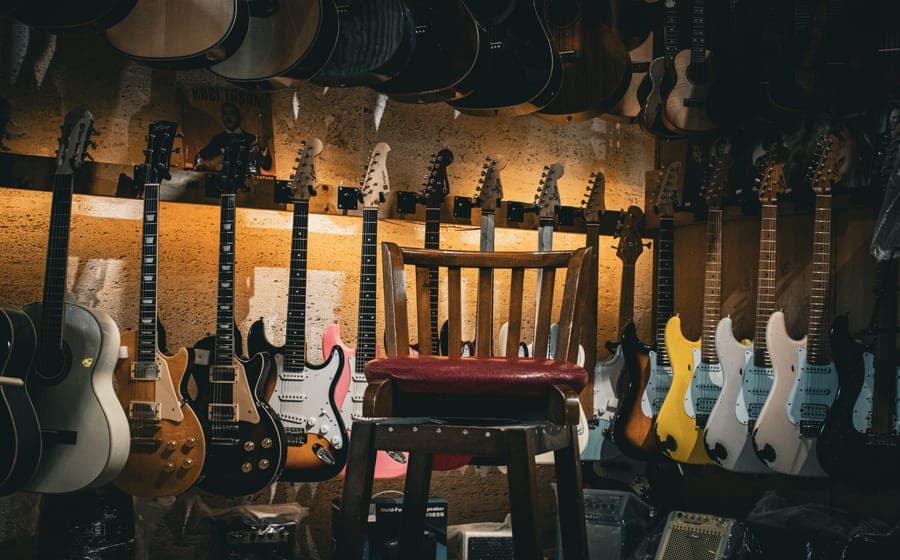
This question arrives at the worst possible moment: before the first guitar is bought, by someone who has never played one, and it is a decision that is genuinely awkward to change a year later.
The good news is that the honest answer is simpler than the amount of argument around it suggests.
If holding the guitar left-handed feels natural, buy a left-handed instrument. The availability problem is real but modest at beginner prices. Do not flip a right-handed guitar over and do not force a left-handed player to learn right-handed because of what might be available later.
The three options
1. A proper left-handed guitar. Built mirror-image: the neck, nut, bridge, controls and strap buttons are all where a left-handed player needs them. This is the right answer for most left-handed players.
2. Learn right-handed. Genuinely viable, and a lot of left-handed players do it. Both hands have hard jobs on a guitar, so there is no strong physical reason the strumming hand must be dominant. Do this only if the player is comfortable holding the instrument that way from the start.
3. Restring a right-handed guitar. The one that sounds clever and is mostly a bad idea. Details below.
Why flipping a guitar does not really work
Reversing the string order on a right-handed guitar leaves four specific problems.
The nut slots are wrong. Each slot is cut to a width matched to a specific string. Put a thick low E in a slot cut for a thin high E and it sits too high; put a thin string in a wide slot and it rattles and slips. A new nut, cut for the reversed order, is required.
The acoustic saddle is angled. Most acoustic saddles are set at a slant so each string has slightly different length for correct intonation. Reversed, that compensation now works against every string, and the guitar plays out of tune with itself up the neck.
Everything is in the wrong place. The volume knob and pickup selector end up under the strumming hand. The output jack points the wrong way. The strap button is missing where you need it.
The cutaway is on the wrong side. Cosmetic, and it means the upper-fret access the guitar was designed for is gone.
A technician can convert a guitar properly — new nut, reversed or replaced saddle, new strap button. That is a real job with a real cost, and at beginner prices it is usually cheaper to buy a left-handed instrument.
What is actually available
Better than the reputation. The standard beginner models are made left-handed, including left-handed versions of the Squier Sonic Stratocaster#ad and the Yamaha FG800#ad lines, and every major manufacturer produces left-handed variants of its core beginner instruments.
Where it thins out is choice: fewer colors, fewer finishes, fewer of the models that sit slightly off the main line, and a much smaller used market. Expect to wait for stock more often, and expect to pay slightly more.
Worth knowing: some instruments sidestep the problem entirely. A Kala KA-15S#ad ukulele has a symmetrical body and a straight saddle, so converting one is largely a matter of restringing and having the nut looked at. For a young left-handed child, that is a genuinely useful route into stringed instruments — see ukulele versus guitar.
How to decide, especially for a child
Hand them a guitar and do not tell them which way to hold it. Most people pick up an instrument the way that feels natural, and that instinct is worth more than any reasoning about availability.
If they are genuinely ambivalent — and some left-handed players are — learning right-handed removes the availability problem permanently, and there is no cost to it if it is comfortable from day one.
What not to do is force it. A left-handed child who is uncomfortable holding a guitar right-handed will conclude that guitars are uncomfortable, which is precisely the failure this whole site exists to prevent.
Once you have chosen
Everything else about learning is identical. Chord diagrams are drawn for right-handed players and are simply mirrored; most beginners work this out in a week. Left-handed diagrams exist and are easy to find.
Get the instrument set up like any other — a left-handed guitar needs the same attention to action and nut slot height, and possibly more, because it has likely spent longer on a shelf. What that involves is in what a guitar setup actually is.
And expect the used market to be thin when you eventually upgrade. That is the one real, lasting inconvenience, and it is a smaller price than years of playing an instrument that feels wrong.
What we would buy
Squier Sonic Stratocaster
Squier by FenderBest for: The honest floor, electric
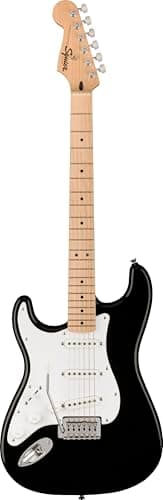
The cheapest electric that still has full-scale geometry, sealed tuners and a real 9.5 inch fingerboard radius. Nothing about it will make a beginner's first year harder.
Published specifications
- Scale length:
- 25.5" (647.7 mm) — full size
- Body / neck:
- Poplar body, maple neck, "C" profile
- Fingerboard:
- Maple or Indian laurel, 9.5" (241 mm) radius
- Frets:
- 21, narrow tall
- Nut width:
- 1.650" (42 mm), synthetic bone
- Pickups:
- Three ceramic single-coils (SSS)
- Bridge:
- 6-saddle vintage-style synchronized tremolo
What it gets right
- Full 25.5 inch scale, so nothing learned here has to be relearned later
- Synthetic bone nut rather than a soft plastic one — the part that decides whether a cheap guitar stays in tune
- Sealed-gear tuners, which is the single most important spec on a first electric
Where it gives ground
- Poplar body and ceramic pickups are exactly what you would expect at this tier
- The tremolo bridge will pull the guitar out of tune if a beginner uses it, and beginners always use it
What it is not good at
Staying in tune if you use the whammy bar. If that matters, buy the hardtail (HT) version of the same guitar instead — it is the identical instrument with the tremolo deleted.
How the specs score against a beginner’s needs
Scores are our reading of the published specifications above against what a beginner physically needs. They are not test results — we have not played this instrument.
Specifications from Squier Wiki — Sonic Stratocaster specifications.
Yamaha FG800
YamahaBest for: Buy once, acoustic
A solid Sitka spruce top with scalloped bracing at the entry price. Solid-versus-laminate is the one acoustic spec that changes what the instrument does over years, and this is the cheapest place to get it done right.
Published specifications
- Top:
- Solid Sitka spruce
- Back / sides:
- Nato / okume
- Neck / fingerboard:
- Nato neck, rosewood fingerboard, R400 mm (23-5/8") radius
- Scale length:
- 650 mm (25-9/16")
- Nut width:
- 43 mm (1-11/16")
- Bracing:
- Scalloped
- Body:
- Traditional Western (dreadnought), 412 mm (16-1/4") wide, 100-118 mm deep
- Hardware:
- Die-cast chrome tuners, urea nut and saddle
What it gets right
- A solid top, not a laminate — the only acoustic spec at this price that genuinely changes over time
- Scalloped bracing and die-cast tuners are specifications you normally pay considerably more for
- Yamaha's most-copied entry acoustic; parts, setups and advice are everywhere
Where it gives ground
- A full dreadnought body is a big box — 412 mm across and up to 118 mm deep
- Nato and okume back and sides are the cost saving; the top is where the money went
What it is not good at
Fitting a smaller player. The dreadnought body is wide and deep enough that a young teenager can struggle to get their arm over it comfortably. If that is the buyer, look at the JR1 or a concert-size body instead.
How the specs score against a beginner’s needs
Scores are our reading of the published specifications above against what a beginner physically needs. They are not test results — we have not played this instrument.
Specifications from Yamaha Europe — FG/FS800 series specifications.
Kala KA-15S
Kala Brand MusicBest for: The honest floor, soprano
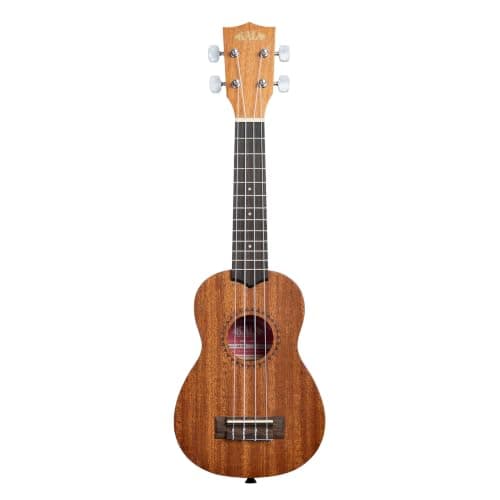
Mahogany throughout, a GraphTech NuBone nut and saddle, and Aquila strings fitted from the factory. The nut material is the spec that separates this from the pile of look-alikes.
Published specifications
- Size:
- Soprano
- Top / back / sides:
- Mahogany
- Neck / fretboard:
- Mahogany neck, rosewood fretboard
- Nut and saddle:
- GraphTech NuBone
- Scale length:
- 13.625"
- Frets:
- 12
- Nut width:
- 1.375"
- Overall length:
- 21.062"
- Strings:
- Aquila Super Nylgut
What it gets right
- NuBone nut and saddle rather than molded plastic — this is what decides whether the instrument plays in tune up the neck
- Aquila strings fitted at the factory, so the first thing you would otherwise replace is already done
- 21 inches overall and light enough for a small child to hold unsupported
Where it gives ground
- 12 frets only, and the body joint stops you well short of the high notes
- Soprano scale means less room between frets — adult fingers with wide fingertips will find it cramped
What it is not good at
Adult hands, sometimes. A 13.625 inch scale is genuinely tight. If the player is a grown-up with large hands, read our soprano-versus-concert comparison before buying this size.
How the specs score against a beginner’s needs
Scores are our reading of the published specifications above against what a beginner physically needs. They are not test results — we have not played this instrument.
Specifications from Kala Brand Music — KA-15S specifications.
Questions people actually ask
Should a left-handed person learn guitar left-handed?
Usually yes, if it feels natural to hold that way. The main argument against is availability of instruments, and that argument is much weaker now than it was. Comfort should decide it.
Can you just flip a right-handed guitar over?
Not usefully without work. The nut slots are cut for specific string thicknesses, an acoustic saddle is often angled for intonation, the controls end up in the way and the strap button is on the wrong side. It can be converted properly; it is not a flip.
Are left-handed guitars more expensive?
Usually slightly, and the bigger problem is choice rather than price. Popular beginner models are made left-handed; niche models and colors frequently are not.
Do left-handed players have a disadvantage?
In instrument availability, marginally. In learning, no. Both hands have difficult jobs on a guitar and neither is obviously the dominant-hand task.
Sources
Still deciding?
Every recommendation on this site is built the same way, and the method is published in full — including what we do not do and what would get a pick dropped.
Read next
- Best beginner electric guitars: what's worth it from $150 to $400
Segmented by player and price band, with the three specs that actually decide whether a first electric survives its first year.
- Best beginner acoustic guitars: solid tops from $200 to $350
Solid versus laminate tops, the dreadnought body-size problem, and picks for adults and children separately.
- What size guitar does a child need?
Age and height chart with real scale lengths, the ten-second fit check, and why height beats age every time.
- What instrument should I learn?
Four practical constraints instead of a personality quiz, each one routing straight to the instrument that fits.
- What a guitar setup actually is
The four adjustments in a setup, why budget guitars need one most, and which parts of it a beginner can safely do at home.