Guitars
Best beginner bass guitars
Four strings, a 34 inch scale and a job nobody notices until you stop doing it. Bass is the easiest instrument to be useful on and the hardest to shop for blind.
By Sawyer V. · Published · Last updated
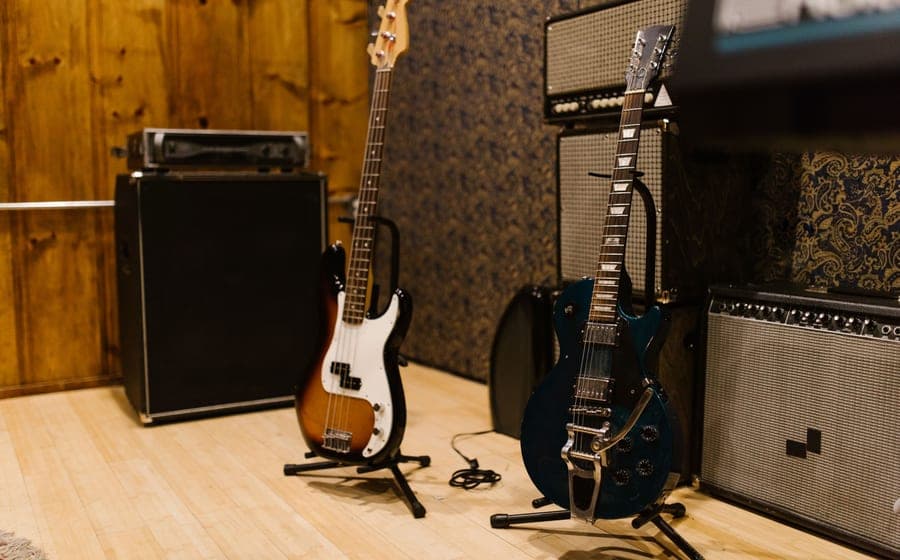
The bass is the instrument most often bought by accident — someone wanted a guitar, the shop had a sale, and four strings looked simpler than six. It is not simpler. It is a different job.
Every pick below states its Starter Path band, and we have not played either of them — the method we used instead is on how we pick.
What a bass actually does
A guitarist plays chords and melodies, and a room notices immediately when they play well. A bassist plays one note at a time, locks it to the kick drum, and a room notices only when they stop.
That has a real consequence for a beginner, and it is the strongest argument for starting on bass: you become genuinely useful very quickly. A bassist who can play root notes in time is doing the job as written. Three weeks in, they can play with other people. A guitarist three weeks in is still fighting the F chord.
The counterweight is that bass gets harder rather than easier. Once the notes are there, the whole craft is timing, feel and note length — things that take years and are not visible from outside.
The three specs that matter
1. Scale length, and why 34 inches is not negotiable
A standard bass is a 34 inch scale, against 25.5 inches for a Fender-style guitar. That is nearly nine extra inches, and it is all in the first few frets where a beginner spends their time.
The reason it cannot simply be shortened is string tension. A bass string tuned to a low E needs enough length and mass to hold pitch without going slack, and shorter scales trade tightness for reach. Short-scale basses around 30 inches exist and are a legitimate choice for a smaller player, but they are the exception rather than the default, and strings for them are harder to find.
For anyone from about five feet upward, take the 34 inch scale. For a younger or smaller player, look at short-scale options before committing.
2. Pickup layout
Two designs dominate. A Precision bass has one split pickup in the middle and sounds thick, round and even — it is the sound of most records ever made. A Jazz bass has two narrow single coils and sounds brighter and more articulate.
A PJ bass has one of each, with separate volume controls, so a beginner can blend between them and find out what they actually like without buying twice. Both picks here are PJ layouts, and that is deliberate: it is the most useful configuration for someone who does not yet know their own taste.
3. Weight and balance
A bass is heavy. Not slightly — meaningfully heavier than a guitar, with more of that weight out at the headstock end. Over an hour standing up, that lands on one shoulder.
A wide padded strap is not an accessory here, it is part of the purchase. A narrow strap on a bass will make a beginner stop practicing for reasons they will not correctly diagnose.
What to skip
Any bass sold without a stated scale length. Same tell as with guitars: the specification a manufacturer omits is the one with a bad answer. A bass whose listing talks about the color and the included strap and never says 34 inches is frequently a short scale sold as a full one.
A guitar amplifier. Genuinely important and frequently ignored. A guitar speaker is not designed to reproduce the frequencies a bass produces, and driving one hard with a low E will damage it. If the budget only stretches to a bass and a guitar amp, buy the bass and use headphones until a bass amp is affordable.
The two picks, briefly
The Squier Affinity Precision Bass PJ#ad is the default. It is the most-copied bass design in existence, the geometry matches a real Fender so nothing learned has to be relearned, and the PJ layout covers everything.
The Yamaha TRBX174#ad answers with 24 frets instead of 20 and a mahogany body rather than poplar. Four extra semitones at the top of the neck is a genuine advantage once a player starts learning melodies rather than just root notes, and Yamaha’s entry instruments are consistently well finished.
Neither is a mistake. Take the Squier if you want the canonical instrument, the Yamaha if the extra range appeals.
What you still need
A bass practice amp with a headphone socket. A wide padded strap. A clip-on tuner. A cable. And, as with every stringed instrument on this site, a setup — a bass with high action is punishing in a way a guitar is not, because the strings are thicker and the stretch is longer.
Budget for all of it up front. The full band-by-band reasoning is in what a first guitar should cost — a bass sits at the same tiers with the amplifier line item enlarged.
Quick picks
Adults and teenagers, full-size
Both are 34 inch scale PJ basses — a Precision pickup in the middle and a Jazz pickup at the bridge, which is the most useful pickup layout a first bass can have.
| # | Product | Best for | Score | Price |
|---|---|---|---|---|
| 1 | No image Squier Affinity Precision Bass PJA full 34 inch scale with both a Precision split-coil and a Jazz bridge pickup, so one bass covers the thick sound and the bright one. | First bass, most versatileThe honest floor | 8.4 | Check price on Amazon → #ad How we’re funded |
| 2 | 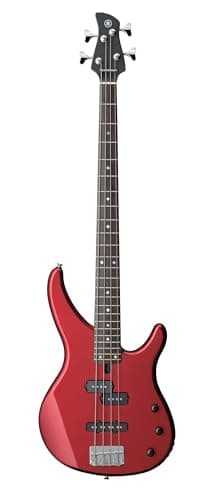 Yamaha TRBX174A mahogany-bodied PJ bass with 24 frets rather than the usual 20, which is four extra semitones at the top for anyone who wants to play melodically. | 24 frets, more rangeThe honest floor | 8.3 | $299.99 · View on Amazon #ad How we’re funded |
The picks in full
Squier Affinity Precision Bass PJ
Squier by FenderBest for: First bass, most versatile
A full 34 inch scale with both a Precision split-coil and a Jazz bridge pickup, so one bass covers the thick sound and the bright one. The standard first bass for good reason.
Published specifications
- Scale length:
- 34" — full size
- Body:
- Poplar or alder, polyurethane finish
- Neck:
- Maple, "C" shape
- Fingerboard:
- Laurel or maple, 9.5" radius
- Frets:
- 20, medium jumbo
- Nut width:
- 1.5" (38.1 mm), synthetic bone
- Pickups:
- Split single-coil P (middle) + single-coil J (bridge), separate volumes, master tone
- Bridge:
- 4-saddle standard, chrome hardware
What it gets right
- Two pickup voices in one instrument, so a beginner is not locked into a single sound before they know what they want
- 34 inch scale is the standard every bass method book and every bandmate assumes
- Separate volume controls let you blend the two pickups rather than just switching
Where it gives ground
- A 34 inch scale is a long reach at the first fret for a smaller player
- Basses are heavy, and this one is not an exception — a wide strap matters
What it is not good at
Small hands and young players. There is no 3/4 version of this in the line, so a player under about 12 should look at a short-scale bass instead.
How the specs score against a beginner’s needs
Scores are our reading of the published specifications above against what a beginner physically needs. They are not test results — we have not played this instrument.
Specifications from Fender — Affinity Series Precision Bass PJ, Squier Wiki — Affinity Precision Bass PJ.
Yamaha TRBX174
YamahaBest for: 24 frets, more range
A mahogany-bodied PJ bass with 24 frets rather than the usual 20, which is four extra semitones at the top for anyone who wants to play melodically.
Published specifications
- Scale length:
- 34" — full size
- Body:
- Mahogany
- Neck:
- Maple
- Fingerboard:
- Rosewood, 10" radius
- Frets:
- 24
- Pickups:
- Split-coil P + single-coil J, separate volumes, master tone
- Hardware:
- Chrome, vintage-style bridge, covered tuning machines
What it gets right
- 24 frets against the usual 20 — a genuinely useful extra range once a player starts learning melodies rather than just root notes
- Mahogany body rather than poplar, which is a real material upgrade at this tier
- Covered tuning machines keep dust and knocks out of the gears
Where it gives ground
- The 10 inch fingerboard radius is rounder than the Squier's 9.5 inch equivalent feel and some players notice it
- Fewer finish options than the Squier line
What it is not good at
Sounding like a Fender, if that is what you are after. It is its own instrument with its own voice, and buying it expecting a P-Bass will disappoint.
How the specs score against a beginner’s needs
Scores are our reading of the published specifications above against what a beginner physically needs. They are not test results — we have not played this instrument.
Specifications from Yamaha USA shop — TRBX174 4-string electric bass guitar.
Questions people actually ask
Is bass easier to learn than guitar?
Easier to become useful on, harder to master. A bassist playing root notes in time is doing the job properly from week three, where a guitarist playing three chords badly is not. What is harder is the physical side: thicker strings, a longer stretch between frets, and more hand strength required.
What scale length is a bass guitar?
34 inches is the standard, and both picks here use it. Short-scale basses exist at around 30 inches and are worth considering for a smaller player — but every method book, every bandmate and every set of strings assumes 34 unless you say otherwise.
Do I need a bass amp, or can I use a guitar amp?
You need a bass amp. A guitar speaker is not built to move the air a low B or E requires, and pushing one hard with a bass will damage it. Budget for a bass practice amp as part of the purchase, the same way you would for an electric guitar.
What is a PJ bass?
A bass with a Precision-style split pickup in the middle position and a Jazz-style single coil at the bridge. The P pickup is thick and round, the J pickup is bright and articulate, and having both means one instrument covers most of what a beginner will be asked to play.
Sources
Still deciding?
Every recommendation on this site is built the same way, and the method is published in full — including what we do not do and what would get a pick dropped.
Read next
- Best bass amps for beginners
Why an eight-inch speaker is the floor for bass and a six-inch one is not, what the jump to ten inches actually buys, and three Fender Rumble combos on published specifications.
- Best bass guitar books for beginners
The method, the guide and the exercise book are three different products. Which one teaches, which one explains, which one is useless bought first, and what each publisher actually prints.
- Best beginner electric guitars: what's worth it from $150 to $400
Segmented by player and price band, with the three specs that actually decide whether a first electric survives its first year.
- Best beginner guitar amps
Why the headphone socket outranks wattage, two picks, and the honest limits of a practice amp.
- How much should a beginner guitar cost?
Four price bands defined by specification rather than by number, plus the hidden costs that turn a $200 budget into a $270 purchase.
- Best guitars for small hands
Scale length and nut width explained as a reach problem, with picks for adults with small hands and for children.
- Best beginner guitar strings
Why gauge outranks brand, the default set for electric and acoustic, and when going lighter actually helps.