Guitars
Best guitar cases and gig bags for beginners
The accessory every beginner already owns a bad version of, and the only one whose job is to stop a 200 dollar mistake happening in a doorway.
By Sawyer V. · Published · Last updated
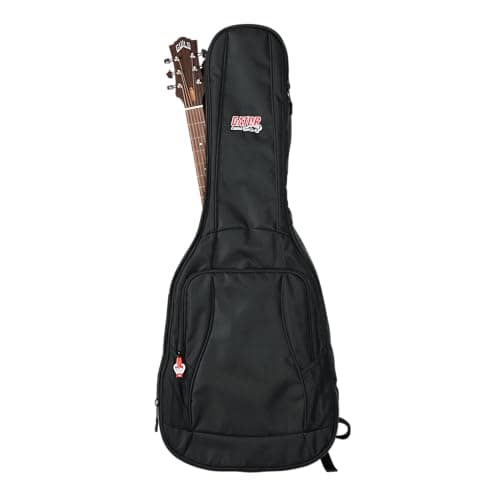
Almost every first guitar arrives with a bag, and almost every one of those bags is a nylon sleeve with no padding in it. It keeps dust off. It does nothing at all about the doorframe, the curb, the car door, or the moment somebody leans a bike against it in a hallway.
That matters more than it sounds, because the damage a beginner guitar actually suffers is almost never dramatic. It is a chipped headstock from a doorway, a cracked heel from a tip-over, a scuffed-through finish on the lower bout where the bag was dragged. All three are things a case with a published padding depth is designed to absorb.
We have not used these cases. What follows is our reading of what each maker publishes, and the method is on how we pick. Two notes on sourcing. First, this category is unusually bad at publishing numbers: most bags are sold as padded with no figure anywhere, and we left those out. Second, Fender publishes a genuinely detailed spec sheet for its gig bags, but every fender.com URL we tried refused our requests outright, so no Fender bag is listed here. We would rather leave a good product off the page than describe it from a retailer’s copy of its specs.
Buy the Gator GB-4G-ACOUSTIC if you own a dreadnought and want one bag to stop thinking about: 20 mm of padding on every side, published. Buy the Ibanez IAB540 to save money without losing the published numbers, or the IGB540 if the guitar is an electric. Buy the Gator GWE-DREAD 12 only if the guitar genuinely travels — it weighs 12 lb empty. And if the choice is between the cheapest real bag and the sleeve from the box, the GBE-DREAD wins that on a published 10 mm of foam.
What a case is actually protecting against
Impact, in the dullest possible sense. Not a drop from a stage, but the hundred small collisions of carrying a 40-inch object through a world built for people. Padding depth is the whole story here: foam spreads the force of a hit over a wider area and a longer time, which is the difference between a scuff and a crack.
The headstock. The most-broken part of any guitar, because it sits at the end of a lever and takes the force of every tip-over. This is why internal headstock reinforcement is worth more than it sounds: it is padding in the one place where damage tends to be structural rather than cosmetic.
Abrasion and weather. The exterior fabric does this job, and it is measured in denier — the thickness of the thread. A 600-denier shell resists the scraping that eventually wears a hole in a thin bag, and a water-resistant outer layer means a walk home in rain is not a problem.
The environment, partly. A closed case is a small pocket of air, so it changes temperature and humidity more slowly than the room around it. That genuinely helps during a cold car journey or a dry winter week. It is not climate control, and the full version of that argument is in guitar maintenance for beginners.
The three numbers that decide a bag
1. Padding depth, in millimeters. The single most useful figure in this category and the one most often missing. Ten millimeters is a dust-and-knocks bag. Twenty millimeters on all sides is a bag that will take a real bump. Some makers publish edge cushioning only — a thick bottom and thinner sides — which is honest and tells you where the protection is concentrated. Any bag whose maker publishes no number at all is asking you to take the word padded on trust.
2. Interior dimensions. A case either fits your guitar or it moves around inside, and a guitar that moves inside a bag is being knocked against the bag rather than cushioned by it. The figure to compare is the lower bout width: a dreadnought runs about 15.5 to 16 inches across, a concert body a good inch less, a classical guitar narrower still but deeper at the neck. Makers that publish all three bout widths let you check before you buy, and the ones on this page do.
3. What the shell is. Soft bags cushion. Rigid shells resist. There is no overlap: 20 mm of foam will absorb a knock that a hard case would simply shrug off, and a hard case will survive a suitcase landing on it that would flatten any bag. Choose by what actually happens to your guitar, not by which sounds safer.
Gig bag, hybrid or hard case
Gig bags. Fabric shell, foam inside, backpack straps on the better ones. Light, cheap, and the right answer for a guitar that goes to a lesson and comes home. The range is wide: the gap between a 10 mm economy bag and a 20 mm one with reinforced headstock support is larger than the price difference suggests.
Hybrid and foam cases. A thick molded foam core in a fabric outer, so the case holds its shape without the weight of wood. They sit between the two camps on price and protection, and they are worth knowing about if you want structure without 12 lb in your hand.
Hard cases. Plywood or molded plastic with a plush-lined interior, a neck rest and latches. They are heavy, they are the only thing that genuinely resists crushing, and they are the right call for storage, for shipping, and for a guitar that goes in a hold. They are also conspicuous overkill for an instrument that never leaves one room.
Flight cases. Worth one sentence so you can rule them out: a TSA-latched molded flight case exists for guitars that fly in cargo regularly, costs more than many beginner guitars, and is not a first purchase. If flying is the problem, the better answer is often a smaller instrument — see best travel guitars.
How we ranked these
Five criteria, in this order, every one of them read from published specifications rather than from use.
Impact padding published first, because it is the reason the product exists, and because a maker that publishes a depth can be held to it.
Headstock and neck support second, since that is where damage stops being cosmetic.
Carry comfort third — a bag that is unpleasant to carry gets left behind, and a guitar left behind is a guitar not played.
Published fit dimensions fourth, because a case you cannot check against your own guitar is a gamble. Room to grow last.
The picks
The Gator GB-4G-ACOUSTIC#ad is the bag we would buy for a dreadnought and stop thinking about. Gator publishes 20 mm of GFLEX padding on all sides — not an edge figure, all sides — plus internal headstock and bridge reinforcement, which covers the two places a bagged guitar gets hurt. The interior is published in full: 42.75 inches overall, a 21.5 inch body, and bouts of 17, 15 and 13 inches, so a dreadnought can be measured against it in advance. It carries on padded backpack straps with contoured back padding, weighs 4.25 lb, and comes with a limited lifetime warranty on manufacturing defects.
The honest costs: it is around three times the price of the cheapest bag here, for a guitar that may never leave the house. Gator does not publish an exterior denier for this model, so its fabric cannot be compared with the bags that do. And it is still a soft bag — 20 mm of foam spreads an impact, it does not stop a hard one, and nothing here makes it suitable for checked baggage.
The Ibanez IAB540#ad is the value pick, and it is better documented on fit than anything else on this page. Ibanez publishes the whole interior: 1085 mm overall, a 430 mm lower body width, 590 mm of body length, 125 mm of depth and a 130 mm neck pocket. The cushioning is published as firm edges — 25 mm at the bottom, 15 mm at the sides — and the bottom and side wear areas are covered in synthetic leather. At 1.55 kg it is lighter than the Gator and it carries on backpack straps.
What you give up is the faces. Those 25 and 15 mm figures are edge cushioning, and Ibanez publishes no thickness for the flat front and back, so a knock to the soundboard side is the unknown. It also publishes no headstock or bridge reinforcement, which is exactly where the Gator pulls ahead, and it does not say how many pockets the bag has.
The Ibanez IGB540#ad is the same bag reshaped for an electric, and it is the one we would hand a teenager carrying a Stratocaster-style guitar to a weekly lesson. It weighs 1.278 kg, which is the difference between a bag that gets carried and one that gets left at home. The published neck pocket is 150 mm — wider than the acoustic version — so a chunky bolt-on neck is covered, and the edge cushioning is the same published 25 mm bottom and 15 mm sides.
Two things to check first. The published interior depth is 55 mm, which is a solidbody number: a semi-hollow or hollow body is roughly twice that and will not fit. And as with the acoustic version, the face padding is undocumented and there is no published headstock reinforcement, which in a thin electric bag is the spec we would most like to read.
The Gator GWE-DREAD 12#ad is the hard case, and it is the right purchase only for a specific reason. The shell is arch-topped plywood under black Tolex, the interior is plush-lined with a padded neck rest, the accessory compartment has a lid so a capo cannot rattle against the finish, and the latches are chrome and lockable. Gator publishes the interior in full and states it fits 6- or 12-string dreadnoughts.
It also weighs 12 lb empty. Loaded, that is a case you carry with intent, in a car, with both hands — there are no backpack straps on a wooden case. Gator publishes no lining thickness either, so the cushioning inside the shell is the one figure you cannot read. For a first guitar that lives in one room, this is more case than the situation calls for, which is why we file it where overspending starts. For a guitar that gets checked at an airport, stored in a loft for a year, or driven around under other luggage, it is the only sensible choice on the page.
The Gator GBE-DREAD#ad is the budget pick, and we include it for the same reason we include cheap stands: the realistic alternative is not a better bag, it is the unpadded sleeve that came in the box. This one publishes a dense 10 mm foam core, a 600-denier nylon exterior with a water-resistant outer shield, reinforced headstock and neck support, and an exterior pocket.
It is also the least documented product here. Gator publishes no dimensions and no weight for it, so the fit has to come off the retail listing’s 41.9 inch figure rather than a spec sheet. A carry handle is published and a shoulder strap is not, so plan on one hand. And 10 mm is under half an inch: this is dust, rain and scratch protection with a little cushioning behind it, not something to trust with a drop.
Measure before you buy
Lower bout width is the number that matters. Lay a tape across the widest part of the body. A dreadnought is about 15.5 to 16 inches, a concert or grand auditorium body an inch narrower, a parlor narrower again. Compare that against the published lower bout of the bag, and leave a little room rather than none.
Body depth catches people out. A classical guitar is narrower than a dreadnought but often similarly deep, and a semi-hollow electric is far deeper than the solidbody a thin electric bag is cut for. Depth is published on every bag here for exactly this reason.
Overall length is a hard limit. Most dreadnought bags stop at around 42 to 43 inches overall. A 12-string or a long-scale acoustic can exceed that, and a bag that does not close is a bag that does not work. If you are unsure which body shape you own, guitar body shapes explained walks through them.
Electric bags are shape-specific. A Stratocaster-shaped bag will not close around a V or an offset, and manufacturers publish separate models for Jazzmaster and Les Paul outlines for that reason. Match the outline, not just the word electric.
What else to know
The zip is what fails first. On a cheap bag it is the component that goes before the fabric does, and it is worth noticing that Gator covers moving parts for a year and then supplies field-replaceable parts at no charge. A bag with a replaceable zip pull outlasts one without.
Do not store the guitar next to heat. A case slows environmental change, it does not stop it. A guitar in a bag beside a radiator is still a guitar beside a radiator.
A case is not a stand, and vice versa. A guitar that lives in a case gets played less, which is the strongest argument for leaving it out at home and keeping the case for transport. The stands worth buying are in best guitar stands.
If you are buying a bundle, price the bag separately. The sleeve in a starter pack is one of the components that makes the bundle look cheap — the full accounting is in are guitar starter packs worth it, and the rest of the first-month kit is in guitar accessories you actually need.
Quick picks
The one to buy for an acoustic
The only bag here with a published padding depth on every side — 20 mm — plus internal headstock and bridge reinforcement and a lifetime warranty.
| # | Product | Best for | Score | Price |
|---|---|---|---|---|
| 1 | Gator GB-4G-ACOUSTICThe only bag here whose maker publishes padding on every side — 20 mm of GFLEX — plus internal headstock and bridge reinforcement, every interior bout width and a limited lifetime warranty. | The soft case to buy onceEnough | 8.8 | $84.99 · View on Amazon #ad How we’re funded |
The value acoustic bag
A published 25 mm at the bottom edge and the most completely documented interior on the page, for less money and less weight.
| # | Product | Best for | Score | Price |
|---|---|---|---|---|
| 1 | 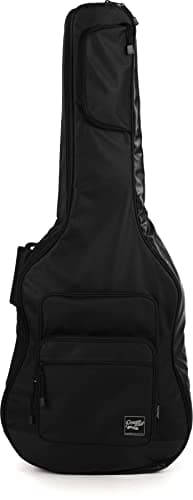 Ibanez IAB540Ibanez publishes the fullest interior geometry of any bag here — every body width, the neck pocket, the depth — along with 25 mm of edge cushioning at the bottom and 15 mm at the sides. | Value in a padded acoustic bagEnough | 7.2 | $64.99 · View on Amazon #ad How we’re funded |
For an electric going to lessons
Under 3 lb empty with the same published edge cushioning, and a 150 mm neck pocket that fits a chunky bolt-on neck.
| # | Product | Best for | Score | Price |
|---|---|---|---|---|
| 1 | 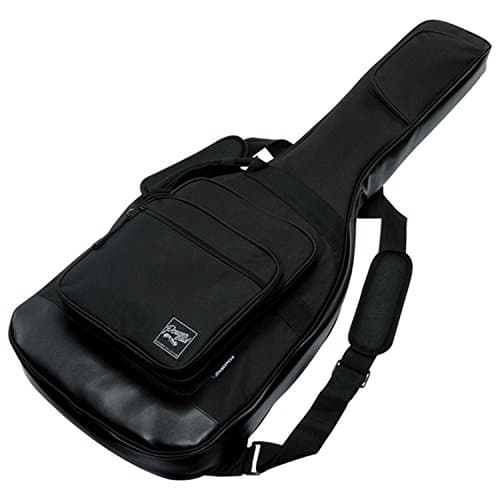 Ibanez IGB540The electric-shaped sibling of the IAB540: the same published 25 mm bottom and 15 mm side cushioning, the same full interior geometry, and 1. | An electric guitar going to lessonsEnough | 7.2 | $59.99 · View on Amazon #ad How we’re funded |
If the guitar genuinely travels
A plywood shell under Tolex with a padded neck rest and lockable latches. Twelve pounds empty, and worth it only if the guitar leaves the house.
| # | Product | Best for | Score | Price |
|---|---|---|---|---|
| 1 | 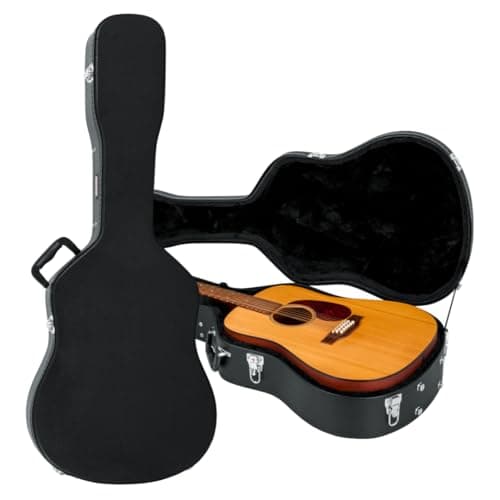 Gator GWE-DREAD 12An arch-topped plywood shell in black Tolex, with a plush lining, a padded neck rest and chrome lockable latches. | A guitar that travels or gets storedWhere overspending starts | 7.4 | $119.99 · View on Amazon #ad How we’re funded |
The cheapest bag worth owning
A published 10 mm foam core in 600-denier nylon, for when the realistic alternative is the unpadded sleeve from the starter pack.
| # | Product | Best for | Score | Price |
|---|---|---|---|---|
| 1 | 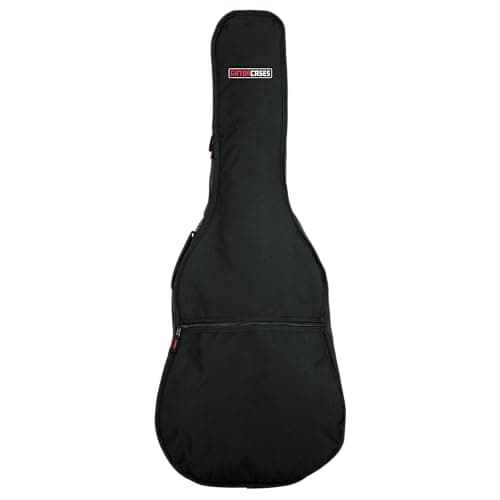 Gator GBE-DREADA 10 mm foam core in a 600-denier nylon shell, with reinforced headstock and neck support. | Replacing the bag in the boxThe honest floor | 4.2 | $29.99 · View on Amazon #ad How we’re funded |
The picks in full
Gator GB-4G-ACOUSTIC
Gator CasesBest for: The soft case to buy once
The only bag here whose maker publishes padding on every side — 20 mm of GFLEX — plus internal headstock and bridge reinforcement, every interior bout width and a limited lifetime warranty. For a guitar that rides in a car and lives at home, this is enough case.
Published specifications
- Type:
- Gig bag, 4G Series
- Padding:
- 20 mm GFLEX on all sides
- Reinforcement:
- Internal headstock and bridge reinforcement
- Interior:
- Overall 42.75"; body 21.5" long x 5" deep; bouts 17" lower, 15" middle, 13" upper
- Exterior:
- 44" x 18" x 6"
- Weight:
- 4.25 lb
- Carry:
- Padded backpack straps, contoured back padding
- Storage:
- Large exterior pocket, plus a pick-clip
- Warranty:
- Limited lifetime on manufacturing defects; moving parts one year, then free field-replaceable parts
What it gets right
- 20 mm of padding on ALL sides is the deepest all-round figure on this page, and Gator publishes it as a number rather than as the word padded
- Internal headstock and bridge reinforcement targets the two places a guitar in a bag actually gets damaged
- Every interior dimension is published, all three bout widths included, so you can measure your guitar against the bag before buying
- Backpack straps with contoured back padding, which is what makes a 44 inch bag walkable rather than draggable
Where it gives ground
- Costs roughly three times the cheapest bag here, for a guitar that may never leave the room
- Gator publishes no exterior fabric denier for this model, so its abrasion resistance cannot be compared against the bags that do publish one
- There is no rigid shell: 20 mm of foam spreads an impact, it does not stop a hard one
What it is not good at
Checked baggage. A soft bag with no rigid shell is the wrong tool for an aircraft hold — Gator builds a molded flight case for that, and this is not it.
How the specs score against a beginner’s needs
Scores are our reading of the published specifications above against what a beginner physically needs. They are not test results — we have not played this instrument.
Specifications from Gator Cases — 4G Series Gig Bag for Acoustic Guitars (GB-4G-ACOUSTIC).
Ibanez IAB540
IbanezBest for: Value in a padded acoustic bag
Ibanez publishes the fullest interior geometry of any bag here — every body width, the neck pocket, the depth — along with 25 mm of edge cushioning at the bottom and 15 mm at the sides. Less documented protection across the faces than the Gator, at a lower price.
Published specifications
- Type:
- Gig bag, POWERPAD 540 series
- Padding:
- Firm edge cushioning: 25 mm bottom, 15 mm sides
- Wear surfaces:
- Synthetic leather over the bottom and side sections
- Interior:
- Overall 1085 mm; lower body 430 mm wide x 590 mm long; upper body 360 mm; depth 125 mm; neck pocket 130 mm
- Exterior:
- 1120 x 455 x 145 mm
- Weight:
- 1.55 kg (3 lb 7 oz)
- Carry:
- Backpack straps
- Storage:
- Extra pockets; Ibanez does not publish how many
What it gets right
- 25 mm at the bottom edge is the deepest single padding figure on the page, and the bottom edge is the part that meets the floor
- Synthetic leather over the bottom and sides is published as a wear surface, which the nylon-only bags do not claim
- The most completely published fit here, down to a 130 mm neck pocket — enough to check a wide classical neck before buying
- Lighter than the comparable Gator at 1.55 kg
Where it gives ground
- The 25 and 15 mm figures are edge cushioning; Ibanez publishes no thickness for the flat front and back, so the faces are unquantified
- No headstock or bridge reinforcement is published, which is the Gator's clearest advantage
- Pocket count and interior lining are not published either
What it is not good at
Reassuring you about the faces of the bag. Ibanez documents the edges precisely and the panels not at all, so a knock to the soundboard side is the unknown.
How the specs score against a beginner’s needs
Scores are our reading of the published specifications above against what a beginner physically needs. They are not test results — we have not played this instrument.
Specifications from Ibanez — IAB540 acoustic gig bag specifications.
Ibanez IGB540
IbanezBest for: An electric guitar going to lessons
The electric-shaped sibling of the IAB540: the same published 25 mm bottom and 15 mm side cushioning, the same full interior geometry, and 1.278 kg on the scale. The bag we would put a Stratocaster-style guitar in for a weekly lesson across town.
Published specifications
- Type:
- Gig bag, POWERPAD 540 series, electric
- Padding:
- Firm edge cushioning: 25 mm bottom, 15 mm sides
- Wear surfaces:
- Synthetic leather over the bottom and side sections
- Interior:
- Overall 1045 mm; lower body 425 mm wide x 550 mm long; upper body 350 mm; depth 55 mm; neck pocket 150 mm
- Exterior:
- 1070 x 440 x 85 mm
- Weight:
- 1.278 kg (2 lb 13 oz)
- Zipper:
- Smart zipper design for quick instrument removal (Ibanez's own description)
- Storage:
- Extra pockets; Ibanez does not publish how many
What it gets right
- Under 3 lb empty, which is the difference between a bag a teenager carries and one they leave at home
- A published 150 mm neck pocket, wider than the acoustic version's, so chunky bolt-on necks are covered
- 25 mm of published bottom-edge cushioning, on the edge that gets set down on concrete
- Synthetic leather on the bottom and sides, specified as the wear area rather than assumed
Where it gives ground
- A 55 mm published interior depth is a solidbody figure — measure before assuming a semi-hollow fits
- Edge cushioning only: Ibanez publishes nothing about the thickness of the front and back faces
- No published headstock reinforcement, which for a bolt-on neck in a thin bag is the spec we would most like to see
What it is not good at
Semi-hollow and hollow bodies. The published interior depth is 55 mm, and a 335-style guitar is roughly twice that.
How the specs score against a beginner’s needs
Scores are our reading of the published specifications above against what a beginner physically needs. They are not test results — we have not played this instrument.
Specifications from Ibanez — IGB540 electric gig bag specifications.
Gator GWE-DREAD 12
Gator CasesBest for: A guitar that travels or gets stored
An arch-topped plywood shell in black Tolex, with a plush lining, a padded neck rest and chrome lockable latches. Twelve pounds empty, and that is the whole trade: real structural protection in exchange for a case nobody carries casually.
Published specifications
- Type:
- Hard case, Traditional Series
- Shell:
- Arch-topped plywood under a black Tolex PVC covering
- Interior:
- Thick plush lining, padded neck rest, lidded accessory compartment
- Latches:
- Chrome-plated lockable latches
- Interior size:
- Overall 44"; body 21" long x 5.5" deep; bouts 16.125" lower, 11.5" middle, 12.25" upper
- Exterior:
- 45" x 18.25" x 6.5"
- Weight:
- 12 lb
- Fits:
- 6- or 12-string dreadnought acoustics
- Warranty:
- Limited lifetime on manufacturing defects; moving parts one year
What it gets right
- A rigid arch-topped shell is the only thing on this page that resists an impact rather than cushioning it
- A padded neck rest holds the guitar off the shell, and the lidded compartment keeps capos and tuners from rattling against the finish
- Lockable chrome latches, which start to matter the moment the case is somewhere you are not
- Published to fit 6- and 12-string dreadnoughts, with every interior dimension listed so the fit is checkable
Where it gives ground
- 12 lb empty, so loaded this is a two-hands-and-a-car item rather than a walk-to-the-bus one
- Gator publishes no lining thickness, so the cushioning inside that shell is the one number you cannot read
- No backpack straps: a wooden hard case is carried by its handle, full stop
- For a first guitar that lives in one room this is more case than the situation needs, which is why we file it where overspending starts
What it is not good at
Everyday carrying. Nothing about 12 lb and a single handle is convenient; this is protection you choose deliberately, for a reason.
How the specs score against a beginner’s needs
Scores are our reading of the published specifications above against what a beginner physically needs. They are not test results — we have not played this instrument.
Specifications from Gator Cases — 12 String Dreadnought Guitar Wood Case (GWE-DREAD 12).
Gator GBE-DREAD
Gator CasesBest for: Replacing the bag in the box
A 10 mm foam core in a 600-denier nylon shell, with reinforced headstock and neck support. It is not much bag. It is a published 10 mm more than the unpadded sleeve a starter pack ships with, for about the price of a set of strings.
Published specifications
- Type:
- Gig bag, Economy series
- Padding:
- Dense 10 mm foam core
- Exterior:
- 600-denier nylon with a water-resistant outer shield
- Reinforcement:
- Reinforced headstock and neck support
- Carry:
- Heavy-duty nylon carry handle; no strap published
- Storage:
- Exterior storage pocket
- Fits:
- Dreadnought acoustics up to 41.9" long (retail listing, not a Gator figure)
- Dimensions / weight:
- Not published by Gator
What it gets right
- Publishes the one number that matters at this price, a 10 mm foam core, where the bundled bag publishes nothing at all
- 600-denier nylon and a water-resistant outer shield are specified, so rain and a scraped doorframe are covered
- Reinforced headstock and neck support, so the most breakable part of the guitar is not simply wrapped in cloth
- Cheap enough that there is no real argument for keeping the free bag
Where it gives ground
- 10 mm is under half an inch of foam: it cushions a knock and nothing beyond that
- Gator publishes no dimensions and no weight for this bag, so fit comes off the retail listing's 41.9 inch figure rather than a spec sheet
- A carry handle is published and a shoulder strap is not, so plan on carrying it in one hand
What it is not good at
Surviving a drop. At 10 mm this is dust, rain and scratch protection with a little cushioning behind it, not impact protection.
How the specs score against a beginner’s needs
Scores are our reading of the published specifications above against what a beginner physically needs. They are not test results — we have not played this instrument.
Specifications from Gator Cases — GBE-DREAD economy gig bag.
Questions people actually ask
Is a gig bag enough, or do I need a hard case?
For a guitar that lives at home and occasionally rides in a car seat, a padded gig bag is enough. A hard case earns its weight in three situations: the guitar is checked as luggage, it is stored for months, or it travels in a car trunk with other luggage stacked on top. Those are the cases where a rigid shell is doing something a bag cannot.
How much padding does a gig bag need?
More than the bundled bag has, and the useful question is whether the maker publishes a number at all. Ten millimeters is enough for dust, rain and knocks. Twenty millimeters on every side is where a bag starts to spread the force of a real bump. Anything described only as padded, with no figure anywhere on the maker’s site, is being sold on a word.
Will a dreadnought bag fit a smaller acoustic?
Usually it will close, and that is not the same as fitting. A concert or parlor body in a dreadnought bag slides around inside it, which turns every knock into a knock against the guitar rather than against foam. Check the published lower bout width against your guitar before buying — the bags on this page publish theirs.
Is the bag that came with my starter pack usable?
As a dust cover, yes. As protection, no — the sleeve in most starter packs is unpadded nylon, and no maker publishes a padding figure for it because there is nothing to publish. It is the first thing we would replace in the bundle, and the cheapest bag here already represents a measurable upgrade.
Does a case protect a guitar from humidity?
It slows the swings rather than controlling them. A closed case is a smaller volume of air, so it changes temperature and humidity more slowly than the room — useful, and not the same as a humidifier. If the room swings between damp summers and dry winter heating, the case helps and a humidity solution is the actual answer.
Sources
- Gator Cases — 4G Series Gig Bag for Acoustic Guitars (GB-4G-ACOUSTIC)
- Gator Cases — 4G Series Gig Bag for Electric Guitars (GB-4G-ELECTRIC)
- Gator Cases — 12 String Dreadnought Guitar Wood Case (GWE-DREAD 12)
- Gator Cases — GBE-DREAD economy gig bag
- Ibanez — IAB540 acoustic gig bag specifications
- Ibanez — IGB540 electric gig bag specifications
Still deciding?
Every recommendation on this site is built the same way, and the method is published in full — including what we do not do and what would get a pick dropped.
Read next
- Guitar accessories you actually need
The four accessories that change how a beginner's guitar plays, the ones that can wait, and the ones that are pure margin.
- Are guitar starter packs worth it?
Which pack contents hold up, which get replaced within a month, and the four-item alternative that costs about the same.
- Best guitar stands and wall hangers
Why a stand raises practice time, the finish-safety question nobody covers, and four picks across floor stands, wall hangers and racks.
- Guitar maintenance a beginner actually needs
The four jobs that matter, the humidity problem that ruins acoustics, and an honest list of what you can safely ignore.
- Best travel guitars
Scale length versus body volume, why laminate is a feature on a travel guitar, and three picks from carry-anywhere to sounds-like-a-real-guitar.