Drums
Best drum sticks for beginners
The numbering runs backwards, the differences are tiny, and they decide whether a beginner controls the stick or fights it.
By Sawyer V. · Published · Last updated
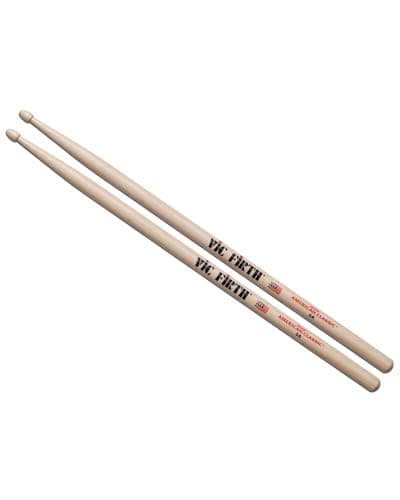
Buy a pair of 5A wood-tip sticks, then buy a second pair. That is the answer for almost everybody. 5A is the near-universal default at 0.565 inch, it is what a teacher assumes you own, and it costs about fifteen dollars. The only common reason to deviate is hand size — a child wants a thinner 7A — or an electronic kit, where a nylon tip lasts considerably longer. Everything else on this page is a reason not to buy something.
Every pick states its Starter Path band, and we have not played any of them — the method is on how we pick. Lengths, diameters, tapers, materials and tip shapes come from dealers that publish them, cited at the bottom: Vic Firth’s own site loads but serves no specification text to a plain request, so a dealer is the verifiable source here.
Buy 5A wood tip, two pairs. 16 in, 0.565 in, hickory — the default size almost every drummer uses. The numbering runs backwards: a LOWER number is a THICKER stick, so thin to thick runs 7A (0.540 in), 5A (0.565 in), 5B (0.595 in). Small hands: 7A. Thinner and half an inch shorter, which is a real difference, not a token one. Electronic kit: nylon tip — it lasts noticeably longer on rubber pads. Do not start on a 5B. It costs the same as a 5A, which is exactly the trap: more mass is not more control, and it costs you endurance and quiet playing. Buy two pairs — sticks are the only real consumable on a kit.
The numbering system runs backwards
This is the single thing worth knowing before you look at a wall of sticks, and nothing about it is guessable.
A lower number means a thicker stick. From thin to thick, the common beginner range runs 7A, then 5A, then 5B, then 2B. So a 7A is the lightest of those, not the heaviest, which is the opposite of what almost everyone assumes on first contact. The letter was originally an indication of intended application rather than size, which is why it does not help either.
Here is the whole decision in published numbers:
7A — 15.5 inches, 0.540 inch. The thin one. For children and adults with small hands.
5A — 16 inches, 0.565 inch. The default. Buy this unless you have a specific reason not to.
5B — 16 inches, 0.595 inch. The thick one. Same price as the 5A, and the wrong place to start.
Look at that range: from the thinnest useful beginner stick to the thickest is fifty-five thousandths of an inch. Less than the thickness of a credit card and a half. It sounds like nothing, and it is the difference between a child who can hold the stick loosely and one who grips it to keep control — and a tight grip is the root of most early drumming problems. Our guide to choosing drum sticks explains the system in more depth; this page is the part where you buy something.
The second axis: tip material
After size, the only choice that matters to a beginner is what the tip is made of, and the honest answer depends entirely on what you are hitting.
Wood tips give a warmer, rounder cymbal sound, and there is nothing glued on that can fail. They are the default and the right choice on an acoustic kit. They do wear — the tip frays and flattens against a hi-hat edge over months.
Nylon tips are brighter and more defined on cymbals, and they last considerably longer. The trade is that a nylon tip is a separate part and can work loose and fly off after heavy use, which is startling but not dangerous.
The practical rule: acoustic kit, wood; electronic kit, nylon. Rubber and mesh pads are abrasive in a way cymbals are not, and the durability difference stops being academic within a few months of daily practice. If the kit is electronic, our page on drum practice pads covers the same wear problem on the pad side.
The picks
The Vic Firth American Classic 5A, wood tip#ad is the stick to buy, and there is very little to argue about. 16 inches, 0.565 inch diameter, medium taper, hickory with a lacquer finish, wood teardrop tip. It is the default size for almost every drummer alive, which means every teacher, book and bandmate assumes it, and it is the cheapest thing on this page. Buy these if the player has roughly adult hands and an acoustic kit, which covers most readers. Skip them if the player is a small child — 0.565 inch is genuinely too thick for a seven-year-old’s hand, and the resulting grip problem reads as a talent problem.
The American Classic 7A#ad is the answer for smaller hands: 15.5 inches, 0.540 inch, same hickory and same medium taper, so nothing changes except the scale. It is also quieter, which matters more in a shared house than people expect. Buy these if the player is a child or an adult with small hands. Skip them if the hands are average or large — a 7A in a full-size hand feels flimsy and encourages exactly the tight grip you are trying to avoid. One honest note on cost: the single-pair 7A listing returned a price but no availability message when we checked, so the pack we have linked is three pairs and costs roughly three times a 5A single pair. For a child who will outgrow them, that is worth knowing before you click.
The 5AN#ad is the same 5A profile — 16 inches, 0.565 inch, medium taper, premium US hickory — with a nylon teardrop tip instead of wood. It is on this page for one specific reason: on an electronic kit, nylon lasts considerably longer against rubber pads. Buy these if the kit is electronic, or the player is wearing through wood tips. Skip them if the kit is acoustic and cymbal tone matters — and note the tip is a separate part that can come loose eventually.
The 5B#ad is on this page as a warning rather than a recommendation, which is why it sits in the overspend band despite costing the same as the 5A. 16 inches, 0.595 inch — thirty thousandths thicker. Because it is the same price, it reads as a free upgrade, and it is not: the extra mass costs endurance, makes quiet playing harder, and is louder in a house where that is already a negotiation. Buy these if the player is a year or two in, plays heavier music, and a teacher has suggested it. Skip them if this would be a first pair — it is the clearest example on this page of a purchase that feels like an upgrade and is a downgrade.
Three variants that get bought by mistake
Worth naming, because in a listing photograph all of these look identical to the stick you meant to buy.
The Barrel Tip 5A. Published at the same 16 inches and 0.565 inch in the same hickory with the same medium taper — but the tip is a barrel rather than a teardrop, which changes the contact patch and the cymbal sound. Not worse, just not what you chose.
The Extreme 5A. Longer, at 16.5 inches. Half an inch of extra length changes the balance point, which a beginner will feel as the stick being harder to control.
Anything with an N. The suffix means nylon tip on an otherwise identical stick — 5A against 5AN, 7A against 7AN. If you wanted wood and the model ends in N, you bought nylon. Read the model name, not the photograph.
What we did not list, and why
2B and heavier. Genuinely useful sticks for marching and for practice-pad work where deliberate extra mass builds strength, and completely wrong as a first pair for a kit. If a band director has asked for 2B, buy 2B; nobody else should.
Unbranded multi-packs. Four pairs for the price of one is tempting and it is the purchase we would avoid here. The whole argument of this page is that a few thousandths of an inch decides how a stick behaves, and these listings publish no diameter, no length and often no wood species. Without those numbers you cannot replace a stick you liked, which on a consumable is the one thing you need to be able to do.
Maple and oak. Real options with real trade-offs — maple lighter and more fragile, oak denser and harder on the hands. Both are decisions for a player who already knows what their hickory sticks do. All four picks here are hickory deliberately.
Brushes and mallets. Different implements for different jobs rather than different sticks, and not a first purchase. A beginner needs sticks.
Stick bags and holders. Useful once there are several pairs and a reason to carry them. With two pairs, the kit’s floor tom does the job. Our page on drum accessories you actually need ranks the whole list in priority order.
Quick picks
Buy these
16 inches, 0.565 inch, hickory, wood teardrop tip. The near-universal default and what a teacher assumes you own. For: almost every beginner on an acoustic kit. Skip if: the player is a small child — the 7A is thinner.
| # | Product | Best for | Score | Price |
|---|---|---|---|---|
| 1 | Vic Firth American Classic 5A (wood tip)16 inches, 0. | The default, and the one to buy firstThe honest floor | 9.0 | $14.99 · View on Amazon #ad How we’re funded |
If the hands are small
15.5 inches, 0.540 inch — thinner and shorter, which is a real difference rather than a token one. For: a child, or an adult with small hands. Skip if: adult hands, where a 7A feels flimsy and invites a tight grip.
| # | Product | Best for | Score | Price |
|---|---|---|---|---|
| 1 | 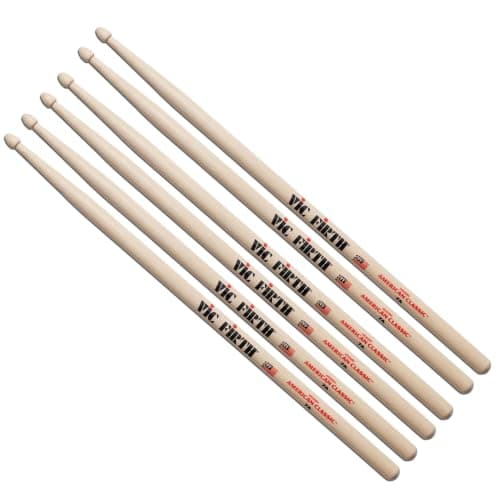 Vic Firth American Classic 7A (3 pairs)15. | Smaller hands, and younger playersThe honest floor | 8.0 | $41.99 · View on Amazon #ad How we’re funded |
If the kit is electronic
The same 5A profile with a nylon tip, which lasts noticeably longer against rubber pads and a hi-hat edge. For: an electronic kit, or a player wearing out wood tips. Skip if: wood tone on real cymbals matters more than tip life.
| # | Product | Best for | Score | Price |
|---|---|---|---|---|
| 1 | 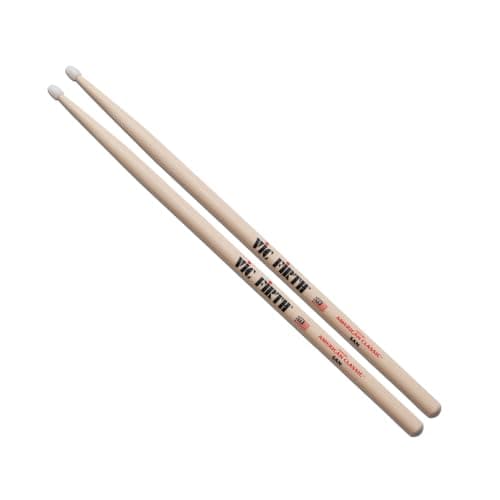 Vic Firth American Classic 5AN16 inches, 0. | The gift any drummer will useThe honest floor | 8.6 | $15.49 · View on Amazon #ad How we’re funded |
The same price, and the wrong first stick
0.595 inch — thirty thousandths thicker than a 5A for identical money. More mass is not more control. For: a heavier player a year or two in. Skip if: this would be a first pair.
| # | Product | Best for | Score | Price |
|---|---|---|---|---|
| 1 |  Vic Firth American Classic 5B (wood tip)16 inches, 0. | More stick than a beginner can useWhere overspending starts | 6.4 | $14.99 · View on Amazon #ad How we’re funded |
The picks in full
Vic Firth American Classic 5A (wood tip)
Vic FirthBest for: The default, and the one to buy first
16 inches, 0.565 inch diameter, medium taper, hickory, wood teardrop tip. The 5A is the stick almost every drummer alive uses and the one a teacher assumes you own, and the wood tip is the version to start with.
Published specifications
- Length:
- 16"
- Diameter:
- 0.565"
- Taper:
- Medium
- Material:
- Hickory, lacquer finish
- Tip:
- Wood, teardrop shape
- Variants to avoid by accident:
- A Barrel Tip 5A exists at the same 16" / 0.565" with a different tip shape, and an Extreme 5A is longer at 16.5"
What it gets right
- The near-universal default size, so a teacher, a band and every method book assume it
- Hickory is the standard shaft wood: stiffer than maple and less brittle than oak, which is what you want while technique is still rough
- Wood tip gives a warmer cymbal sound and has nothing to come loose, unlike a nylon tip
- Cheapest item on this page and the one most likely to be correct without any further thought
Where it gives ground
- 0.565 inch is genuinely too thick for a small child's hand, which is what the 7A exists for
- Wood tips wear and eventually fray against a hi-hat edge, where nylon lasts longer
- Vic Firth's own site is JS-rendered and publishes no spec text to a plain request, so every figure here comes from a dealer
- One pair is not enough — sticks are a consumable and break, so plan on two
What it is not good at
Small hands. A 0.565 inch shaft is the adult default, and handing it to a seven-year-old produces a grip problem that reads as a talent problem. The 7A is thinner for exactly this reason.
How the specs score against a beginner’s needs
Scores are our reading of the published specifications above against what a beginner physically needs. They are not test results — we have not played this instrument.
Specifications from Sweetwater — Vic Firth American Classic 5A: 16 in length, 0.565 in diameter, hickory, teardrop tip, Adorama — Vic Firth American Classic 5A drum sticks, published 16 in length and 0.565 in diameter in both imperial and metric, Michéo Music — Vic Firth American Classic 5A Barrel Tip, published at the same 16 in / 0.565 in / hickory / medium taper but with a barrel rather than teardrop tip, which is the variant to avoid buying by mistake.
Vic Firth American Classic 7A (3 pairs)
Vic FirthBest for: Smaller hands, and younger players
15.5 inches, 0.540 inch diameter, medium taper, hickory, teardrop tip. Twenty-five thousandths of an inch thinner and half an inch shorter than a 5A, which sounds like nothing and is the difference between a child controlling the stick and fighting it.
Published specifications
- Length:
- 15.5" (394 mm)
- Diameter:
- 0.540" (13.7 mm)
- Taper:
- Medium
- Material:
- Hickory
- Tip:
- Teardrop shape
- Quantity:
- 3 pairs — see the cons: the single-pair listing could not be confirmed as buyable, so this is the pack we pinned
What it gets right
- Thinner and shorter than a 5A, which is the correct answer for a child or an adult with small hands rather than a compromise
- Still hickory and still a medium taper, so nothing else about the stick changes — only the scale
- Three pairs covers the fact that sticks are a consumable, which is the site's own advice on them
- Lighter stick also means less volume, which matters more than people expect in a shared house
Where it gives ground
- Sold here as a 3-pair pack costing roughly three times a 5A single pair, which is a real difference when buying for a child
- The single-pair 7A listing returned a price but no availability message, so we could not pin the cheaper configuration
- A player who grows into adult hands will move to a 5A, so this is a stage rather than a destination
- Lighter sticks are harder to use for loud playing, so a teenager in a band will outgrow them quickly
What it is not good at
An adult with average or large hands. A 7A in a full-size hand feels flimsy and encourages a tight grip to compensate, which is the opposite of what the thinner stick is for.
How the specs score against a beginner’s needs
Scores are our reading of the published specifications above against what a beginner physically needs. They are not test results — we have not played this instrument.
Specifications from Equipboard — Vic Firth American Classic 7A: 15.5 in length, 0.540 in diameter, medium taper, tear-drop tip, described as thinner and lighter than the 5A, Kirstein — Vic Firth American Classic 7A, publishing the same dimensions in metric at 394 mm length and 13.7 mm diameter, hickory.
Vic Firth American Classic 5AN
Vic FirthBest for: The gift any drummer will use
16 inches, 0.565 inch diameter, medium taper, US hickory, nylon teardrop tip. The 5A is the default stick size for almost every drummer alive, which makes it the one drum gift you can buy without knowing anything about their kit.
Published specifications
- Length:
- 16.00" (40.64 cm)
- Diameter:
- 0.565" (1.44 cm)
- Taper:
- Medium
- Material:
- Premium US hickory
- Tip:
- Nylon, teardrop shape
- Quantity:
- One pair
What it gets right
- 5A is the near-universal default size, so this fits a beginner, a teenager and a working drummer equally
- Sticks are a consumable — they chip and break — so this is the rare gift that cannot be a duplicate of something they own
- A nylon tip gives a brighter, more defined cymbal attack than wood and lasts longer against a hi-hat edge
- Hickory is the standard shaft wood: stiffer than maple, less brittle than oak
Where it gives ground
- Nylon tips can come loose and fly off after heavy use; wood-tip 5A is the alternative and a matter of taste
- A 16 inch stick is long for a child under about ten, who is usually better on a 7A or a junior stick
- One pair is a small gift on its own and reads better alongside something else
- A drummer with a strong preference may already be committed to a different model
What it is not good at
Young children. At 16 inches and 0.565 inch this is an adult-sized stick, and a seven-year-old handed one learns a grip that has to be corrected later.
How the specs score against a beginner’s needs
Scores are our reading of the published specifications above against what a beginner physically needs. They are not test results — we have not played this instrument.
Specifications from George's Music — Vic Firth American Classic 5AN published specifications (16.00 in length, 0.565 in diameter, medium taper, premium US hickory, teardrop nylon tip).
Vic Firth American Classic 5B (wood tip)
Vic FirthBest for: More stick than a beginner can use
16 inches, 0.595 inch diameter, medium taper, hickory, teardrop tip. Thirty thousandths of an inch thicker than a 5A for the same money, which is exactly why it is the wrong first stick: more mass is not more control.
Published specifications
- Length:
- 16"
- Diameter:
- 0.595"
- Taper:
- Medium
- Material:
- Hickory
- Tip:
- Teardrop shape
- Against the 5A:
- Same length and taper, 0.030" thicker — the only difference is mass
What it gets right
- A genuinely useful stick for a heavier player once technique is established, with more power for the same stroke
- Same price as the 5A, so nothing is lost by moving up later
- Same hickory and medium taper, so the feel is familiar rather than a different stick entirely
- Published diameter makes the step from 5A measurable rather than a matter of marketing
Where it gives ground
- Costs the same as the 5A, which is the trap: more stick for no more money, and a beginner who takes it tires faster and plays less accurately
- The extra mass makes quiet playing harder, and quiet control is most of early drumming
- Louder, which in a shared house is a problem rather than a feature
- Nothing about it is better for a beginner, so buying it first is a pure downgrade in disguise
What it is not good at
A first pair of sticks, which is the only reason it is on this page. It is in the overspend band not because of price — it costs the same as the 5A — but because taking it early costs the player endurance and accuracy they have not yet built.
How the specs score against a beginner’s needs
Scores are our reading of the published specifications above against what a beginner physically needs. They are not test results — we have not played this instrument.
Specifications from Adorama — Vic Firth American Classic 5B: 16 in length, 0.595 in diameter, hickory construction, teardrop shape, medium taper.
Questions people actually ask
What drum sticks should a beginner buy?
A pair of 5A wood tip#ad sticks, and then a second pair, because sticks break. 5A is the near-universal default size at 0.565 inch and is what a teacher, a band and every method book assume you have. The only common reason to choose differently is hand size: a child or an adult with small hands wants a 7A#ad at 0.540 inch.
Why is a 7A thinner than a 5A if 7 is bigger?
Because the numbering runs backwards, and it catches out everybody. In this system a lower number means a thicker stick, so the order from thin to thick is 7A, then 5A, then 5B, then 2B. The letter originally indicated the intended application rather than the size. There is no way to work this out from first principles — you simply have to know it, which our guide to choosing drum sticks explains at length.
Wood tip or nylon tip?
Wood on an acoustic kit, nylon on an electronic one. A wood tip gives a warmer cymbal sound and has nothing that can come loose; a nylon tip is brighter and lasts noticeably longer against rubber pads and a hi-hat edge. On a mesh or rubber electronic kit the durability argument wins easily, which is why the nylon 5AN#ad is our pick for those.
How many pairs do I need?
Two, from the start. Sticks are the only true consumable on a drum kit — they chip at the shoulder where they strike a rim, and they snap, usually mid-song and usually when you are enjoying yourself. One pair means a session that ends early. At roughly fifteen dollars a pair this is the cheapest insurance in drumming.
Is a heavier stick better once I improve?
Sometimes, and it is not the upgrade people assume. A 5B is thirty thousandths of an inch thicker than a 5A for the same price, which makes it feel like a free upgrade. It is not: the extra mass costs endurance and makes quiet playing harder, and quiet control is most of early drumming. Move up when a teacher suggests it or when you genuinely need more volume, not because it costs the same.
Does the wood matter?
A little, and all four sticks here are hickory, which is the standard and the right default. Hickory is stiffer than maple and less brittle than oak — maple sticks are lighter and break sooner, oak is dense and durable but transmits more shock to the hands. For a beginner whose technique is still rough and who will break sticks, hickory is the sensible middle.
Which variants get bought by mistake?
Three. The Barrel Tip 5A is published at the same 16 inches and 0.565 inch but has a barrel-shaped tip rather than a teardrop, which changes the cymbal sound. The Extreme 5A is longer at 16.5 inches. And an N suffix — as in 5AN — means a nylon tip on an otherwise identical stick. All three look near-identical in a listing photo, so read the model name rather than the picture.
Sources
- Sweetwater — Vic Firth American Classic 5A: 16 in length, 0.565 in diameter, hickory, teardrop tip
- Adorama — Vic Firth American Classic 5A, published 16 in length and 0.565 in diameter
- Equipboard — Vic Firth American Classic 7A: 15.5 in length, 0.540 in diameter, medium taper, tear-drop tip, thinner and lighter than the 5A
- Kirstein — Vic Firth American Classic 7A, same dimensions published in metric at 394 mm and 13.7 mm, hickory
- Adorama — Vic Firth American Classic 5B: 16 in length, 0.595 in diameter, hickory, teardrop shape, medium taper
- George's Music — Vic Firth American Classic 5AN published specifications (16.00 in length, 0.565 in diameter, medium taper, premium US hickory, teardrop nylon tip)
- Michéo Music — Vic Firth American Classic 5A Barrel Tip: same 16 in / 0.565 in / hickory / medium taper with a barrel rather than teardrop tip, which is the variant most often bought by mistake
Still deciding?
Every recommendation on this site is built the same way, and the method is published in full — including what we do not do and what would get a pick dropped.
Read next
- How to choose drum sticks
What the numbers and letters mean, which size suits which player, tip materials, and why sticks are a consumable.
- Best drum practice pads
Gum rubber versus neoprene, why 12 inches is the right size, and the honest limit of what pad practice builds.
- Drum accessories you actually need
Sticks, a pad, hearing protection and a throne, in priority order, plus the upgrades that genuinely change how a cheap kit sounds.
- Best hearing protection for drummers
Why foam plugs are the wrong tool, filtered plugs versus isolation headphones, and what the exposure numbers actually say.
- Best beginner drum sets: complete kits for teens and adults
Complete acoustic and electronic kits for adult players, with the total-purchase problem and the noise question both addressed.
- Best drum books for beginners
Snare method against drumset method is the whole first decision, and it is not printed on the cover in plain language. Four books on published contents, page counts and what each one leaves out.