Band & Orchestra
Best reeds for beginners
The cheapest object in the case decides how hard the instrument feels. Get the strength wrong and a beginner concludes they cannot play.
By Sawyer V. · Published · Last updated
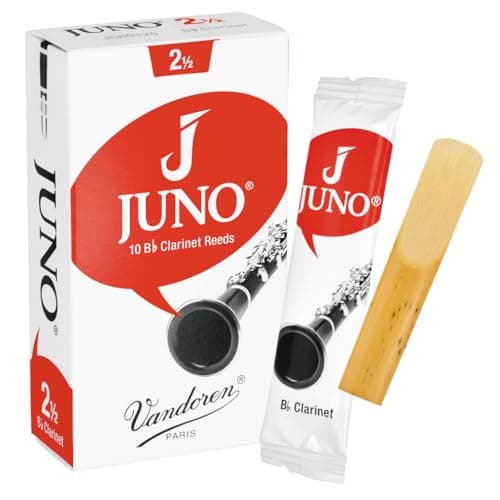
Buy strength 2.5 in a student-cut reed for the instrument they actually play, and drop to a 2 if they are struggling. For clarinet that is the Vandoren JUNO#ad; for alto saxophone, the JUNO alto box#ad. The reason this page exists is that a reed which is too hard produces precisely the symptoms people blame on a cheap instrument — a thin, airy sound, no low register, and a child who gives up — and it is the cheapest thing in the case to change.
Every pick states its Starter Path band, and we have not played any of them — the method is on how we pick. Line descriptions, strengths offered and packaging come from published dealer and distributor listings, cited at the bottom.
Start at strength 2.5 in a student cut. Clarinet: Vandoren JUNO (JCR0125). Alto sax: Vandoren JUNO (JSR6125). These are not interchangeable — clarinet and saxophone reeds are different shapes and sizes, and tenor is different again. If the player sounds airy or cannot play low notes, go softer, to a 2 or even 1.5 in the same line, and test it with a 3-reed box rather than a 10. Student-line reeds are deliberately more responsive than professional lines at the same printed number, so do not start on a Vandoren Traditional 2.5 — that is the step up, not the starting point. Soak the reed before playing and store it flat, because a warped reed is the usual cause of an instrument that sounded fine last week.
What the number on the box means, and what it does not
Reed strength describes how stiff the cane is and therefore how much air pressure and embouchure support it takes to make it vibrate. It runs from about 1.5 to about 5 and it is not a skill rating. A professional playing a 2.5 is a normal thing; a beginner put on a 3.5 because somebody thought harder meant better is a beginner who will sound worse every week.
Two things make the number more slippery than it looks.
It is not comparable across brands. A Rico 2.5 and a Vandoren 2.5 are cut differently and do not feel the same. Changing brand without re-testing strength is how players end up convinced their instrument has developed a fault.
It is not even comparable across lines from one maker. Vandoren publishes JUNO as its student line, cut to be extra responsive so a student can improve faster, alongside the Traditional and V.12 professional cuts. All three print a “2.5” and the JUNO is noticeably the easiest of them. This is the single most useful fact on this page, and nothing on the front of the box tells you.
The picks
Vandoren JUNO Bb Clarinet 2.5, box of 10#ad is the default first box for a clarinet player. It is Vandoren’s student line, from Mediterranean-basin cane with a cut published as extra responsive for students, and — the part that matters in a school bag — every reed is sealed individually in a humidity-balanced Flow Pack, so reed ten is as flat as reed one months later. The line runs 1.5, 2, 2.5 and 3, so there is somewhere to go in both directions without changing brand. Buy this if the student plays clarinet and you want one decision made correctly. Skip it if they have already settled on a professional-line reed they like.
Vandoren JUNO Alto Saxophone 2.5, box of 10#ad is the same argument for alto sax: same student cut, same strength, same Flow Pack sealing. Buy this if the instrument is an alto saxophone. Skip it if it is a tenor or a clarinet — and check, because the boxes look alike and the number on the front is identical.
Rico Organic Bb Clarinet 2.5, 3-pack#ad is the worst value per reed on this page and is here deliberately. Strength is the one variable a beginner genuinely has to experiment with, and a three-reed box lets you find out whether 2.5 is right for about a third of the cost of discovering it was not after buying ten. Rico is the other brand band rooms stock, so a teacher will recognize it. Buy this if the player is struggling and you suspect the reed, or you want to compare two strengths cheaply. Skip it if the strength is settled, in which case the ten-pack is simply cheaper per reed.
Vandoren Traditional Bb Clarinet 2.5, box of 10#ad is the step up, and it is in the overspend band on purpose. It is the reference clarinet reed and most players end up here and stay for years — but at the same printed strength it is firmer work than the JUNO, because the cut assumes an embouchure that has developed. Handing this to a first-month beginner is a well-trodden way to convince a child the clarinet is beyond them. Buy this if the player is a year or two in and outgrowing the student cut. Skip it if this is a first box.
Storage, which costs nothing and prevents most sudden problems
A reed is a thin piece of cane that absorbs water and changes shape. Two rules cover almost everything.
Wet it before playing. Thirty seconds in the mouth. A dry reed does not vibrate evenly and chips at the tip, which is where all the flex is.
Store it flat. A reed put back wet and loose into the sleeve it came in dries warped, and a warped reed does not seal against the mouthpiece — which is the usual answer to “it sounded fine last week and now it is awful.” A hard reed case holding reeds flat solves it, and our band student gift page leads with one for exactly this reason.
What we did not list, and why
Unbranded ten-packs. They are everywhere, they are cheap, and with a natural material the consistency is the product. A box where three reeds play well has not saved you anything over a box where eight do, and a beginner cannot yet tell a bad reed from their own technique — which makes an inconsistent box actively harmful at this stage.
Synthetic reeds. Genuinely interesting, genuinely durable, and deliberately left off a beginner page: they cost several times a cane reed, they feel different enough that a student will be working against what their teacher expects, and the cost case only makes sense for a player who already knows what strength suits them.
D’Addario Reserve. A premium cut we would be happy to recommend later. The ten-pack in the beginner strength returned no availability message when we checked, and we do not list a buy row we cannot confirm is in stock.
Reed knives, rush and sandpaper. Adjusting reeds is a real skill and a terrible first-year project. A student who does not yet know what a good reed feels like cannot improve one with a blade.
Quick picks
Clarinet, first box
Vandoren's student line at the standard school strength, each reed sealed in its own humidity-balanced pack. For: any beginning clarinet player. Skip if: they have already settled on a professional-line reed.
| # | Product | Best for | Score | Price |
|---|---|---|---|---|
| 1 | Vandoren JUNO Bb Clarinet Reeds, Strength 2.5, Box of 10Vandoren's student line, cut to be more responsive than their professional reeds so a beginner can get a note out without fighting. | The default first box of clarinet reedsThe honest floor | 8.6 | $23.50 · View on Amazon #ad How we’re funded |
Alto saxophone, first box
The same student cut and the same strength for alto sax. For: any beginning alto player. Skip if: the instrument is a tenor — that is a different size of reed.
| # | Product | Best for | Score | Price |
|---|---|---|---|---|
| 1 | 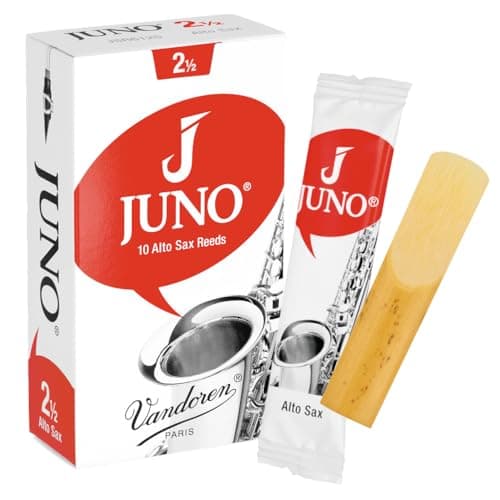 Vandoren JUNO Alto Saxophone Reeds, Strength 2.5, Box of 10The saxophone half of the same student line, in the same strength 2. | The default first box of alto sax reedsThe honest floor | 8.6 | $29.00 · View on Amazon #ad How we’re funded |
If you are not sure 2.5 is right
A three-reed box, so finding out costs a third of what being wrong about a ten-pack does. For: a player who is struggling and might need a softer reed. Skip if: the strength is already settled — buy the ten-pack.
| # | Product | Best for | Score | Price |
|---|---|---|---|---|
| 1 | 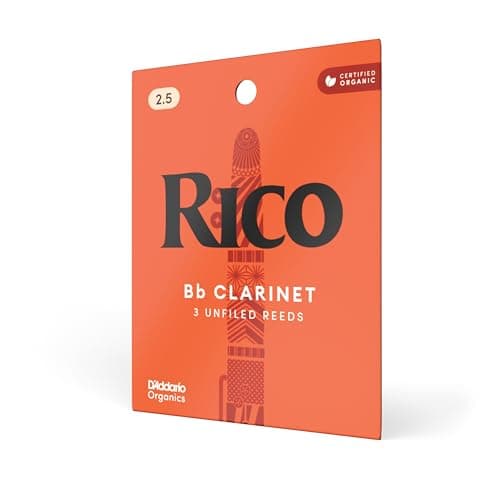 Rico Organic Bb Clarinet Reeds, Strength 2.5, 3-PackA three-reed box, which is the point. | Testing a strength without buying ten of themThe honest floor | 7.4 | $12.99 · View on Amazon #ad How we’re funded |
The step up, later
The blue-box Vandoren clarinet reed. At the same printed 2.5 it feels firmer than the JUNO, because the cut assumes a developed embouchure. For: a player a year or two in. Skip if: this is a first box.
| # | Product | Best for | Score | Price |
|---|---|---|---|---|
| 1 | 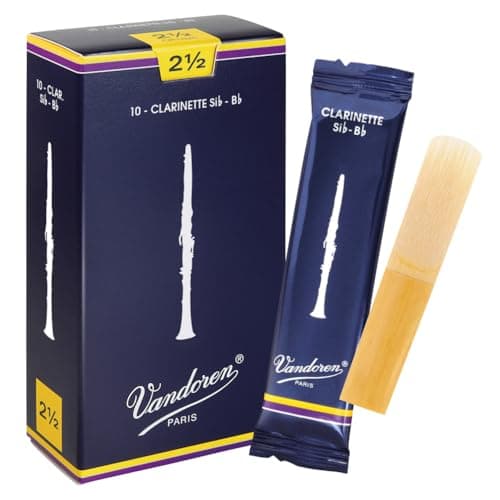 Vandoren Traditional Bb Clarinet Reeds, Strength 2.5, Box of 10The blue-box Vandoren that clarinet players move to and then mostly stay on for years. | The step up from a student reedEnough | 7.6 | $31.00 · View on Amazon #ad How we’re funded |
The picks in full
Vandoren JUNO Bb Clarinet Reeds, Strength 2.5, Box of 10
VandorenBest for: The default first box of clarinet reeds
Vandoren's student line, cut to be more responsive than their professional reeds so a beginner can get a note out without fighting. Strength 2.5 is the usual school-band default, and every reed is sealed in its own humidity-balanced Flow Pack so the box does not warp in a locker.
Published specifications
- Model:
- JCR0125
- Strength:
- 2.5
- Box:
- 10 reeds
- Line:
- JUNO — Vandoren's student line, cut for responsiveness rather than for professional resistance
- Strengths offered:
- 1.5, 2, 2.5 and 3 across Bb clarinet, alto sax and tenor sax
- Packaging:
- Each reed individually sealed in a humidity-balanced Flow Pack
What it gets right
- Cut specifically for students, which is the whole reason to prefer it over a professional-line reed at the same strength
- Individual Flow Pack sealing means reed ten is as flat as reed one months later
- Strength 2.5 is the commonest school default, so it matches what a director will assume
- Available in 1.5 and 2 for a genuinely struggling beginner, in the same cut
Where it gives ground
- Dearer per reed than the unbranded ten-packs sold alongside it
- A student who has settled on a professional-line reed will find it too easy
- Cane is a natural material: even in one box, reeds vary
- No strength above 3 in this line, so a progressing player eventually leaves it
What it is not good at
Saxophone. Clarinet and saxophone reeds are different shapes and are not interchangeable, and the single commonest reed-buying mistake is picking up the wrong instrument's box at the right strength.
How the specs score against a beginner’s needs
Scores are our reading of the published specifications above against what a beginner physically needs. They are not test results — we have not played this instrument.
Vandoren JUNO Alto Saxophone Reeds, Strength 2.5, Box of 10
VandorenBest for: The default first box of alto sax reeds
The saxophone half of the same student line, in the same strength 2.5 and the same individually sealed Flow Packs. If the student plays alto sax rather than clarinet, this is the box — the two are not interchangeable no matter what the number on the front says.
Published specifications
- Model:
- JSR6125
- Strength:
- 2.5
- Box:
- 10 reeds
- Instrument:
- Eb alto saxophone — not clarinet, not tenor
- Line:
- JUNO — the student cut, more responsive than Vandoren's professional lines at the same number
- Packaging:
- Each reed individually sealed in a humidity-balanced Flow Pack
What it gets right
- Student cut, so a beginner gets a note rather than a struggle
- Flow Pack sealing keeps the box flat through a school year
- 2.5 matches the strength most band directors assume
- The 1.5 and 2 strengths in the same cut give somewhere to go if 2.5 is still too hard
Where it gives ground
- Costs more per reed than unbranded boxes
- Outgrown by a player who develops a real embouchure
- Natural cane means reed-to-reed variation
- Tops out at 3
What it is not good at
Tenor saxophone or clarinet. Reed strength numbers look transferable and are not: an alto reed is a different size from a tenor reed and a completely different shape from a clarinet reed.
How the specs score against a beginner’s needs
Scores are our reading of the published specifications above against what a beginner physically needs. They are not test results — we have not played this instrument.
Rico Organic Bb Clarinet Reeds, Strength 2.5, 3-Pack
D'Addario WoodwindsBest for: Testing a strength without buying ten of them
A three-reed box, which is the point. Reed strength is the one variable a beginner genuinely has to experiment with, and a three-pack lets you find out whether 2.5 is right for about a third of the price of being wrong about it.
Published specifications
- Strength:
- 2.5
- Box:
- 3 reeds
- Line:
- Rico Organic, D'Addario's unfiled student-cut reed
- Also sold as:
- 10-packs and 25-packs in the same strength
- Sibling line:
- Royal and Reserve are D'Addario's filed and premium clarinet cuts
- Instrument:
- Bb clarinet
What it gets right
- Cheapest honest way to find out whether a strength suits the player
- Rico is the other brand school band rooms stock, so a teacher will recognize it
- Same strength available in bigger boxes once the player has settled
- Low enough cost to buy two strengths at once and compare
Where it gives ground
- Worst value per reed of anything on this page
- Three reeds will not last a term of daily practice
- Rico and Vandoren strength numbers do not line up exactly, so 2.5 in one is not 2.5 in the other
- Cane variability bites harder in a box of three than a box of ten
What it is not good at
Being the box you keep buying. It exists to answer a question — is this the right strength — and once answered, the ten-pack is the sane purchase.
How the specs score against a beginner’s needs
Scores are our reading of the published specifications above against what a beginner physically needs. They are not test results — we have not played this instrument.
Specifications from Heid Music — Vandoren and Rico clarinet reed listings showing the same strength offered in 3-, 10- and 25-reed boxes, which is the basis for the small-box-to-test argument on this page.
Vandoren Traditional Bb Clarinet Reeds, Strength 2.5, Box of 10
VandorenBest for: The step up from a student reed
The blue-box Vandoren that clarinet players move to and then mostly stay on for years. At the same printed strength it feels firmer than the JUNO because the cut is made for a developed embouchure — which is the whole reason not to start here.
Published specifications
- Model:
- CR1025
- Strength:
- 2.5
- Box:
- 10 reeds
- Line:
- Traditional — Vandoren's long-standing professional-line clarinet cut
- Relationship to JUNO:
- Same maker, different cut: JUNO is the student line and is deliberately more responsive at the same number
- Heavier sibling:
- V.12 (CR1925) is a separate, thicker-blank professional line at the same strength
What it gets right
- The reference clarinet reed; a teacher asking for "Vandoren 2.5" usually means this box
- More tonal body than a student reed once the player can support it
- Enormous strength range, so a player never has to change brand as they develop
- Stocked everywhere, including school band suppliers
Where it gives ground
- Harder work than a JUNO at the same number, which can read as "the clarinet is broken" to a beginner
- Among the more expensive boxes here
- Still cane, so still variable reed to reed
- Strength numbers do not transfer between brands or even between Vandoren lines
What it is not good at
A first box. Handing a beginner a professional-line reed at 2.5 is the standard way to convince a child they cannot play the instrument, when the actual problem is that the reed is too stiff for the embouchure they have.
How the specs score against a beginner’s needs
Scores are our reading of the published specifications above against what a beginner physically needs. They are not test results — we have not played this instrument.
Questions people actually ask
What strength reed should a beginner use?
2.5 is the usual school-band default for both clarinet and alto saxophone, and it is where to start. If the player sounds airy, cannot get low notes or runs out of breath quickly, drop to a 2 — and if they are very young or very new, 1.5 exists in the same cut. Strength is not a measure of skill and there is no prize for playing a hard reed.
Are clarinet and saxophone reeds the same?
No, and this is the commonest reed-buying mistake. They are different shapes and different sizes, and an alto sax reed will not seat correctly on a clarinet mouthpiece or the reverse. Tenor sax reeds are different again. Check the instrument name on the box, not just the number.
Why is a student reed easier than a professional one at the same number?
Because the number describes the cut within one line, not across lines. Vandoren publishes JUNO as its student line with a cut made to be more responsive, while the Traditional and V.12 lines are cut for players who can support more resistance. A 2.5 JUNO and a 2.5 Traditional are both “2.5” and do not feel the same, which is why swapping brands without changing number can go badly wrong.
How long does a reed last?
For a student practicing daily, a couple of weeks of real use is typical before the tip softens and the response goes dull, and reeds also chip. That is why they are sold in tens and why they make a genuinely good gift — there is no such thing as a duplicate box of reeds.
Should I buy the cheap unbranded ten-packs?
We would not. The cost difference over a school year is small, and with cane — a natural material whose consistency is the whole product — you are paying for how many of the ten are usable. A box where three play well is not cheaper than a box where eight do.
Does the reed need to be wet before playing?
Yes. A dry reed does not vibrate properly and is more likely to chip. Thirty seconds in the mouth, or in a little water, before playing is the normal routine, and a reed put away wet and loose in the box warps — which is the usual reason an instrument that was fine last week sounds bad today for no apparent reason.
Sources
- Long & McQuade — Juno Reeds, Clarinet Reeds, 10 reeds, 2-1/2 strength: Juno reeds are made for student performance from select cane grown on the Mediterranean basin, given a cut that is extra responsive for students, each reed sealed in its own humidity balanced Flow Pack; strengths 1 1/2, 2, 2 1/2 and 3 offered for alto sax, tenor sax and Bb clarinet
- Heid Music — Vandoren Juno and Rico clarinet reed listings showing the same strength sold in 3-, 10- and 25-reed boxes, and the Juno line's student cut and Flow Pack packaging
Still deciding?
Every recommendation on this site is built the same way, and the method is published in full — including what we do not do and what would get a pick dropped.
Read next
- Reeds, and why they decide how hard playing feels
What reed strength means, why beginners start soft, how to rotate a set, and the signs a reed is finished.
- Best beginner clarinets
Why resin beats wood for a student, what a 65mm barrel does for intonation, and two picks for the year-two step-up.
- Best beginner saxophones
Why alto is the beginner size, the ergonomic details that matter at eleven, and two picks for when buying is right.
- Best clarinet books for beginners
Clarinet is the largest beginning-band section, so the method is usually assigned. Three books on published page counts, and which one explains the most.
- Best saxophone books for beginners
Three alto saxophone methods compared on published page counts and editions, plus why the reed in the box matters more than which book you bought.
- Best gifts for band students
Woodwind, brass and percussion need completely different accessories. The one gift that works for all three, the two that are family-specific, and what to avoid on a rented instrument.