Keys
How to practice piano so it actually works
Most beginners practice by playing a piece from the start until they make a mistake, then starting again. That is rehearsal, not practice.
By Sawyer V. · Published · Last updated
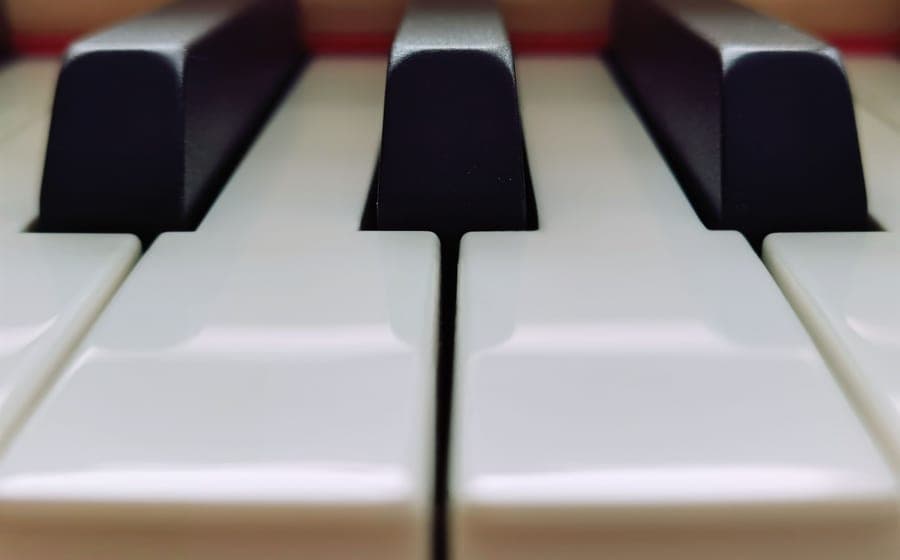
There is a specific way most beginners practice, and it is close to the least effective method available: open the book, play the piece from bar one, stumble somewhere in the middle, go back to bar one, repeat.
The result is a player who can perform the first eight bars beautifully and has never successfully played bar seventeen.
Practice the parts that fail, not the piece. Split a twenty-minute session into warm-up, isolated problem passages worked slowly, and a run-through at the end. Practice hands separately until each is secure. Frequency beats duration — twenty minutes daily beats two hours weekly.
A twenty-minute structure
Two to three minutes: warm-up. Scales, five-finger patterns, or simply playing something you already know. The purpose is physical rather than musical — cold hands play badly and get discouraged.
Twelve to fifteen minutes: the difficult part. Take the specific passage that fails. Not the piece — the two or three bars. Play them slowly enough that you get them right every time, then increase speed gradually. This is where nearly all real progress happens and it is the part beginners skip because it is boring.
Three to five minutes: play something. Run the piece, or play something you enjoy that you can already do. This matters more than it looks: ending on something that sounds like music is a large part of why anyone comes back tomorrow.
Slow is the whole technique
If there is one idea on this page, it is this: play it slowly enough to play it correctly, every single time.
Practicing a passage at a speed where you get it right seven times in ten teaches your hands both the right version and the wrong version. The nervous system does not label one as the mistake; it learns the average.
Halve the tempo. If it still fails, halve it again. A passage played correctly ten times at a crawl becomes reliable much faster than the same passage played approximately fifty times at target speed. Then raise the tempo in small steps, and drop back the moment errors return.
Hands separately, then together
Piano is two instruments played by one person. The right hand usually carries melody, the left usually carries harmony and bass, and they do genuinely different things.
Learning both at once means learning three tasks simultaneously: the right-hand notes, the left-hand notes, and the coordination between them. That is why a piece that looks simple takes weeks.
Work each hand alone until it runs without thought. Then put them together slowly. The combination will feel disproportionately hard at first and then resolve quickly, which is the normal shape of it.
The four habits that waste the most time
Always starting from the beginning. Guarantees the opening is over-practiced and the middle is under-practiced. Start from the hard part.
Playing at target speed too early. Covered above, and the single most common error.
Practicing only what already sounds good. Enjoyable, and it is playing rather than practicing. Both have a place; keep them separate in your head.
Looking at the hands constantly. Understandable early on and a habit worth breaking, because reading music and watching your fingers cannot happen at the same time. The keyboard has physical landmarks — the groups of two and three black keys — and the hands learn them faster than you expect if you let them.
Use the instrument’s own tools
The metronome. Built into essentially every digital piano and keyboard, including the Casio Casiotone CT-S1#ad. Rhythm is the thing beginners are least able to assess in themselves — almost everyone slows down at hard passages and does not notice.
The recording function. Where a board has one, it is the most useful feature on it. Listening back to yourself is uncomfortable and instantly reveals the uneven timing and the rushed passages you cannot hear while playing.
Lesson features. The Yamaha PSR-E383#ad has a built-in lesson system, which is genuinely useful for a self-teaching beginner who wants structure without a teacher. Whether that beats an app or a human is in piano lessons versus learning apps.
Remove the reasons not to practice
Most missed practice is logistical rather than motivational.
Wrong height. A keyboard on a dining table is about four inches too high, which bends the wrists upward and makes twenty minutes uncomfortable. Fix it once with a stand and an adjustable bench — see our stand and bench guide.
Cannot make noise. The Audio-Technica ATH-M20x#ad mutes the internal speakers entirely, which converts “I can practice when the house is empty” into “I can practice.” For an adult beginner this is usually the single highest-value purchase after the instrument.
Instrument in the wrong room. A piano in a spare room you never enter gets played on purpose only. One in the room you already sit in gets played casually, which is where most practice hours actually come from.
What progress looks like
Progress on piano is lumpy. Weeks of apparently no improvement end with a passage suddenly working, because consolidation happens between sessions rather than during them.
Which means the honest measure is not whether today went well. It is how many days you sat down at all. A beginner practicing twenty minutes on five days a week is playing simple pieces with both hands within a few months, and almost nobody who does that stalls for reasons of aptitude.
What we would buy
Audio-Technica ATH-M20x
Audio-TechnicaBest for: Practice headphones
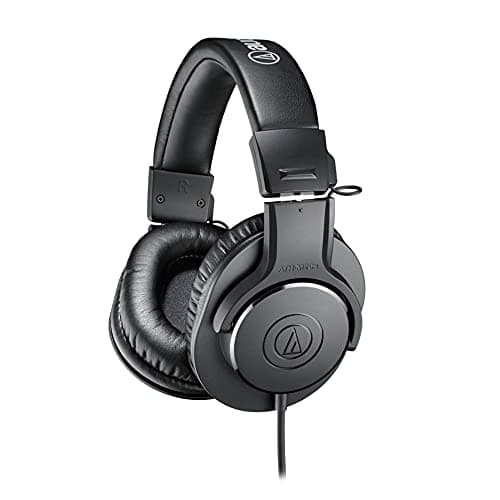
Closed-back 40 mm drivers with a 1/4 inch adapter included, which is the socket most digital pianos actually have. The cheapest headphones we would put on a practicing student.
Published specifications
- Type:
- Closed-back, circumaural (over-ear)
- Drivers:
- 40 mm, copper-clad aluminum voice coils
- Frequency response:
- 15 Hz - 20,000 Hz
- Cable:
- 9.8 ft (3.0 m), single-sided, straight
- Weight:
- 6.7 oz (190 g) without cable
- In the box:
- 6.3 mm (1/4") snap-on adapter
What it gets right
- Closed-back, so the sound stays in and the room stays out — the whole point of practice headphones
- The 1/4 inch adapter is included, and that is the socket most digital pianos have rather than the 1/8 inch a phone uses
- Under 200 grams, which matters over an hour of practice on a child's head
Where it gives ground
- The cable is fixed, not detachable, so a damaged cable means new headphones
- A 3 meter cable is generous at a piano and a trip hazard anywhere else
What it is not good at
Portability. They do not fold flat and there is no case. These live at the instrument.
How the specs score against a beginner’s needs
Scores are our reading of the published specifications above against what a beginner physically needs. They are not test results — we have not played this instrument.
Specifications from Audio-Technica ATH-M20x published specifications.
Yamaha PSR-E383
YamahaBest for: Learning tools, 61 keys
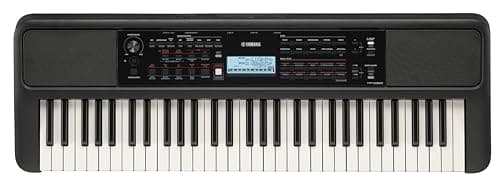
61 touch-sensitive keys and 125 lesson songs with hand-separate practice and scoring. The touch response is the spec that matters; the 650 tones are the spec that sells it.
Published specifications
- Keys:
- 61, organ-style (unweighted), touch-sensitive
- Touch response:
- Soft / medium / hard / off
- Polyphony:
- 48 notes
- Tones:
- 650 (258 panel, 25 drum/SFX, 20 arpeggio, 347 XGlite)
- Lessons:
- 125 lesson songs, right/left/both-hand practice with evaluation
- In the box:
- Music rest, PA130 power adapter
What it gets right
- Touch-sensitive keys — playing harder makes it louder, which is the thing a beginner has to learn early and a non-touch keyboard cannot teach
- The lesson mode with hand-separate practice and scoring is genuinely useful, not a gimmick
- Power adapter included, which is not a given at this tier
Where it gives ground
- Unweighted organ-style keys — this will not build the finger strength a piano needs
- 61 keys, so a method book that assumes 88 will eventually run out of instrument
What it is not good at
Preparing anyone for an acoustic piano. If there is a real piano in the child's future, the unweighted action is a habit to unlearn later. Read our 61-versus-88 comparison before deciding.
How the specs score against a beginner’s needs
Scores are our reading of the published specifications above against what a beginner physically needs. They are not test results — we have not played this instrument.
Specifications from Yamaha — PSR-E383 specifications.
Casio Casiotone CT-S1
CasioBest for: 61 keys, piano sound first
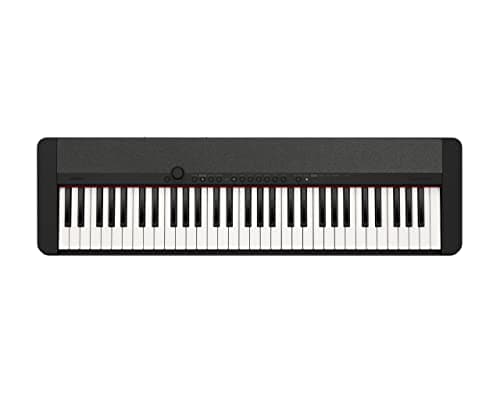
61 full-size touch-sensitive keys, 61 tones and no arranger clutter. It is the 61-key board for someone who wants to play piano rather than operate a keyboard.
Published specifications
- Keys:
- 61, full-size, touch-sensitive
- Polyphony:
- 64 notes
- Tones:
- 61, including a stereo grand piano
- Weight:
- 9.9 lb
- Dimensions:
- 36.61" W x 10.15" D x 3.30" H
- Connectivity:
- USB-MIDI
What it gets right
- Deliberately few sounds and a clean panel, which removes the single biggest distraction from actual practice
- 9.9 pounds and 3.3 inches tall — it can live on a shelf between sessions, and an instrument that lives out of the way gets played less
- 64-note polyphony, higher than the PSR-E383's 48
Where it gives ground
- No lesson mode at all, unlike the PSR-E383
- Unweighted keys, same fundamental limit as any 61-key board
What it is not good at
Entertaining a young child. There is no light-up key guidance, no play-along scoring and only 61 sounds. That restraint is the point for an adult beginner and a drawback for a seven-year-old.
How the specs score against a beginner’s needs
Scores are our reading of the published specifications above against what a beginner physically needs. They are not test results — we have not played this instrument.
Specifications from Casio — CT-S1 product page.
Questions people actually ask
How long should a beginner practice piano each day?
Twenty minutes most days is an excellent target and beats ninety minutes once a week by a wide margin. Skill consolidates between sessions rather than during them, so frequency matters more than duration.
Should I practice hands separately?
Yes, for anything new. Each hand is doing a different job and combining them before either is secure means practicing the coordination and the notes at once, which is why progress stalls.
Why do I keep making the same mistake?
Because you keep practicing it. Playing a passage from the start until you stumble repeats the stumble every time. Isolate the two bars that fail, play them slowly until they are reliable, then put them back.
Do I need a metronome?
Not for every minute, and yes regularly. Rhythm is the thing beginners are least able to self-assess, and playing along to a click reveals the small slow-downs at hard passages that a player never hears in themselves.
Sources
Still deciding?
Every recommendation on this site is built the same way, and the method is published in full — including what we do not do and what would get a pick dropped.
Read next
- What you actually need to start piano
The complete accessory list in priority order, with what each one is for and which ones can genuinely wait.
- Keyboard stands and benches
How to set the correct playing height, X-stand versus Z-stand, and why the adjustable bench is the item to buy first.
- Piano lessons or a learning app?
What apps do well, the two things only a person can catch, and a hybrid approach that costs a fraction of weekly lessons.
- Setting up a practice space that gets used
Why the instrument should never live in its case, the seat height that prevents wrist problems, and the two cheap accessories that matter most.
- Best keyboards for adult beginners
Why adults should weight the key action over the feature list, and four boards covering buy-once down to the honest floor.