Keys
Best weighted keyboards
Manufacturers use the word weighted for at least three different mechanisms, and only one of them builds piano technique.
By Sawyer V. · Published · Last updated
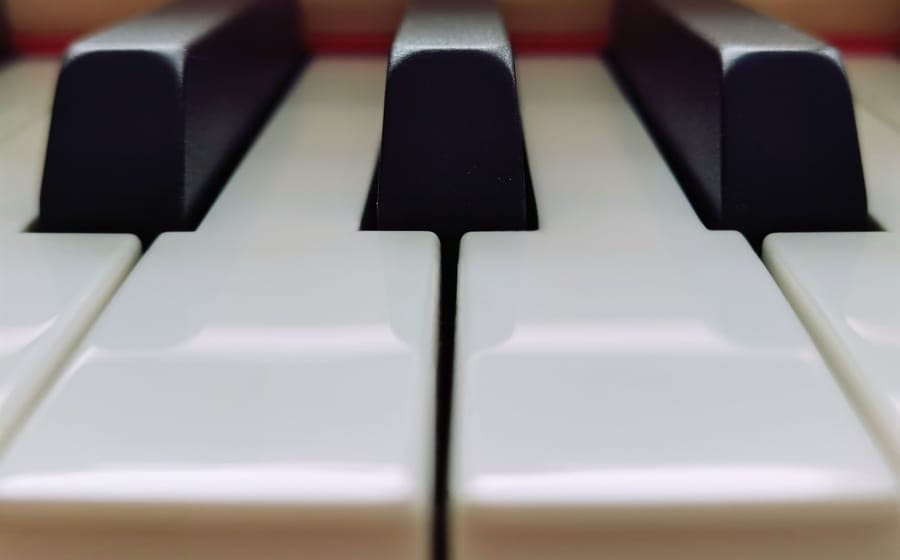
“Get a weighted keyboard” is the most common piece of advice a new piano student receives, and it is nearly useless on its own, because the word is applied to at least three different mechanisms that feel and behave differently.
This page decodes the term and names the two boards that deliver the real thing at a beginner price.
Both picks state their Starter Path band, and we have not physically tested either — the method is on how we pick.
What a teacher means by weighted is a hammer action: a physical weighted lever under each key. Graded hammer action adds heavier low notes, like a real piano. Semi-weighted uses springs and only approximates the feel. Buy hammer action if you can; buy semi-weighted 88 if you cannot.
The three things called weighted
Hammer action. A small weighted lever sits under each key and has to be lifted when you press. The resistance comes from mass, exactly as it does on an acoustic piano, and it is what builds finger strength and dynamic control.
Graded hammer action. Hammer action where the weights vary across the keyboard, heavier at the bass end and lighter at the treble end, mirroring how an acoustic piano’s strings and hammers change in size. This is the top of what a beginner board offers.
Semi-weighted. Sprung keys with added resistance, sometimes with a small weight. It feels heavier than a synth action and it is not the same mechanism. Marketing copy frequently calls this “weighted,” which is where the confusion starts.
There is a fourth thing to know about, which is not weighting at all: touch response, meaning the board plays louder when you strike harder. An unweighted board can have excellent touch response, and a board without touch response is unusable for learning regardless of its action. That distinction is in keyboard specs explained.
How to tell what you are looking at
Read the spec line, not the headline. Manufacturers who fit a genuine hammer action name it: “graded hammer standard,” “hammer action,” or a branded action name. A board that only says “weighted feel” or “touch-sensitive” is telling you what it is not.
Check the weight of the instrument. Hammers are mass, and mass shows up on the scales. An 88-key board with a real hammer action is substantially heavier than an unweighted one of the same size. A very light 88-key board is not hammer-action.
Check the key count. Hammer actions are almost always 88 keys, because the two specifications are aimed at the same buyer. A 61-key board advertising weighting is usually semi-weighted.
The picks
The Yamaha P-145#ad is the one to buy if you can. 88 keys with a graded hammer action, meaning real weighted levers that are heavier in the bass than in the treble. That is the specification a teacher is actually asking for and it is the one you cannot add later.
Everything else about it is deliberately spare — a short voice list, a simple panel, a slim cabinet. For a student who wants an instrument rather than a gadget, that restraint is the point.
Against it: it costs meaningfully more than an unweighted board; a hammer action is heavy to move; and the keys make a mechanical thump when they bottom out, which is audible through a floor late at night in a way an unweighted board is not.
The Alesis Recital#ad is the compromise we would make if the budget will not stretch. You get 88 full-size keys with a semi-weighted action rather than a hammer one. It is not the same feel and we will not pretend it is — but the key count and key width are right, and those are the two things that limit what repertoire you can play at all.
Against it: semi-weighted resistance is spring-based, so it does not build finger strength the way hammers do, and a student who moves to an acoustic piano later will find it noticeably heavier going.
When you do not need weighted keys
Being honest about this saves people a lot of money.
If the goal is playing chords, accompanying singing, working out songs by ear, or playing in a band, an unweighted board is not a compromise — it is arguably the better instrument. It is lighter, cheaper, quieter mechanically, and faster to play synth and organ parts on.
Weighted keys matter for classical repertoire, graded exams, and anyone who will regularly sit at an acoustic piano. The full trade is in weighted versus unweighted keys, and if you have already decided you want a proper piano instrument, the wider field is in best beginner digital pianos.
What a weighted board still needs
A bench at the right height. More important on a weighted action, not less, because you are pressing against real resistance. A dining chair is usually too low.
A sustain pedal. Written piano music assumes one within months.
Headphones. And a note specific to this page: hammer actions are mechanically noisier than unweighted boards, so headphones silence the speakers but not the keys. In an apartment that matters — see best digital pianos for apartments.
Quick picks
Real graded hammer action
88 keys with a weighted hammer under each one, graded so the low notes are heavier than the high ones. This is what a teacher means.
| # | Product | Best for | Score | Price |
|---|---|---|---|---|
| 1 | No image Yamaha P-14588 graded hammer keys, a concert grand sample and 24 pounds. | Buy once, 88 weighted keysEnough | 9.0 | Check price on Amazon → #ad How we’re funded |
88 keys on a tight budget
Full key count and full-size keys with a semi-weighted action rather than a hammer one. A real compromise, honestly stated.
| # | Product | Best for | Score | Price |
|---|---|---|---|---|
| 1 | No image Alesis Recital88 full-size semi-weighted keys and 128-note polyphony for meaningfully less than a hammer-action piano. | 88 keys on a tight budgetThe honest floor | 7.7 | Check price on Amazon → #ad How we’re funded |
The picks in full
Yamaha P-145
YamahaBest for: Buy once, 88 weighted keys
88 graded hammer keys, a concert grand sample and 24 pounds. If the plan is piano lessons rather than keyboard playing, this is where the shopping actually starts.
Published specifications
- Keys:
- 88, GHC (Graded Hammer Compact), fully weighted and graded
- Polyphony:
- 64 notes
- Sound:
- Yamaha CFIIIS concert grand sample, damper resonance DSP
- Speakers:
- 7 W built-in
- Dimensions:
- 1,326 x 268 x 129 mm (52-3/16" x 10-9/16" x 5-1/16")
- Weight:
- 11.1 kg (24 lb 8 oz)
- In the box:
- Music rest, sustain foot switch
What it gets right
- Graded hammer action — the low keys are heavier than the high ones, which is the thing an unweighted keyboard cannot teach
- All 88 keys, so no method book ever runs off the end of the instrument
- Genuinely portable at 24 pounds and 268 mm deep; it fits on a desk
Where it gives ground
- 64-note polyphony is the entry-tier number; heavy sustain-pedal passages will drop notes eventually
- A single sustain footswitch, not a proper piano-style pedal — most players replace it
What it is not good at
Anything other than piano. There are only a handful of voices and no arranger features, so if the player wants to make beats or layer sounds, a PSR-E383 will make them happier for less money.
How the specs score against a beginner’s needs
Scores are our reading of the published specifications above against what a beginner physically needs. They are not test results — we have not played this instrument.
Specifications from Yamaha USA — P-145 specifications.
Alesis Recital
AlesisBest for: 88 keys on a tight budget
88 full-size semi-weighted keys and 128-note polyphony for meaningfully less than a hammer-action piano. Semi-weighted is a real compromise and the page should say so, so: it is a real compromise.
Published specifications
- Keys:
- 88, full-size, semi-weighted
- Touch response:
- Adjustable — low / medium / high
- Polyphony:
- 128 notes
- Voices:
- 5, layerable and splittable
- Speakers:
- 2 x 20 W
- Weight:
- 15.7 lb
- Extras:
- Lesson mode, metronome, reverb, chorus
What it gets right
- All 88 keys at a price where most instruments give you 61 — the method book never runs out of instrument
- 128-note polyphony, double the Yamaha P-145's 64
- 15.7 pounds, lighter than the P-145's 24 and a genuine consideration if it moves between rooms
Where it gives ground
- Semi-weighted is not hammer action and not graded — the resistance is springs, not weights
- Five voices total, and the piano sample is clearly the entry tier
What it is not good at
Building acoustic-piano technique. Semi-weighted keys let a beginner play faster than their hands have earned, and the habit shows the first time they sit at a real piano. If lessons on an acoustic are coming, spend up to the hammer action.
How the specs score against a beginner’s needs
Scores are our reading of the published specifications above against what a beginner physically needs. They are not test results — we have not played this instrument.
Specifications from Alesis — Recital product page.
Questions people actually ask
What does weighted actually mean on a keyboard?
Properly, it means a physical weighted lever — a hammer — under each key, so the resistance comes from mass rather than from a spring. Manufacturers also use “weighted” loosely for semi-weighted actions that only feel heavier.
Do beginners need weighted keys?
If the goal is learning piano properly or sitting graded exams, yes — the whole technique is built on controlling how hard a key is struck against resistance. If the goal is playing chords and songs, unweighted is fine and much cheaper.
What is graded hammer action?
Hammer action where the weight varies across the keyboard, so the low keys are heavier than the high ones, the way an acoustic piano is. It is a step above plain hammer action and it is what the P-145 has.
Is semi-weighted good enough?
For a hobbyist, largely. For a student working toward exams, it is a real compromise: the resistance is spring-based rather than mass-based, so it does not build the same finger strength or dynamic control.
Sources
Still deciding?
Every recommendation on this site is built the same way, and the method is published in full — including what we do not do and what would get a pick dropped.
Read next
- Weighted vs unweighted keys
Hammer, semi-weighted and synth action explained by effect on the hands, with the one question that settles the choice.
- Best beginner digital pianos: 88 keys, honestly compared
Hammer action versus semi-weighted at the entry price, with the polyphony and weight trade-offs both stated.
- Keyboard specs, and which ones matter
What polyphony really limits, why 700 voices is not a feature, and the four specs that genuinely decide whether a keyboard is good.
- Digital piano or acoustic piano to start?
Running costs, tuning, volume control and why a neglected acoustic is worse than a good digital, with the case for each stated fairly.
- 61 vs 88 key keyboard
When 61 keys stops being enough, what 88 actually costs in money and floor space, and buy paths for both answers.