Drums
What an electronic drum module actually does
Kits are sold on the module's feature list, and most of that list is irrelevant to a beginner. Three things on it are not.
By Sawyer V. · Published · Last updated
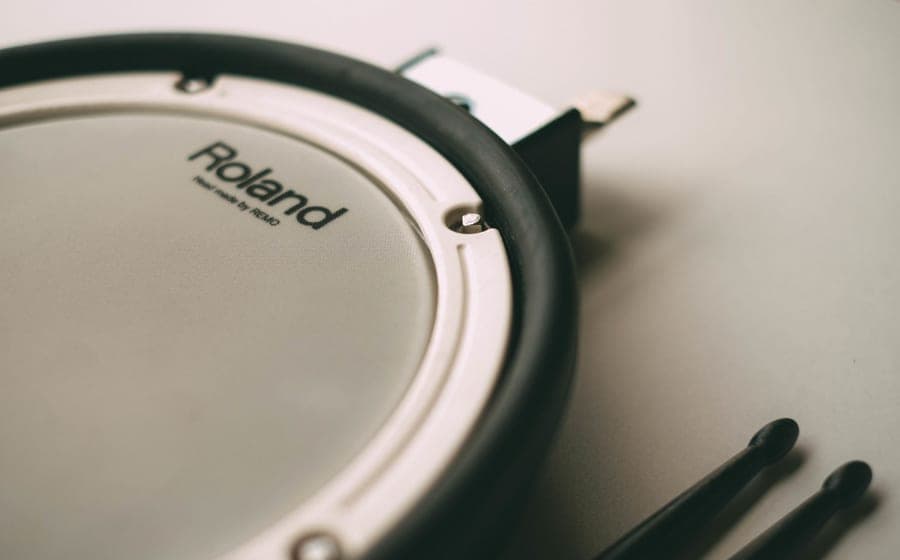
On an acoustic kit, the drums make the sound. On an electronic kit the pads make almost no sound at all — they are switches. Everything you hear comes from the module.
Which makes the module important, and also makes it the part manufacturers describe with the longest and least useful list of numbers.
The module reads how hard each pad was hit and plays a matching sound. Three things on its spec sheet matter: adjustable trigger sensitivity, a decent headphone output, and an aux input. Preset count, sound count and built-in songs are close to irrelevant.
What it does, step by step
A sensor under each pad produces a voltage when struck. The module reads that voltage, works out which pad it came from and how hard the hit was, selects the matching sample at the matching volume, and outputs audio.
All of that happens in a few milliseconds. Latency — the delay between stick and sound — is low enough on modern modules that it is not something a beginner needs to evaluate.
The three specs that matter
1. Trigger sensitivity adjustment. The most important and the least advertised. Sensitivity controls how hard you must hit for the module to register a stroke at all, and how the range from soft to hard maps onto volume.
Set wrongly, two things go wrong: quiet strokes do not register, which makes ghost notes impossible and makes the player think their technique is failing; or the pad triggers from the vibration of a neighboring pad being struck, which produces phantom notes.
Any module worth buying lets you adjust this per pad. The Alesis Nitro Max Kit#ad does, and spending ten minutes with those settings when the kit is new is the highest-value thing you can do with it.
2. The headphone output. This is how you will play, nearly always. What matters is that it goes loud enough to hear over the physical noise of sticks on pads — which is a real level, especially on rubber — without distorting.
Isolation headphones such as the Vic Firth stereo isolation headphones#ad help here by cutting the struck noise physically, so the module does not have to compete with it.
3. The aux input. A socket for a phone or laptop, mixed with the drum sounds and sent to the same headphones. Playing along to music is how most beginners actually practice, and a kit without this makes it awkward.
The specs that do not matter
Number of preset kits. A module offering forty kits has a good acoustic kit, maybe a decent jazz kit, and a long tail of electronic and novelty sets nobody practices with. Judge the default acoustic kit.
Total sound count. Same argument at a finer grain.
Built-in songs. A short list of tracks to play along with. Fine, and your own music through the aux input is better.
Built-in coaching functions. Timing games and accuracy scores. Genuinely useful for a beginner with no teacher, and none of them are worth choosing a kit for.
Recording. Basic capture to internal memory. Listening back to yourself is valuable and a phone does it well enough.
Connections worth checking
Headphone output. Universal. Check whether it is a quarter-inch socket or 3.5mm, because the adapter is a trivial item that is deeply annoying to discover you need at ten at night.
Main outputs. For connecting to speakers or an amplifier. Needed only if you play with other people.
USB-MIDI. Sends note data to a computer, so the kit can trigger drum software or record into a recording program. Present on most modern modules and the feature most likely to become useful later.
Bluetooth audio. On newer modules, replacing a physical aux cable. A convenience.
Spare trigger inputs. A socket for adding an extra pad or cymbal later. Worth checking if you expect to expand.
Hi-hat control is the real difference
The most consequential mechanical difference between electronic kits at different prices, and it lives partly in the module.
Switch-type hi-hat control gives two states: open or closed. Simple, and it cannot produce a half-open hi-hat, which is a sound used constantly in real drumming.
Continuous control reads pedal position across its whole travel, so the sound changes progressively from closed to open. Considerably more expressive and normally found further up the range.
For a beginner, switch-type is workable and is what most entry kits have. It is worth knowing that it is a limitation of the kit rather than of your playing.
What a cheaper module gives up
The Alesis Debut Kit#ad is aimed at young children, and its module reflects that: fewer sounds, simpler controls, less adjustment. That is appropriate for a five-year-old learning where the drums are.
Moving up the range buys better samples, more sensitivity control, and better hi-hat behavior. What it does not usually buy is a fundamentally different playing experience — that comes from the pads, and the mesh-versus-rubber question in mesh heads versus rubber pads matters more than any module spec.
The upgrade path
Pads and modules connect over standard jacks, which means they are separable.
A player who outgrows the sounds on an entry kit can keep the pads and rack and add a better module, which is substantially cheaper than replacing the whole kit. That is the normal second purchase for a committed electronic drummer.
Which kit to start with is in best electronic drum sets for beginners, and the acoustic comparison is in acoustic versus electronic drums.
What we would buy
Alesis Nitro Max Kit
AlesisBest for: Apartments and shared walls
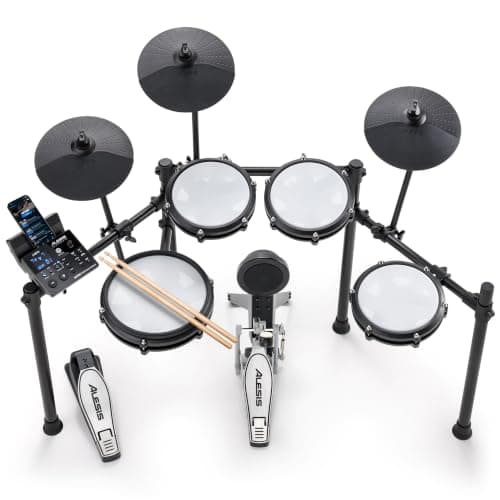
Mesh heads on every pad, a dual-zone snare and Bluetooth audio for playing along. Mesh is the spec that makes an electronic kit tolerable to sit at for an hour.
Published specifications
- Pads:
- 10" dual-zone mesh snare, three 8" mesh toms
- Cymbals:
- Three 10" pads — hi-hat, crash, ride
- Module:
- 440 sounds, 32 kits, 60 play-along songs, performance recorder
- Connectivity:
- Bluetooth audio, USB-MIDI
- Mounting:
- Included four-post rack
- Weight:
- Under 15 kg complete
What it gets right
- Mesh heads on every drum pad — quieter and far closer to a real rebound than the rubber pads a tier down
- Bluetooth audio means playing along to a phone with no cable and no extra mixer
- USB-MIDI, so it doubles as a controller for recording software later
Where it gives ground
- Mesh heads are quiet in the room but the kick pedal thumps through a floor; downstairs neighbors still hear it
- Single-zone toms — no rimshot on anything except the snare
What it is not good at
Teaching cymbal technique. Three 10 inch pads cannot reproduce how a real hi-hat or a crash responds, and a drummer moving to an acoustic kit later has that to learn from scratch.
How the specs score against a beginner’s needs
Scores are our reading of the published specifications above against what a beginner physically needs. They are not test results — we have not played this instrument.
Specifications from Alesis Drums — Nitro Max Kit.
Alesis Debut Kit
AlesisBest for: Ages roughly 5-9
Four 6 inch mesh pads sized and spaced for a small child, with headphones, a throne and sticks in the box. Alesis states it is designed for ages 5 to 9 and the geometry backs that up.
Published specifications
- Pads:
- Four 6" mesh pads (snare and three toms)
- Cymbals:
- Three 10" pads — hi-hat, crash, ride
- Pedals:
- Hi-hat and bass drum pedals included
- Module:
- DM-Lite: 120 sounds, 10 kits, 30 play-along tracks, drum coach
- Age guidance:
- Manufacturer states ages 5-9
- In the box:
- Metal rack, height-adjustable throne, sticks, headphones, cables, Melodics lessons
What it gets right
- Purpose-built small geometry — the pads are within a small child's reach rather than an adult kit with the legs shortened
- Headphones included, which for a kids' drum kit is the difference between practicing and being asked to stop
- Height-adjustable throne, so it tracks a growing child for a couple of years
Where it gives ground
- 6 inch pads are small enough that an older child will feel boxed in quickly
- The DM-Lite module is basic; 120 sounds and no real editing
What it is not good at
Lasting. Alesis's own 5-to-9 guidance is honest, and a 10-year-old should start on the Nitro Max instead. Buying this for an older child to save money buys a kit they will resent in a year.
How the specs score against a beginner’s needs
Scores are our reading of the published specifications above against what a beginner physically needs. They are not test results — we have not played this instrument.
Specifications from Alesis Drums — Debut Kit.
Vic Firth stereo isolation headphones
Vic FirthBest for: Playing along on an acoustic kit
Over-ear headphones built to block a drum kit while feeding music in, which is the one job normal headphones cannot do at a live acoustic kit.
Published specifications
- Type:
- Closed-back stereo isolation headphones
- Purpose:
- Attenuate ambient kit volume while delivering a music feed
- Fits:
- Any 1/8 inch source
What it gets right
- Solves the problem earplugs cannot: hearing a backing track over an acoustic kit without turning the track up to damaging levels
- Doubles as hearing protection when nothing is plugged in
- Built by a drum-hardware company, so the headband survives being thrown in a bag
Where it gives ground
- Bulky and warm over a long session
- Sound quality is functional, not hi-fi — they are a tool, not listening headphones
What it is not good at
Electronic kits. A mesh-head kit is quiet enough that ordinary closed-back headphones do the job better and sound nicer.
How the specs score against a beginner’s needs
Scores are our reading of the published specifications above against what a beginner physically needs. They are not test results — we have not played this instrument.
Specifications from Vic Firth stereo isolation headphones published description.
Questions people actually ask
What is a drum module?
The box mounted on the rack of an electronic kit. It receives a signal from each pad, decides how hard it was struck, and plays the matching drum sound out through headphones or speakers.
Do more kit presets make a module better?
Almost never. A module with forty preset kits usually has three or four that get used. Judge it on how good the default acoustic kit sounds, because that is the one you will practice with.
What module features actually matter?
Trigger sensitivity adjustment, a headphone output with a usable volume range, and an aux input for playing along to music. Everything else on the spec sheet is secondary for a beginner.
Can you upgrade a drum module later?
Yes. Pads and modules connect over standard jacks, so a better module can be added to existing pads later. That is the most common upgrade path on an entry-level electronic kit.
Sources
Still deciding?
Every recommendation on this site is built the same way, and the method is published in full — including what we do not do and what would get a pick dropped.
Read next
- Best electronic drum sets for beginners
Mesh versus rubber pads, the kick-thump problem that headphones do not solve, and picks for adults and children.
- Mesh heads or rubber pads?
How mesh and rubber differ in rebound and struck noise, what tensioning does, and which kits use which.
- Acoustic vs electronic drums for beginners
Feel against practice hours, what transfers in each direction, and the building question that settles it. Buy paths for both.
- Every part of a drum kit, explained
What every drum, cymbal and stand is for, which parts are the weak link on a budget kit, and what a five-piece actually means.
- Drum accessories you actually need
Sticks, a pad, hearing protection and a throne, in priority order, plus the upgrades that genuinely change how a cheap kit sounds.