Keys
Yamaha P-145 vs Alesis Recital
Two 88-key pianos at very different prices. The question is whether you are buying a piano action or buying 88 keys, because those are not the same purchase.
By Sawyer V. · Published · Last updated
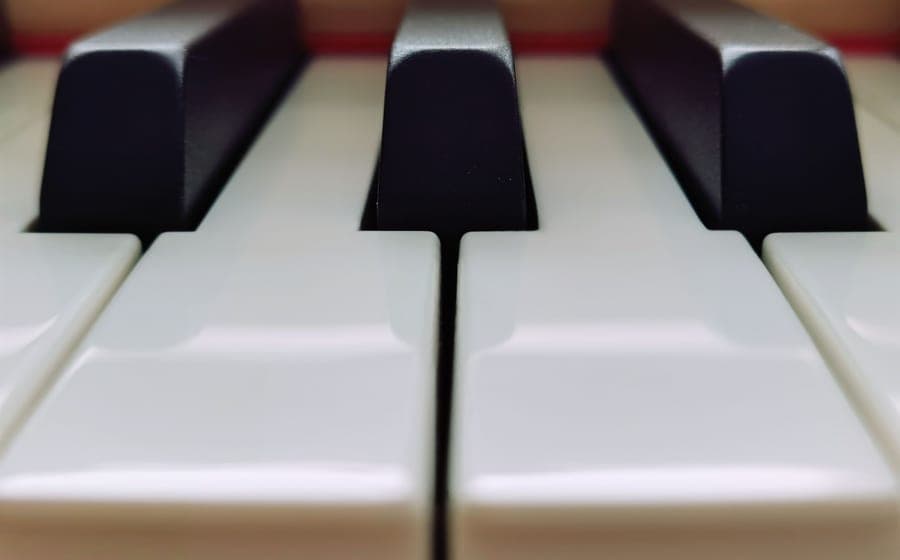
These two get compared constantly because they both say 88 keys on the box and they do not cost the same. That framing hides the actual decision, which is about what is under the keys rather than how many of them there are.
We have not played either. This is our reading of the published specifications; the method is on how we pick.
Buy the Yamaha P-145#ad if the goal is to learn piano properly and stay with it: a graded hammer action is the thing you cannot add later. Buy the Alesis Recital#ad if the budget is fixed and the alternative is a 61-key board or nothing — 88 semi-weighted keys still beats not starting.
The action is the whole comparison
Yamaha P-145: GHC, fully weighted and graded. Hammers rather than springs, heavier at the bass end and lighter at the treble, exactly as an acoustic piano is. That resistance is what teaches a student to control volume with their fingers, and it is why piano teachers ask for weighted keys.
Alesis Recital: 88 full-size semi-weighted keys with adjustable touch response across low, medium and high. Semi-weighted means springs with some added weight: more resistance than a synth, considerably less than a piano.
The practical consequence arrives in year two. A student who learned on semi-weighted keys sits down at a real piano at a lesson or an exam and finds it heavy and unresponsive, because their hands never had to work. The full argument is in weighted vs unweighted keys.
Where the Alesis wins
Polyphony: 128 notes against 64. Polyphony is how many notes can sound at once before the oldest are cut off, and it matters most with the sustain pedal down. 64 is adequate for beginner repertoire; 128 has more headroom.
Speakers: 2 x 20 W against 7 W. The Alesis is simply louder, which matters in a room with other noise.
Extras. Five layerable and splittable voices, a lesson mode that divides the keyboard into two identical halves for teaching, a metronome, reverb and chorus.
Price. The reason this comparison exists at all.
Where the Yamaha wins
The action, covered above, and it is decisive for anyone taking lessons.
The piano sound. A CFIIIS concert grand sample with damper resonance DSP is a more convincing piano voice than anything in this price class.
Size. At 52 inches wide and about 5 inches deep it is genuinely compact for an 88-key instrument.
What is in the box. Music rest and a sustain foot switch, so it plays properly on day one.
Who should buy which
Buy the P-145 if there is a teacher involved, if the player is an adult who is serious, or if you would rather buy once. It is our default recommendation in best beginner digital pianos.
Buy the Recital if the choice is between it and nothing, if the player is a curious child rather than a committed student, or if you need volume and voices more than realism.
Buy neither if 88 keys will not fit the room. 61 keys is a legitimate floor for a first year, and that trade is in 61 vs 88 keys.
What we would buy
Yamaha P-145
YamahaBest for: Buy once, 88 weighted keys
88 graded hammer keys, a concert grand sample and 24 pounds. If the plan is piano lessons rather than keyboard playing, this is where the shopping actually starts.
Published specifications
- Keys:
- 88, GHC (Graded Hammer Compact), fully weighted and graded
- Polyphony:
- 64 notes
- Sound:
- Yamaha CFIIIS concert grand sample, damper resonance DSP
- Speakers:
- 7 W built-in
- Dimensions:
- 1,326 x 268 x 129 mm (52-3/16" x 10-9/16" x 5-1/16")
- Weight:
- 11.1 kg (24 lb 8 oz)
- In the box:
- Music rest, sustain foot switch
What it gets right
- Graded hammer action — the low keys are heavier than the high ones, which is the thing an unweighted keyboard cannot teach
- All 88 keys, so no method book ever runs off the end of the instrument
- Genuinely portable at 24 pounds and 268 mm deep; it fits on a desk
Where it gives ground
- 64-note polyphony is the entry-tier number; heavy sustain-pedal passages will drop notes eventually
- A single sustain footswitch, not a proper piano-style pedal — most players replace it
What it is not good at
Anything other than piano. There are only a handful of voices and no arranger features, so if the player wants to make beats or layer sounds, a PSR-E383 will make them happier for less money.
How the specs score against a beginner’s needs
Scores are our reading of the published specifications above against what a beginner physically needs. They are not test results — we have not played this instrument.
Specifications from Yamaha USA — P-145 specifications.
Alesis Recital
AlesisBest for: 88 keys on a tight budget
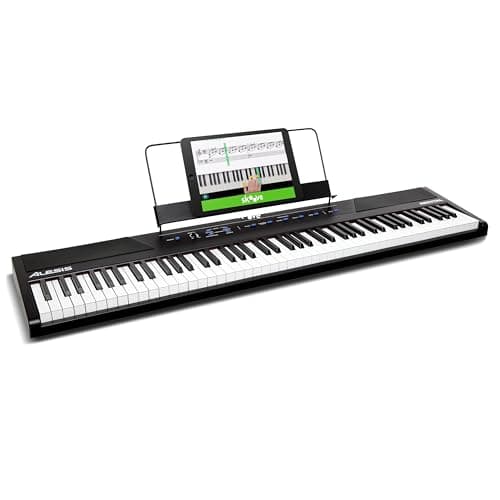
88 full-size semi-weighted keys and 128-note polyphony for meaningfully less than a hammer-action piano. Semi-weighted is a real compromise and the page should say so, so: it is a real compromise.
Published specifications
- Keys:
- 88, full-size, semi-weighted
- Touch response:
- Adjustable — low / medium / high
- Polyphony:
- 128 notes
- Voices:
- 5, layerable and splittable
- Speakers:
- 2 x 20 W
- Weight:
- 15.7 lb
- Extras:
- Lesson mode, metronome, reverb, chorus
What it gets right
- All 88 keys at a price where most instruments give you 61 — the method book never runs out of instrument
- 128-note polyphony, double the Yamaha P-145's 64
- 15.7 pounds, lighter than the P-145's 24 and a genuine consideration if it moves between rooms
Where it gives ground
- Semi-weighted is not hammer action and not graded — the resistance is springs, not weights
- Five voices total, and the piano sample is clearly the entry tier
What it is not good at
Building acoustic-piano technique. Semi-weighted keys let a beginner play faster than their hands have earned, and the habit shows the first time they sit at a real piano. If lessons on an acoustic are coming, spend up to the hammer action.
How the specs score against a beginner’s needs
Scores are our reading of the published specifications above against what a beginner physically needs. They are not test results — we have not played this instrument.
Specifications from Alesis — Recital product page.
Questions people actually ask
Is the Alesis Recital good enough to learn piano on?
For a first year, yes, with one caveat: semi-weighted keys do not build the finger strength or control that a hammer action does. A student who continues to lessons will feel the gap when they sit at an acoustic piano.
What does graded hammer action mean?
The keys use small hammers rather than springs, and the low keys are weighted heavier than the high keys, copying how an acoustic piano feels across its range. That is what the P-145’s GHC action does and what the Recital does not.
Which has better sound?
Different strengths. The Yamaha uses a CFIIIS concert grand sample with damper resonance, which is the more realistic piano voice. The Alesis has 128-note polyphony against the Yamaha’s 64, and louder 2 x 20 W speakers against 7 W.
Which is more portable?
The Alesis is lighter: 15.7 lb against the Yamaha’s 11.1 kg, which is about 24 lb 8 oz. The Yamaha is the more compact instrument at roughly 52 inches wide and 5 inches deep, so it wins on footprint rather than on weight.
Do both take a sustain pedal?
Yes, and the Yamaha includes a sustain foot switch in the box. A proper piano-style pedal is a worthwhile upgrade on either — see best sustain pedals for keyboards.
Still deciding?
Every recommendation on this site is built the same way, and the method is published in full — including what we do not do and what would get a pick dropped.
Read next
- Best beginner digital pianos: 88 keys, honestly compared
Hammer action versus semi-weighted at the entry price, with the polyphony and weight trade-offs both stated.
- Weighted vs unweighted keys
Hammer, semi-weighted and synth action explained by effect on the hands, with the one question that settles the choice.
- 61 vs 88 key keyboard
When 61 keys stops being enough, what 88 actually costs in money and floor space, and buy paths for both answers.
- What you actually need to start piano
The complete accessory list in priority order, with what each one is for and which ones can genuinely wait.
- Best sustain pedals for keyboards
Polarity, half-damper and grip explained, plus three pedals for keyboards that came with a plastic footswitch or nothing.