Keys
Best keyboard brands for beginners
Two companies make most of the keyboards a beginner will ever consider, and they are good at noticeably different things.
By Sawyer V. · Published · Last updated
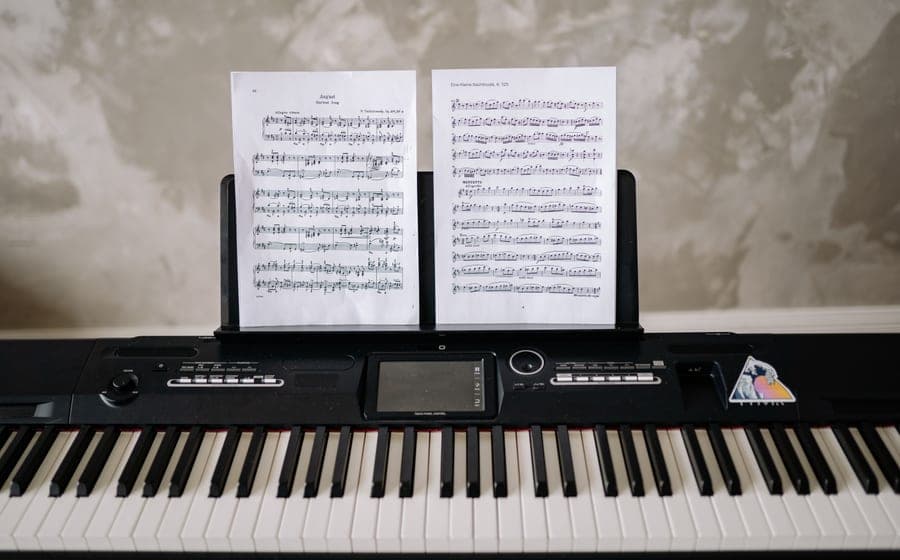
The beginner keyboard market is unusually concentrated. Two Japanese companies make most of what a first-time buyer will look at, one American company undercuts them both on key count, and two more names appear once the budget rises. Knowing what each is good at shortens the shortlist considerably.
Every pick states its Starter Path band, and we have not physically tested any of them — the method is on how we pick.
Yamaha covers the widest range competently and has the best built-in lesson system. Casio makes the cleanest, lightest instruments for an adult who wants to play rather than browse sounds. Alesis is how you get 88 keys cheaply. Roland and Korg start above the beginner tier. The key action and key count still decide the purchase.
Yamaha — the broadest range
Yamaha is the only name here that is strong at every tier a beginner might shop in, from a first portable keyboard through to a weighted digital piano.
At the portable end the Yamaha PSR-E383#ad is the default recommendation: 61 touch-sensitive keys and 125 lesson songs with hand-separate practice and scoring. Touch sensitivity is the specification that matters — playing harder makes it louder, which is the first thing a pianist has to learn and the thing a non-touch keyboard physically cannot teach.
At the piano end the Yamaha P-145#ad is where the shopping actually starts if lessons are the plan: 88 graded hammer keys, a concert grand sample and 24 pounds of instrument. Graded means the low keys are heavier than the high ones, exactly as on an acoustic piano.
What Yamaha is known for is quality control and the lesson software, not character. What it is not is cheap for what it is; there is usually something with a longer feature list for the money.
Casio — the cleanest instruments
Casio’s reputation with people who have not looked recently is still the toy keyboard of thirty years ago. The current Casiotone line is nothing of the sort.
The Casio Casiotone CT-S1#ad is the clearest example: 61 full-size touch-sensitive keys, 64-note polyphony, and deliberately only 61 tones with a clean panel and no arranger clutter. It weighs 9.9 pounds and stands 3.3 inches tall, so it can live on a shelf between sessions.
That restraint is the whole argument. An adult beginner who sits down at a keyboard with 650 sounds spends the first ten minutes of every session browsing them. An instrument with a piano sound and a volume knob gets practiced on. Casio built that instrument on purpose.
The cost of the restraint is that there is no lesson mode at all, which is the exact thing a child benefits from most.
Alesis — 88 keys, cheaply
The Alesis Recital#ad does one thing no other brand at this price does: it gives you all 88 full-size keys and 128-note polyphony for meaningfully less than a hammer-action piano costs.
The compromise is in the action. Semi-weighted means the resistance comes from springs rather than from weighted hammers, and it is not graded. It feels better than an unweighted keyboard and clearly different from a piano, and a student who learns on it will notice the first time they sit at an acoustic.
Whether that trade is worth making depends on one question, and we work through it in weighted versus unweighted keys.
Roland and Korg
Roland is respected for key actions and for digital pianos that hold their value, and its range begins above where most first-time buyers are shopping. If the budget stretches, it belongs on the list; it is rarely the honest floor.
Korg is strongest in synthesizers and stage instruments, which is a different buyer. Its entry digital pianos exist and compete, but the brand’s reputation is built somewhere a beginner is not yet standing.
Both belong to the conversation in best beginner digital pianos rather than to a first-keyboard shortlist.
What brand actually tells you
Less than buyers hope, and enough to be useful.
What a known brand buys you: published specifications you can check before buying, a power supply that is actually in the box, firmware and support that outlast the warranty, and resale value.
What it does not buy you: the right instrument. Yamaha, Casio and Alesis all make keyboards we would recommend and keyboards we would tell you to skip, sometimes in the same product line.
The two specifications that outrank the badge
Key count. Sixty-one keys is enough for the first year or two and will eventually run out under a method book that assumes 88. The argument in full is in 61 versus 88 keys.
Key action. Unweighted, semi-weighted and hammer action are three genuinely different instruments, and the difference decides whether the player is learning piano technique or keyboard technique. Neither is wrong; they are not the same thing.
There is a third thing worth checking that has nothing to do with brand: whether a power supply is included. Many portable keyboards do not include one, and a keyboard without its adapter is a shelf ornament. What every number on a keyboard spec sheet means is decoded in keyboard specs explained.
What we would buy
Yamaha PSR-E383
YamahaBest for: Learning tools, 61 keys
61 touch-sensitive keys and 125 lesson songs with hand-separate practice and scoring. The touch response is the spec that matters; the 650 tones are the spec that sells it.
Published specifications
- Keys:
- 61, organ-style (unweighted), touch-sensitive
- Touch response:
- Soft / medium / hard / off
- Polyphony:
- 48 notes
- Tones:
- 650 (258 panel, 25 drum/SFX, 20 arpeggio, 347 XGlite)
- Lessons:
- 125 lesson songs, right/left/both-hand practice with evaluation
- In the box:
- Music rest, PA130 power adapter
What it gets right
- Touch-sensitive keys — playing harder makes it louder, which is the thing a beginner has to learn early and a non-touch keyboard cannot teach
- The lesson mode with hand-separate practice and scoring is genuinely useful, not a gimmick
- Power adapter included, which is not a given at this tier
Where it gives ground
- Unweighted organ-style keys — this will not build the finger strength a piano needs
- 61 keys, so a method book that assumes 88 will eventually run out of instrument
What it is not good at
Preparing anyone for an acoustic piano. If there is a real piano in the child's future, the unweighted action is a habit to unlearn later. Read our 61-versus-88 comparison before deciding.
How the specs score against a beginner’s needs
Scores are our reading of the published specifications above against what a beginner physically needs. They are not test results — we have not played this instrument.
Specifications from Yamaha — PSR-E383 specifications.
Casio Casiotone CT-S1
CasioBest for: 61 keys, piano sound first
61 full-size touch-sensitive keys, 61 tones and no arranger clutter. It is the 61-key board for someone who wants to play piano rather than operate a keyboard.
Published specifications
- Keys:
- 61, full-size, touch-sensitive
- Polyphony:
- 64 notes
- Tones:
- 61, including a stereo grand piano
- Weight:
- 9.9 lb
- Dimensions:
- 36.61" W x 10.15" D x 3.30" H
- Connectivity:
- USB-MIDI
What it gets right
- Deliberately few sounds and a clean panel, which removes the single biggest distraction from actual practice
- 9.9 pounds and 3.3 inches tall — it can live on a shelf between sessions, and an instrument that lives out of the way gets played less
- 64-note polyphony, higher than the PSR-E383's 48
Where it gives ground
- No lesson mode at all, unlike the PSR-E383
- Unweighted keys, same fundamental limit as any 61-key board
What it is not good at
Entertaining a young child. There is no light-up key guidance, no play-along scoring and only 61 sounds. That restraint is the point for an adult beginner and a drawback for a seven-year-old.
How the specs score against a beginner’s needs
Scores are our reading of the published specifications above against what a beginner physically needs. They are not test results — we have not played this instrument.
Specifications from Casio — CT-S1 product page.
Alesis Recital
AlesisBest for: 88 keys on a tight budget
88 full-size semi-weighted keys and 128-note polyphony for meaningfully less than a hammer-action piano. Semi-weighted is a real compromise and the page should say so, so: it is a real compromise.
Published specifications
- Keys:
- 88, full-size, semi-weighted
- Touch response:
- Adjustable — low / medium / high
- Polyphony:
- 128 notes
- Voices:
- 5, layerable and splittable
- Speakers:
- 2 x 20 W
- Weight:
- 15.7 lb
- Extras:
- Lesson mode, metronome, reverb, chorus
What it gets right
- All 88 keys at a price where most instruments give you 61 — the method book never runs out of instrument
- 128-note polyphony, double the Yamaha P-145's 64
- 15.7 pounds, lighter than the P-145's 24 and a genuine consideration if it moves between rooms
Where it gives ground
- Semi-weighted is not hammer action and not graded — the resistance is springs, not weights
- Five voices total, and the piano sample is clearly the entry tier
What it is not good at
Building acoustic-piano technique. Semi-weighted keys let a beginner play faster than their hands have earned, and the habit shows the first time they sit at a real piano. If lessons on an acoustic are coming, spend up to the hammer action.
How the specs score against a beginner’s needs
Scores are our reading of the published specifications above against what a beginner physically needs. They are not test results — we have not played this instrument.
Specifications from Alesis — Recital product page.
Yamaha P-145
YamahaBest for: Buy once, 88 weighted keys
88 graded hammer keys, a concert grand sample and 24 pounds. If the plan is piano lessons rather than keyboard playing, this is where the shopping actually starts.
Published specifications
- Keys:
- 88, GHC (Graded Hammer Compact), fully weighted and graded
- Polyphony:
- 64 notes
- Sound:
- Yamaha CFIIIS concert grand sample, damper resonance DSP
- Speakers:
- 7 W built-in
- Dimensions:
- 1,326 x 268 x 129 mm (52-3/16" x 10-9/16" x 5-1/16")
- Weight:
- 11.1 kg (24 lb 8 oz)
- In the box:
- Music rest, sustain foot switch
What it gets right
- Graded hammer action — the low keys are heavier than the high ones, which is the thing an unweighted keyboard cannot teach
- All 88 keys, so no method book ever runs off the end of the instrument
- Genuinely portable at 24 pounds and 268 mm deep; it fits on a desk
Where it gives ground
- 64-note polyphony is the entry-tier number; heavy sustain-pedal passages will drop notes eventually
- A single sustain footswitch, not a proper piano-style pedal — most players replace it
What it is not good at
Anything other than piano. There are only a handful of voices and no arranger features, so if the player wants to make beats or layer sounds, a PSR-E383 will make them happier for less money.
How the specs score against a beginner’s needs
Scores are our reading of the published specifications above against what a beginner physically needs. They are not test results — we have not played this instrument.
Specifications from Yamaha USA — P-145 specifications.
Questions people actually ask
What is the best keyboard brand for beginners?
Yamaha, for breadth: it covers portable keyboards, digital pianos and lesson features competently at every tier. Casio is the strongest alternative and often the better buy for an adult who wants a clean instrument rather than an arranger.
Is Casio or Yamaha better for a beginner?
Neither wins outright. Yamaha’s PSR line has the better built-in lesson system; Casio’s Casiotone line is lighter, simpler and less distracting. The choice follows the player, not the badge.
Is Alesis a good keyboard brand?
For getting 88 keys cheaply, yes. The Recital is 88 full-size semi-weighted keys with 128-note polyphony at a price where most instruments give you 61. Semi-weighted is a real compromise against hammer action, and worth understanding before you buy.
Does keyboard brand matter?
As a proxy for consistency and for spare parts, yes. It tells you nothing about whether a specific model has the key count, key action and polyphony a method book is going to assume.
Sources
Still deciding?
Every recommendation on this site is built the same way, and the method is published in full — including what we do not do and what would get a pick dropped.
Read next
- Best beginner keyboards: 61 keys that suit real lessons
Touch response over tone count, segmented for children and adult learners, with the 61-key ceiling stated plainly.
- Best beginner digital pianos: 88 keys, honestly compared
Hammer action versus semi-weighted at the entry price, with the polyphony and weight trade-offs both stated.
- Keyboard specs, and which ones matter
What polyphony really limits, why 700 voices is not a feature, and the four specs that genuinely decide whether a keyboard is good.
- 61 vs 88 key keyboard
When 61 keys stops being enough, what 88 actually costs in money and floor space, and buy paths for both answers.
- Weighted vs unweighted keys
Hammer, semi-weighted and synth action explained by effect on the hands, with the one question that settles the choice.