Band & Orchestra
Best recorders for beginners
The recorder is the one instrument where the real version and the toy version cost the same money, so there is no excuse for buying the toy.
By Sawyer V. · Published · Last updated

More people start on the recorder than on any other instrument, and almost none of them chose it. It arrives in a letter from a school with a price and a deadline, which is exactly the situation in which people buy the wrong thing.
The recorder is also the one instrument on this site where our usual argument does not apply. Everywhere else we have to explain why the cheapest thing that works costs more than the cheapest thing on the shelf. Here they cost the same. A Yamaha school recorder and an unbranded one sit at roughly the same price, which means the entire decision is free — and that makes buying the wrong one genuinely unnecessary.
Every pick below states its Starter Path band, and we have not physically played any of them — the method is on how we pick. Specifications come from named published spec sheets, cited at the bottom of the page.
Buy a soprano (descant) recorder in C with Baroque fingering. That one word is the whole decision: German fingering makes your method book’s diagrams wrong. The Yamaha YRS-24B is the standard Baroque school recorder and costs about what an unbranded one does, so the better instrument is not the more expensive choice.
The one specification that decides this
Recorders come in two fingering systems, Baroque (sold as English) and German. The physical difference is the size of one hole. The practical difference is which fingers play F and F sharp.
German fingering was invented in the 1920s specifically to make the note F simpler for schoolchildren, and it succeeded — at the cost of making F sharp awkward and the upper register less reliable. Baroque fingering is harder at F and correct everywhere else.
That trade-off would be an interesting argument if the world had not already settled it. It has. Method books, printed fingering charts, classroom curricula and the overwhelming majority of lesson videos assume Baroque. Buy a German-fingered recorder and the diagrams in your book are simply wrong for the instrument in your hands, which a beginner experiences not as a compatibility problem but as evidence that they cannot play.
The good news is that it is printed on the box, usually in the model number. Yamaha’s B suffix means Baroque: YRS-24B, YRS-312B. The models without it — YRS-23, YRS-301III — are German. Aulos uses B the same way in 703B. If a listing does not say which system it uses, that is a reason to buy a different recorder rather than a reason to guess.
What the other three specs actually change
Once fingering is settled, three published specs separate an eight-dollar recorder from a forty-dollar one. Only one of them matters in the first year.
Windway. This is the channel that carries your breath to the edge that makes the sound, and spec sheets describe it as straight, curved or arched. Straight is the cheap molding and it is what the YRS-24B uses. Curved and arched windways cost more to make and give more control high up, which is why the Aulos 703B (curved) and the Yamaha YRS-312B (arched) are priced where they are. This is the real difference between the brackets, and it is also the difference a first-term player will not notice, because they are not yet playing in the register where it shows.
Toneholes: single or double. A double tonehole is a pair of small holes where a cheaper instrument has one large one, and it lets you half-cover cleanly to get the chromatic notes — F sharp and G sharp in particular. Method books reach these sooner than people expect. The YRS-24B has double toneholes and so does the YRS-312B (published as c-c# and d-d#). Sweet Pipes does not state the tonehole configuration for the Aulos 703B, so we are not claiming it either way.
Body pieces. A three-piece recorder can be tuned slightly flat by pulling the head joint out a few millimeters, which is how you match a piano or a group rather than being stuck. It also means a cracked or lost joint is a replacement part rather than a replacement instrument. One-piece recorders give up both. All three picks here are three-piece.
Why “cheap recorder” means something different
On most pages on this site, the bottom of the market is a trap because the instrument physically fails: tuners that will not hold a guitar in tune, keyboards whose keys do not respond to how hard you press. The recorder is not like that. An eight-dollar Yamaha is not a compromised instrument — it is a mass-produced one, which is a different thing.
So the failure mode here is narrower and more specific. The recorders that cause problems are the ones that are cheap and get the fingering system wrong, or cheap and single-holed, or cheap and unbranded with no stated specification at all. The price is not the signal. The spec sheet is.
This is worth saying plainly because the usual advice — spend a bit more than the minimum — does not apply. Spending more on a recorder buys windway geometry, and windway geometry is the last thing a beginner needs. Buy the cheap correct one and put the difference toward lessons, which is the recommendation we would make on almost any page but can make here without hedging.
Soprano first, and why alto is not a shortcut
Recorders come in a family. Soprano (called descant in the UK) is the one in C that everybody means by “a recorder.” Alto, sometimes sold as treble, is pitched in F; tenor is in C again but much longer; sopranino and bass exist at the extremes.
Start on soprano. It is the smallest finger stretch, which matters for a seven-year-old. It is the cheapest. And critically, it is the pitch all the beginner material is written for — an alto in F needs a different fingering chart and a different book, so choosing one as a first instrument means sourcing teaching material that mostly does not exist for beginners.
Adults sometimes want to skip to alto because the soprano sounds shrill in a small room. That is a real objection and alto is a genuinely nicer instrument to listen to. It is still the second recorder, not the first. Learn to read and finger on soprano, where the material is, and move across later if you want to.
The picks, and what each one is for
Three recorders, in three price brackets, all Baroque. The ranking is the order we would buy them in, which is not the order of their specifications.
The Yamaha YRS-24B#ad is the answer for almost everyone: it is the recorder schools hand out, it has the fingering and the toneholes a method book needs, and it costs about what the unbranded ones cost. Its weakness is published and specific — the straight windway makes the top octave harder to keep in tune.
The Aulos 703B#ad is what to buy instead if the player has already decided to continue. A curved windway and a bore modelled on a 17th-century Richard Haka instrument, plus a detachable thumb rest you can set for a child’s hand. It is roughly three times the Yamaha, which is a real decision for a child who might stop at Christmas and an obvious one for a child who will not.
The Yamaha YRS-312B#ad is here as the honest ceiling. Arched windway, Rottenburgh bore, simulated rosewood, joint cream in the box. All real; none of it usable by a beginner. At roughly double the Aulos it buys a finish and a bore style, and the money gap is two or three lessons.
What we did not list, and why
The Aulos 103N “Alouette” is the near miss and it is instructive. Thomann publishes its specification plainly: Baroque fingering, one piece, and “double holes: no.” It is also more expensive than the Yamaha YRS-24B. So it costs more and does less — no double toneholes for the chromatic notes, and no joints to tune or replace. It is a competently made instrument from a serious maker and we still cannot find a reader for whom it is the right purchase, so it has no buy row here.
German-fingered recorders are not listed at all, including Yamaha’s own YRS-23 and YRS-301III. They are not bad instruments; they are the wrong instruments for anyone working from standard teaching material, which is everyone this page is for.
Unbranded recorders are not listed because they do not publish specifications. Several are sold at the same price as the Yamaha with “baroque fingering” in the title and nothing verifiable behind it. When the correct instrument costs the same, there is no reason to take that risk.
Wooden recorders are out of scope for a first purchase. A wooden instrument needs a breaking-in period of a few minutes a day for weeks, and it can crack if you ignore that. It is a reward for sticking with it, not a way to start.
If you are buying from a school letter
This is the situation most people are actually in, so it is worth treating as its own problem. A school note asking for “a soprano recorder” or “a descant recorder” has told you the size and the key, and that is genuinely most of the decision. What such a note very often leaves out is the fingering system — and that is the one thing it cannot afford to leave out, because it is the thing that makes the book and the instrument agree.
There is a quick way to settle it without asking anyone. Open whatever method book or handout the class is using and find the fingering chart for F. If the diagram for F covers the holes in a continuous run down the instrument, that chart is German. If it skips a hole — the pattern people describe as “holey” or forked — that chart is Baroque. Buy to match the chart in front of you. If there is no book yet, buy Baroque, because that is what the overwhelming majority of material assumes and because it is the system that keeps working as the player improves.
If the school offers to supply the recorder as part of a bundle, take it. Not because the instrument will be better — it is very likely the same Yamaha or Aulos — but because a class playing identical instruments is a class where the teacher is not troubleshooting one child’s different fingering chart in a room of thirty. The exception is a bundle that does not say which fingering system it contains, which is worth one email to ask.
Two practical notes that have nothing to do with specifications. Write the child’s name on the instrument and on the bag, because a classroom set of identical recorders is the most losable object in a school. And buy the three-piece kind if you have a choice, so that a joint lost on a bus is a few dollars rather than a new recorder.
What else you need, which is almost nothing
A cleaning rod and a scrap of cloth, to dry the bore after playing. The Aulos and the YRS-312B include a rod; the YRS-24B does not. That is the entire accessory list, and it is why the recorder remains the cheapest honest way into reading music and controlling breath — there is no stand, no case worth buying, no amplifier, no reeds and no consumables.
If the recorder turns out to be a stepping stone rather than the instrument, that is a normal and good outcome. The breath control and note reading transfer directly to flute and to the rest of the band instruments, and the finger independence transfers to anything. Our page on choosing a school band instrument covers what usually comes next.
Quick picks
The one to buy
Baroque fingering, double toneholes, three-piece body, and it costs about what the unbranded recorders next to it cost. There is no version of this decision where the no-name wins.
| # | Product | Best for | Score | Price |
|---|---|---|---|---|
| 1 | Yamaha YRS-24BBaroque fingering, double toneholes and a three-piece ABS body, for about what a no-name recorder costs. | The school recorder to buyThe honest floor | 8.1 | $7.99 · View on Amazon #ad How we’re funded |
If the player is going to keep going
A curved windway instead of a straight one, which is the published difference that buys control in the second octave. Worth it once someone has decided to continue, pointless before that.
| # | Product | Best for | Score | Price |
|---|---|---|---|---|
| 1 | 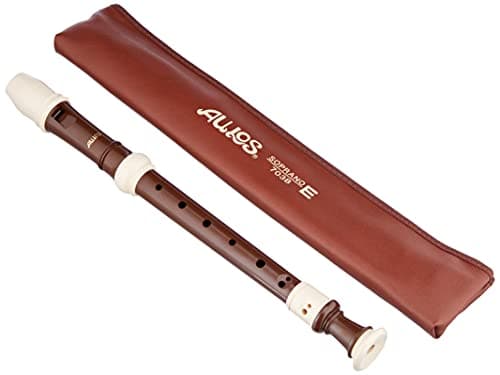 Aulos 703B 'Haka'A curved windway and a bore copied from a 17th-century Richard Haka instrument, in the same durable ABS as the school recorders. | Buy-once, if the player is likely to continueEnough | 9.2 | $24.64 · View on Amazon #ad How we’re funded |
Where the money stops helping
Real refinements — arched windway, Rottenburgh bore — that a first-year player cannot use. Listed so you can see what the next price bracket actually buys, which is not much.
| # | Product | Best for | Score | Price |
|---|---|---|---|---|
| 1 | 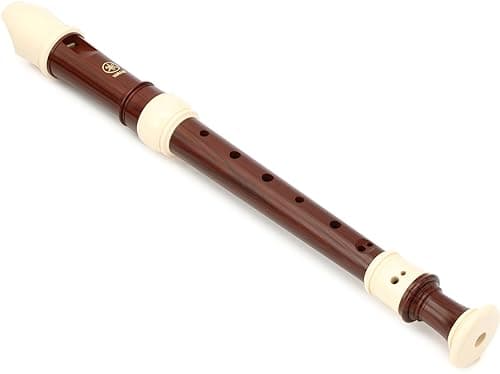 Yamaha YRS-312BAn arched windway, a Rottenburgh bore and a simulated rosewood finish. | Where more money stops helpingWhere overspending starts | 9.0 | $39.99 · View on Amazon #ad How we’re funded |
The picks in full
Yamaha YRS-24B
YamahaBest for: The school recorder to buy
Baroque fingering, double toneholes and a three-piece ABS body, for about what a no-name recorder costs. That last point is the whole argument: at this price the instrument your method book was written for is not a step up in spend, so there is no reason to buy the other thing.
Published specifications
- Fingering:
- Baroque (English) — the system method books assume
- Windway:
- Straight
- Body:
- Three pieces, ABS resin
- Toneholes:
- Double
- Key:
- C soprano (descant)
- Included:
- Cotton case and fingering chart
What it gets right
- Baroque fingering, which is what essentially every school method book and online lesson is written for
- Double toneholes, so the chromatic notes a method book reaches by the second term are actually playable in tune
- Three-piece body: the head joint can be pulled out slightly to tune down to a group, and a single damaged joint can be replaced
- Costs roughly the same as the unbranded recorders sold beside it, so the better instrument is not the expensive choice
Where it gives ground
- The straight windway is the cheaper design, and the upper register is the first place that shows
- Published reviews consistently note it running sharp high up, which a beginner hears as 'this note sounds wrong' rather than as a breath-pressure problem
- No thumb rest, which matters for a small player holding it for a full lesson
- The cotton bag is a dust cover, not protection
What it is not good at
Holding its tuning in the top octave under enthusiastic breath. It is the cheapest honest recorder, not a refined one, and the compromise is specifically in the register a beginner reaches in year two.
How the specs score against a beginner’s needs
Scores are our reading of the published specifications above against what a beginner physically needs. They are not test results — we have not played this instrument.
Specifications from Musician's Friend — Yamaha YRS-24B published specifications (fingering, windway, body pieces, toneholes).
Aulos 703B 'Haka'
AulosBest for: Buy-once, if the player is likely to continue
A curved windway and a bore copied from a 17th-century Richard Haka instrument, in the same durable ABS as the school recorders. The curved windway is the specification that buys you control in the top octave, which is exactly where the cheapest recorders stop cooperating.
Published specifications
- Fingering:
- Baroque / English
- Windway:
- Curved
- Body:
- Three pieces, ABS resin
- Toneholes:
- Not published by the dealer's spec sheet
- Design:
- After a 17th-century Richard Haka instrument
- Included:
- Bag, cleaning rod, fingering chart, detachable thumb rest
What it gets right
- Curved windway, the design difference that makes the second octave easier to control rather than louder
- Detachable thumb rest, so the hand position can be set for a child and moved later
- Comes with a cleaning rod, which is the one piece of maintenance kit a recorder actually needs
- Specialist recorder dealers stock it as a student-to-intermediate instrument, so it is not outgrown in a year
Where it gives ground
- Roughly three times the price of the Yamaha school recorder, which is a real decision for a child who may not continue past one term
- The dealer's spec sheet does not state whether the toneholes are double, so we are not claiming they are
- Heavier and slightly longer than the budget recorders, which a very small player will notice
- Nothing about it helps in the first ten lessons — the advantage is in a register a beginner has not reached yet
What it is not good at
Being the sensible purchase for a child whose school handed out a recorder and may drop it by Christmas. It is the right recorder for someone who has already decided to keep going, and overkill for anyone else.
How the specs score against a beginner’s needs
Scores are our reading of the published specifications above against what a beginner physically needs. They are not test results — we have not played this instrument.
Specifications from Sweet Pipes — Aulos A703B published specifications (Baroque/English fingering, three-piece, curved windway, detachable thumb rest).
Yamaha YRS-312B
YamahaBest for: Where more money stops helping
An arched windway, a Rottenburgh bore and a simulated rosewood finish. Every one of those is a genuine refinement, and none of them is something a first-year player can use — at roughly double the Aulos you are buying a finish and a bore style, not a better instrument for a beginner.
Published specifications
- Fingering:
- Baroque — identical to the YRS-24B
- Windway:
- Arched
- Body:
- Three pieces, ABS resin, simulated rosewood finish
- Toneholes:
- Double: c-c#, d-d#
- Style:
- Rottenburgh
- Included:
- Vinyl bag, cleaning rod, joint cream, owner's manual
What it gets right
- Arched windway and a Rottenburgh bore, both real design upgrades over the straight-windway school recorders
- Ships with joint cream, which is the thing that stops a tight three-piece joint being forced and cracked
- Double toneholes at c-c# and d-d# are published, not inferred
- The same Baroque fingering as the cheap Yamaha, so nothing a student has learned transfers badly
Where it gives ground
- Around double the Aulos 703B for no documented advantage a beginner can hear or use
- The simulated rosewood finish is cosmetic; it changes nothing about how the instrument plays
- Marketed as intermediate-to-advanced, which is an honest description of who benefits — and it is not a first-term student
- At this price the sensible comparison is no longer other plastic recorders but a cheap wooden one
What it is not good at
Justifying itself to a beginner. The money difference between this and the Aulos buys two or three lessons, and lessons will do more for a first-year recorder player than any windway geometry.
How the specs score against a beginner’s needs
Scores are our reading of the published specifications above against what a beginner physically needs. They are not test results — we have not played this instrument.
Specifications from Brook Mays — Yamaha YRS-312B published specifications (Baroque fingering, arched windway, three-piece, double holes c-c# and d-d#, Rottenburgh style).
Questions people actually ask
What recorder should a beginner buy?
A soprano (also sold as descant) recorder in the key of C with Baroque fingering. That is what school programs hand out and what essentially every method book and online lesson is written for. The Yamaha YRS-24B#ad is the standard one and costs about the same as an unbranded recorder.
What is the difference between Baroque and German fingering?
One hole size, and it changes which fingers play F. German fingering makes F easier and F sharp much harder; Baroque does the opposite. Every method book, fingering chart and lesson video you are likely to meet assumes Baroque, so a German-fingered recorder makes the diagrams wrong. Yamaha prints it in the model number: the B in YRS-24B is Baroque, and the models without it are German.
Is a plastic recorder good enough, or should I buy wood?
Plastic, for a beginner, without hesitation. Plastic does not crack when a child breathes condensation into a cold instrument, it can be washed, and the good ones are molded to the same bore designs as wooden instruments. A wooden recorder needs careful breaking in and it is the wrong first purchase. Our picks are all ABS resin on purpose.
Soprano, alto or tenor?
Soprano first, every time. It is the smallest, the cheapest, the one with the shortest finger stretch, and the one all the beginner material is written for. Alto is pitched in F rather than C, which means a different set of fingerings and a different set of books. It is a second instrument, not a first one.
Why is the school recorder so cheap, and is that a problem?
It is cheap because it is injection-molded plastic with no moving parts, in enormous quantities. That is not the usual cheap-instrument story: unlike a hundred-dollar guitar, an eight-dollar Yamaha recorder is not failing at anything a beginner needs. The money saved here is real, and it is the one entry on this site where the honest floor costs essentially nothing.
Do I need the three-piece kind?
It helps. A three-piece body lets you pull the head joint out a few millimeters to tune down to a group, and it lets you replace one damaged joint instead of the whole instrument. One-piece recorders exist and play fine, but you give up both of those.
Sources
- Musician's Friend — Yamaha YRS-24B published specifications (Baroque fingering, straight windway, three-piece, double toneholes)
- Sweet Pipes — Aulos A703B published specifications (Baroque/English fingering, curved windway, detachable thumb rest)
- Brook Mays — Yamaha YRS-312B published specifications (arched windway, Rottenburgh style, double holes c-c# and d-d#)
- Thomann — Aulos 103N Alouette published specifications (one piece, Baroque fingering, double holes: no)
Still deciding?
Every recommendation on this site is built the same way, and the method is published in full — including what we do not do and what would get a pick dropped.
Read next
- Best harmonicas for beginners
Diatonic versus chromatic, why key of C, what bending is and why it decides the purchase, and two harps compared honestly.
- The best first instrument for a child
Instrument by instrument, the real starting age set by hand size and reach, with a pick for each and the noise column filled in.
- Choosing a school band instrument
Which instrument suits which child, what school rental covers, and the honest case for not buying in year one.
- The easiest instruments to learn
Ranked by time to a first real song, with the ceiling each one trades away, and a pick for the top three.
- Best beginner flutes
Closed-hole and offset G explained, the split E mechanism, and the two picks for a year-two step-up.